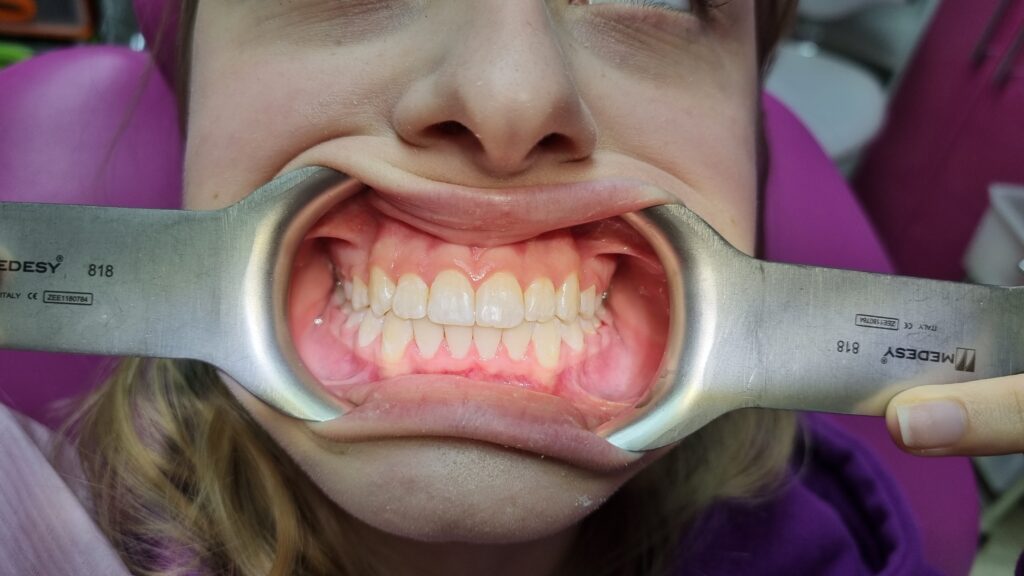
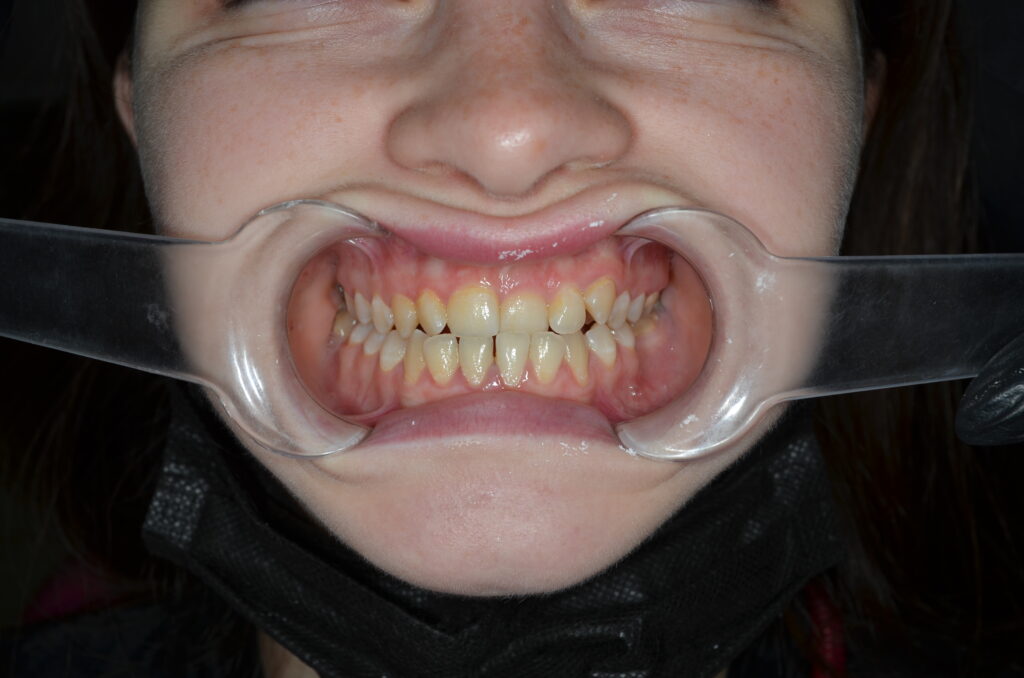
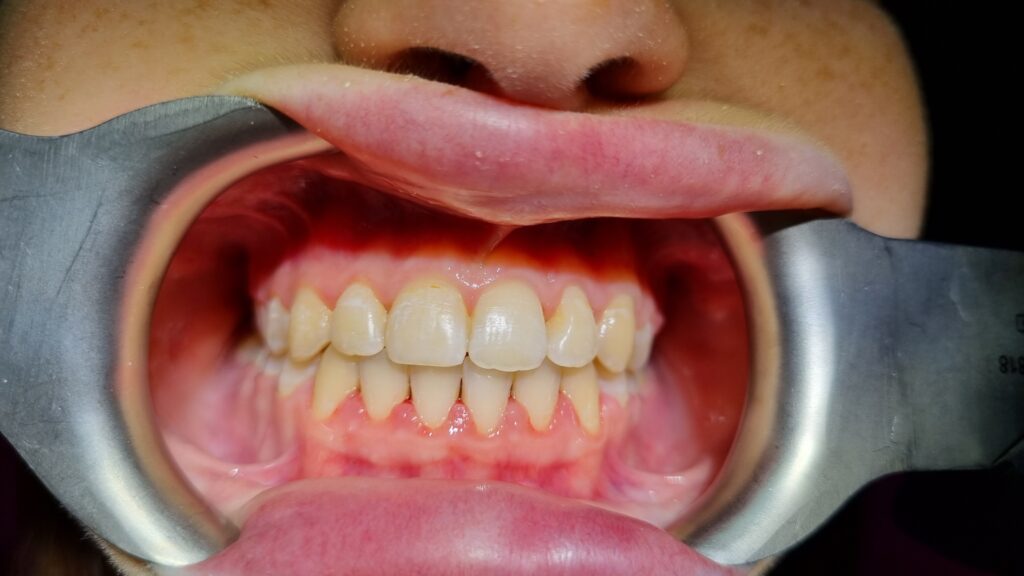
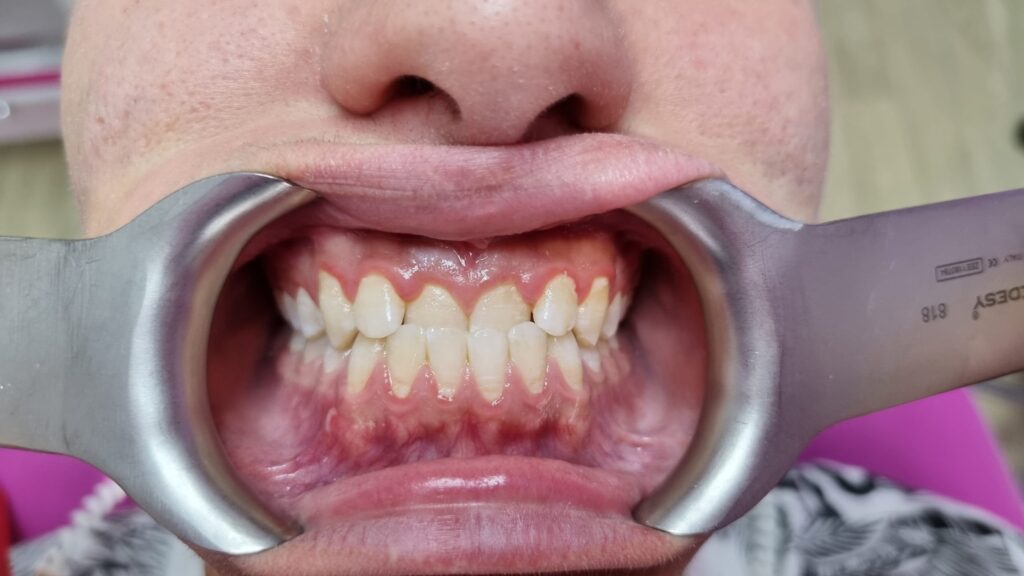
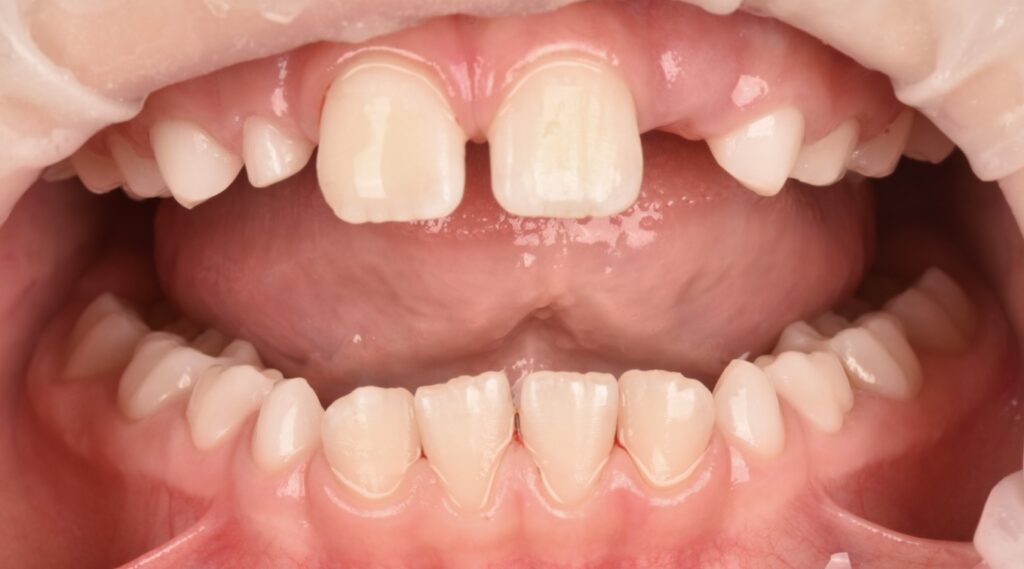
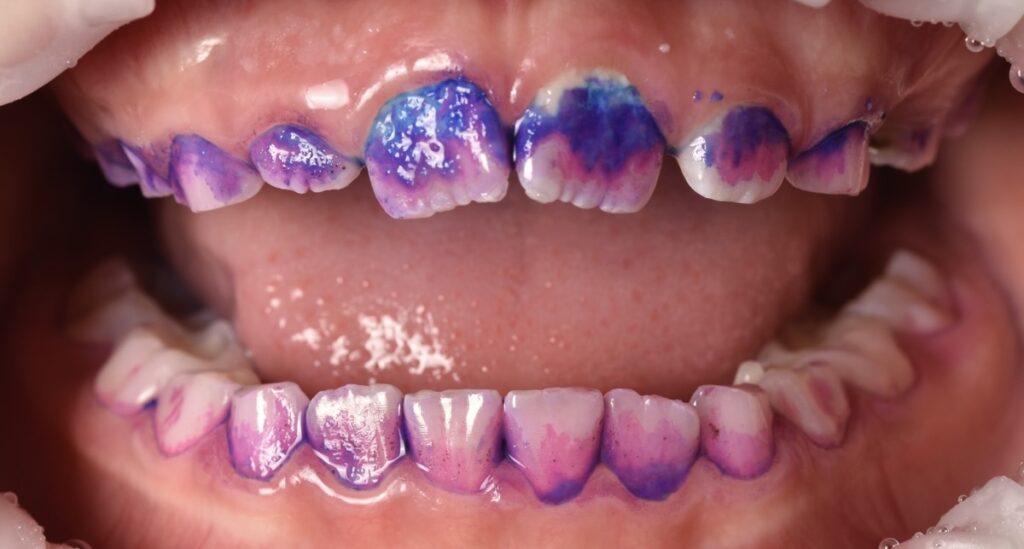
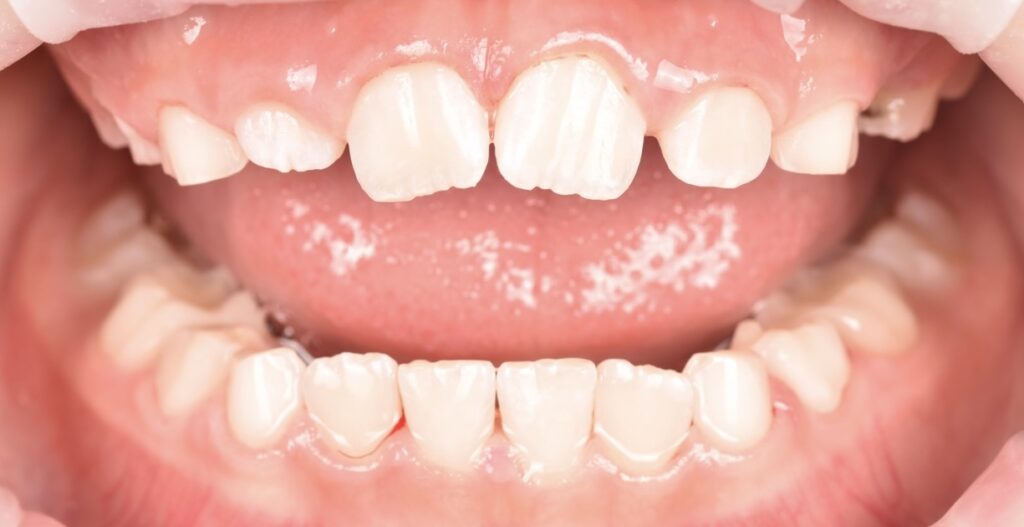
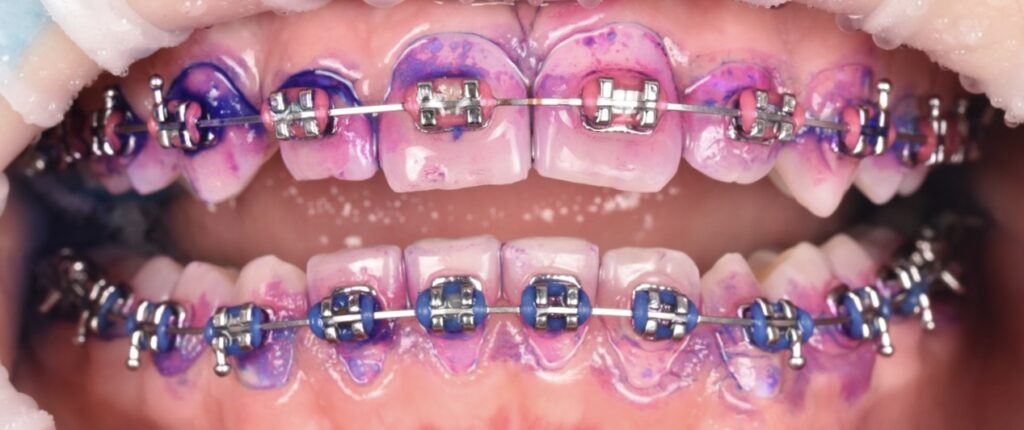
Orthodontic treatment helps correct misaligned teeth and malocclusions in children, teenagers and adults. At Dynasty Stomatology in Krakow, we prepare a personalised treatment plan after an examination, a discussion of expectations and an assessment of the overall condition of the oral cavity.
Orthodontist in Krakow – how can we help?
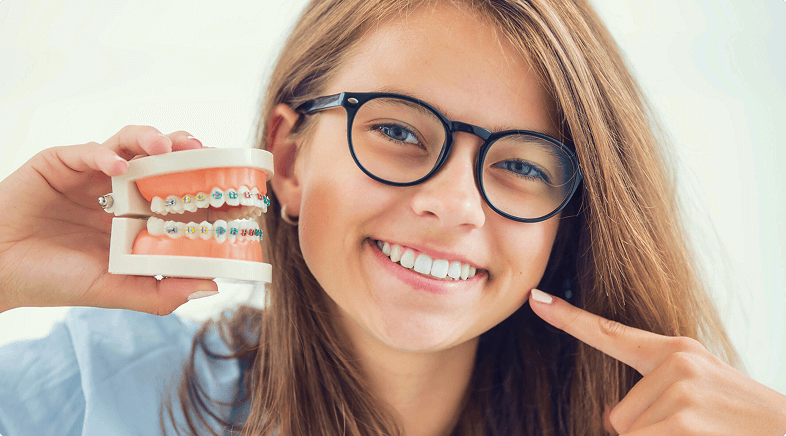
An orthodontist is a dentist who diagnoses and treats malocclusions and misaligned teeth. Orthodontic treatment in Krakow may include monitoring the development of a child’s bite, treatment with fixed braces, removable braces or clear aligners, if the patient qualifies for a particular method.
At Dynasty Stomatology, we provide orthodontic services for children, teenagers and adults. The consultation primarily serves to assess the situation: the dentist checks the alignment of the teeth, the relationship between the dental arches, the condition of the gums and any need for prior restorative treatment or professional dental hygiene.
An orthodontist in Krakow does not select a method based solely on the appearance of the braces. The type of malocclusion, the health of the oral cavity, daily hygiene, aesthetic expectations and the possibility of attending regular check-ups are all important. The patient receives a plan that can be discussed calmly before making a decision.
When is it worth seeing an orthodontist?
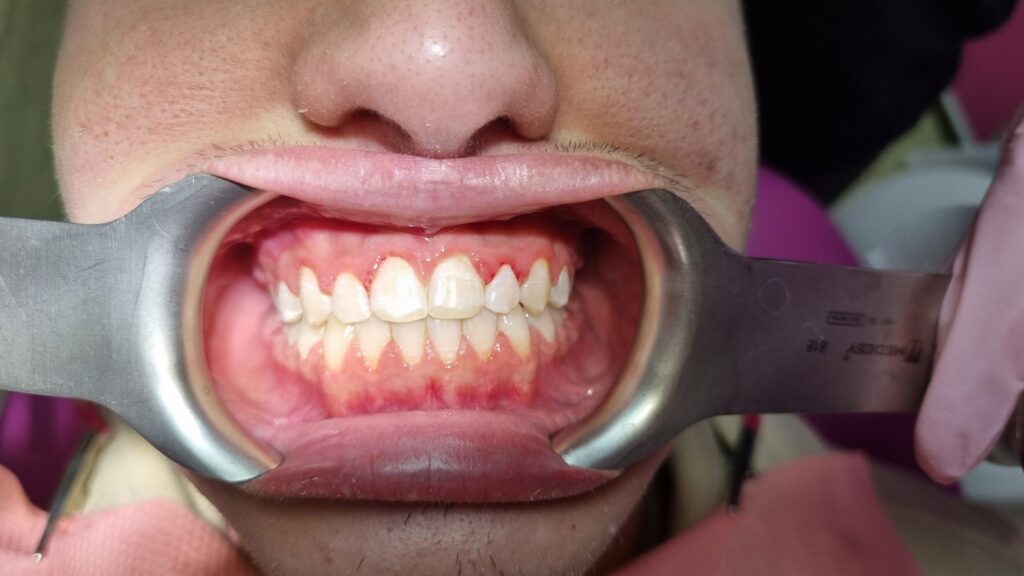
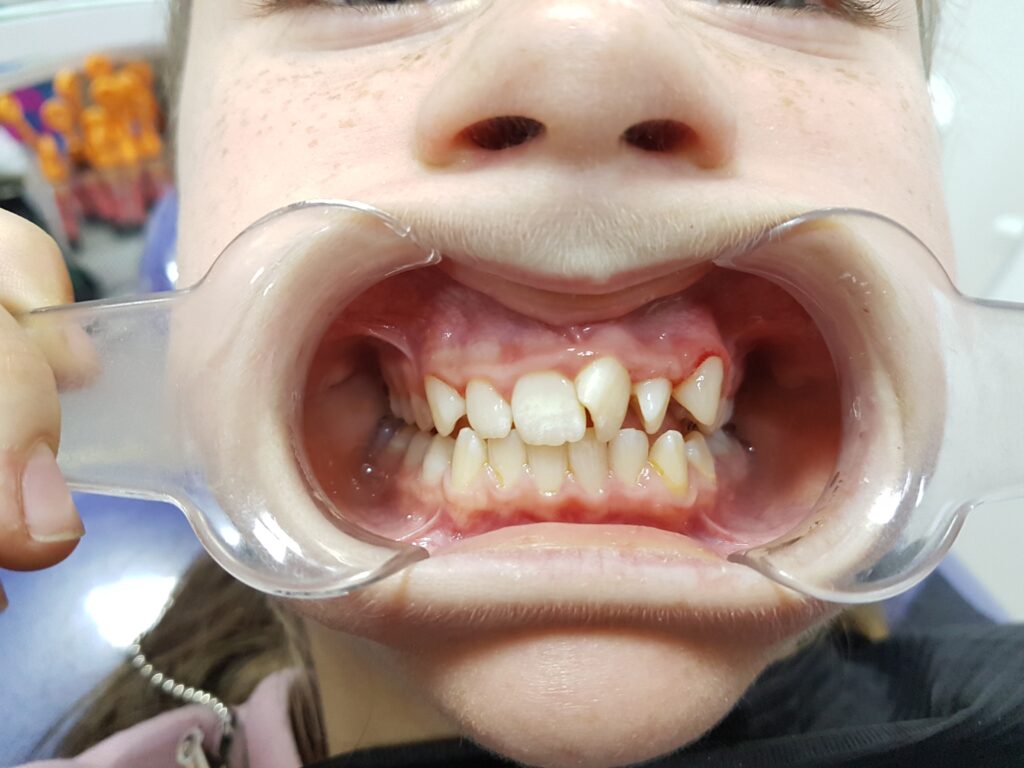
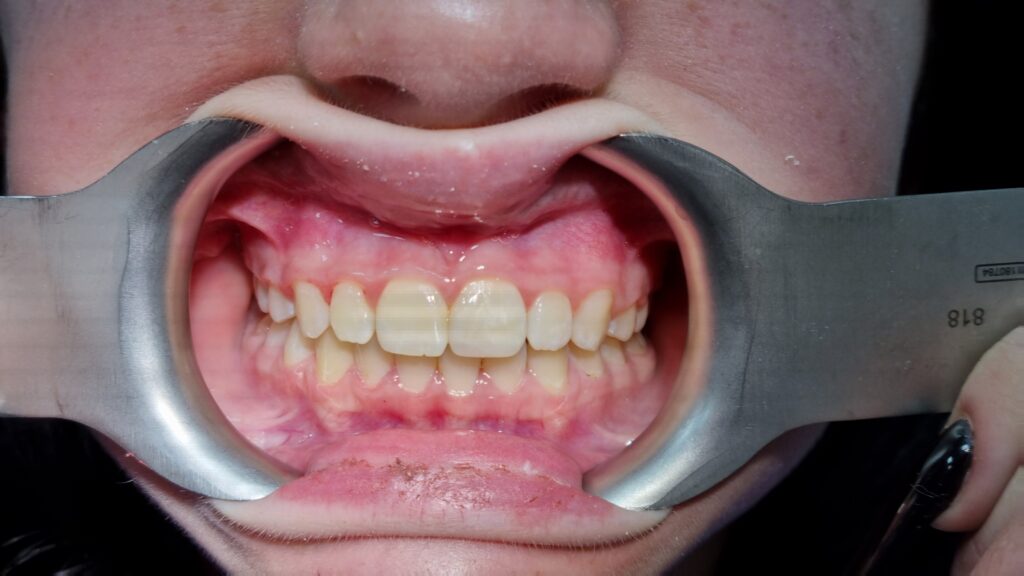
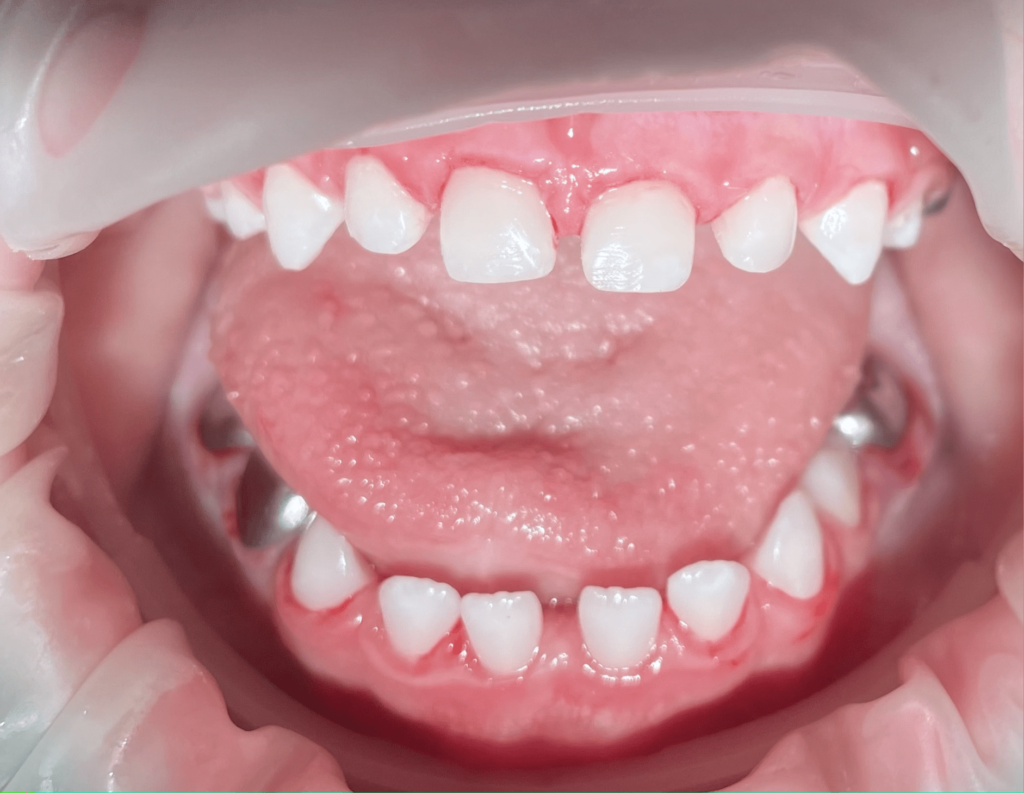
An orthodontic consultation is recommended not only when teeth are visibly crooked. It is also worth booking an appointment in the case of crowded teeth, gaps between teeth, difficulties maintaining hygiene or suspected malocclusion.
You should not diagnose a malocclusion yourself based on photos from the internet. An orthodontist in Krakow assesses the problem during an examination and, if the situation requires it, recommends orthodontic diagnostics. In children, parents may notice uneven tooth eruption, a habit of mouth breathing or difficulty biting properly. In adults, reasons for a visit may also include tooth wear, tension in the chewing muscles or dissatisfaction with the alignment of their smile.
Bruxism, meaning habitual clenching or grinding of the teeth, as well as symptoms in the temporomandibular joint area, require separate assessment. Not every such issue results from a malocclusion, and not all of them require braces.
The most common malocclusions and dental irregularities
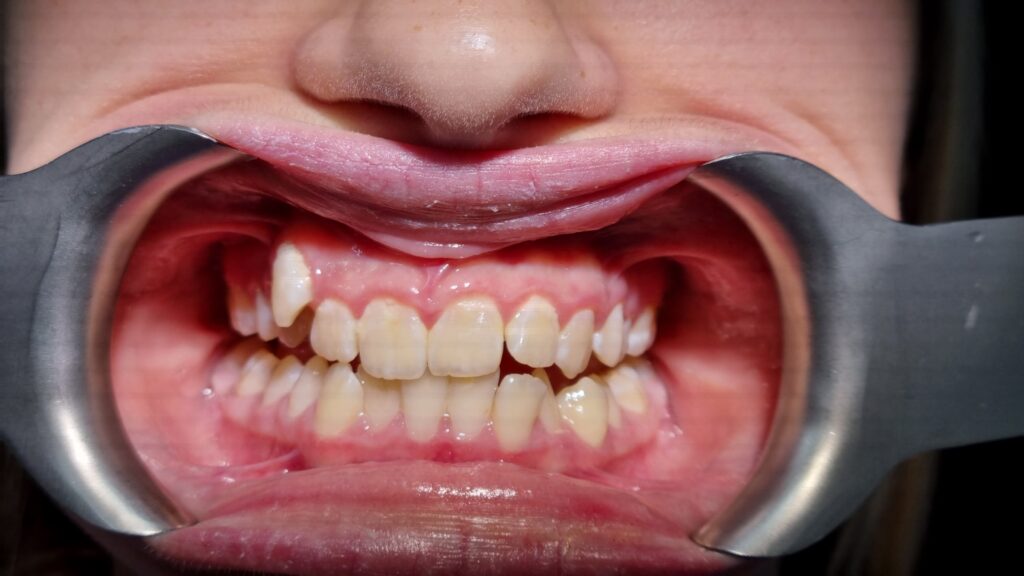
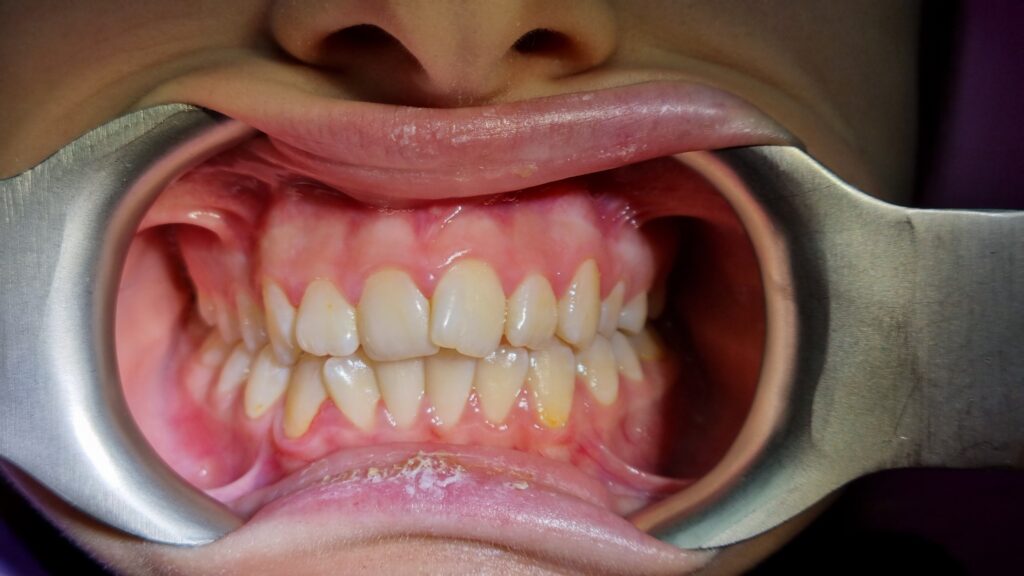
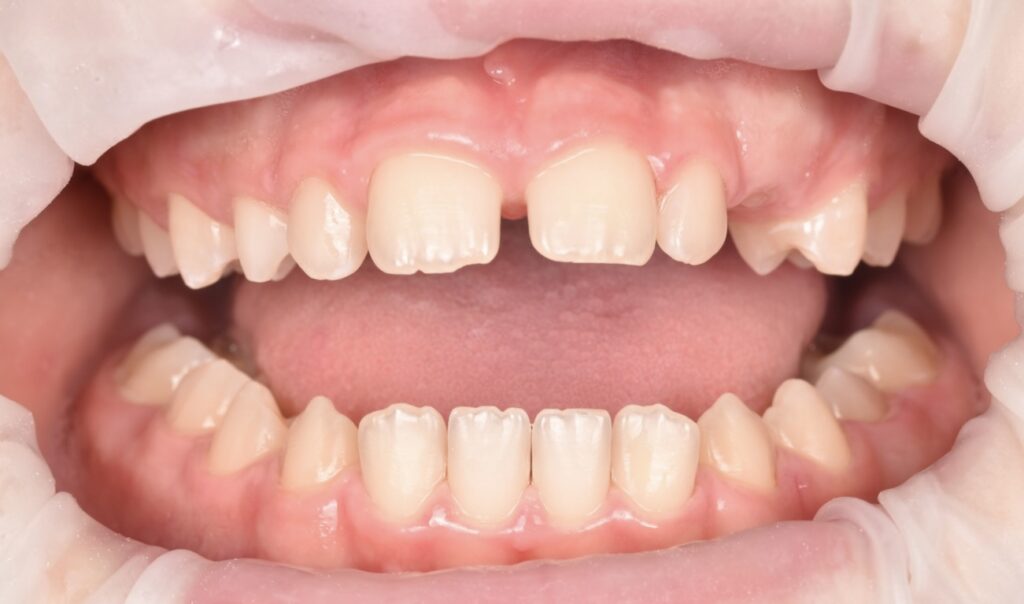
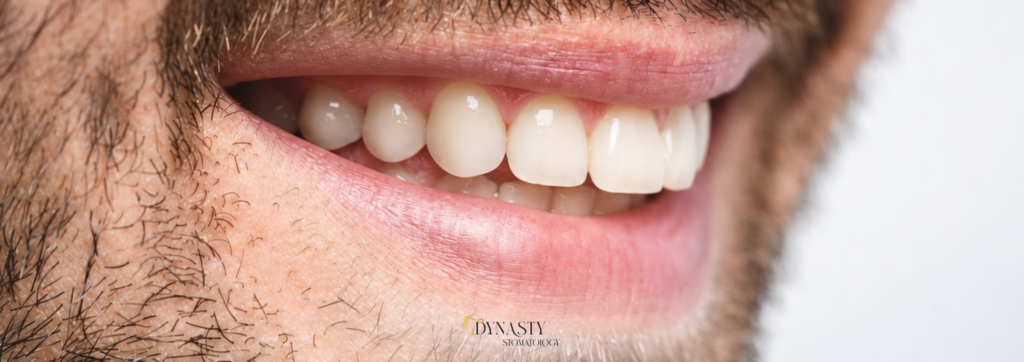
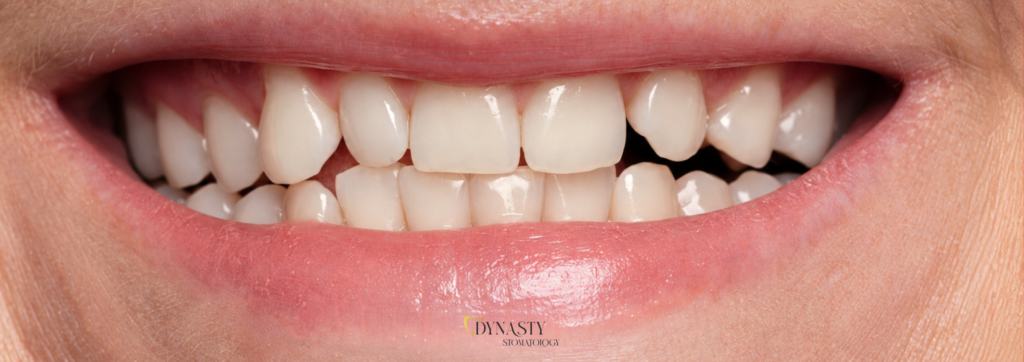
Crowding means that there is not enough room in the dental arch for the teeth to align properly. Spacing, on the other hand, refers to visible gaps between teeth. Both irregularities can vary in severity and have different causes.
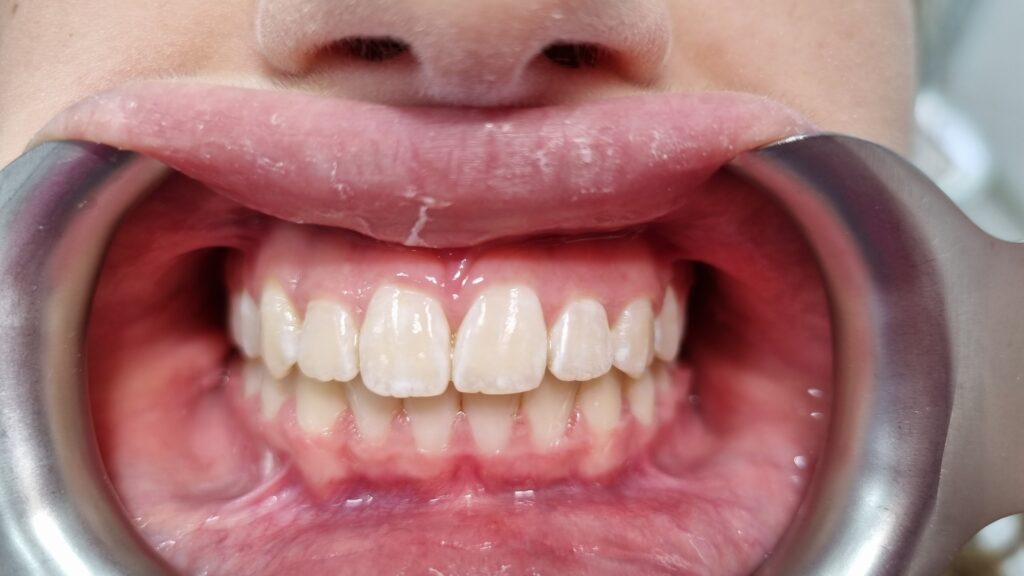
A crossbite occurs when some upper teeth overlap incorrectly in relation to the lower teeth. In a deep bite, the upper teeth excessively cover the lower teeth, while in an open bite there is a gap between selected teeth despite the jaws being closed. The method of treatment always depends on an individual diagnosis.
Why is it worth correcting malocclusions?
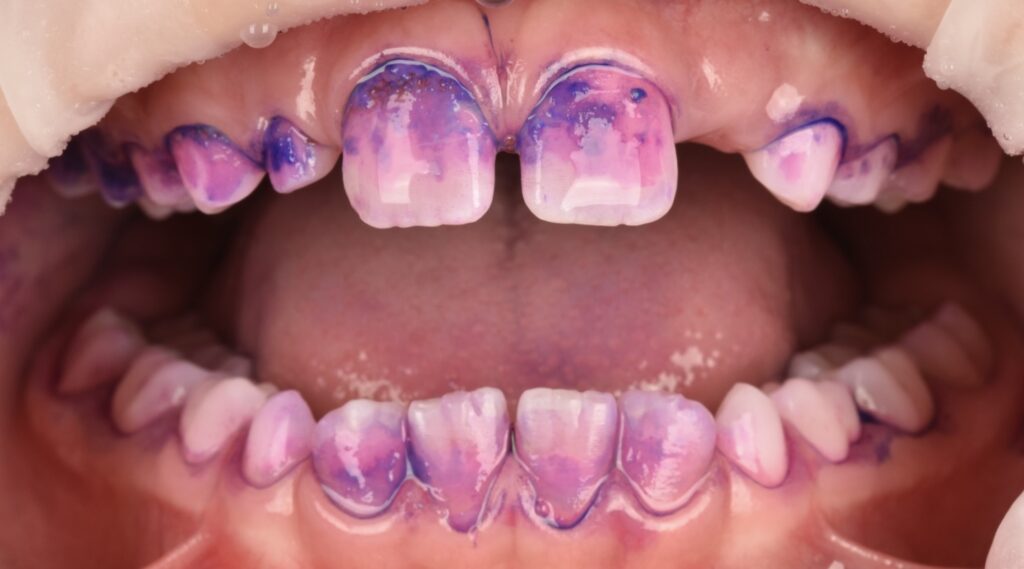
Correcting a malocclusion can make it easier to brush thoroughly and clean between the teeth. When access to certain tooth surfaces is difficult, everyday oral hygiene becomes less precise, which promotes the accumulation of dental plaque.
Treatment for malocclusions may also improve the appearance of the smile and patient comfort. However, it is not a promise of one identical result for everyone. Before treatment begins, the dentist discusses realistic treatment goals, limitations and the need to maintain the result with retention.
Orthodontist for children and adults – when should treatment begin?
Orthodontic treatment can be carried out in both children and adults, but the treatment plan differs depending on age and the stage of bite development. The best time to begin orthodontic treatment in Krakow is determined by the dentist after an examination, rather than according to one universal age.
For children, orthodontic prevention and monitoring tooth development are important. For teenagers, treatment is often possible during the period of active growth. For adults, an orthodontist for adults in Krakow assesses not only the bite, but also the condition of the gums, the bone around the teeth, existing fillings, crowns or missing teeth.
A child’s first orthodontic consultation
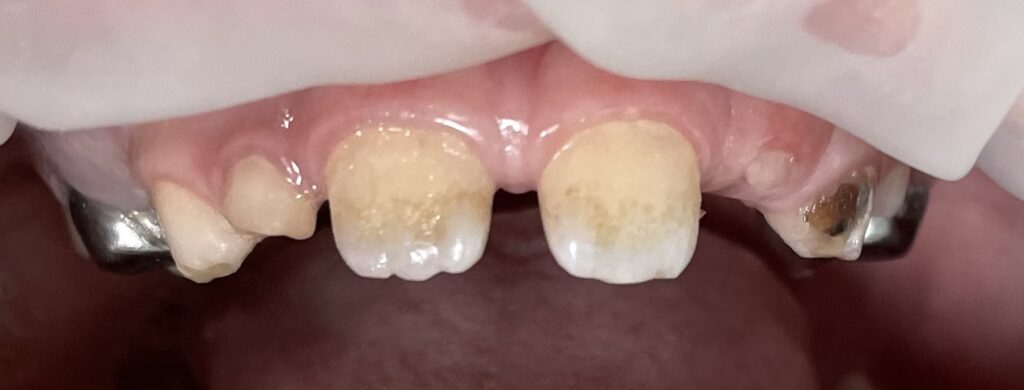
A child’s first orthodontic consultation is an assessment of tooth and bite development, not an automatic decision to fit braces. The dentist checks whether teeth are erupting correctly and whether there are signs that should be monitored or treated earlier.
An early assessment can help plan further check-ups and avoid overlooking problems that develop as the child grows. For the appointment, a parent can prepare information about previous dental treatment, dental injuries and any observed habits.
Orthodontic treatment for adults
An adult patient can begin orthodontic treatment after individual qualification. Before selecting a method, the dentist assesses the condition of the teeth, gums and bite, as well as needs related to appearance and the organisation of everyday life.
For people who are professionally active, the discreet nature of a solution, the option to remove aligners or the way follow-up appointments are planned may be important. Before treatment, active tooth decay and gum inflammation should be treated. Orthodontics does not replace routine dental care – it is part of it.
Which orthodontic braces should you choose?
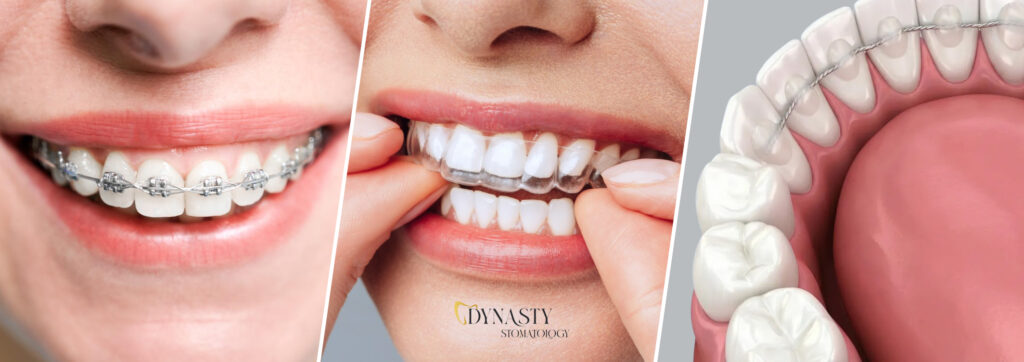
The choice of orthodontic braces is based on the diagnosis, type of malocclusion, condition of the oral cavity, hygiene, lifestyle and the patient’s budget. Fixed braces, removable braces and orthodontic aligners have different uses, so the decision is made together with the dentist after the treatment plan has been presented.
| Method |
Who it may be considered for |
Can it be removed? |
Appearance and hygiene |
Check-ups and limitations |
| Removable braces |
Most often children and teenagers during bite development |
Yes |
Easier brushing after removing the appliance |
Requires consistent wear as recommended |
| Fixed braces |
Teenagers and adults, including those with more complex malocclusions |
No |
Requires thorough cleaning of brackets and the areas around them |
Regular appointments are necessary to monitor treatment |
| Orthodontic aligners |
Selected patients qualified by an orthodontist |
Yes |
Clear and without metal components; teeth should be brushed before putting them in |
Effectiveness depends on regular use according to the plan |
Removable orthodontic braces and retention
Removable braces are mainly used for children and teenagers, especially during the eruption of permanent teeth. The patient can put them in and take them out independently, but the success of treatment depends on wearing them consistently as instructed by the orthodontist.
After active treatment is completed, retention is necessary – the stage of maintaining the achieved tooth alignment. Retainers often take a removable form. Their purpose is not to continue straightening the teeth, but to stabilise the treatment result.
Fixed braces or Orthocaps aligners?
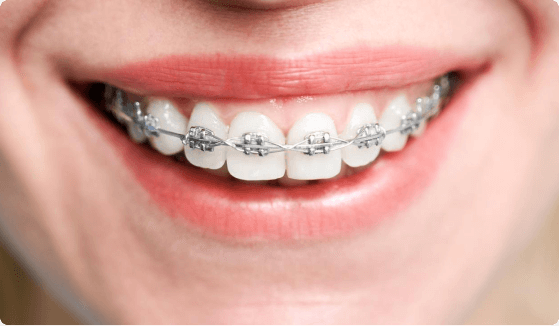
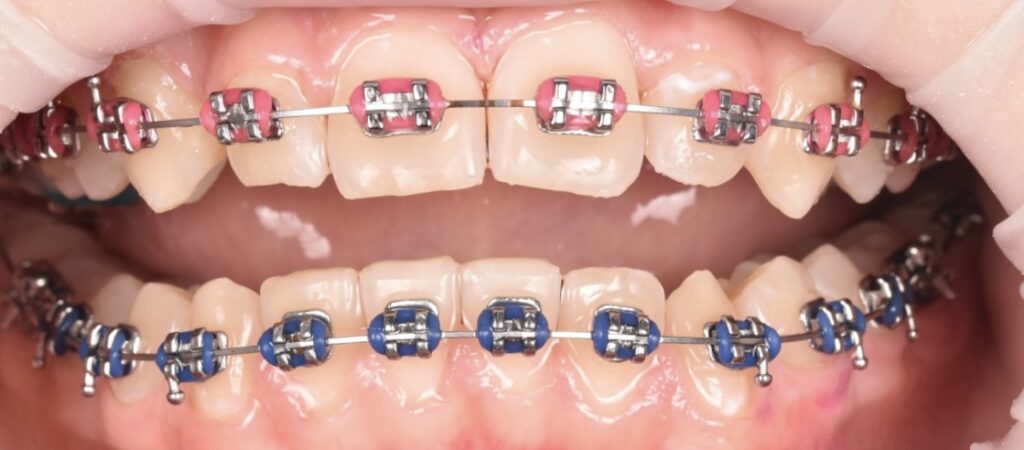
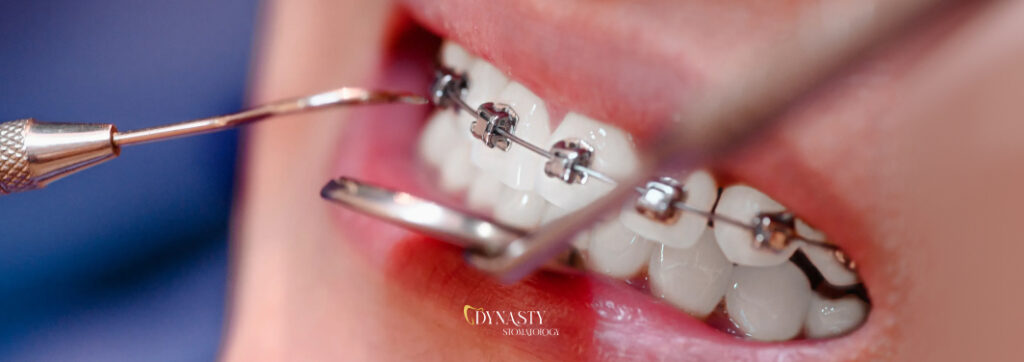
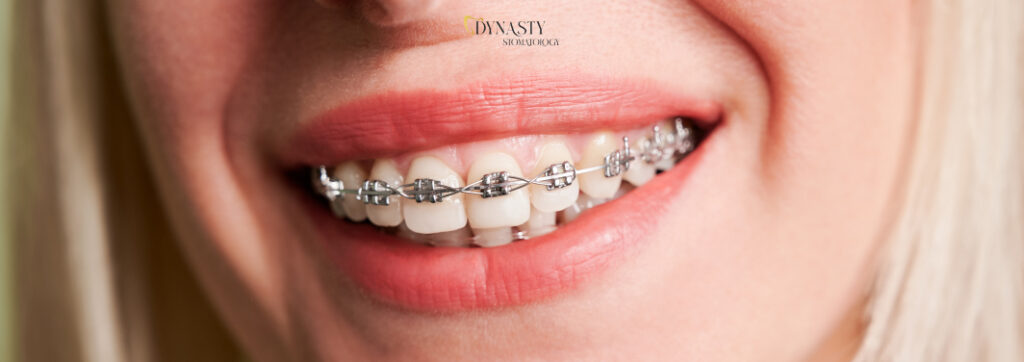
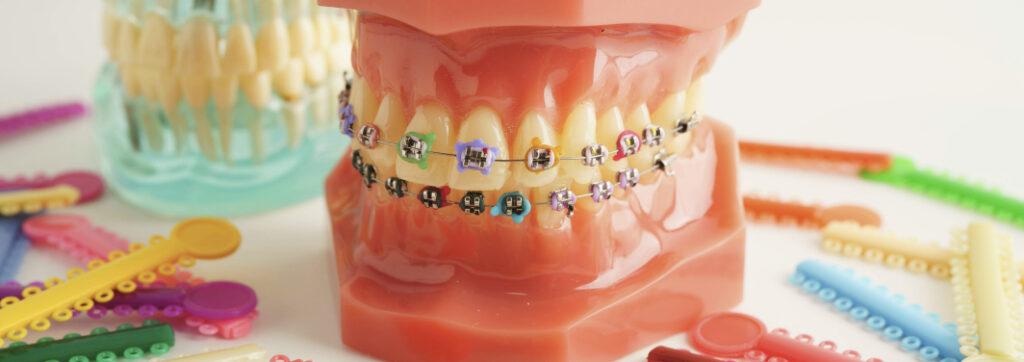
Fixed braces are permanently bonded to the teeth and may be considered for more severe or complex malocclusions. The brackets are connected by an orthodontic wire, and the dentist changes brace components during scheduled check-ups.
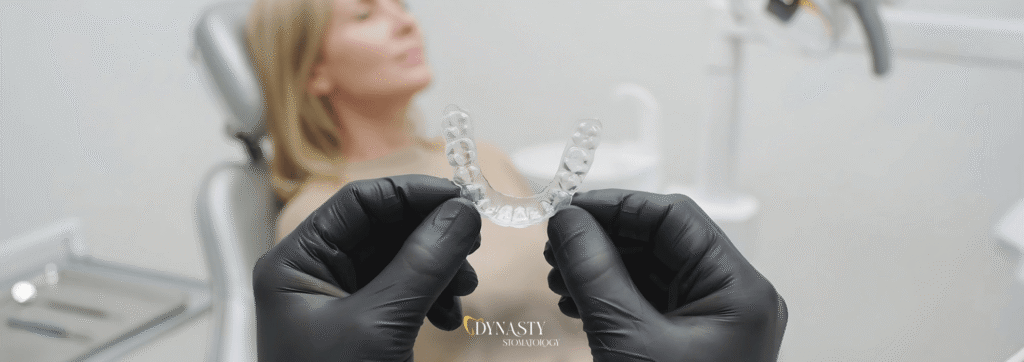
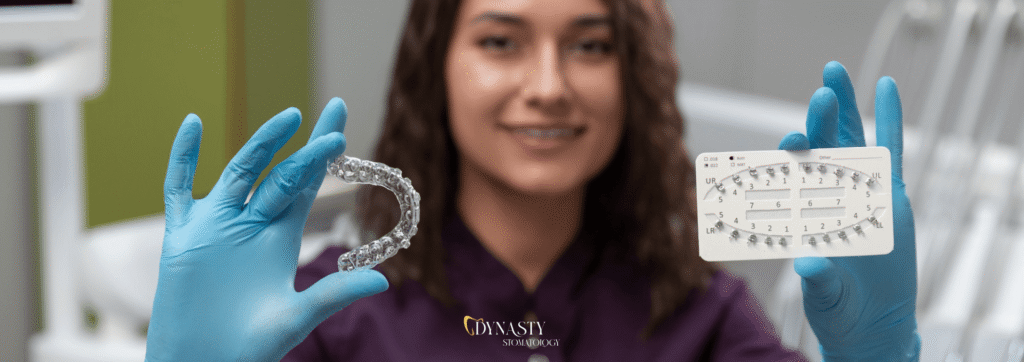
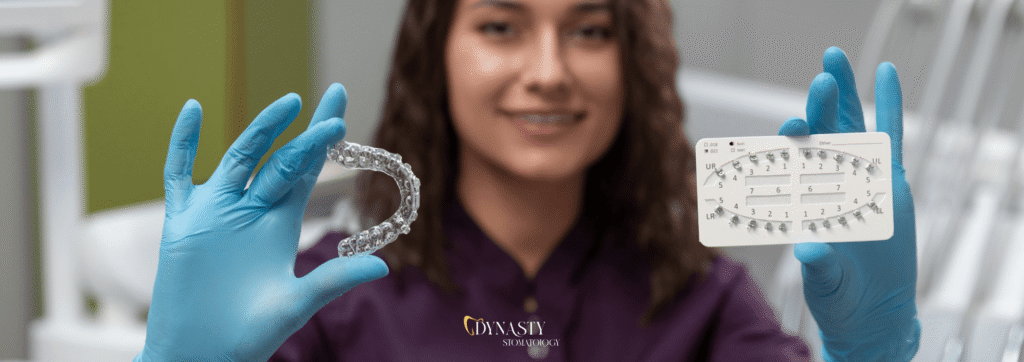
Orthodontic aligners are custom-made and can be removed, including for meals and oral hygiene. The name Orthocaps refers to a specific aligner system, but the availability of a particular system and eligibility for treatment should be confirmed directly during a consultation at Dynasty Stomatology. What matters most is not the method’s logo, but its safety and suitability for the diagnosed condition.
What does orthodontic treatment in Krakow involve?
Orthodontic treatment in Krakow usually begins with a consultation and diagnostics, after which the dentist prepares an individual treatment plan. The next stages include fitting braces or issuing aligners, regular check-ups and retention after active treatment is completed.
- Consultation – a discussion of the problem, an oral examination and a review of treatment options.
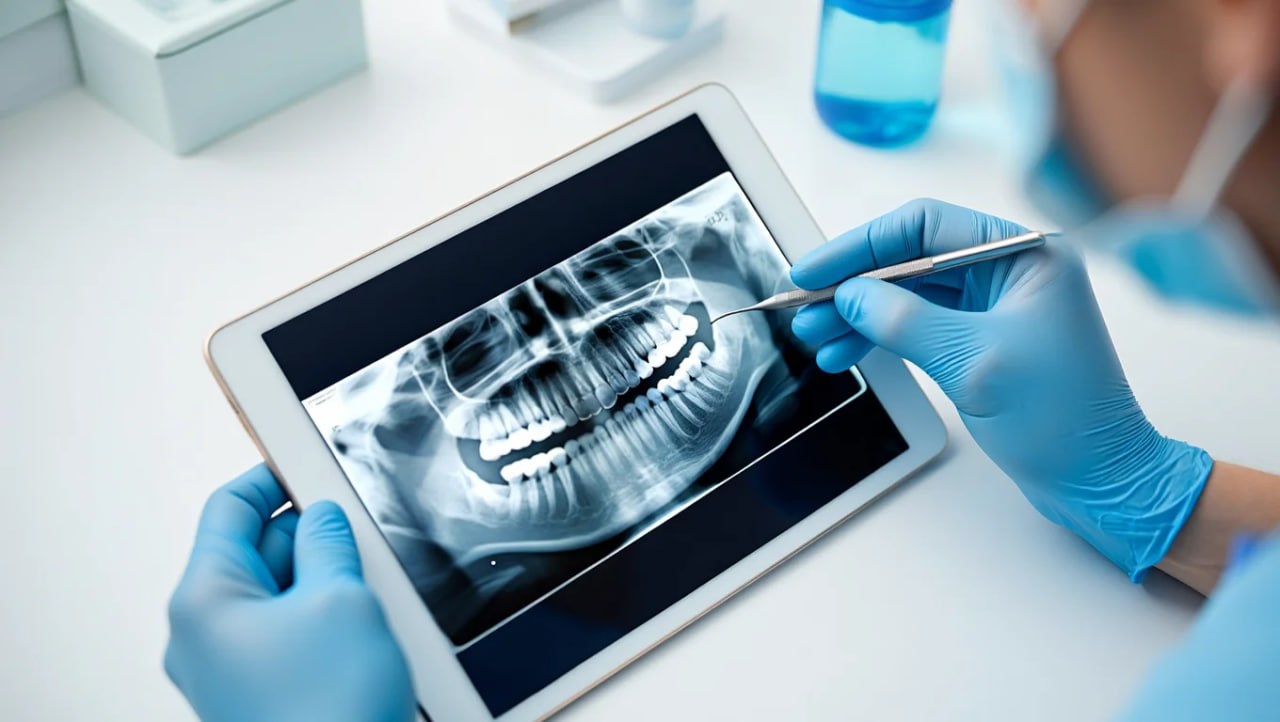
- Orthodontic diagnostics – the dentist selects the scope of examinations; if needed, X-rays, scans or dental models may be helpful.
- Treatment plan – the patient receives information about the proposed method, stages, hygiene, check-ups and costs.
- Active treatment – braces or aligners are monitored and adjusted according to the plan.
- Retention – after active tooth movement, solutions are used to help maintain the treatment result.
Diagnostics and an individual treatment plan
Orthodontic diagnostics makes it possible to determine what needs correction and whether other dental procedures are necessary before treatment. The orthodontist assesses tooth alignment, bite relationships, the condition of the gums and teeth, and the patient’s expectations.
It is worth preparing questions about the treatment method, hygiene, follow-up appointments, retention and expected costs. If the patient has previous X-rays, treatment records or information about general health conditions, they should provide them to the dentist.
Fixed brace check-ups and treatment changes
With fixed braces, brackets are bonded to the tooth surfaces, and the orthodontic wire applies planned forces needed to change tooth alignment. Ligatures, meaning the elements that hold the wire to the brackets, and other brace components may be changed during appointments.
Check-ups are not an addition to treatment but an important part of it. The dentist assesses progress, the condition of the braces, hygiene and any irritation. The patient should report a damaged brace component, significant discomfort or difficulty maintaining hygiene in advance.
How long do you wear orthodontic braces and how should you care for them?
How long orthodontic braces need to be worn depends on the type and complexity of the malocclusion, the selected method and patient cooperation. An exact schedule can only be determined after diagnostics and preparation of the treatment plan.
The course of treatment is affected by regular check-ups, following recommendations for aligners or removable braces, gum health and daily hygiene. Shortening the intervals between aligner changes on your own, missing check-ups or repairing braces at home can disrupt treatment.
Retention is necessary after fixed braces are removed. Teeth have a natural tendency to shift, which is why retainers should be worn as recommended by the dentist.
Oral hygiene during treatment
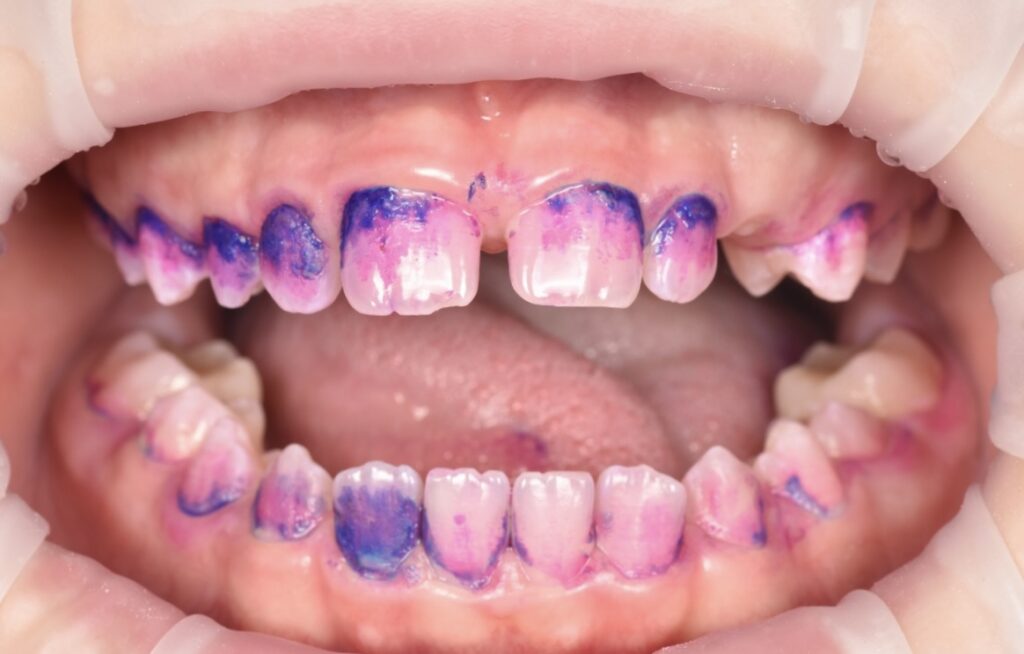
When wearing braces, regular tooth brushing, cleaning between the teeth and dental check-ups are particularly important. With fixed braces, food debris can become trapped more easily around brackets and wires, so these areas need to be cleaned thoroughly but gently.
A practical daily routine includes:
- brushing your teeth after meals or as soon as possible,
- thoroughly cleaning around brackets and along the gumline,
- cleaning between the teeth using appropriate accessories,
- removing aligners for eating, if recommended by the dentist,
- attending regular hygiene and dental appointments.
Recommendations for oral hygiene with braces are also provided by MouthHealthy, the educational service of the American Dental Association. Specific techniques and accessories should be selected during an appointment, as they depend on the type of braces and the condition of the gums.
Orthodontist Krakow – price list and what affects treatment costs
The cost of orthodontic treatment depends on diagnostics, the type of braces or aligners, the complexity of the malocclusion, the number of follow-up appointments and retention. The dentist and reception team can provide a reliable estimate after the consultation, once the required treatment plan is known.
| Plan element |
What it may include |
| Orthodontic consultation |
Examination, discussion of the problem and an initial assessment of treatment options |
| Diagnostics |
Imaging tests, X-rays, scans or models, depending on the indications |
| Active treatment |
Removable braces, fixed braces or aligners, according to the individual plan |
| Follow-up appointments |
Progress assessments and necessary brace adjustments |
| Retention |
Retainers or other solutions intended to maintain the result |
An orthodontist’s price list should be discussed clearly: it is worth asking whether the quoted amount includes diagnostics, check-ups, repairs, retention and any additional procedures. Current information is available on the Dynasty Stomatology price list.
Private treatment, insurance and payments
The extent of financing for orthodontic treatment depends on the type of service, the patient’s individual policy and the rules of the particular insurer. You should not assume that a specific method, diagnostics or retention is covered without confirming it in advance.
During the consultation, it is worth asking the reception team which parts of the plan are billed privately, what documents may be needed for an insurance claim and whether instalment payments are available. Dynasty Stomatology provides instalment payment options, including MediPay, MediRaty and an internal plan – terms are determined individually.
How do you choose a good orthodontist in Krakow and book an appointment?
A good orthodontist in Krakow explains the diagnosis, available methods, subsequent stages of treatment, hygiene rules and costs in a way the patient can understand. The best orthodontist is not solely a matter of reviews- it is important whether the patient has time to ask questions, receives clear information and is given a plan based on an examination.
Before booking a consultation, it is worth checking whether the clinic provides on-site diagnostics, how it organises check-ups and whether it presents an up-to-date price list. Also ask what retention looks like after treatment and what to do if the braces need repair.
After fixed braces are removed, the dentist may recommend dental hygiene treatment, meaning professional removal of tartar and deposits, or earlier dental treatment if required by the condition of the teeth. Such measures help ensure a safe transition to the stage of maintaining the results.
At Dynasty Stomatology, we see patients at ul. Romanowicza 1/LU3 and ul. Romanowicza 4B in Krakow. When booking, you can indicate your preferred language of communication -Polish, Ukrainian, English or Russian – so that the reception team can prepare accordingly. Book an orthodontic consultation or call +48 123 002 806.