



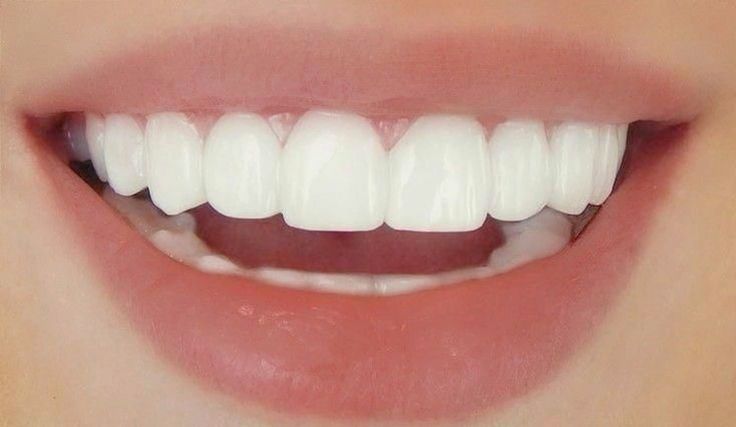
Are you dreaming of achieving that perfect "Hollywood smile" like your favorite movie star? Well, the good news is you can make your wish come true thanks to dental veneers. They not only enhance your appearance, but they improve front teeth bite functionality after your dental treatment. Hollywood smile refers to comprehensive procedure that involves dental veneers to improve the shape and color of your teeth.
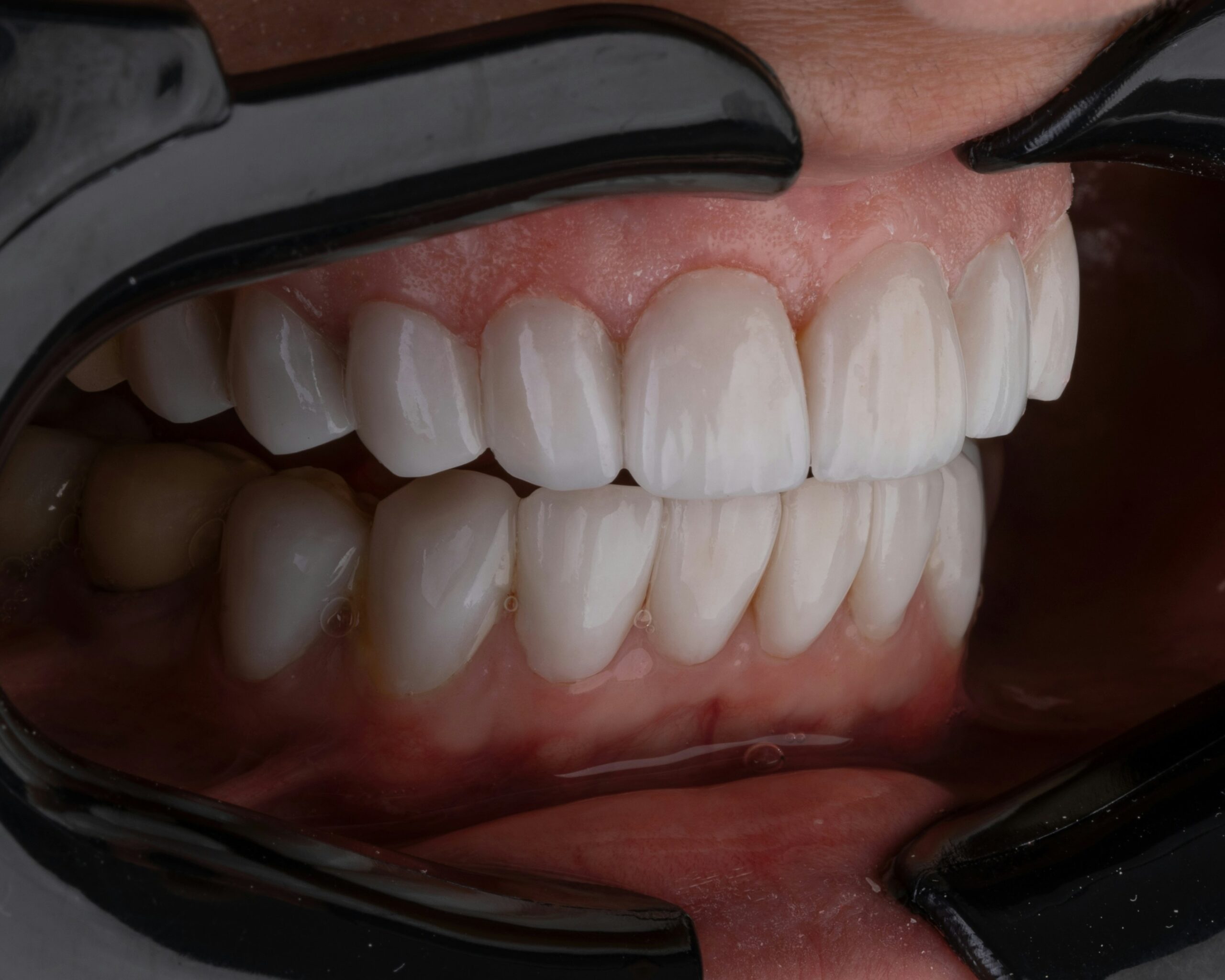

Ceramic veneers

Composite veneers

No-prep veneers
Why choose Dynasty Stomatology for your Hollywood smile procedure?
Dynasty Stomatology is a highly esteemed clinic for top- quality dental implants, orthodontic treatment and cosmetic dental procedures in Krakow, Poland. Its dental lab is equipped with modern equipment to make every patient comfortable.
When it comes to comprehensive dental care and treatment, the specialists here ensure patients get the best personalized treatment according to their needs. It is one of the best dental clinics in the region to get care and treatments at a reasonable price. If you have any questions about how veneers are made, their dental care and your oral health, do not hesitate to contact our specialists today!
Price: Veneers in Krakow
-
Dentist consultation
250 PLN -
Projekt “Hollywood smile” (with presentation)
13 200 PLN -
Veneer E-max
2 800 PLN -
3D scan (one jaw)
200 PLN -
Tomography of 1 jaw
250 PLN -
Tomography of 2 jaws
350 PLN
How the Dynasty Stomatology dental clinic's loyalty program works
Learn more about the loyalty program
Step 01
Visit the clinic and scan the QR code at the reception desk
Step 02
Register online — enter your details
Step 03
Receive and accumulate points after each visit
Ready for a Hollywood smile?
Make an appointment!
By clicking the button, you agree to the processing of personal data in accordance with the privacy policy.
Frequently asked questions about dental veneers
-
Visit your dentist for a consultation to know whether you are an eligible candidate for permanent or temporary veneers.
-
Brush your teeth properly, make a list of the questions to ask, carry dental reports, if any before the appointment.
-
Your doctor will evaluate your teeth during the initial consultation. On the date of the appointment he trims the tooth, takes an impression, and finally bonds the veneer to the tooth.
-
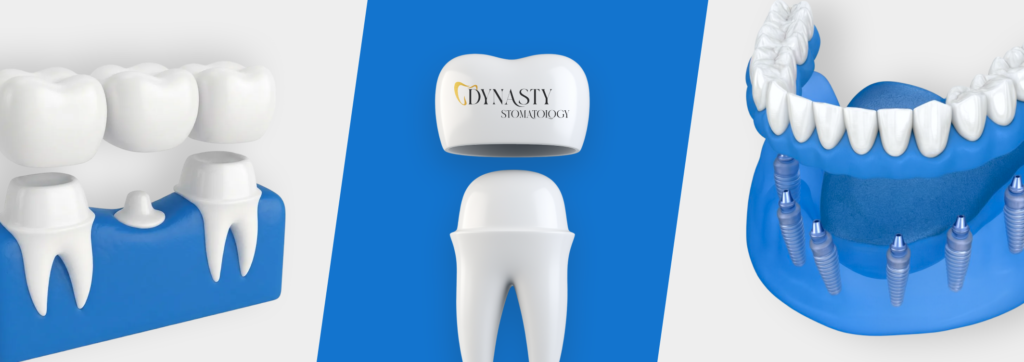
Veneers are used to cover the front teeth, dental crowns are used for covering the entire tooth, and implants are used to replace gaps or missing teeth.
-
Brush and floss your teeth twice daily. If your dentist has given you special instructions, follow them. Ensure you go for regular checks every 6 months.
-
Dental veneers are thin, custom-made shells — typically made of porcelain or composite resin — that are bonded to the front surface of your teeth to improve their appearance. They can correct discoloration, chips, gaps, or uneven shapes, giving you a natural-looking, beautiful smile. The procedure usually requires 2–3 visits: consultation, tooth preparation, and final placement. The cost varies depending on the material and number of teeth involved, so we encourage you to book a consultation at our clinic for a personalized treatment plan and pricing.
-
Porcelain veneers typically last 10 to 15 years or even longer with proper care, while composite veneers generally last 5 to 7 years. Their lifespan depends on your oral hygiene habits, diet, and whether you avoid habits like teeth grinding or biting hard objects. Regular dental check-ups and good daily brushing and flossing will help your veneers stay beautiful for as long as possible.
-
The cost of veneers in Poland typically ranges from 800 to 2,500 PLN (approximately €180–€550) per tooth, depending on the type chosen. Porcelain veneers are at the higher end of this range, while composite veneers are more affordable. Poland offers significantly lower prices compared to Western Europe or the US — often 50–70% less — without compromising on quality. For an exact quote tailored to your needs, we invite you to book a consultation at our clinic, where we'll assess your smile and recommend the best option for you.
-
Veneers are a safe and effective option for improving the appearance of your teeth — they can correct discoloration, chips, gaps, and minor misalignment while preserving most of your natural tooth structure. A thin layer of enamel is typically removed to place the veneer, but this is minimal and the veneer itself acts as a protective shell for the front surface of your tooth. With proper care and good oral hygiene, high-quality porcelain veneers can last 10–15 years or even longer. During a consultation at our clinic, we'll assess whether veneers are the best solution for your individual needs and ensure your teeth remain healthy throughout the process.
-
The cost of a single tooth veneer at our clinic depends on the type of material used. Porcelain veneers typically range from 2,000 to 4,000 PLN per tooth, while composite veneers are more affordable, starting from around 800 to 1,500 PLN per tooth. We recommend scheduling a consultation so we can assess your individual needs and provide you with an exact price tailored to your treatment plan.
Doctors who perform dental veneers
View all doctors
Borys Minakov
Prosthodontist
His approach focuses on individually tailored treatment plans that not only solve current issues but also prevent future ones. This helps patients ...

Dmytro Ostrovskyi
Prosthodontist
Over 30 hands-on courses completed in 9 years of practice. A comprehensive approach guarantees stable, durable, and predictable results.
Reviews on dental veneers in Krakow
Expert articles on the topic
View all blog-
19.08.2026
2
10 min. read
What to choose veneers or crowns – which solution will be better for you?
Veneers or Crowns: The Key Difference A veneer mainly covers the visible front surface of a tooth and is primarily…
Read more -
21.01.2026
506
6 min. read
The Best Dental Restoration Options for Damaged Teeth
When something happens to a tooth, the first reaction is often anxiety. People often assume that treatment will be expensive…
Read more -
06.01.2026
490
8 min. read
Dental Prosthetics – The Secret to a Beautiful Smile
A healthy smile isn’t just about looking perfect. It’s about how comfortable you are when you eat, how freely you speak, and how confident you feel when you smile. After all, if you have chips, cracks, or missing teeth, your lifestyle changes. That’s why dental prosthetics plays a crucial role in restoring your sense of […]
Read more -
09.12.2025
1295
5 min. read
What is Dental Splinting and How It Can Save a Loose Tooth?
Loose teeth in adults are often a sign that something important is changing in your mouth. This causes a lot…
Read more -
31.07.2025
1868
6 min. read
What is Inlay, Onlay and Overlay in dental restoration – pros & cons, purpose and cost
In modern dentistry, there are several advanced options for restoring damaged teeth with precision and durability. Inlay, onlay, and overlay…
Read more -
24.07.2025
1101
10 min. read
Dental Crowns: Types, Costs, and the Procedure
Dental crowns play a vital role in restoring the strength, function, and appearance of damaged or weakened teeth. Whether due…
Read more
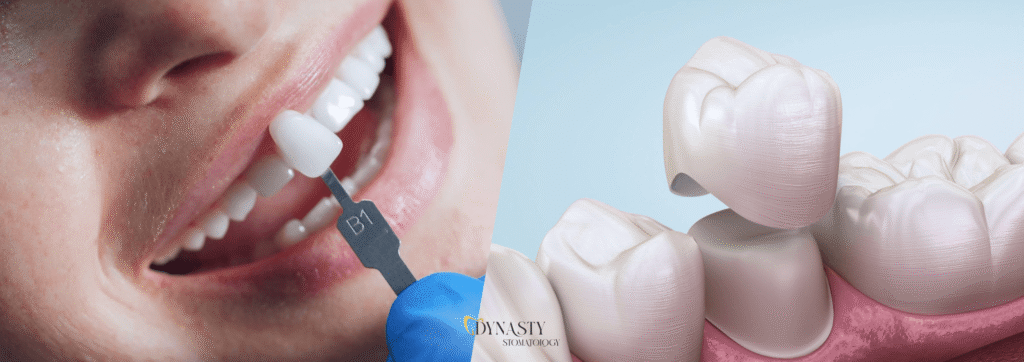

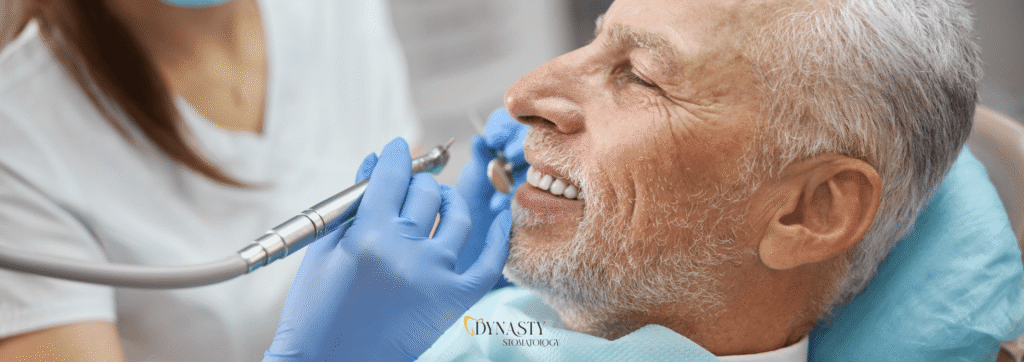




Dental Veneers in Kraków – Types, Cost, and Consultation
Veneers are thin shells bonded to the front surface of teeth to improve their colour, shape, and proportions. They are used for cosmetic smile makeovers in adult patients in Kraków, including those who prefer communication in Polish, Ukrainian, Russian, or English. At Dynasty Stomatology, the treatment plan begins with a consultation, diagnostics, and a discussion of realistic possibilities.
Dental veneers in Kraków – what does a smile makeover involve?
Dental veneers are very thin cosmetic restorations bonded to the visible front part of a tooth. They do not straighten the bite or treat tooth decay, but they can change the appearance of teeth in the smile zone.
Patients usually seek veneers in Kraków when they are concerned about the colour of their enamel, uneven edges of their front teeth, minor damage, or gaps between teeth. A well-planned smile makeover should look natural: teeth do not need to be bright white or identical for the result to be aesthetically pleasing.
At Dynasty Stomatology, before treatment begins, we carry out on-site diagnostics, including photographs, digital intraoral scans and, when needed, X-rays or CT scans. This allows us to plan tooth proportions and discuss the scope of treatment without guesswork.
What imperfections can veneers conceal?
Veneers work well for discolouration that does not respond satisfactorily to whitening, for example after dental trauma or in cases of deep enamel colour changes. They can also correct minor chips, surface cracks, and uneven incisal edges.
Common indications include small diastemas, meaning gaps between teeth, as well as teeth that are too short or disproportionate in shape. For example, when two front teeth have worn, uneven edges, veneers can help restore a consistent contour without extensive reconstruction of the entire tooth crown.
Not every aesthetic issue should be concealed with a veneer. Significant crowding often requires orthodontic treatment first, while a severely damaged tooth may need a restoration or a dental crown.
Who are veneers a good solution for?
The best candidate is someone with treated teeth and healthy gums who wants to permanently improve the appearance of visible teeth. Veneers may be chosen for a single correction or for changing several teeth in the upper or lower arch.
Before treatment, we analyse the condition of the enamel, the bite, the way the teeth are clenched, their natural colour, and the desired result. A patient looking for a subtle improvement in colour and shape usually needs a different solution than someone planning a full smile makeover.
Realistic expectations are also important. A veneer should harmonise with facial features, gums, and the remaining teeth rather than resemble a ready-made, uniform template.
Types of veneers: porcelain, composite, and no-prep veneers
The most commonly used options are porcelain and composite veneers. They differ in material, fabrication method, resistance to staining, and the extent of in-clinic work required. Minimally invasive veneers, known as no-prep veneers, are also available, but they are not a universal solution.
| Feature | Porcelain veneers | Composite veneers | No-prep veneers |
|---|---|---|---|
| Material | Ceramic made in a laboratory | Composite resin shaped by the dentist | Usually very thin ceramic |
| Aesthetics | High translucency and stable colour | Aesthetic result for smaller corrections | Natural effect under suitable conditions |
| Repair | Usually requires assessment and prosthetic work | Often easier to repair locally | Depends on the type of damage |
| Intervention in the tooth | Often minor surface preparation | Usually conservative preparation | No preparation only in selected cases |
| Treatment time | Requires a laboratory stage | Sometimes possible in a shorter process | Requires careful planning |
Temporary veneers may be used after teeth have been prepared, before the final porcelain restorations are fitted. They protect prepared surfaces and allow the patient to get used to the planned tooth shape.
Porcelain veneers – aesthetics and colour stability
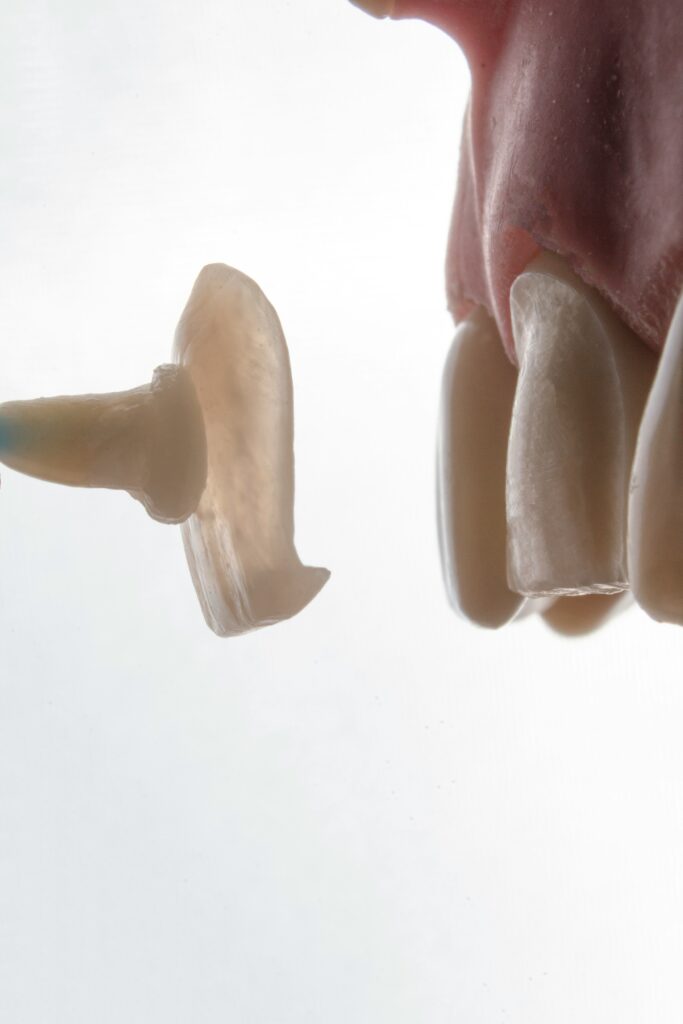
Porcelain veneers are individually made in a dental laboratory based on a scan or impressions. Ceramic closely replicates the natural translucency of enamel, which is why it looks particularly good on front teeth.
Porcelain retains its colour better than composite and makes it possible to reproduce the tooth surface, edge, and proportions with great precision. It is a common choice for more substantial colour changes or when the patient plans to correct several teeth in the smile zone.
The process involves several stages. These include the design, laboratory work, try-in, and final cementation, meaning the permanent bonding of the veneer to the tooth with a special material.
Composite veneers – when are they worth considering?
Composite veneers are made from the material also used for aesthetic tooth restorations. The dentist applies it in layers, shapes it, and cures it with light. This solution works well for minor corrections, such as closing a small gap, rebuilding a chipped edge, or improving asymmetry in a single tooth.
One of their strengths is that minor damage can be repaired more easily. However, composite requires regular hygiene appointments and polishing because, over time, it is more likely than porcelain to accumulate deposits and stains from coffee, tea, or tobacco use.
Cost should not be the only criterion. For a small correction, composite can be a sensible option, whereas for a comprehensive smile makeover, precise porcelain restorations often work better.
Are no-prep veneers possible?
Yes, no-prep veneers are possible, but only when the structure of the teeth leaves enough room for an additional layer of material. They are most often considered for teeth that appear narrow, short, or slightly set back.
No preparation is not automatically an advantage. If a thin veneer is placed on a tooth with normal volume, the result may be too bulky and the smile may look less natural. In some cases, minimal enamel preparation provides better proportions and a more stable bond.
How are veneers fitted step by step?
Getting veneers is a planned process, not a one-time cosmetic procedure. The number of appointments depends mainly on the type of restoration, the number of teeth, and whether prior treatment is needed.
- Discussion of expectations and an oral examination.
- Diagnostics, photographs, and a scan or impressions.
- Designing the shape and colour of the future teeth.
- Tooth preparation, if needed.
- Try-in of the restorations and assessment of aesthetics.
- Fitting the veneers and hygiene instructions.
- Follow-up appointment.
Careful planning reduces the risk of making rushed decisions about tooth colour or length during the final appointment. The patient has the opportunity to provide feedback at the try-in stage.
Consultation, examination, and digital smile planning
The first dental consultation includes a medical interview and an assessment of the teeth, gums, and bite. The dentist asks, among other things, about teeth grinding, previous treatment, injuries, and expectations regarding smile colour.
At our Kraków clinic, we carry out digital diagnostics on site. An intraoral scan replaces traditional impression material in many situations, while photographs help plan tooth proportions in relation to the lips and face. A Digital Smile Design (DSD) can make it easier to discuss the expected result.
At this stage, we also determine the order of treatment. Tooth decay, tartar, gum inflammation, or bite problems must be addressed first, as a veneer is not a substitute for dental treatment.
Tooth preparation, try-in, and veneer fitting
With porcelain veneers, the tooth surface may be minimally prepared to make room for the ceramic. Local anaesthesia is used when necessary. Patients should not assume in advance that every stage will feel the same, as the scope of treatment depends on the individual plan.
After scanning or taking impressions, the laboratory prepares the veneers. If the teeth have been prepared, the patient receives temporary veneers. During the try-in, we check the colour, length, edge arrangement, and bite comfort together.
The final stage is cementation. The teeth are carefully isolated, and the veneers are bonded according to the procedure appropriate for the material used. After the appointment, the patient receives hygiene instructions and information about when to come for a follow-up check.
Indications and contraindications for veneers
Veneers are intended to improve the aesthetics of healthy or previously treated teeth. The health of the gums and enamel, as well as proper bite forces, always take priority over changing appearance.
When may a dentist recommend veneers?
Indications for veneers include permanent discolouration, minor cracks, worn or chipped edges, small diastemas, and differences in tooth shape. They can also be a solution for people who want to unify the colour of several visible teeth when whitening alone does not produce the expected result.
A veneer does not have to mean a complete makeover. Sometimes one or two precisely made restorations are enough to even out the smile line after an injury. At other times, the treatment plan includes several teeth to avoid differences in colour and gloss.
Good cosmetic dentistry also takes tooth function into account. The tooth must remain comfortable in the bite, and the result should match what the patient considers natural.
When should veneers be postponed or another method chosen?
Active tooth decay, bleeding gums, periodontal disease, and untreated tartar are reasons to postpone veneers. Inflammation must first be controlled and oral health stabilised.
Strong bite forces and bruxism, meaning habitual grinding or clenching of the teeth, can also be contraindications to veneers. In such cases, tooth protection needs to be assessed, and a night guard is often used after treatment.
When there is too little enamel or a tooth has extensive fillings and damage, a crown or prosthetic restoration may be a more durable solution. This is why the indications and contraindications for veneers are discussed before treatment begins, rather than after it has been completed.
Veneers in Kraków – price and what affects treatment costs
The price of veneers in Kraków is not one fixed amount, as a treatment plan may cover anything from one tooth to the entire smile zone. The quotation is prepared after diagnostics and takes into account the material, number of veneers, laboratory work, smile design, and any preparatory treatment.
| Cost factor | Why does it affect the cost? |
|---|---|
| Type of veneer | Porcelain and composite differ in material and fabrication technique |
| Number of teeth | A broader scope means more clinical and laboratory work |
| Diagnostics | Scans, photographs, and planning help prepare treatment safely |
| Temporary restorations | These may be needed after tooth preparation |
| Treatment before veneers | Hygiene appointments and treatment for decay or gums are charged separately |
| Level of complexity | Bite, asymmetry, and colour correction require a more complex plan |
It is worth checking the current veneer price list in Kraków before your appointment, but a complete estimate should concern a specific treatment plan rather than only the price of a single tooth.
Why do porcelain and composite veneers have different prices?
Porcelain veneers require collaboration between the dentist and a dental laboratory. Each restoration is designed, made, and fitted to a specific tooth, which affects both the cost and the completion time.
Composite veneers are created directly in the dental office or through a shorter clinical process. However, this does not mean they are “worse.” For a minor chip or correction of a single gap, this method can provide a functional, aesthetic result without an extensive laboratory stage.
When comparing veneer prices, it is worth asking about the full scope of treatment: diagnostics, temporary restorations, follow-up appointments, and possible repairs. An apparently lower per-tooth price does not always mean a lower cost for the entire treatment.
Are veneers covered by the NFZ or insurance?
Veneers performed solely for cosmetic smile enhancement are generally private treatment and are usually not reimbursed by the National Health Fund (NFZ). The scope of services funded by the NFZ differs from that of private cosmetic dentistry.
Private insurance also does not provide one answer for every patient. Coverage depends on the policy, limits, and provisions concerning prosthetic or cosmetic dental treatment. Before starting treatment, it is worth confirming the settlement rules with your insurer and the clinic reception desk.
Dynasty Stomatology offers the option of arranging instalment payments through MediPay, MediRaty, or an internal payment plan. Details are arranged individually after the treatment plan has been presented.
Veneer durability and aftercare
The durability of veneers depends largely on hygiene, bite forces, and everyday habits. Both porcelain veneers in Kraków and composite veneers in Kraków require care for the gums and the natural teeth around them.
Veneers do not protect against tooth decay in areas where the tooth meets the gum or an adjacent tooth. Regular check-ups help identify deposits, restoration leakage, or gum problems early.
Avoid biting very hard objects, opening packages with your teeth, and habitual nail biting. People who clench their teeth should report this issue, as a properly fitted night guard reduces excessive forces.
How should you care for veneers every day?
Veneer care includes the same basics as caring for natural teeth:
- brushing your teeth at least twice a day with a soft toothbrush;
- cleaning between the teeth every day with floss, interdental brushes, or another recommended tool;
- attending regular check-up appointments;
- having professional dental hygiene treatments, including tartar and deposit removal;
- using toothpaste and other products suited to the condition of your gums and the sensitivity of your teeth.
After composite veneers, periodic surface checks and polishing are particularly beneficial. This helps restorations retain their smoothness and aesthetic shine for longer.
Veneer consultation in Kraków – how to book an appointment?
You can request a veneer consultation in Kraków by phone or through the Dynasty Stomatology contact form. When booking, it is helpful to say whether you are interested in a single tooth, correcting discolouration, or a more extensive smile makeover, and to indicate your preferred language of communication: Polish, Ukrainian, Russian, or English.
The first appointment includes a discussion of your expectations, an examination, and a review of the diagnostics needed to prepare a treatment plan. If you have previous X-rays or information about orthodontic treatment, bruxism, or night guards you use, bring them with you. This will help the dentist assess your situation.
Dynasty Stomatology sees patients in Kraków at ul. Romanowicza 1/LU3 and ul. Romanowicza 4B. Book an appointment at Dynasty Stomatology to receive a treatment plan, diagnostic scope, and transparent cost estimate before deciding on veneers.