
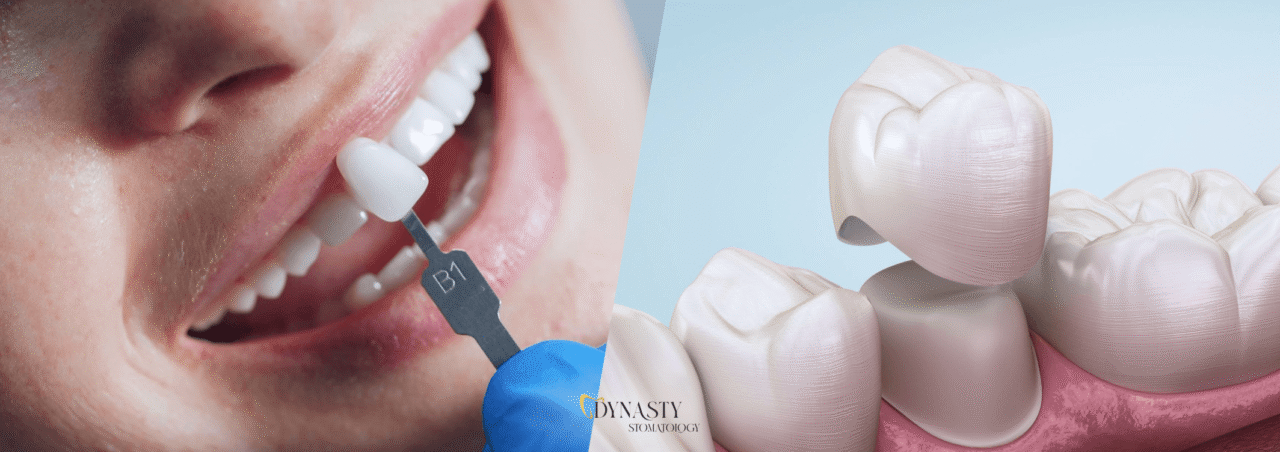
Veneers or Crowns: The Key Difference
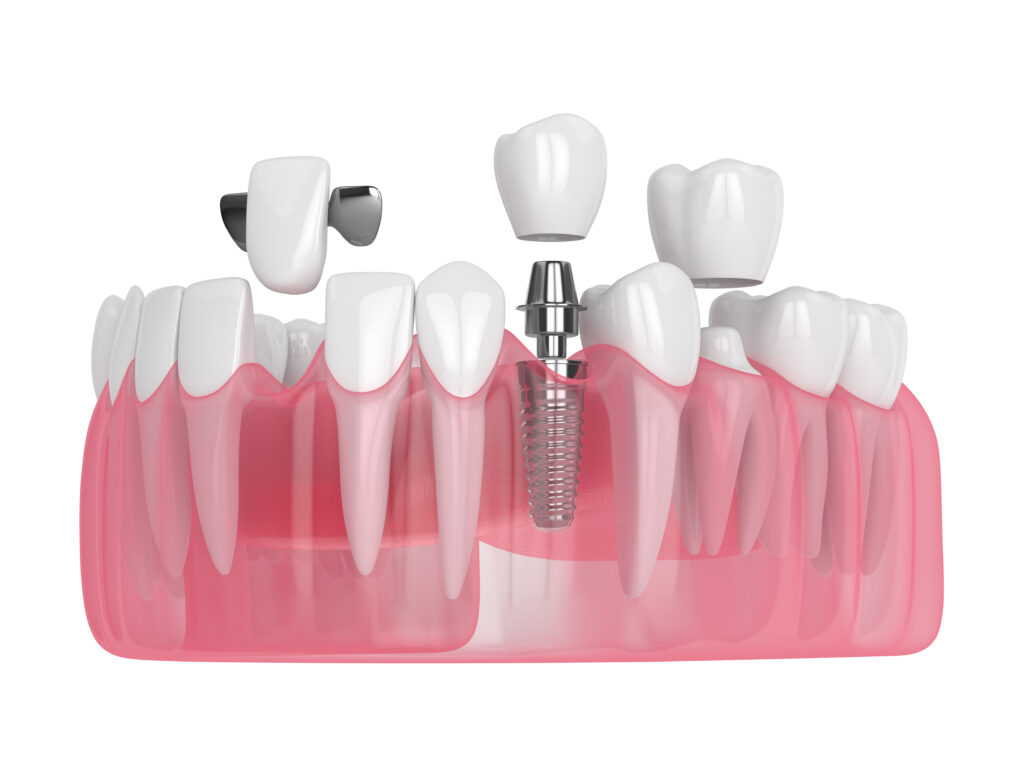
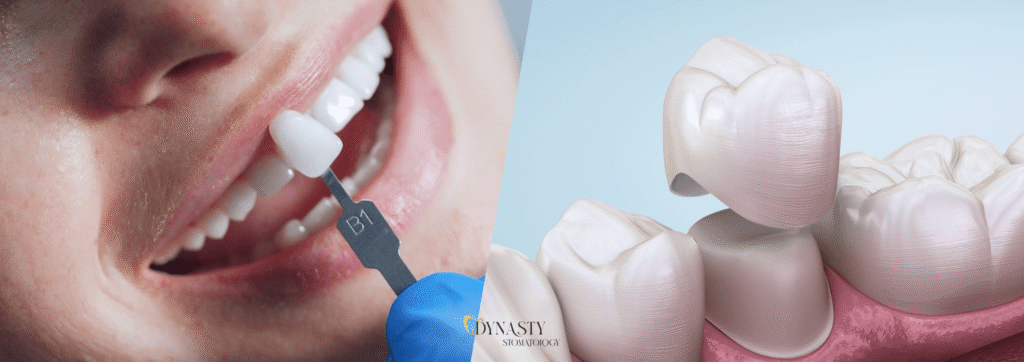
A veneer mainly covers the visible front surface of a tooth and is primarily used to improve aesthetics. A crown covers the tooth from all sides, which is why it is used when the tooth requires more extensive restoration and protection.
This guide is for people who want to improve the appearance of their smile but do not know whether their concern requires a subtle cosmetic correction or a more comprehensive prosthetic restoration. There is no single solution that works for everyone. The choice depends, among other things, on the amount of healthy enamel, the size of the defect, the presence of cracks, gum health, bite alignment, and habits such as teeth grinding.
At Dynasty Stomatology in Kraków, we begin treatment planning with an examination and diagnostics so that we do not recommend a veneer where a tooth needs reinforcement with a crown. An aesthetic result is important, but it should go hand in hand with safe tooth function.
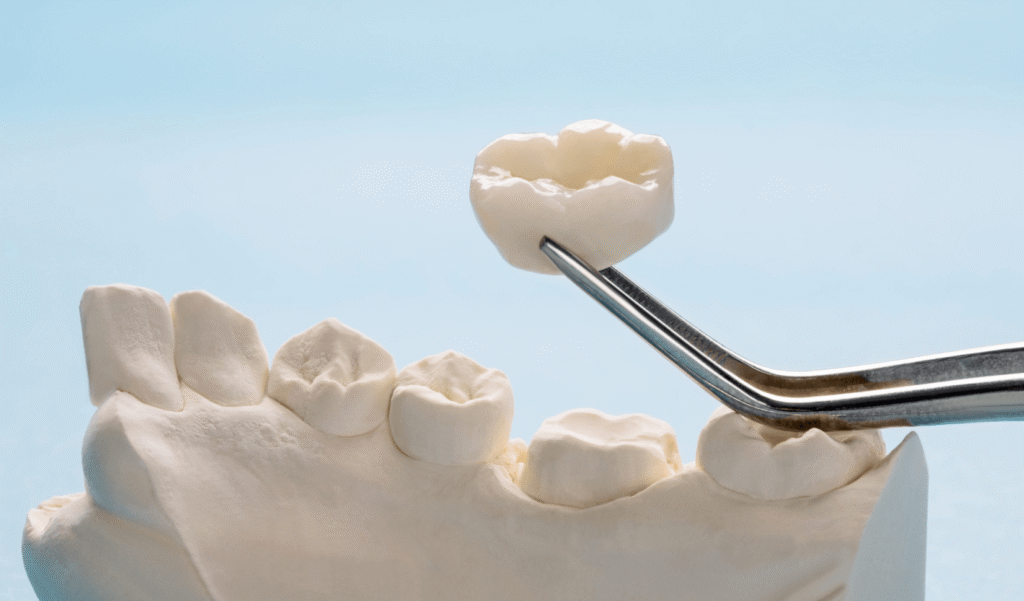
Comparing Veneers and Crowns: Indications, Durability, and Tooth Preparation
The comparison below helps explain the difference between a veneer and a crown. However, it does not replace an examination, as the same visible issue—such as a chipped tooth—may have different causes and require different treatment.
| Criterion | Veneer | Crown |
| Main purpose | Correcting colour, shape, or minor defects | Restoring and protecting a weakened tooth |
| Coverage | Usually the front surface of the tooth | The entire clinical crown of the tooth |
| Tooth preparation | Usually minimal, depending on the case | Generally more extensive, to create room for the restoration |
| Resistance to forces | Good when properly indicated | Designed to protect more severely weakened teeth |
| Aesthetics | Particularly important in the smile zone | Can look very natural while also strengthening the tooth |
| Repair | Minor adjustments may be possible, depending on the material and damage | The repair method depends on the type of damage and material |
| Hygiene | Daily brushing, flossing, and check-ups | The same basic hygiene requirements |
The durability of veneers and crowns does not depend on the material alone. Bite alignment, bruxism—meaning involuntary grinding or clenching of the teeth—daily hygiene, diet, and regular check-ups all matter. In cases of significant bite forces, the dentist may recommend wearing a protective night guard.
When Are Veneers the Better Choice?
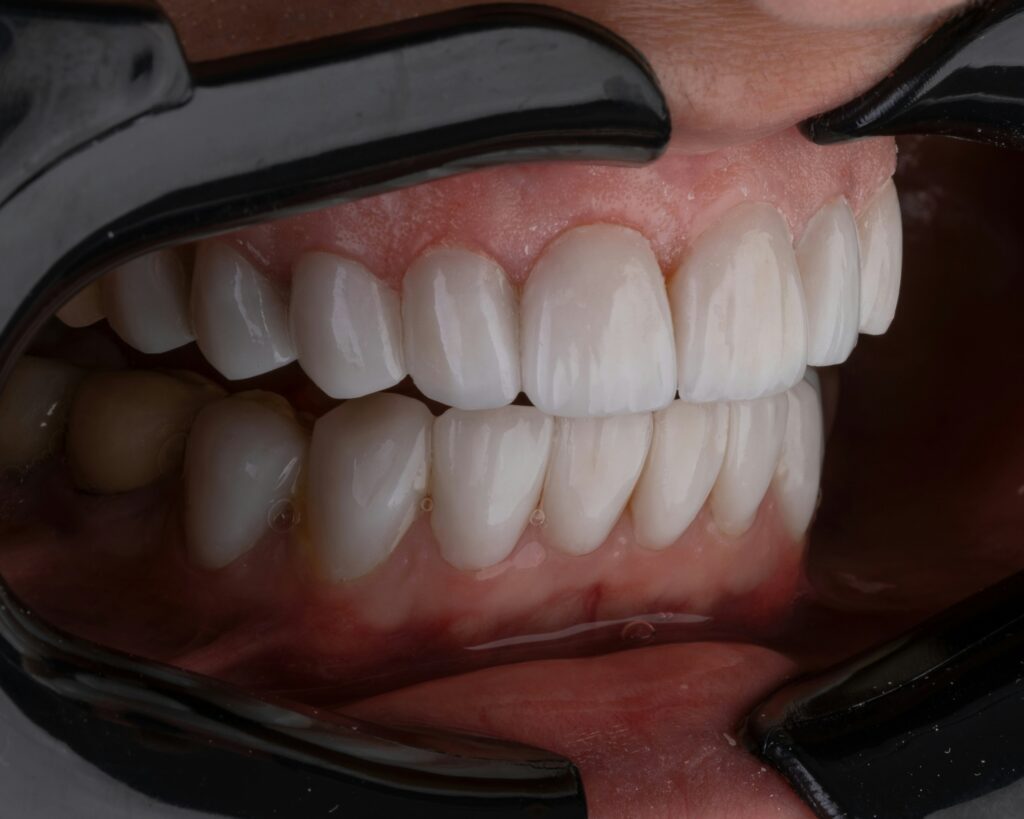
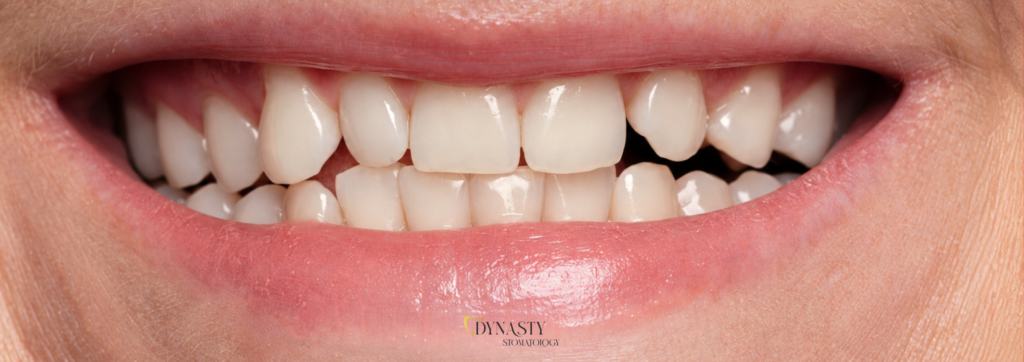
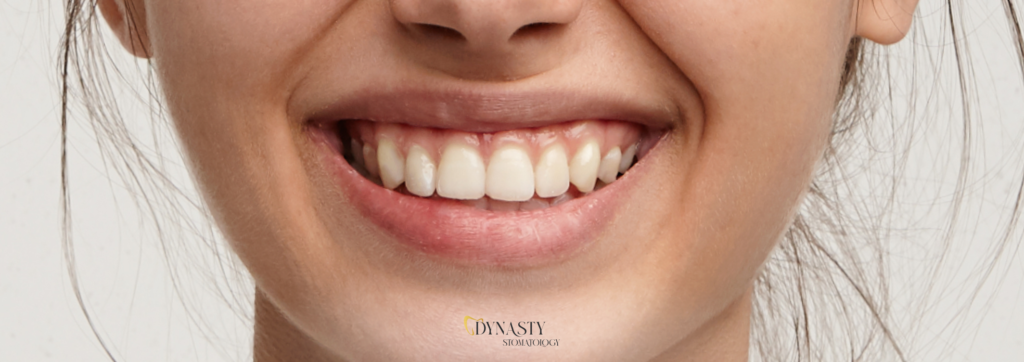
Veneers are most often considered when the tooth is structurally sound and the patient wants to improve its appearance. They can help correct persistent discolouration, uneven shape, teeth that appear shortened, minor chips, slight irregularities, or small gaps between teeth.
This option is mainly used in the visible smile zone. Before treatment begins, the dentist assesses the condition of the enamel, dentine, gums, and bite. If there is tooth decay, gum inflammation, or an issue with tooth alignment, treatment for these underlying causes should be planned first.
A veneer is not the right choice for every tooth. In the case of extensive damage, a large filling, a crack, or significant loss of tooth structure, a crown may provide better protection. It is not worth choosing a method based solely on photos of aesthetic results—the most important factor is what remains unseen beneath the restoration.
Porcelain or Composite Veneers?
Porcelain veneers are made in a dental laboratory based on a scan or impression. Porcelain makes it possible to reproduce the translucency and surface texture of a natural tooth with great precision, and it maintains its colour well with proper care.
Composite veneers are created directly on the tooth by the dentist using a material also used for aesthetic restorations. They are particularly useful for smaller corrections, repairing chips, or when the treatment plan calls for a more conservative approach. Over time, they may require polishing, adjustment, or surface refreshing.
Composite is not an “inferior” version of porcelain. It is a different method, with its own advantages and limitations. When choosing a material, we consider the desired result, bite conditions, the possibility of future adjustments, and the budget allocated for treatment.
How Are Teeth Prepared for Veneers?
The veneer preparation process takes place in stages:
- Consultation and diagnostics – the dentist assesses the teeth, gums, and bite, and prepares the necessary documentation.
- Smile planning – we discuss the desired changes in the shape, length, and colour of the teeth.
- Tooth surface preparation – in some cases, minimal preparation of the enamel, the very thin outer layer of the tooth, is necessary.
- Scan or impression – this serves as the basis for creating the veneer in the dental laboratory.
- Try-in and bonding – the dentist checks the fit, colour, and contact with adjacent teeth, then permanently bonds the restoration in place.
The extent of tooth reduction is not the same for every patient. It depends on the initial position of the tooth, its colour, the planned shape change, and the type of restoration. This is precisely why an honest assessment requires an in-person appointment rather than an evaluation based on a photo sent online.
When Is a Dental Crown the Better Solution?
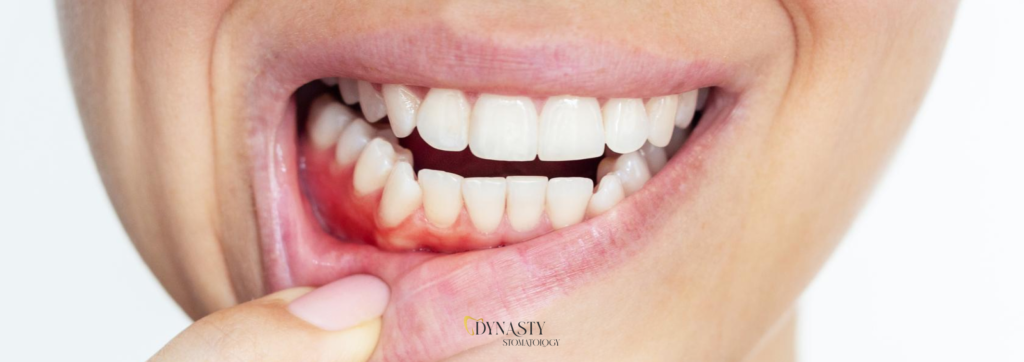
A dental crown is often the better solution when a tooth has lost a significant amount of its own structure and requires protection during biting and chewing. It may be indicated for extensive fillings, cracks, large cavities caused by tooth decay, after injuries, and in teeth weakened following root canal treatment.
A crown can also improve the colour and shape of a tooth, especially in the front teeth. However, its primary function is not cosmetic alone. It is meant to restore a stable tooth shape, withstand chewing forces, and protect the remaining tooth structure from further damage.
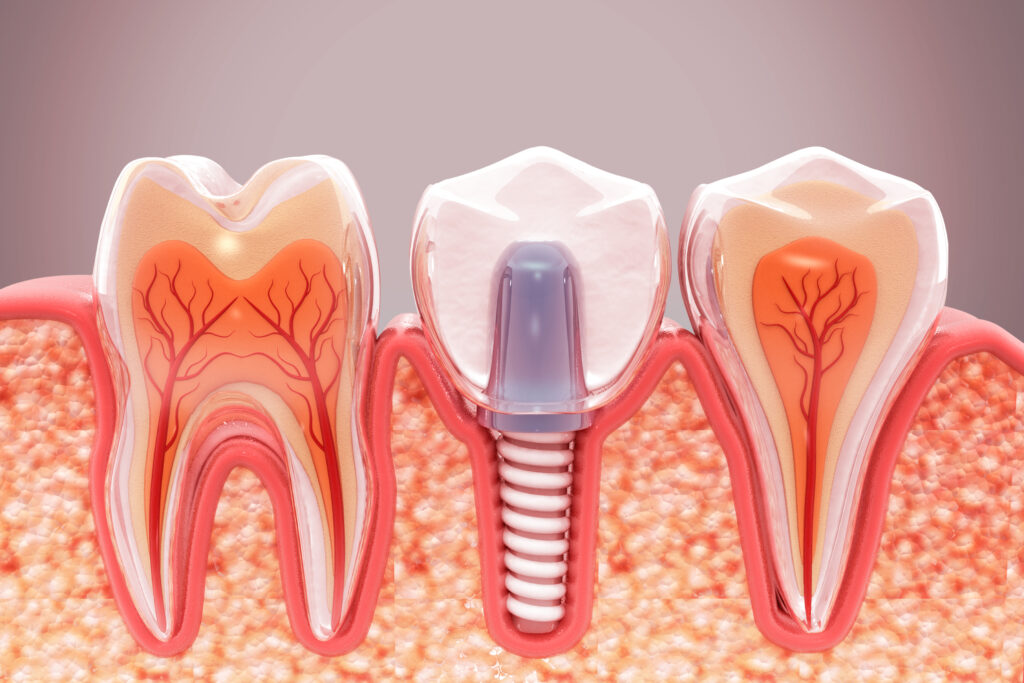
Before making a crown, the dentist checks whether the tooth can be restored predictably. Sometimes it is first necessary to treat decay, replace a leaking filling, perform root canal treatment, or rebuild the tooth core. If the tooth cannot be restored, other options are discussed, including implant treatment.
A Crown After Root Canal Treatment and in the Case of a Large Defect
Root canal treatment, also called endodontic treatment, involves cleaning and tightly filling the inside of a tooth when the pulp has been irreversibly damaged or infected. Root canal treatment alone does not automatically mean that every tooth needs a crown.
The decision is made after assessing the amount of remaining tooth walls, its position in the dental arch, the quality of the previous restoration, and the forces acting on it during chewing. Back teeth are usually exposed to greater forces than front teeth, which is why they require particularly careful assessment.
When little healthy tooth structure remains, a crown can reduce the risk of weakened fragments breaking off. If the tooth is well preserved, the dentist may recommend another type of restoration. The safest treatment plan results from a clinical examination and diagnostic images, not from one general rule.
What Does Treatment with Veneers and Crowns Look Like?
Treatment with veneers and crowns begins with a consultation, not immediate tooth drilling. The number of appointments depends on the condition of the teeth, the material selected, the need for prior treatment, and the scope of the planned restoration.
A typical treatment pathway looks like this:
- Consultation and examination – a discussion about expectations, symptoms, previous treatment, and habits.
- Diagnostics – an oral examination, bite assessment, and, when needed, an X-ray, CT scan, or intraoral scan.
- Treatment plan – discussion of possible options, the sequence of stages, the cost estimate, and expected aftercare.
- Tooth preparation – minimal for a veneer or more extensive for a crown, always only to the extent clinically justified.
- Temporary restoration – in selected situations, this protects the prepared tooth until the final restoration is ready.
- Fitting and follow-up check – checking fit, bite, and aesthetics, as well as providing hygiene recommendations.
Dynasty Stomatology offers digital diagnostics, X-rays, CT scans, and 3D scanning. These tools facilitate restoration planning, but they do not replace a thorough examination by a dentist.
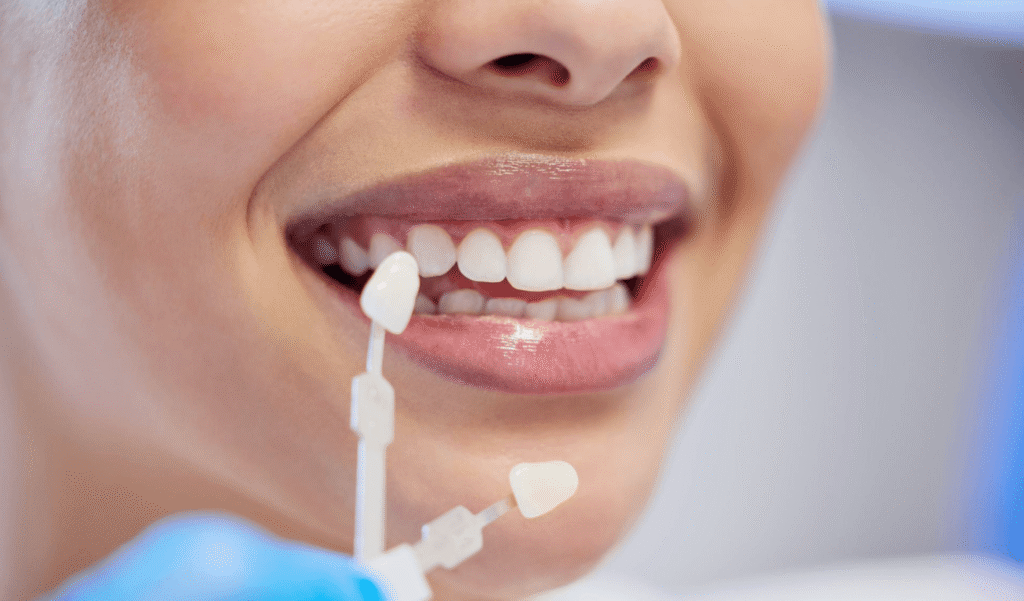
Examination, Treatment Planning, and Shade Selection
A good aesthetic restoration requires an assessment of the entire oral cavity, not just a single tooth visible in the mirror. The dentist checks the condition of the gums, the presence of tooth decay, the integrity of older fillings, and the way the teeth come into contact when biting.
Before veneers or crowns are made, professional hygiene treatment is often necessary, meaning the professional removal of tartar and plaque. Gum inflammation and active tooth decay should be treated before prosthetic work begins.
Shade selection takes place under conditions that allow reliable evaluation of the colour. The shape and proportions of the teeth are also discussed so that the restoration matches facial features and adjacent teeth. If necessary, the plan can be supported by photographic documentation and a digital smile design.
How Much Do Veneers and Crowns Cost, and What Does the Price Depend On?
The price of a veneer or crown should not be assessed solely as the cost of a single tooth. A reliable estimate includes the material, the extent of preparation, diagnostics, temporary work, case complexity, and any treatment needed before the restoration.
Treatment costs may increase if the tooth requires restorative treatment, root canal treatment, rebuilding before a crown is made, or gum treatment. For a more extensive smile makeover, the plan also includes the number of teeth needed to create a cohesive result.
During the consultation, it is worth asking for a written treatment plan and cost estimate. These should clearly indicate what is included in the price, what additional stages may be required, and what alternatives are available. A current price list can help provide general guidance, but the final cost can only be determined after an examination.
Dynasty Stomatology offers a transparent discussion of the treatment plan and the possibility of arranging installment payments through MediPay, MediRaty, or an internal payment plan—terms are determined individually.
What Should You Consider Beyond the Price of a Single Tooth?
When comparing treatment plans, it is worth asking specific questions during the consultation:
- Does the price include the consultation, diagnostics, a scan or impression, and follow-up visits?
- What material will be used, and why is it recommended in this case?
- Does tooth decay, gum disease, or root canal treatment need to be addressed before the veneer or crown is made?
- Does the plan include a temporary restoration?
- What is the procedure if an adjustment or repair is needed?
- What habits may shorten the lifespan of the restoration, and will a protective night guard be needed?
- What will future professional hygiene appointments and check-ups cost?
The lowest unit price does not always mean the lowest total cost of treatment. It is worth comparing the scope of services, the quality of diagnostics, the team’s experience, and whether the dentist explains the limitations of the proposed solution. A transparent plan should give the patient time to ask questions and make an informed decision.
How Can You Make a Safe Decision and Book a Consultation?
The best decision begins with clearly defining your goal. Tell the dentist whether your main concern is colour, shape, a chipped tooth, a large filling, pain when biting, or concern about a tooth after root canal treatment. Also mention previous treatment, jaw clenching, teeth grinding, and plans for teeth whitening.
During the appointment, it is worth asking for an assessment of your bite, gum condition, and the amount of remaining tooth structure. The dentist may suggest a veneer, a crown, bonding—a composite restoration—or another option if it is safer for your particular case.
After submitting an enquiry to Dynasty Stomatology, you will receive information about available consultation dates. At the clinic, we carry out an examination, any necessary diagnostics, and discuss an individual treatment plan with a cost estimate. The clinic sees patients at ul. Romanowicza 1/LU3 and ul. Romanowicza 4B in Kraków, and the team communicates in Polish, English, Ukrainian, and Russian.
If your main goal is aesthetics and your tooth is healthy and well preserved, a veneer may be the right option. If the tooth is weakened or significantly damaged, it will more often need the protection provided by a crown. Book a consultation.
Frequently Asked Questions
-
Not always, but minimal preparation of the enamel surface is often necessary. The extent of preparation depends on the position of the tooth, its colour, the planned shape change, and the type of veneer. The dentist should discuss this before treatment and explain whether a more conservative option is possible in your case.
-
Yes, a well-planned crown can look very natural. The choice of material, the right shade, shape, and work on adjacent teeth all have a significant impact on the result. A veneer is usually used mainly for aesthetics, while a crown combines a natural appearance with the need to restore a weakened tooth.
-
The choice depends on the size of the chip and the condition of the entire tooth. A minor defect can sometimes be restored with bonding. A veneer may be considered for an aesthetic correction of a front tooth, while a crown may be appropriate for major damage, a crack, or weakened tooth structure. The dentist makes the decision after an examination.
-
Sometimes yes, but it is not an automatic solution or appropriate in every case. A tooth after root canal treatment requires assessment of the amount of remaining tooth structure, cracks, colour, and bite forces. If it is significantly weakened, a crown may better protect it from further damage.