



Missing teeth can cause irreparable damage to your oral health and well-being if not arrested on time. Not only do they look ugly, but they cause serious problems like gum recession, shifting teeth, difficulties in speech and eating food. This misalignment results in bite issues, pressure on the remaining teeth and may cause gum or bone injury. In order to arrest these problems before they turn severe, dentists recommend people to opt for a dental implant surgery.


Placing the implant

Osseointegration

Prosthetic stage
Indications for implants in dentistry:
Implantology is a field in dentistry to help people get a permanent solution to tooth gaps. A tooth implant is generally advised for-
- A single missing tooth
- Several missing teeth
- Complete toothlessness
- Damaged (compromised) tooth
The dental implant procedure is a stable support for dental bridges and prevents bone loss. A dental exam will ascertain the severity of the issue for the dentist to create a customized treatment plan.
Antibiotics before surgery will be prescribed to the patient before the surgery to prepare the gums and bone for the implant. Since the implant is made from biocompatible titanium, over time, when the gum heals, it fuses naturally with the remaining teeth.
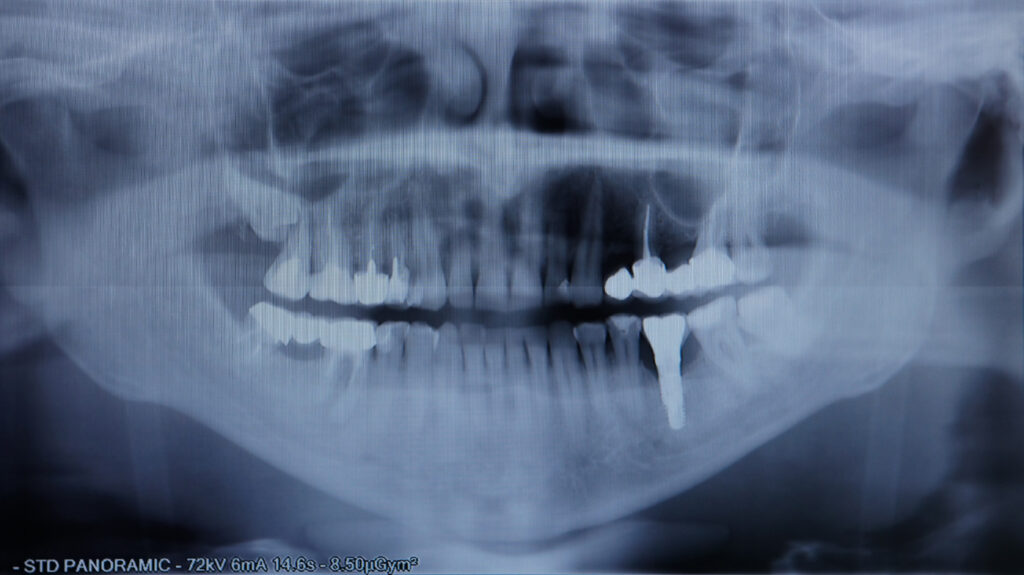
Dental implantation - Prices in Krakow
-
Surgical consultation
250 PLN -
Tomography of 1 jaw
250 PLN -
Tomography of 2 jaws
350 PLN
Dental implant placement
-
JDental (Italy)
2 500 PLN -
Megagen (South Korea)
4 000 PLN -
Straumann (Switzerland)
5 000 PLN -
Zirconia implant crown
3 300 PLN -
Temporary implant crown
1 200 PLN -
Non-removable temporary denture on implants
6 000 PLN -
Non-removable permanent denture on implants
20 000 PLN -
Tooth extraction
310‑800 PLN
How the Dynasty Stomatology dental clinic's loyalty program works
Learn more about the loyalty program
Step 01
Visit the clinic and scan the QR code at the reception desk
Step 02
Register online — enter your details
Step 03
Receive and accumulate points after each visit
Do you want to treat your teeth while you sleep?
Schedule an appointment!
By clicking the button, you give your agreet your personal data in accordance with privacy policy.
Frequently asked questions about dental implants
-
Yes, if the quality of your bone and gum health is good, your dentist can go ahead with an immediate dental implant procedure.
-
Chronic illnesses may affect your healing. Implants will only be used subject to the approval of your dentist after evaluating your condition.
-
Dental implants during pregnancy are generally not recommended, unless necessary. X-rays must be avoided, and hormonal changes often affect healing.
-
Implantation with proper care can last for life. Crowns may need to be replaced after 10 to 15 years with good dental hygiene and regular check-ups.
-
Dental implantations are done with anesthesia to reduce pain. However, soreness and swelling may remain after the procedure, but they can be managed with medicines.
-
No. Dental implants are precisely customized to your needs and are natural looking to blend in with your smile.
-
Implants are usually biocompatible and safe. If you are sensitive to metals, your dentist may recommend an alternate treatment.
-
Dental implant treatment can be done by experienced dentists specialized in implantology, periodontists, or oral healthcare specialists.
-
Yes, Poland is one of the top destinations in Europe for dental implants, offering high-quality treatment at significantly lower prices — often 50–70% less than in Western Europe or the USA. Polish dental clinics use the same premium implant systems and follow the same EU medical standards, while many dentists have international training and experience. At our clinic, we also help international patients with treatment planning and scheduling to make the entire process as smooth and comfortable as possible.
-
Dental implantation is a procedure in which a small titanium post is placed into the jawbone to replace the root of a missing tooth. Once the implant integrates with the bone (a natural process called osseointegration), a custom-made crown is attached on top, giving you a restoration that looks, feels, and functions just like a natural tooth. Implants are considered the gold standard for tooth replacement because they are durable, comfortable, and help preserve your jawbone health for years to come.
-
Most patients are pleasantly surprised by how little discomfort they experience during a dental implant procedure. The surgery is performed under local anesthesia, so you won't feel pain during the placement — just some pressure. After the procedure, mild soreness and swelling are normal for a few days but are easily managed with over-the-counter pain relievers. Many of our patients at Dynasty Stomatology report that the experience was much easier than they expected.
-
The entire dental implant process typically takes 3 to 6 months from start to finish. After the implant is placed into the jawbone, a healing period of 2 to 4 months is needed for the implant to fuse securely with the bone — a natural process called osseointegration. Once healing is complete, your custom crown (the visible tooth) is attached. During your consultation at our clinic, we'll give you a personalized timeline based on your individual needs.
-
Dental implants are one of the most reliable and well-researched solutions for replacing missing teeth, with success rates above 95% according to long-term clinical studies. They look, feel, and function like natural teeth, and they help preserve your jawbone, which can deteriorate after tooth loss. Like any medical procedure, implants require proper planning and good oral hygiene to ensure lasting results. At our clinic, we'll assess your individual situation to determine if an implant is the right option for you.
-
The implant placement itself is usually a single surgical stage, but complete treatment takes longer. The procedure is most often followed by around 3–6 months of healing and osseointegration, followed by the fabrication of a crown or another restoration.
-
In some cases, an implant can be placed directly after tooth extraction. This depends, among other things, on bone condition, the presence of infection, gum conditions, and implant stability, so the decision is made by the dentist after an examination.
-
Yes, dental implants can be used in cases of complete tooth loss. They can stabilise a snap-on denture or serve as the foundation for a fixed restoration. The number of implants and type of prosthetic work require individual planning.
-
The price depends on the entire scope of treatment, not only on the implant screw itself. It is affected by diagnostics, the surgical procedure, any bone reconstruction, the abutment, crown or bridge, temporary restoration, and follow-up visits.
Dentists specializing in dental implants
View all doctors
Kostiantyn Danyliuk
Oral Surgeon, Implantologist
Konstantin is a skilled specialist who combines in-depth knowledge and cutting-edge technology to achieve the best results. He maintains active com...

Rafal Kazanecki
Oral surgeon, implantologist
His experience in implantology and surgery allows him to effectively implement modern technologies, enabling quick and safe procedures. Rafał activ...
Reviews of dental implants in Krakow
Expert articles on the topic
View all blog-
05.06.2026
332
10 min. read
Dental Implants – What You Should Know
Tooth loss is a situation faced by people of all ages. Some put off treatment for months, becoming accustomed to…
Read more -
11.05.2026
352
9 min. read
What is Teeth in a Day – Steps Of The Immediate Implantation Procedure
Just a few years ago, losing a tooth meant a long and unpleasant process: extraction, months of waiting, temporary solutions,…
Read more -
26.02.2026
427
11 min. read
What is Dental Implant Procedure — A Complete Guide
Losing a tooth isn't always just about aesthetics. It's about self-confidence, the ability to smile without tension, the ability to…
Read more -
30.10.2025
544
7 min. read
How long does a dental implant last?
If you are reading this article, most likely you have already made an important decision: to replace a lost tooth with an implant. But somewhere inside there is still a doubt: “What’s next? Will I have to redo everything in a year or two?“ These are absolutely normal questions. Because when you choose implantation, you […]
Read more





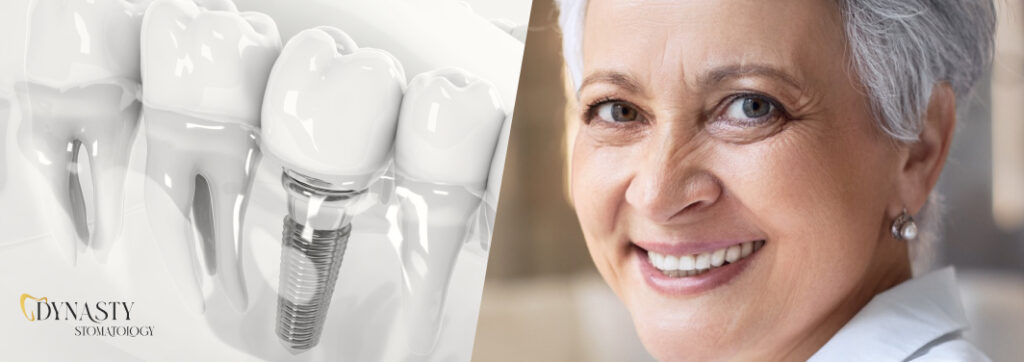
Dental implants make it possible to restore a missing tooth or a larger part of the dentition in a stable, aesthetic, and natural-looking way. For adult patients in Krakow who have lost a tooth due to decay, trauma, or surgical treatment, an implant can serve as the foundation for a crown, bridge, or a denture that is more securely fixed than a traditional removable denture.
An implant is a small metal screw, most commonly made of biocompatible titanium. An oral surgeon places it in the bone of the upper or lower jaw, where, after a healing period, it can support a prosthetic restoration. However, treatment is not an automatic solution for everyone—the decision is preceded by an examination, medical history review, and diagnostic imaging.
An untreated missing tooth can affect chewing, speech, and the appearance of the smile. Over time, neighbouring teeth may shift position, while the bone at the site of the removed tooth gradually deteriorates. This is why it is worth booking an implant consultation soon after a tooth extraction, even if the final treatment is planned for a later date.
Dental Implants in Krakow – What They Are and Who They Are For
A dental implant replaces the root of a lost tooth, while the visible part of the restoration is a crown or prosthetic bridge. Once the implant has fused with the bone, it is possible to restore chewing function and the natural appearance of the smile without grinding down the healthy teeth next to the gap.
At Dynasty Stomatology, we plan implant treatment for people with single missing teeth, larger gaps, and complete tooth loss. Digital diagnostics are available on site, including X-rays and CT scans, allowing the dentist to assess bone conditions and safely plan the procedure.
Implant dentistry is not limited to placing a screw. It is a surgical and prosthetic process in which the condition of the gums, bone quality, bite, oral hygiene, and the way the final crown is made all matter. The aim is to create a restoration suited to the entire oral cavity, rather than simply filling a visible gap.
What a Dental Implant Consists Of
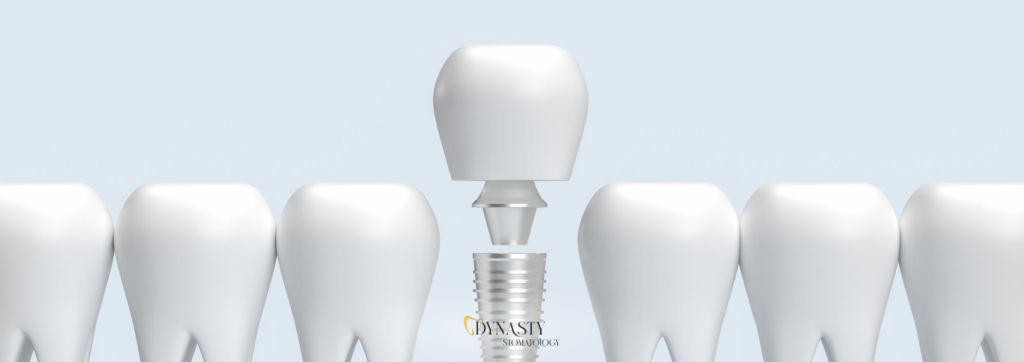
A dental implant has three basic parts: the implant screw, the abutment, and the prosthetic crown. Each has a different role, so an implant should not be identified solely with the visible “new tooth.”
The implant screw is placed in the bone of the upper or lower jaw and functions as the root. It is most often made of titanium, a material used in implant dentistry because of its biocompatibility.
The abutment is the component that connects the implant to the crown. The dentist selects its shape, height, and position according to the patient’s anatomical conditions, gum line, and planned restoration.
The prosthetic crown is the part visible above the gum line. It restores the appearance and function of the tooth, and its colour and shape are matched to the remaining teeth.
Crown, Bridge, or Implant-Supported Denture
Once the implant has integrated with the bone, different types of restorations can be made. When one tooth is missing, a single crown is most commonly used. If several adjacent teeth are missing, implants can serve as supports for a prosthetic bridge.
Crowns can be made, among other materials, from porcelain or zirconia. The choice of material depends on its location in the mouth, bite conditions, aesthetic expectations, and the treatment plan.
In cases of complete tooth loss, implants can stabilise a snap-on denture or serve as the basis for a fixed restoration. The number of implants and the type of prosthetic work are determined by the dentist after assessing the bone, gums, and the patient’s individual needs.
Indications for Dental Implants and Treatment Eligibility
Dental implants are considered when one tooth, several teeth, or all teeth are missing. They can also be a solution for people who cannot tolerate traditional removable dentures, have gaps between teeth, or have not developed tooth buds for certain permanent teeth.
A single missing tooth is not always only an aesthetic concern. The gap may encourage neighbouring teeth to shift and make proper oral hygiene more difficult. With larger gaps, the way a person chews also changes, which may place additional strain on the remaining teeth.
Eligibility for implant treatment requires an in-person consultation. The dentist assesses the condition of the oral cavity, gums, bone, bite, and general health. Only then can it be reliably discussed whether implants are the right method and what preparation may be needed.
Does Bone Loss Rule Out Implant Placement?
Insufficient bone volume does not necessarily rule out implant treatment permanently, but it requires thorough diagnostics and an individual treatment plan. After a tooth is lost, the bone at the extraction site gradually remodels and deteriorates. According to the clinic’s materials, as much as 60% of bone tissue may be lost during the first six weeks after tooth removal.
A prompt consultation after extraction makes it possible to assess whether the socket should be preserved or a later restoration should be planned. If bone conditions are insufficient, the dentist may consider preparatory procedures such as bone regeneration or a sinus lift.
Not every patient requires these procedures. A CT scan shows the amount and distribution of bone, and the dentist explains which solution will be safest in a particular situation.
Contraindications and Tests Before Implant Treatment
Before implant placement, the dentist takes a medical history, examines the oral cavity, and analyses diagnostic images. They assess, among other things, the condition of the gums, the presence of inflammation, bone volume, hygiene, bite, and medications being taken.
It is worth distinguishing between absolute and temporary contraindications. An absolute contraindication means a situation in which the procedure should not be performed because of a significant health risk. A temporary contraindication means that treatment may be postponed until the issue is under control, such as active inflammation in the oral cavity, inadequate hygiene, or an unstable general medical condition.
In practice, the assessment is not based on a single item of information from a questionnaire. The dentist considers the full picture of the patient’s health, consultations with other specialists when needed, and the possibility of safe preparation for treatment. Self-assessment based on symptoms or an article does not replace an examination.
Step-by-Step Stages of Dental Implant Placement
Implant treatment includes a surgical and a prosthetic stage. The schedule depends on the location of the missing tooth, bone quality, gum condition, and whether preparatory procedures are necessary. Implant placement is usually performed under local anaesthesia.
The process most often follows this sequence:
- consultation and diagnostics;
- preparation of the oral cavity and treatment planning;
- surgical implant placement;
- healing and osseointegration;
- fabrication of a temporary or final prosthetic restoration;
- follow-up visits and professional hygiene treatment.
For the patient, the most important thing is to understand that implant treatment should not be accelerated at the expense of safety. Each stage has a clinical rationale and makes it possible to monitor healing and the fit of the restoration.
Dental Implants Krakow: Consultation and Treatment Plan
A consultation for implant placement is a decision-making stage, not merely a formality before the procedure. The dentist assesses the missing tooth or teeth, the condition of the remaining teeth, gums, and bite. At Dynasty Stomatology, the necessary diagnostics can be performed on site, making it easier to prepare a coherent treatment plan.
Diagnostic imaging, often a CT scan, is an important part of the process. It allows the amount and quality of bone to be assessed and the implant position to be planned. The dentist also discusses possible alternatives, the scope of treatment, risks, healing time, and the anticipated stages of the cost estimate.
At this stage, it is determined whether the goal will be a single crown, bridge, or a solution for complete tooth loss. The patient can also raise concerns related to pain, fear of treatment, work commitments, or planned travel.
Implant Placement and the Osseointegration Period
Implant placement is performed by an oral surgeon under local anaesthesia. During the procedure, the patient should not feel pain, although they may feel pressure, vibrations, or manipulation inside the mouth. After the procedure, the dentist provides individual healing instructions.
The implant then remains covered by the gum for approximately 3–6 months. This is the period of osseointegration, meaning the process in which the bone fuses with the implant surface. Healing time is not the same for every patient and depends, among other things, on the implant location and bone conditions.
After successful osseointegration, the implant can provide stable support for a prosthetic restoration. During the healing period, follow-up appointments are necessary, and the patient should follow recommendations regarding hygiene, diet, and any limitations on stimulants.
Implant Uncovering and Prosthetic Restoration
Once healing is complete, the dentist assesses the stability of the implant and prepares it for the prosthetic stage. While the implant is integrating with the bone, the patient may use a temporary conventional restoration if required for aesthetics or chewing function.
Next, intraoral scans or impressions are taken to design the final restoration. Depending on the situation, this may be a single crown, a bridge, or an implant-supported denture.
The dentist checks the completed restoration for fit, contacts with neighbouring teeth, and bite alignment. This stage is important not only for comfort, but also for an even distribution of chewing forces.
Benefits, Safety, and Comfort During Dental Implant Placement
Dental implants are valued because they can stably restore chewing function, improve speaking comfort, and recreate the appearance of a smile. Unlike a conventional bridge for a single missing tooth, they do not require grinding down neighbouring teeth if clinical conditions allow this type of treatment.
The safety of the procedure depends on proper eligibility assessment, planning, the team’s experience, oral hygiene quality, and regular follow-up visits. An implant is not a “forever” solution without responsibilities—the tissues around it require the same consistent care as natural teeth.
Long-term results also depend on controlling gum inflammation, treating periodontal disease, not smoking, and following post-treatment recommendations. The patient should seek care sooner if they notice bleeding, swelling, pain, mobility of the restoration, or a change in their bite.
Does Implant Placement Hurt?
Implant placement is performed under local anaesthesia, so the patient should not feel pain during the procedure. However, sensations of pressure or vibration are possible and do not indicate pain.
After the procedure, temporary tenderness, swelling, or discomfort related to healing may occur. Their intensity depends on the extent of the procedure and individual sensitivity. The dentist provides recommendations tailored to the patient’s situation and explains when to come in for a check-up.
People who experience severe anxiety about treatment should mention it during the consultation. The clinic can discuss available methods of reducing tension, while any possible sedation is always decided by the dentist after assessing indications and contraindications.
How to Care for Implants After Treatment
The implant and crown require daily, thorough cleaning. Teeth should be brushed with a soft toothbrush, interdental spaces should be cleaned using the method recommended by the hygienist or dentist, and the gum line around the crown should be properly cared for.
It is advisable to attend regular dental check-ups and professional hygiene appointments. During the visit, the team assesses the condition of the gums, restoration, bite, and areas around the implant that are difficult to reach at home.
Do not ignore bleeding gums, unpleasant odour, a feeling that the crown is loose, or pain when biting. A prompt check-up makes it possible to identify the cause of the problem and choose the appropriate course of action before symptoms worsen.
How Much Do Dental Implants Cost in Krakow?
The cost of dental implants should not be presented as one universal amount. The implant itself is only one part of the entire process. The final cost depends on diagnostic findings, the condition of the bone tissue, the scope of the procedure, the type of prosthetic restoration, and the number of necessary appointments.
| Treatment plan element | What it includes | Why the cost may vary |
|---|---|---|
| Consultation and diagnostics | Examination, treatment plan, X-ray or CT scan | Scope of required diagnostics |
| Surgical stage | Implant placement | Location, number of implants, complexity of the procedure |
| Implant | Implant screw placed in the bone | Selected system and clinical conditions |
| Bone preparation | Bone regeneration or sinus lift, if indicated | Size and type of bone defect |
| Abutment | Connection between the implant and the crown | Individual fit to the gums and restoration |
| Crown or bridge | Final prosthetic restoration | Material, aesthetics, number of teeth being restored |
| Temporary restoration | Solution for the healing period | Location of the gap and patient needs |
| Follow-up visits and hygiene treatment | Assessment of healing and post-treatment care | Individual follow-up schedule |
At Dynasty Stomatology, implants are available from PLN 2,500; however, this price applies only to a selected element of treatment and does not replace an individual cost estimate. Only after a consultation can the full plan be determined fairly and payment stages discussed.
Patients may also ask about available instalment payment options, including MediPay, MediRaty, and an internal payment plan. Terms are determined individually. Current information can be checked in the official Dynasty Stomatology price list.
Consultation for Dental Implant Placement in Krakow
For the consultation, it is worth preparing information about chronic illnesses, medications being taken, previous dental treatment, and expectations for the restoration. If the patient has previous X-rays or CT scans, they may bring them along, although the dentist will decide whether they are sufficient for current treatment planning.
During the appointment, we discuss the condition of the oral cavity, possible treatment methods, required diagnostics, risks, alternatives, and the anticipated schedule. The patient receives an individual plan and cost estimate, without being pushed into procedures that lack clinical justification.
Dynasty Stomatology sees patients at Romanowicza 1/LU3 and Romanowicza 4B in Krakow. The team communicates in Polish, English, Ukrainian, and Russian, which can make it easier to discuss treatment calmly for people living in Poland or travelling from abroad for dental care.
If you are missing a tooth or your denture does not provide the stability you expect, the next step is a consultation with an implantologist and an assessment of the conditions in your mouth.