



The problem of partial or complete tooth loss can significantly affect the quality of life - from difficulties in eating to aesthetic and psychological discomfort. Removable dentures allow you to restore both chewing function and self-confidence.
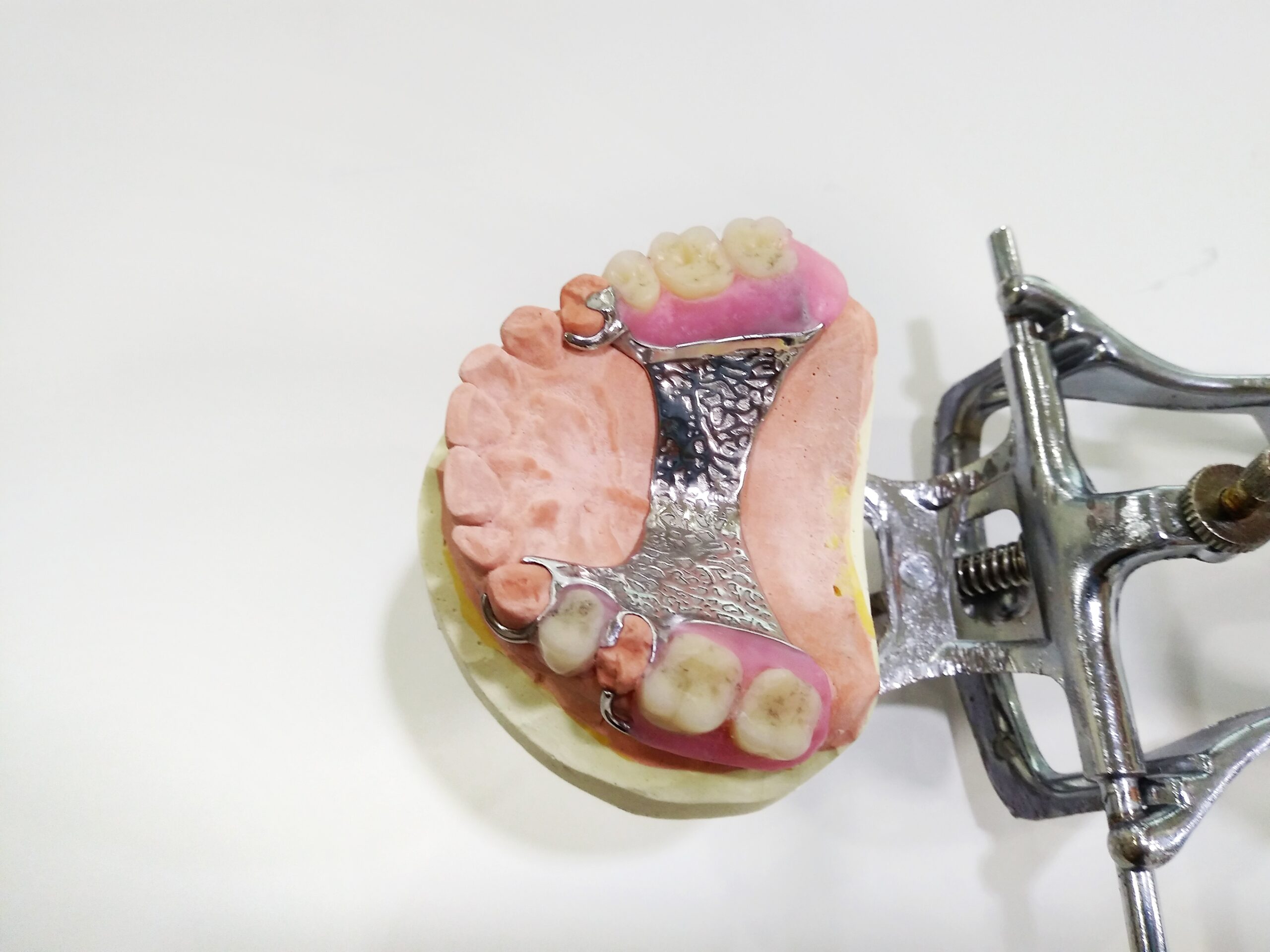
Removable Dentures in Krakow

Сlasp dentures

Acrylic removable dentures

Nylon
Stages of manufacturing complete and partial removable dentures
The manufacture of dental prostheses requires a careful approach to ensure comfort, precise fit and durability of the structure. Stages of manufacturing removable structures:
- Diagnostics. During the initial consultation, the dentist evaluates the condition of the oral cavity, selects the type of prosthesis and makes an individual treatment plan. X-ray diagnostics and examination of soft and hard tissues are also performed to exclude possible contraindications.
- Preparation. If necessary, oral cavity sanitation is performed: removal of decayed teeth, treatment of caries and inflammation, grinding of remaining teeth, installation of crowns or inlays for future fixation.
- Taking impressions. The dentist takes precise impressions of the jaws using special materials so that the production of the prosthesis in the dental laboratory is as accurate as possible and ensures comfortable fixation.
- Manufacturing of removable dentures in dentistry. Based on impressions, an individual design is created in the laboratory: first its base, then the final form taking into account the bite and aesthetics. It is possible to carry out a fitting before the final fixation.
- Installation. The finished prosthesis is fixed in the oral cavity, then the doctor checks the fit, comfort, bite. If necessary, corrections are made. The patient also receives recommendations for care and adaptation to the design.
On average, the installation and manufacture of removable dentures — from the first consultation to full fixation and adaptation — takes from 7 to 21 days. In complex cases (for example, with a complete absence of teeth or the installation of clasp structures), the manufacturing and installation period may be a little longer — up to 3-4 weeks.
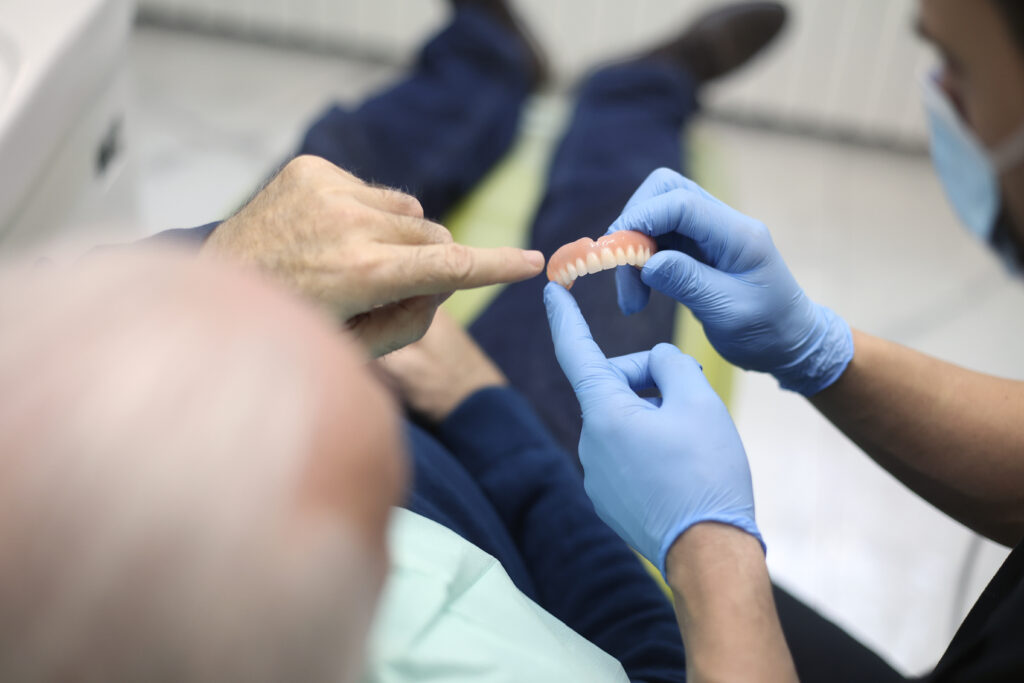
Removable dentures prices in Krakow in case of missing teeth
-
Prosthodontic consultation
250 PLN -
3D scan (one jaw)
200 PLN -
Tomography of 1 jaw
250 PLN -
Tomography of 2 jaws
350 PLN
Partial removable denture
-
Acrylic
3 500 PLN -
Nylon
3 500 PLN
Complete removable denture
-
Acrylic
4 000 PLN -
Clasp dentures
4 000‑4 500 PLN
How the Dynasty Stomatology dental clinic's loyalty program works
Learn more about the loyalty program
Step 01
Visit the clinic and scan the QR code at the reception desk
Step 02
Register online — enter your details
Step 03
Receive and accumulate points after each visit
Do you want to treat your teeth while you sleep?
Schedule an appointment!
By clicking the button, you give your agreet your personal data in accordance with privacy policy.
Frequently asked questions about removable dentures
-
The cost of removable dentures depends on the type of structure, materials, volume of previous treatment and complexity of the case.
-
Adaptation usually takes from several days to several weeks, during which the patient gets used to the structure and learns to handle it comfortably.
-
Regular wearing, proper care and following the dentist's recommendations help speed up the process of getting used to the removable structure.
-
Installing acrylic (or plate) dentures is usually a more affordable option while maintaining excellent functionality.
-
In this case, you can consider fixed structures, such as implants or bridges, which provide greater stability.
-
Yes, wax models or digital 3D modeling can be used during the planning stage.
-
Removable dentures have an average lifespan of 3 to 7 years. Then such dentures require replacement or correction due to wear and tear and changes in the oral cavity.
-
When using high-quality materials, the risk is minimal, but some patients may have an individual reaction to the fixing components.
-
Yes, there are modern dentures that can be attached to remaining teeth for better stability.
-
If you experience discomfort, consult your dentist to correct and eliminate the cause.
-
It is recommended to remove the prosthesis at night and store it in a special solution or water to maintain its shape and hygiene.
-
Yes, removable dentures are often the optimal solution for older patients with weakened bone tissue.
-
Over time, the prosthesis may require adjustments to maintain comfort and function.
-
Yes, temporary dentures are often used to maintain aesthetics and function while preparing for the placement of jaw implants.
-
Complete dentures are removable appliances that replace all of your teeth in the upper or lower jaw (or both), resting directly on your gums. Removable partial dentures, on the other hand, replace only some missing teeth and are held in place by clasps that attach to your remaining natural teeth. Both types are custom-made to fit your mouth comfortably, helping you eat, speak, and smile with confidence. At our clinic, we'll guide you through the best option based on your individual needs.
-
Creating a removable partial denture typically involves several visits. First, your dentist takes precise impressions of your mouth and records your bite, which are sent to a dental laboratory. At the next appointment, you try on a metal framework to check the fit, followed by a wax trial where the teeth are set in position so you can preview the final look. Once everything is approved, the denture is completed, polished, and fitted — with any small adjustments made to ensure comfort and a secure fit.
-
Yes, partial dentures can absolutely be made! They are a great solution when you need to replace one or more missing teeth while keeping your remaining healthy teeth intact. Partial dentures are custom-designed to fit comfortably in your mouth and can be removable or fixed, depending on your individual needs. We invite you to schedule a consultation so we can assess your situation and recommend the best option for you.
-
The fabrication of a removable partial denture typically requires 3 to 5 appointments. These usually include an initial impression, a precise (functional) impression, a jaw relation record and try-in of the wax model so you can preview the fit and appearance, and finally the delivery appointment where adjustments are made for comfort. A follow-up visit is usually scheduled shortly after to fine-tune the fit as you get used to wearing your new denture.
Prosthodontists creating removable dental prostheses
View all doctors
Vladyslav Karkachov
General dentist, endodontist, prosthodontist
Relies on a well-thought-out treatment plan and good rapport with the patient. A friendly approach helps build trust, even among those afraid of de...

Borys Minakov
Prosthodontist
His approach focuses on individually tailored treatment plans that not only solve current issues but also prevent future ones. This helps patients ...

Dmytro Ostrovskyi
Prosthodontist
Over 30 hands-on courses completed in 9 years of practice. A comprehensive approach guarantees stable, durable, and predictable results.
Reviews of removable dentures for partial or complete tooth loss
Expert articles on the topic
View all blog-
19.08.2026
2
10 min. read
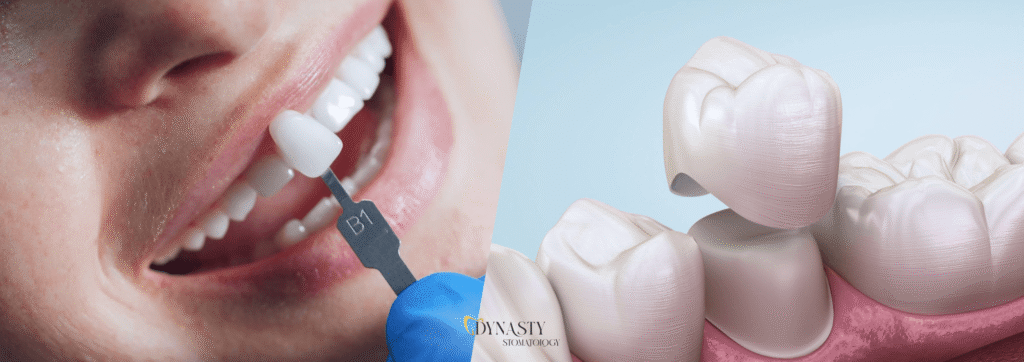
What to choose veneers or crowns – which solution will be better for you?
Veneers or Crowns: The Key Difference A veneer mainly covers the visible front surface of a tooth and is primarily…
Read more -
21.01.2026
506
6 min. read
The Best Dental Restoration Options for Damaged Teeth
When something happens to a tooth, the first reaction is often anxiety. People often assume that treatment will be expensive…
Read more -
06.01.2026
490
8 min. read
Dental Prosthetics – The Secret to a Beautiful Smile
A healthy smile isn’t just about looking perfect. It’s about how comfortable you are when you eat, how freely you speak, and how confident you feel when you smile. After all, if you have chips, cracks, or missing teeth, your lifestyle changes. That’s why dental prosthetics plays a crucial role in restoring your sense of […]
Read more -
09.12.2025
1295
5 min. read
What is Dental Splinting and How It Can Save a Loose Tooth?
Loose teeth in adults are often a sign that something important is changing in your mouth. This causes a lot…
Read more -
31.07.2025
1868
6 min. read
What is Inlay, Onlay and Overlay in dental restoration – pros & cons, purpose and cost
In modern dentistry, there are several advanced options for restoring damaged teeth with precision and durability. Inlay, onlay, and overlay…
Read more -
24.07.2025
1101
10 min. read
Dental Crowns: Types, Costs, and the Procedure
Dental crowns play a vital role in restoring the strength, function, and appearance of damaged or weakened teeth. Whether due…
Read more


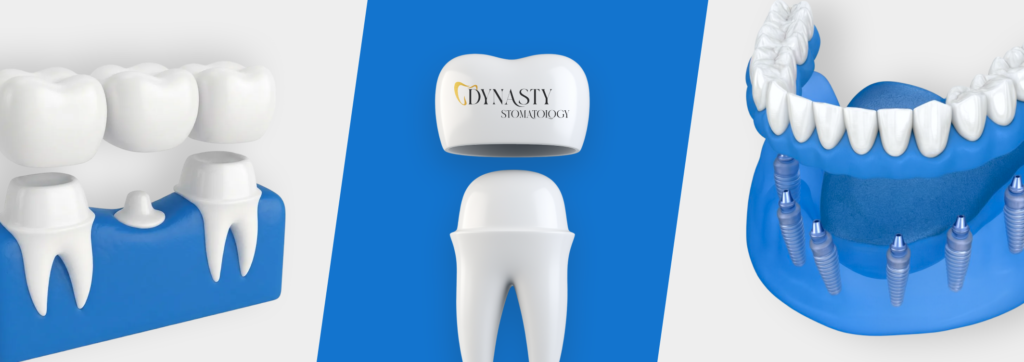



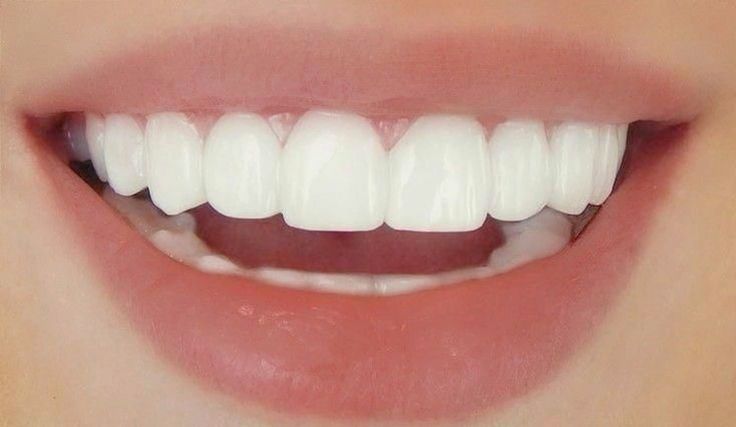
Removable Dentures in Krakow – Types, Prices, and Prosthetic Consultation
A removable denture is a removable replacement for missing teeth. It can replace one tooth, several teeth, or all teeth in an arch, helping restore the ability to chew, clearer speech, and a more natural-looking smile. For some patients, it is a temporary solution, while for others it is a long-term form of treatment.
Removable Dentures in Krakow – Who Are They a Good Solution For?
Removable dentures in Krakow may be considered for single, multiple, and complete tooth loss. They can be taken out by the patient, so their design, retention method, and daily care differ from crowns, bridges, or implant-supported restorations.
At Dynasty Stomatology, the consultation includes a discussion of the patient’s needs, an oral examination, and an assessment of the teeth, gums, bite, and the tissues on which the denture will rest. If necessary, the dentist may plan imaging diagnostics or an intraoral scan. Only then can removable dentures be fairly compared with other methods.
The final choice depends, among other things, on the number of missing teeth, the condition of the bone and soft tissues, the possibility of treating the remaining teeth, and expectations regarding comfort, aesthetics, and budget. Follow-up appointments and possible adjustments are also needed after the restoration is fitted.
When Is It Worth Considering Removable Dentures?
Removable dentures are often considered in cases of extensive tooth loss or complete edentulism, meaning the absence of all teeth in the upper jaw, lower jaw, or both arches. They may also be a temporary solution, for example while planning implant treatment or healing after procedures.
A removable denture may be chosen when a fixed restoration cannot be made at a given time or when the patient wants to reduce the initial cost of treatment. However, this does not mean it will be suitable for everyone. Eligibility is confirmed by the dentist after an examination and discussion of the available options.
What Does a Prosthetic Consultation Include?
A prosthetic consultation begins with a medical interview: the dentist asks about previous treatment, symptoms, expectations, and general health. They then assess the remaining teeth, gums, bite, and the areas that will support the denture.
The patient receives an overview of possible solutions, a preliminary appointment plan, and a cost estimate based on the scope of treatment. It is worth preparing questions about materials, expected adjustments, hygiene, and financing. The Dynasty Stomatology team communicates in Polish, English, Ukrainian, and Russian—when booking, you can specify your preferred language for the consultation.
Types of Removable Dentures and Their Uses
The type of denture is selected individually. Important factors include the number of missing teeth, the condition of the abutment teeth, meaning the teeth supporting the restoration, the stability of the gums and bone, and the patient’s aesthetic needs. Complete dentures, partial dentures, and solutions for a single missing tooth are not automatically interchangeable.
| Type of restoration | Most common use | What the dentist assesses before qualification |
|---|---|---|
| Complete denture | No teeth in one or both arches | Denture-bearing tissues, bite, retention conditions |
| Partial denture | Several missing teeth with natural teeth remaining | Condition of abutment teeth and method of attachment |
| Combination denture | Selected cases of tooth loss | Possibility of combining fixed and removable components |
| Single-tooth denture | Usually a temporary solution | Location of the gap, bite, and further treatment plan |
Complete Denture for Complete Tooth Loss
A complete denture replaces all teeth in the upper jaw, lower jaw, or both arches. Its purpose is to restore the appearance of the smile, support chewing and speech, and provide support for facial tissues.
An upper denture usually has a larger support surface against the palate, while a lower denture has less space for stable retention and may require more frequent adjustments. You should not expect the same feeling as with natural teeth. Adaptation takes time, requires learning how to insert and remove the denture, and involves check-ups at the dental office.
Partial Dentures and Combination Dentures
Partial dentures are used when the patient has retained some natural teeth. The design may use different retention elements, depending on the conditions in the mouth and the treatment plan. The dentist assesses whether the remaining teeth first require restorative, root canal, or periodontal treatment.
Combination dentures combine removable and fixed components. They may be considered when the condition of the teeth and bite allows such a design to be created. The aesthetics of the attachments, comfort of use, and extent of tooth preparation depend on the specific construction, so it is worth discussing the restoration design before treatment begins.
Single-Tooth Removable Denture – When Is It Considered?
A single-tooth removable denture, also called a removable denture for one tooth, can temporarily fill the gap left by a lost tooth. It may be considered, for example, when a patient is waiting for further treatment or cannot currently have a bridge or implant placed.
A bridge is a fixed restoration supported by neighbouring teeth, while an implant replaces the tooth root in the bone. A single-tooth denture is usually not a full equivalent to these options in terms of durability or the feeling when chewing. A clinical examination determines which solution is safe and justified.
How Is a Removable Denture Made?
Making a removable denture is a multi-stage process. The number of appointments depends on the type of restoration, the condition of the mouth, and the need for preparatory treatment. In prosthetic treatment in Krakow, these stages should not be skipped because they affect the fit and later comfort.
- Consultation and diagnostics. The dentist assesses missing teeth, gums, bite, and the condition of the remaining teeth.
- Oral preparation. This may include treatment of cavities, inflammation, removal of teeth with a poor prognosis, or professional hygiene treatment.
- Impressions or scans. These form the basis for preparing a denture model in the dental laboratory.
- Bite registration and try-ins. The dentist checks, among other things, the bite height, tooth arrangement, and appearance of the future restoration.
- Denture fitting. The patient receives instructions on inserting, removing, cleaning, and storing the restoration.
- Check-ups and adjustments. These are a normal part of the adaptation process, especially at the beginning of use.
At Dynasty Stomatology, digital diagnostics, including X-rays, CT scans, and 3D scanning, are available on site when the dentist considers them necessary for treatment planning.
Removable Dentures – Prices in Krakow and What Affects the Cost
The price of removable dentures depends mainly on the type of restoration and the extent of treatment preparation required. Search terms such as “removable denture price” or “removable denture prices” do not have a single answer, because two people with similar tooth loss may need a different design and additional procedures.
| Option | Use | Main cost factors | What to clarify during the consultation |
|---|---|---|---|
| Complete denture | Complete tooth loss | Material, condition of supporting tissues, number of try-ins and adjustments | Scope of follow-up appointments and possible adjustments |
| Partial denture | Several missing teeth | Retention elements, design, condition of abutment teeth | Whether teeth require treatment before the denture is made |
| Combination denture | Selected cases with remaining teeth | Fixed component, removable component, precision of fabrication | Scope of tooth preparation and ongoing hygiene |
| Single-tooth denture | Most often a temporary solution | Design, location of the missing tooth, further treatment plan | Alternatives: bridge or implant |
The cost may also be affected by examinations, preparatory treatment, materials, attachment components, and the need for later adjustments. When comparing cost estimates, it is worth checking exactly what is included in the price instead of focusing solely on the final amount.
Reimbursed Dentures vs Private Treatment – What Should You Check?
Publicly funded treatment and private treatment may differ in the range of available solutions, eligibility requirements, appointment times, and rules for possible additional payments. You should not assume that every denture option will be available under the same funding model.
Before starting treatment, it is worth confirming the current rules directly with the healthcare provider and the relevant payer. Information for patients is also published by the National Health Fund. During a prosthetic consultation, you can also discuss a private cost estimate and available instalment payment options, arranged individually.
What Information Should You Ask About Before Starting Treatment?
Before contacting the dental office, it is worth preparing a short checklist:
- whether the chosen denture option is available under the given funding model;
- what the provided quote includes;
- whether preparatory treatment is charged separately;
- what documents may be required;
- what the schedule is for consultations, try-ins, and adjustments;
- whether follow-up visits after fitting the restoration are included in the plan;
- whether instalment payments are available and under what conditions.
Such questions make it easier to compare proposals and reduce the risk of misunderstandings.
How Can You Compare a Treatment Plan and Cost Estimate?
Compare not only the price, but also the type of proposed denture, materials, retention method, and scope of oral preparation. In the cost estimate, check whether it includes diagnostics, try-ins, fitting the restoration, follow-up appointments, and adjustments.
If anything is unclear, ask the dentist to explain it in simple language. A good decision does not have to be made during the first conversation. The most important thing is that the plan matches the actual conditions in the mouth and the treatment goals.
Adapting to a Removable Denture and Follow-Up Visits
Getting used to a removable denture takes time. At first, the patient may feel the restoration differently in the mouth, have difficulty speaking, or need to expand their diet gradually. Starting with soft, easy-to-chew foods and practising speaking aloud can help.
An important advantage of removable dentures is the ability to replace missing teeth without requiring a fixed restoration in every case. However, comfort depends on the fit, the condition of the tissues, and regular check-ups. Pressure points or a minor need for adjustment may occur during the adaptation period.
Persistent pain, sores, a cracked denture, noticeable looseness, or difficulty using the denture are reasons to contact the dental office. Do not file down, bend, or glue the restoration yourself. General information for patients on using dentures is published by the NHS, but individual recommendations are always determined by the treating dentist.
Removable Denture Hygiene and Daily Care
Removable denture hygiene includes daily cleaning of both the restoration itself and the mouth. The denture should be removed for cleaning so that the gums, tongue, palate, and any remaining natural teeth can also be cleaned thoroughly.
Daily checklist:
- carefully remove the denture over a sink protected with water or a soft towel;
- clean it gently with a soft brush and a denture-cleaning product;
- remove food debris from the mouth;
- store the restoration according to the dentist’s and manufacturer’s instructions;
- inspect the denture regularly for cracks, deposits, and changes in fit.
Denture adhesives may improve the feeling of retention for some people, but they should not mask a problem with a poorly fitting restoration. If removable dentures no longer fit properly, an assessment at the dental office is needed. Whether to remove the denture at night is determined by the dentist’s individual recommendations.
Book a Consultation About Removable Dentures in Krakow
A consultation is a good first step if you are considering removable dentures in Krakow, replacing an old restoration, adjusting a denture, or alternatives such as dental crowns and bridges. This also applies if you need a removable denture for one tooth and want to assess whether a bridge, implant, or temporary restoration would be a better solution.
When booking, it is worth providing the extent of tooth loss, current symptoms, information about any denture you wear, and the documentation you have. You can also immediately ask about your preferred contact language, available appointment dates, and financing.
After the examination, the dentist will present the available options, their limitations, the next stages, and an individual cost estimate. Book a consultation at Dynasty Stomatology.