



One-stage implantation (immediately after tooth extraction) can be defined as a dental procedure, which involves implant placement right into the tooth extraction socket, right — no time detained, no healing gaps.

Technological Expertise

Qualified Dentists and Implant Surgeons

Suitable Cases for Immediate Loading
Tooth implant placement materials, crown options, and prosthetics used in our dental clinic
Every implant we use at our dental clinic meets the strictest safety and quality standards. We use CE and FDA-approved titanium implants designed to match your anatomy and ensure long-term durability.
- Artificial root made of titanium, grade 4 or 5
- Micro-textured surface that minimizes the risk of delayed integration
- Manufactured using top-tier technologies approved by CE and FDA
Each system is chosen to match the patient’s anatomy, implant procedure needs, and the surrounding the implant tissue for long-term success.

Price: Immediate Dental Implants in Krakow
-
Surgical consultation
250 PLN -
Tomography of 1 jaw
250 PLN -
Tomography of 2 jaws
350 PLN
Dental implant placement
-
JDental (Italy)
2 500 PLN -
Megagen (South Korea)
4 000 PLN -
Straumann (Switzerland)
5 000 PLN -
Zirconia implant crown
3 300 PLN -
Temporary implant crown
1 200 PLN -
Tooth extraction
310‑800 PLN
How the Dynasty Stomatology dental clinic's loyalty program works
Learn more about the loyalty program
Step 01
Visit the clinic and scan the QR code at the reception desk
Step 02
Register online — enter your details
Step 03
Receive and accumulate points after each visit
Do you want to treat your teeth while you sleep?
Schedule an appointment!
By clicking the button, you give your agreet your personal data in accordance with privacy policy.
Frequently Asked Questions
-
In most cases, the procedure is performed in one visit and takes 1–2 hours, depending on the complexity and whether a sinus lift is required.
-
We care about the comfort of our clients; that's why we use oral anesthesia or sedation to minimize unpleasant feelings in the course of the procedure.
-
Following implant placement, the osseointegration phase typically takes 3–4 months before final prosthetic restoration.
-
Avoid hard foods or anything that could affect the stability of the implant and gum healing during the implant treatment.
-
Any dental extraction procedure carries minor risks. That’s why our implant surgeons evaluate your jawbone, gum condition, and medical history before we perform the procedure. If something is off, we resolve it first.
-
Yes, in many cases an implant can be placed immediately after tooth extraction — this is called an "immediate implant." However, this depends on several factors, including the condition of the bone, the absence of infection, and the location of the tooth. During your consultation, we'll carefully evaluate your situation with X-rays and a clinical exam to determine if immediate placement is the right option for you or if a short healing period is needed first.
-
Yes, it is possible to receive dental implants and a temporary set of teeth in as little as 24 hours through a procedure known as "immediate loading" or "same-day implants." In this approach, the implant is placed into the jawbone and a provisional crown or bridge is attached during the same visit. However, not every patient is a suitable candidate — it depends on factors like bone quality, overall health, and the location of the missing tooth. During your consultation at our clinic, we'll assess your individual situation and recommend the safest, most effective treatment plan for you.
-
Dry socket (alveolitis) is a condition that occurs when a blood clot fails to form or is lost from an extraction site, leaving the bone exposed. With an immediate implant, the implant itself fills the socket, which significantly reduces the risk of dry socket compared to a standard extraction. However, the surrounding gum tissue still needs to heal properly, so minor complications can occasionally occur. Following your dentist's aftercare instructions — such as avoiding smoking, not using straws, and keeping the area clean — will help ensure smooth healing.
-
Yes, in some cases an implant can be placed directly after extraction. However, appropriate bone conditions, no active inflammation, and the ability to achieve implant stability are required. The decision is made by the dentist after an examination.
-
The price depends on the scope of treatment and is determined individually after a consultation. It is necessary to take into account diagnostics, extraction, the implant, abutment, a possible temporary crown, and the final crown. It is worth asking about the cost of the complete restoration.
-
The procedure is performed under local anesthesia, so the patient should not feel pain during the procedure. Temporary discomfort, swelling, or tenderness may occur afterward. The dentist provides individual recommendations for post-procedure care.
-
Immediate implant placement is usually provided as private treatment and is not a standard service reimbursed by the Polish National Health Fund (NFZ). Current rules should be confirmed directly with the National Health Fund or during a consultation at the clinic.
Implant surgeons performing immediate post-extraction implants
View all doctors
Kostiantyn Danyliuk
Oral Surgeon, Implantologist
Konstantin is a skilled specialist who combines in-depth knowledge and cutting-edge technology to achieve the best results. He maintains active com...

Rafal Kazanecki
Oral surgeon, implantologist
His experience in implantology and surgery allows him to effectively implement modern technologies, enabling quick and safe procedures. Rafał activ...
Reviews of immediate dental implant placement after extraction in Krakow
Expert articles on the topic
View all blog-
05.06.2026
332
10 min. read
Dental Implants – What You Should Know
Tooth loss is a situation faced by people of all ages. Some put off treatment for months, becoming accustomed to…
Read more -
11.05.2026
352
9 min. read
What is Teeth in a Day – Steps Of The Immediate Implantation Procedure
Just a few years ago, losing a tooth meant a long and unpleasant process: extraction, months of waiting, temporary solutions,…
Read more -
26.02.2026
427
11 min. read
What is Dental Implant Procedure — A Complete Guide
Losing a tooth isn't always just about aesthetics. It's about self-confidence, the ability to smile without tension, the ability to…
Read more -
30.10.2025
544
7 min. read
How long does a dental implant last?
If you are reading this article, most likely you have already made an important decision: to replace a lost tooth with an implant. But somewhere inside there is still a doubt: “What’s next? Will I have to redo everything in a year or two?“ These are absolutely normal questions. Because when you choose implantation, you […]
Read more





Immediate Implant Placement: Cost, Procedure, and Eligibility
Immediate implant placement involves placing an implant directly after a tooth extraction, during the same appointment. The cost of treatment does not only cover the implant itself—it also includes diagnostics, the procedure, and the prosthetic restoration. This guide is intended for adult patients in Krakow who are considering a fast replacement for a single missing tooth.
This material was prepared with the participation of Dr. Monika Wójcik, a specialist in oral and maxillofacial surgery. Every treatment plan requires a consultation and an assessment of the conditions in the mouth.
How Much Does Immediate Implant Placement Cost?
The cost of immediate implant placement depends on the clinical situation, so an accurate price cannot be determined without an examination. It is important to distinguish the cost of the implant itself from the cost of complete treatment, including the implant, surgical procedure, abutment, and crown.
The final cost is also affected by diagnostic imaging, any necessary cleaning of the extraction site, regenerative materials, and the type of temporary and final restoration. Having a dental implant placed quickly does not automatically mean that a final crown will be completed during a single visit.
At Dynasty Stomatology, we discuss the treatment plan and individual cost estimate after the consultation. This allows the patient to understand which elements are necessary and which may be considered depending on bone and aesthetic conditions.
What Does the Cost of an Immediate Implant Include?
The full price may include a consultation, CBCT scan, tooth extraction, implant placement, and materials used during the procedure. Prosthetic components are added as well: the abutment, a temporary crown if indicated, and the final crown at a later stage.
If the bone or soft tissues require preparation, the estimate may include regeneration procedures. When comparing offers, it is worth checking whether they refer only to the implant screw or to a complete tooth restoration on an implant.
What Does the Individual Cost of Treatment Depend On?
The number of teeth being restored, the location of the missing tooth, and the quantity and quality of bone all matter. The cost may increase if inflammation needs to be treated, tissues need to be rebuilt, or additional materials are required before implant placement.
The selected implant system and crown type also have an impact. A lower initial price does not always mean a lower cost for the entire process, so it is best to review the complete treatment plan and all subsequent stages.
What Is Immediate Implant Placement?
Immediate implant placement means placing an implant in the socket of an extracted tooth during the same appointment. In selected cases, the patient may leave the office with a temporary replacement for the missing tooth, especially in the visible smile area.
However, this method should not be confused with immediately fitting a final crown. The implant must first integrate with the bone, and the dentist assesses whether it is safe to load it with a temporary restoration right after the procedure.
At Dynasty Stomatology, the decision is supported by CBCT diagnostics, procedure planning, and an assessment of implant stability after placement. The method can reduce the number of stages, but it does not replace the healing process and follow-up appointments.
Implant, Abutment, and Crown: What Is a New Tooth Made Of?
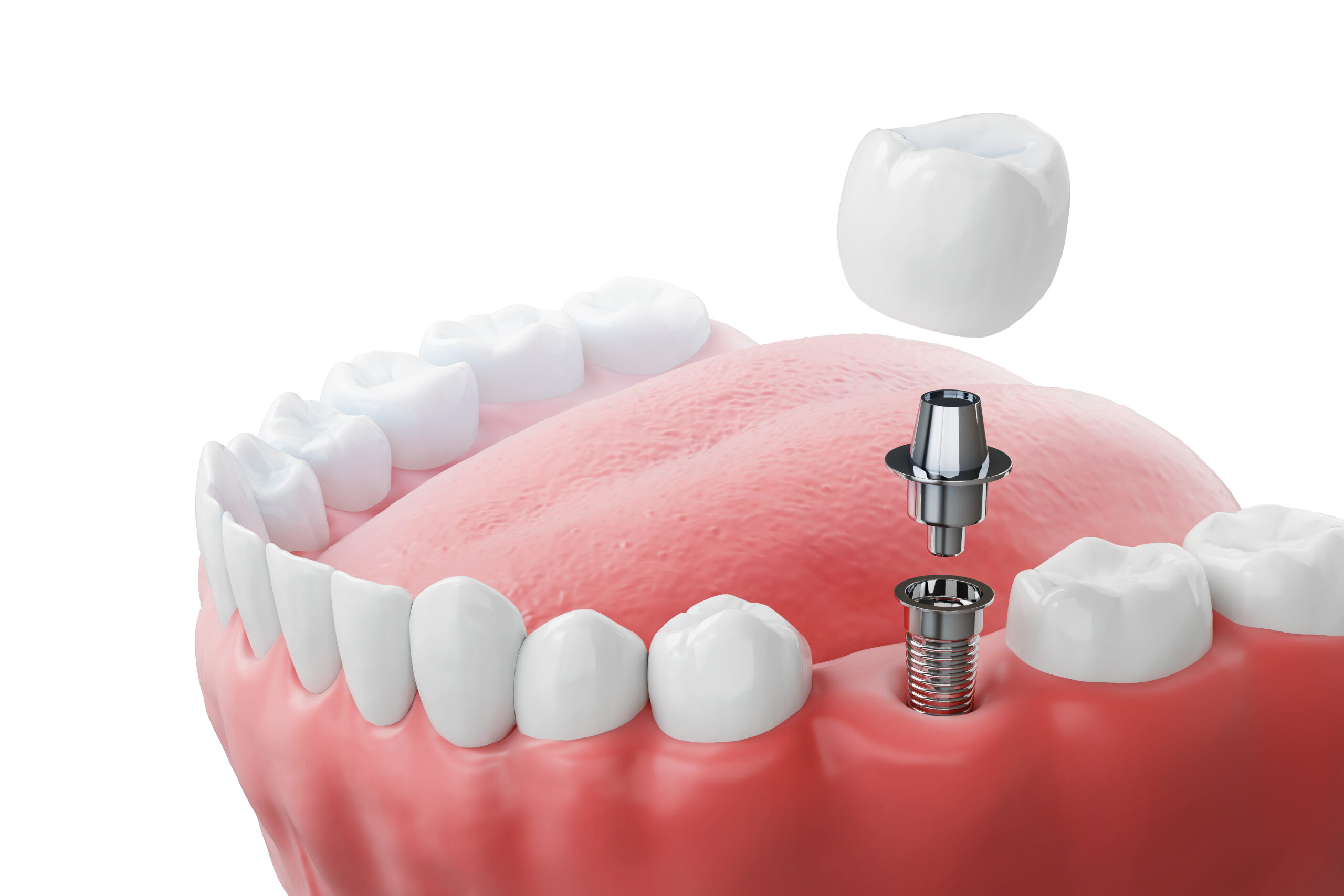
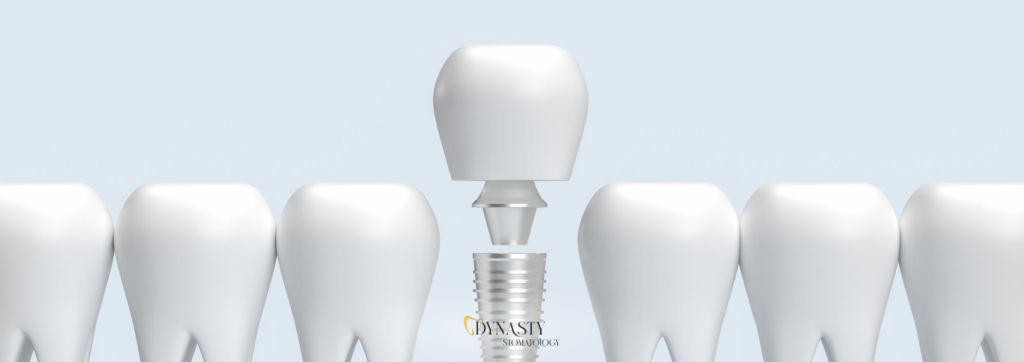
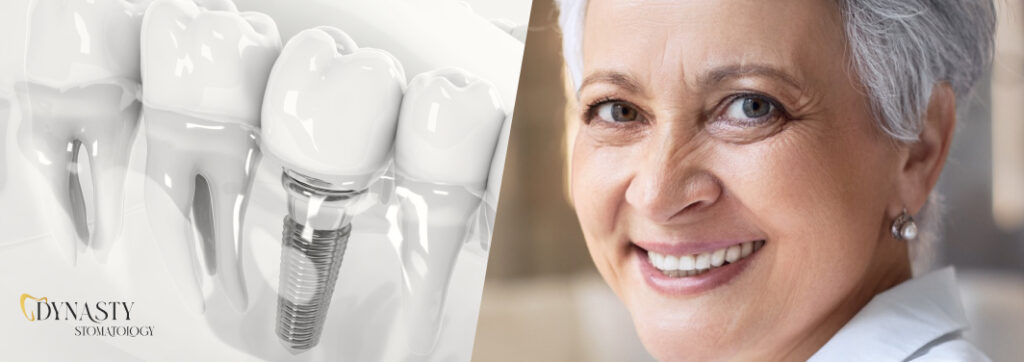
An implant is a small component, most often made of titanium, placed in the bone of the upper or lower jaw. It replaces the root of the lost tooth. After the procedure, osseointegration takes place—the biological process in which the implant surface fuses with the bone.
An abutment is attached to the implant. This component connects the implant to the prosthetic crown. The crown is the visible part of the restoration and is selected to match the shape and color of the adjacent teeth.
What Does the Procedure Look Like Step by Step?
- Consultation and planning – the dentist takes a medical history, examines the mouth, and reviews CBCT imaging.
- Gentle extraction – the tooth is removed in a way that preserves the surrounding tissues as much as possible.
- Assessment of the socket – the dentist checks the condition of the bone and tissues, as well as the presence of inflammatory changes.
- Implant placement – the implant is placed in the planned position.
- Decision regarding a temporary restoration – this depends on implant stability and bite conditions.
- Healing and follow-ups – after the healing period, the final crown is made.
After the procedure, the patient receives recommendations regarding oral hygiene, diet, and follow-up visits.
Immediate vs. Conventional Implant Placement: Key Differences
Both methods have the same goal: to stably replace a missing tooth with an implant. They differ mainly in the timing of implant placement and clinical requirements.
| Treatment element | Immediate implant placement | Conventional implant placement |
|---|---|---|
| Timing of placement | Directly after extraction | After the extraction site has healed |
| Time before implant placement | Usually no waiting period, if conditions allow | Most often 3–6 months for the tooth socket to heal |
| Number of stages | May be fewer | Usually includes an additional waiting stage |
| Temporary aesthetics | A temporary restoration may sometimes be possible right away | A temporary restoration is planned separately |
| Requirements | Good bone quality, no active infection, adequate stability | May be a better option after treating inflammation or regenerating tissues |
Immediate implant placement is not automatically better. Conventional delayed placement can be a more sensible and safer option when the extraction site needs to heal first.
When Can an Implant Be Placed Immediately After an Extraction?
Yes, after a tooth is removed, it may sometimes be possible to place an implant immediately, but the decision is made by the dentist after diagnostic assessment. They evaluate the condition of the socket, the amount of bone, the condition of the tissues, the presence of infection, and whether stable implant placement can be achieved.
The ability to safely provide a temporary restoration is also important. Without an examination, it should not be assumed that this method will be suitable.
When Is Delayed Implant Placement a Better Option?
Delayed implant placement is considered, among other situations, when there is inflammation, an abscess, significant bone damage, or a need for tissue regeneration. First, the dentist treats the problem and prepares the site for stable implant placement.
Delaying the procedure does not mean treatment failure or inferior treatment. It is a deliberate decision that can make the subsequent restoration more predictable.
Eligibility, Safety, and Contraindications
Immediate implant placement requires adequate bone conditions and no active inflammation. Extensive decay, pulp inflammation, an abscess, or inflammatory changes around the tooth root may mean that implant placement during the same visit is not the right solution.
Safe eligibility assessment includes a discussion of your general health, medications, smoking, and previous treatment. The dentist examines the mouth and reviews diagnostic images to plan the procedure and reduce risks.
Some general health conditions or medications may require additional consultations or changes to the treatment plan. This article does not replace a dental examination.
Why Is a CBCT Scan Important Before Implant Placement?
CBCT is cone beam computed tomography, a type of three-dimensional imaging used to assess bone structures. It allows the dentist to check the amount and shape of the bone and plan the implant position while taking adjacent teeth and important anatomical structures into account.
At Dynasty Stomatology, CBCT diagnostics are part of implant treatment planning. They do not guarantee success, but they provide the information needed for a more informed eligibility assessment.
How Can the Risk of Complications Be Reduced?
Risk is reduced through proper planning, good oral hygiene, and following post-procedure recommendations. It is advisable not to smoke or to significantly reduce smoking, attend follow-up appointments, and avoid putting pressure on the treatment area against the dentist’s instructions.
Contact the dental office if you experience increasing pain, worsening swelling, fever, bleeding, discharge, or loosening of the temporary restoration. Such symptoms require professional assessment rather than self-treatment.
Benefits and Limitations of Same-Day Implant Placement
The main benefit of immediate implant placement is the possibility of shortening the process between tooth extraction and implant placement. In the aesthetic zone, a temporary restoration can also help maintain confidence when smiling during the healing period.
The method may involve fewer surgical stages, but it does not eliminate the need for follow-up visits or the later placement of a final crown. It is a treatment option for patients who meet specific criteria, not a universal solution for every missing tooth.
The result depends, among other factors, on bone quality, proper planning, hygiene, healing, and regular dental care. An honestly planned treatment also takes into account the possibility of changing the strategy if the situation during the procedure requires it.
Is an Immediate Implant Long-Lasting?
An implant can last for many years if it integrates properly with the bone and receives regular check-ups. Oral hygiene, gum health, bite forces, and avoiding smoking are also important.
The longevity of an implant is not the same as the longevity of the crown. The crown and other prosthetic components may require check-ups, repair, or replacement over time, just like other dental restorations.
Implant Consultation at Dynasty Stomatology: What Happens Next?
The first implant consultation is intended to help understand the problem and prepare a realistic treatment plan. We discuss the patient’s expectations and general health, perform an oral examination, and arrange diagnostic imaging when needed.
The dentist then assesses whether immediate implant placement is possible or whether a healing period or bone preparation would be safer. The patient receives information about the schedule, treatment stages, and an individual cost estimate.
At Dynasty Stomatology, we provide on-site diagnostics and care from a team specializing in surgery and prosthetics. The clinic is located at Romanowicza Street 1/LU3 and Romanowicza Street 4B in Krakow. To book by phone: +48 124 004 016.
If you are considering an implant after a tooth extraction, schedule an implant consultation before deciding on the extraction date. This will help plan treatment safely and understand the full cost of the restoration.