



Root canal treatment is required when the tooth pulp becomes inflamed or infected because of decay, injury or repeated dental treatment procedures. If the tooth is left untreated, the infection spreads leading to pain and inflammation. It can lead to an abscess that is the accumulation of pus in tooth's root.

Higher Success Rate

Reduced Risk of Re-infection

Professionalism
What is root canal treatment in endodontics?
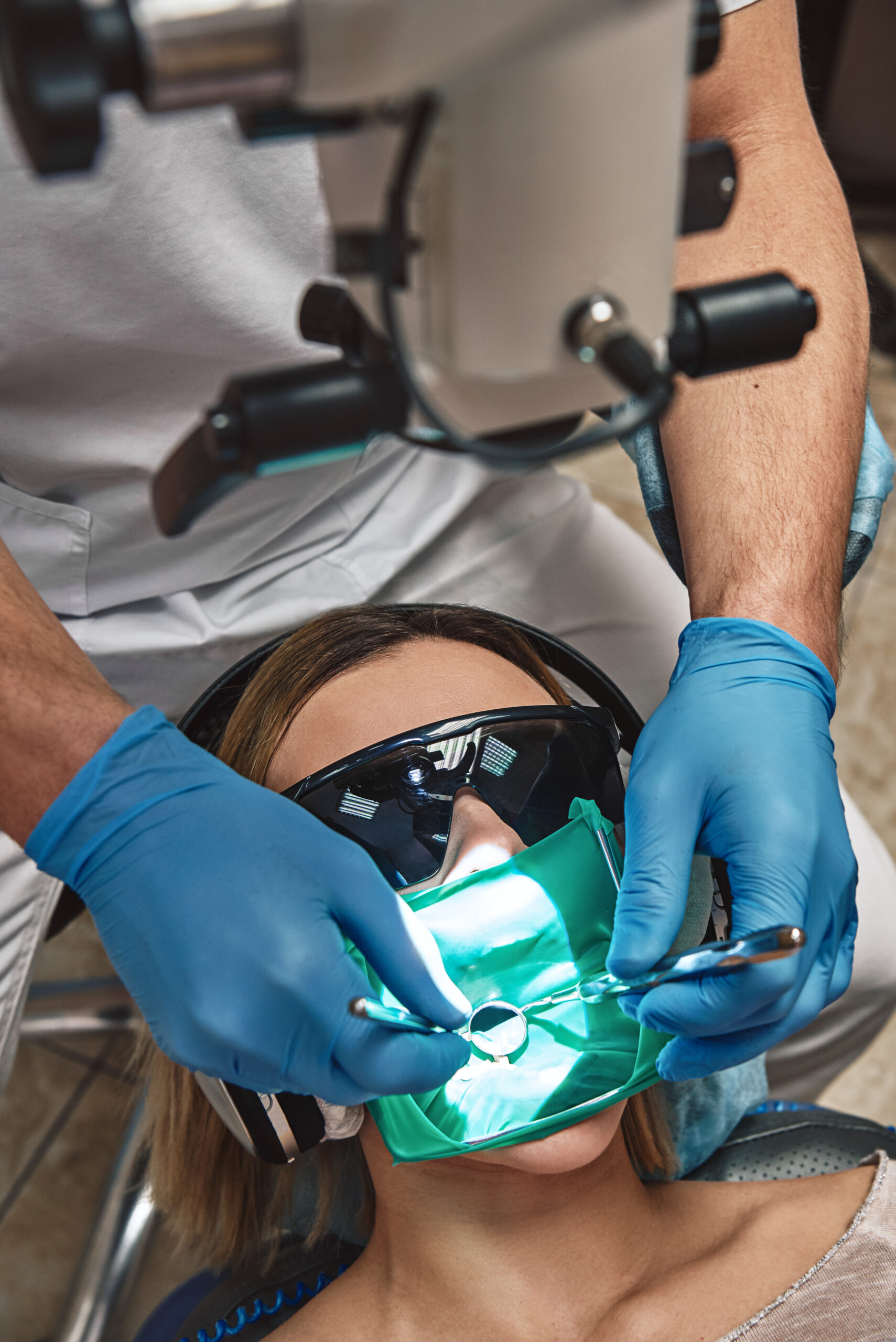
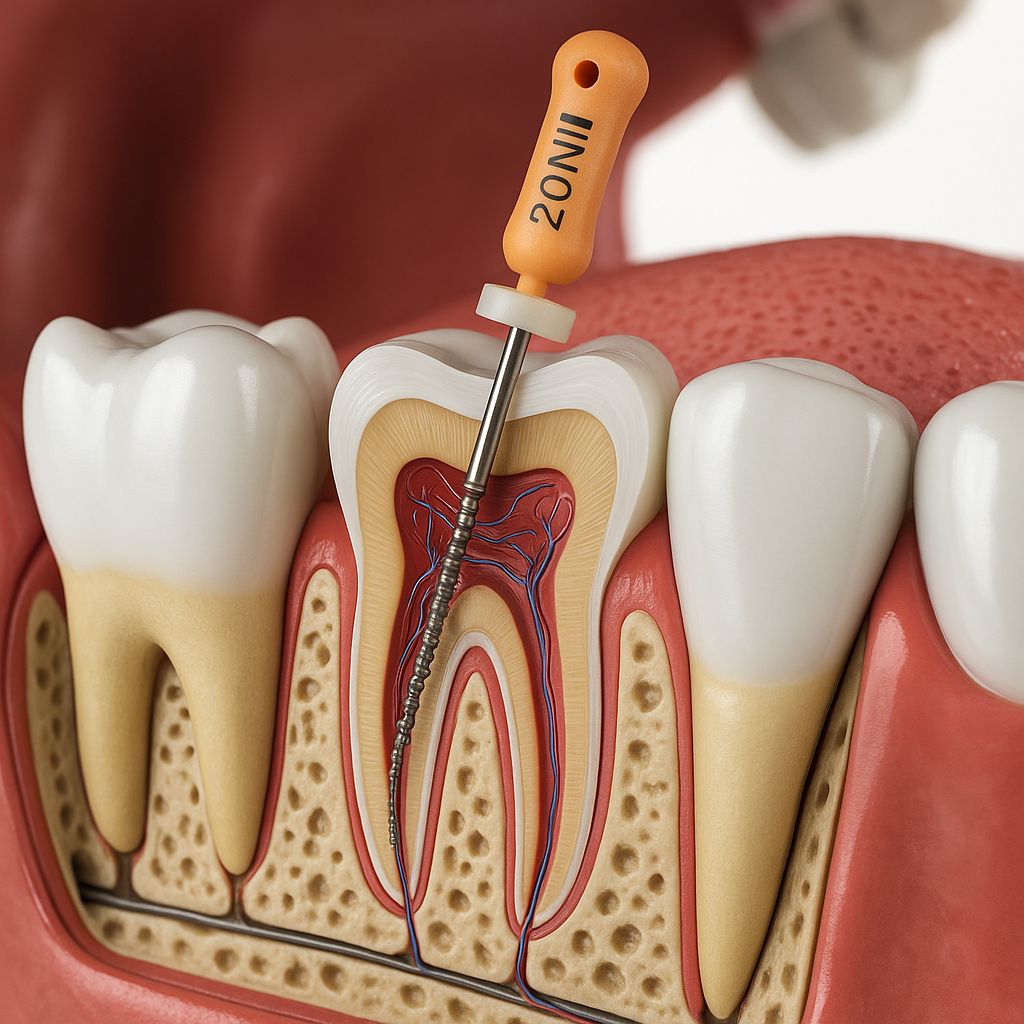
In root canal and endodontic treatment, you can save your tooth by removing the infected or inflamed pulp from inside the tooth. The treatment uses a dental microscope along with a magnification tool for shaping the root canals and finally sealing them to curb the infection from spreading to the other teeth.
When an oral cavity touches the pulp, it causes pain and may lead to an abscess, if not treated on time. The aim of this treatment is to the preservation of natural teeth and restore its full functionality, avoiding tooth extraction.
Root canal treatment requires a trained dentist or an endodontist for the entire procedure. One of the most common methods of saving a tooth is a root canal treatment because it is a better option than extracting it to maintain tooth alignment and bite function.
Root canal treatment - prices in Krakow
-
Dentist consultation
250 PLN
Root canal retreatment with a microscope
-
Single-rooted tooth with a microscope
1 100 PLN -
Two-rooted tooth with a microscope
1 500 PLN -
Three-rooted tooth with a microscope
2 050 PLN -
Four-rooted tooth with a microscope
2 450 PLN
Root canal retreatment is only being done with a microscope
-
Tooth restoration (tooth filling)
400‑750 PLN -
Root canal treatment in a baby tooth
350‑450 PLN -
Composite filling of a baby tooth
300‑400 PLN
How the Dynasty Stomatology dental clinic's loyalty program works
Learn more about the loyalty program
Step 01
Visit the clinic and scan the QR code at the reception desk
Step 02
Register online — enter your details
Step 03
Receive and accumulate points after each visit
Do you want to restore the function and aesthetics of the tooth?
Schedule an appointment!
By clicking the button, you give your agreet your personal data in accordance with privacy policy.
Frequently asked questions about root canal treatment
-
The signs of an infected tooth are dark or chipped tooth, pain, gum inflammation, hot or cold tooth sensitivity and pain.
-
Root canal treatments are generally completed in one to two visits. These sessions generally take 60 to 90 minutes, on an average.
-
Yes. Root canal treatment is safe and successful when done by licensed and skilled dental professionals in a clean environment.
-
Root canal treatment is completely safe in the second trimester with pregnancy safe anesthesia and medicines.
-
A root canal treatment in Poland typically costs between 400 and 1,200 PLN (approximately €90–€270) per tooth, depending on the tooth type — front teeth are less expensive, while molars with multiple canals cost more. At our clinic, the final price also depends on the complexity of the case and whether additional procedures, such as a post or crown, are needed afterward. We recommend scheduling a consultation so we can provide you with an accurate, personalized estimate. Poland offers excellent quality dental care at a fraction of the cost compared to Western Europe, making it a popular choice for patients seeking affordable treatment.
-
A root canal is much less painful than most people expect. Thanks to modern anesthesia, the procedure itself is typically painless — most patients compare it to getting a regular filling. You may experience mild soreness or sensitivity for a few days afterward, but this is usually manageable with over-the-counter pain relievers. In fact, a root canal relieves the severe toothache that brought you in, so most patients feel significantly better after treatment.
-
After a root canal treatment, most patients feel significantly better within a few days, though mild sensitivity or discomfort may last up to a week. Full healing of the surrounding bone and tissues typically takes 1 to 2 weeks, but in some cases, complete biological healing around the tooth root can take several months. If you experience persistent pain or swelling beyond the first week, please contact our clinic so we can ensure everything is healing properly.
-
After a root canal, avoid chewing on the treated side until your permanent restoration is placed, as the tooth can be fragile and prone to cracking. Don't eat hard, crunchy, or sticky foods for at least a few days, and avoid very hot or cold beverages while numbness is still present to prevent accidentally biting your cheek or tongue. Skip smoking and drinking through a straw, as these can slow healing. If you experience any unusual swelling or pain that worsens after a few days, don't hesitate to contact our clinic right away.
-
During a root canal, your dentist removes the infected or damaged pulp (the soft tissue inside your tooth containing nerves and blood vessels) to save the tooth from extraction. The inside of the tooth is then carefully cleaned, disinfected, and shaped before being filled with a special biocompatible material to seal it. Finally, the tooth is restored with a filling or crown to protect it and bring back its full function. The procedure is performed under local anesthesia, so you can feel comfortable knowing it's typically no more uncomfortable than getting a regular filling.
Endodontists specializing in root canal therapy
View all doctors
Anastasiia Danyliuk
General dentist, endodontist
Focuses not only on treatment effectiveness but also on patient comfort. Her main goal is to provide long-term results without the need for repeate...

Yulia Kryzhanovska
General dentist, endodontist
A doctor with a sense of humor who creates a positive atmosphere even in the dental chair.

Vladyslav Karkachov
General dentist, endodontist, prosthodontist
Relies on a well-thought-out treatment plan and good rapport with the patient. A friendly approach helps build trust, even among those afraid of de...

Yana Tereshchenko
General dentist, endodontist
Cares about both the health and the aesthetic and functional aspects of her patients’ teeth, helping preserve a natural, beautiful smile for years.

Yuliia Rudzynska
Pediatric dentist
Helps children not only maintain healthy teeth but also develop a positive attitude toward dentistry, ensuring fear-free visits.

Oleg Vus
General dentist, endodontist, prosthodontist
Oleg Vus is guided by the principles of professionalism, honesty, and patient care. He does not impose unnecessary procedures, but offers only the ...

Rostyslav Savruk
General dentist, endodontist, prosthodontist
Over 16 years of professional experience. Specialization in prosthetic dentistry and dental prosthetics. Use of advanced techniques and modern mate...

Dmytro Ostrovskyi
Prosthodontist
Over 30 hands-on courses completed in 9 years of practice. A comprehensive approach guarantees stable, durable, and predictable results.
Reviews of root canal treatment in Krakow
Expert articles on the topic
View all blog-
08.10.2026
1
8 min. read
Sensitive Teeth: Causes, Treatment, and Effective Pain Relief
Sensitive teeth most often cause brief, sharp pain triggered by stimuli such as a cold drink, hot food, or brushing. It occurs when stimuli reach exposed dentin—the tissue located beneath the enamel and root cementum. Dentin contains microscopic tubules connected to the inside of the tooth. When enamel wears away due to erosion or the […]
Read more -
07.10.2026
2
9 min. read
Toothache – How to Relieve It at Home and When to See a Dentist Urgently
This guide is for adults who need safe relief before seeing a dentist. Home remedies may reduce toothache pain for a short time, but they do not address its cause. If the pain is severe, worsening, recurring, or accompanied by swelling, it is worth contacting a dental office the same day. In cases of sudden […]
Read more -
03.07.2026
276
7 min. read
Treating Tooth Decay — How to Get Rid of Tooth Decay, Causes and Symptoms
Dental caries rarely begins with pain. In most cases, it develops silently in its early stages. First, a small spot…
Read more -
22.05.2026
441
8 min. read
Root canal treatment under a microscope – jwhat is microscopic endodontics?
Many people still view root canal treatment as one of the most unpleasant dental procedures. Fear of pain, lengthy treatment,…
Read more -
25.03.2026
657
9 min. read
Causes and Treatment of Stomatitis – What is it and Why Does it Occur?
Have you ever woken up in the morning, gone to drink coffee, and suddenly noticed an unpleasant burning sensation in…
Read more -
09.03.2026
381
9 min. read
Restorative Dentistry Guide — Everything You Need to Know
Sometimes a tooth decays almost unnoticed. There's no sharp pain or warning signs. A small spot, mild sensitivity to cold,…
Read more









Root Canal Treatment in Krakow – Precision Endodontics at Dynasty Stomatology
Endodontics, or root canal treatment, involves removing infected or inflamed pulp from inside the tooth, cleaning the root canals, and sealing them tightly. The aim is to preserve your natural tooth when disease has reached its inner tissues.
This information is for people in Krakow experiencing tooth pain, dealing with deep decay, or who have been told they may need root canal treatment. Eligibility is always assessed by a dentist after an examination and diagnostic testing. At Dynasty Stomatology, we plan root canal treatment in Krakow individually, taking into account the condition of the roots, canals, and tissues surrounding the tooth.
When Is Root Canal Treatment Needed?
Endodontic treatment may be needed when decay, trauma, or inflammation reaches the pulp—the living tissue inside the tooth. Signs that you should arrange a prompt consultation may include severe, spontaneous, or throbbing pain, a prolonged reaction to heat or cold, swollen gums, pain when biting, or a deep cavity.
Not every tooth that requires root canal treatment is painful. Sometimes changes are detected during a check-up or on an X-ray. If you have pain, swelling, fever, or worsening symptoms, it is advisable to contact the dental practice as soon as possible.
Does Every Toothache Mean You Need a Root Canal?
No. Tooth pain can result from decay, a crack in the enamel, gum problems, bite overload, or tooth sensitivity, among other causes. A description of symptoms alone is not enough to diagnose the condition of the pulp.
The dentist assesses the tooth during an intraoral examination, checks its response to diagnostic tests, and often orders an X-ray. Only after reviewing all this information can they decide whether root canal treatment, routine restorative treatment, or another form of care is needed.
What Can Happen Without Treatment?
Extensive inflammation left untreated may spread beyond the tooth. In some cases, it can lead to inflammatory lesions, including cysts, which may damage the bone as they develop.
This does not mean that every painful tooth will follow this course, but delaying treatment makes assessment and care more difficult. Extraction should be considered a last resort, after determining whether the tooth can be saved with endodontic treatment and appropriate restoration.
Endodontic Consultation in Krakow
An endodontic consultation at Dynasty Stomatology begins with a discussion of your symptoms and an oral examination. The dentist asks about how long the pain has lasted, previous treatment, injuries, and medications you are taking. X-ray diagnostics are also usually needed to help plan further treatment.
In more complex cases, a consultation using a microscope is available. Magnification makes it easier to assess details within the tooth, but it does not replace a clinical examination or imaging. Patients receive an explanation of the possible options, the scope of treatment, and the information needed to make an informed decision.
Why Is an X-ray Taken?
An X-ray helps the dentist assess the position of the roots, the approximate course of the canals, and the extent of changes visible around the tooth. It is an important part of treatment planning because root canals cannot be seen during a standard visual examination of the tooth.
A single examination does not automatically answer every question. The dentist interprets the X-ray image together with your symptoms and the findings from the in-office examination. The principles of endodontic diagnosis and treatment are described by the European Society of Endodontology.
How Should You Prepare for the Consultation?
Before your appointment, it is worth preparing a short list of information that may help the dentist assess your situation:
- when the pain started and what makes it worse or relieves it;
- whether you have swelling, pain when biting, or sensitivity to temperature;
- what dental treatment you have had previously;
- what medications you are currently taking and whether you have any allergies;
- any X-rays or other medical records you have available.
Patients who prefer to communicate in Ukrainian, Russian, or English can mention their preferred language when booking an appointment. Reception will confirm the available options.
What Does Root Canal Treatment Involve?
Root canal treatment is a structured process intended to remove infected tissue from the canals, clean them, and protect them from further infection. The procedure is performed under local anaesthesia selected according to the clinical situation and the patient’s needs.
The dentist isolates the treatment area, gains access to the inside of the tooth, prepares the canals, and then fills them. Once treatment is complete, restoring the crown portion of the tooth is important. This protects weakened tissues and allows the bite function to be restored safely.
Cleaning and Disinfecting the Canals
The stages of root canal treatment are planned in chronological order. First, the dentist reviews the X-ray diagnostics, then opens the crown of the tooth and removes decay to access the pulp and root canals.
The next stage involves removing infected tissue from the canals, shaping them, disinfecting them, and drying them. Each step is intended to reduce microorganisms and prepare the space for a tight seal. The scope of work depends on the anatomy of the individual tooth and the clinical picture.
Sealing the Canals and Restoring the Crown
After cleaning and drying the canals, the dentist fills them with a material intended for this purpose. A tight seal of the canals is designed to reduce the risk of bacteria re-entering the inside of the tooth.
The crown of the tooth—the part visible above the gum line—is then restored. The restoration method depends on the amount of remaining tooth structure, the position of the tooth, and the forces placed on it when biting. The dentist discusses the possible solution after assessing the condition of the individual tooth.
One or Two Visits?
Root canal treatment may be completed in one or two visits. The choice depends on the diagnosis, the condition of the tissues, the canal anatomy, and whether the tooth has active inflammation that requires staged treatment.
In a two-stage approach, the dentist may use a devitalising agent, commonly referred to as “nerve-killing” treatment. This is part of the planned treatment, not an aim in itself. At the next visit, the canals are cleaned and filled. Modern endodontics bases the decision about the number of visits on examination findings rather than a fixed approach for every patient.
Root Canal Treatment Under a Microscope – Why Does It Improve Precision?
Dental treatment under a microscope allows the dentist to work with magnification and better illumination of the treatment area. It is especially helpful when canals are very narrow, curved, or difficult to assess anatomically.
Microscopic root canal treatment does not replace diagnostics or the endodontist’s experience, but it supports careful work. At Dynasty Stomatology, procedures performed under magnification are the standard approach in endodontics.
What Can the Dentist See With Magnification?
Magnification may help identify narrowed canals, root damage, and additional canals that are not always visible on an X-ray. These details matter when planning access to the inside of the tooth and thoroughly preparing the canals.
For the patient, this means more controlled work in the small space inside the tooth. The dentist can assess the treatment area more precisely, although the scope and outcome of treatment still depend on individual clinical conditions.
When Is a Microscope Particularly Useful?
A microscope is particularly useful for complex tooth anatomy, very narrow canals, and situations requiring careful assessment of small structures. It can also help when the dentist suspects an additional canal or needs to assess an unusual root course.
Not every case requires the same extent of work under magnification. The dentist makes the decision after examination and diagnostic analysis, guided by safety and the possibility of preserving the tooth.
Is Root Canal Treatment Painful and Is It Safe?
Root canal treatment is usually performed under local anaesthesia, so the patient should not feel sharp pain during the procedure. However, you may experience a feeling of pressure, fatigue from keeping your mouth open for an extended period, or temporary discomfort after treatment is completed.
After the procedure, the tooth may be tender, especially when biting. The dentist provides individual instructions on what to do after your visit. If swelling increases, pain does not subside despite following the recommendations, or concerning general symptoms appear, contact the dental practice again.
Modern endodontics focuses on pain control, accurate diagnostics, and a safe treatment plan. However, it is not possible to honestly guarantee the same level of comfort or healing process for every person.
How Much Does Root Canal Treatment Cost in Krakow?
The cost of root canal treatment in Krakow depends on the type of tooth, the number of canals, their anatomy, the level of difficulty, the scope of diagnostics, and whether microscope-assisted treatment is needed. It also matters whether extensive restoration of the tooth crown will be necessary after treatment.
The exact cost of root canal treatment can be determined after a consultation and examination. The patient receives a treatment plan and an estimate reflecting the actual scope of work, rather than a single fee that does not account for the specifics of the case.
| Factor | Why does it affect the price? |
|---|---|
| Type of tooth | Front teeth and molars may differ in the number and structure of their canals. |
| Condition of the tooth | Deep decay, previous treatment, or damage may increase the scope of work. |
| Diagnostics | X-rays and other necessary tests make it possible to plan treatment safely. |
| Work under magnification | A microscope supports precision in complex cases. |
| Restoration after treatment | The scope of restoration is determined after assessing the amount of remaining tooth structure. |
What Does the Treatment Estimate Include?
The estimate may include several separate elements, so it is worth asking about the full plan rather than only the cost of preparing the canals. It usually takes into account:
- the consultation and required diagnostics;
- root canal treatment;
- any additional visits;
- use of a microscope, if indicated;
- restoration of the tooth after treatment is completed.
The full scope can only be determined after an examination. This helps the patient understand which stages are needed and what determines the price of root canal treatment.
Private Treatment, Insurance, and Payment
Self-pay treatment means paying the clinic directly according to the treatment plan provided. With private insurance, the possibility of reimbursement, benefit limits, and required documents depend on the individual policy.
Before your appointment, it is worth confirming the available payment methods with reception. Patients using insurance should check payment and reimbursement terms directly with their insurer. Dynasty Stomatology does not automatically assume that reimbursement is available under every policy.
Endodontists at Dynasty Stomatology Krakow – Standard of Care
At Dynasty Stomatology in Krakow, the treatment process begins with a diagnosis and a calm discussion of the possible solutions. The dentist explains why a particular approach is proposed, what to expect during the visit, and why restoring the tooth after root canal treatment is important.
Treatment under magnification is the clinic’s standard of care for endodontic procedures. The team also uses on-site diagnostic imaging. For patients, not only technology matters, but also the opportunity to ask questions and receive clear information in their preferred language.
In cases of acute pain, Dynasty Stomatology aims to see patients on the same day, subject to current appointment availability.
A Treatment Plan Tailored to Your Case
The dentist should not decide on the number of visits, the need for a microscope, or the restoration method solely on the basis of one symptom. The plan is created after an intraoral examination, X-ray analysis, and assessment of the condition of the individual tooth.
Individual assessment does not delay care unnecessarily. It makes it possible to choose an approach appropriate for the canal anatomy, the extent of damage, and the patient’s overall situation. This is especially important for people who want to begin treatment quickly but make an informed decision.
How to Book Root Canal Treatment in Krakow?
To arrange an endodontic consultation, mention any pain, swelling, or previous root canal treatment when you contact us, and prepare any X-rays you have. Reception can provide information about the nearest available appointment, the consultation fee, payment, and communication in Polish, English, Ukrainian, or Russian.
Book an appointment at Dynasty Stomatology. The clinic sees patients at ul. Romanowicza 1/LU3 and ul. Romanowicza 4B in Krakow. If you have acute pain, it is worth indicating the urgent nature of your request.