



Toothache when eating something cold, sweet or sour is a common cause of discomfort in patients of all ages. If you are concerned about increased tooth sensitivity, you should not endure the unpleasant sensations - the specialists of the Dynasty Stomatology clinic in Krakow will help eliminate the problem quickly and carefully. Make an appointment with a dentist and bring back the joy of your favorite tastes!

Treatment of dental hypersensitivity in Krakow

Sealing agents

Blocking agents

Laser therapy
How does tooth hypersensitivity manifest itself?
Increased sensitivity of teeth can cause significant discomfort in everyday life. The main symptom of hyperesthesia can be:
- sharp pain when inhaling cold air;
- discomfort when consuming hot or cold food;
- pain when eating sweet, sour foods, drinking carbonated drinks;
- discomfort when brushing teeth;
- a short-term but acute reaction to other stimuli.
At the first symptoms of hyperesthesia, it is better to immediately contact a dentist to eliminate the problem and avoid unpleasant consequences.

How the Dynasty Stomatology dental clinic's loyalty program works
Learn more about the loyalty program
Step 01
Visit the clinic and scan the QR code at the reception desk
Step 02
Register online — enter your details
Step 03
Receive and accumulate points after each visit
Do you want to treat your teeth while you sleep?
Schedule an appointment!
By clicking the button, you give your agreet your personal data in accordance with privacy policy.
Frequently asked questions about tooth sensitivity treatment
-
With proper treatment and elimination of the cause, sensitivity often disappears permanently or completely.
-
This toothpaste can be used temporarily to reduce symptoms until you visit your dentist. But to achieve lasting results, it is better to consult a specialist.
-
Professional cleaning usually improves the condition of teeth, but in cases of increased sensitivity it may temporarily increase discomfort and reaction to irritants.
-
Yes, sensitivity occurs after bleaching, but it is temporary.
-
It is better to limit sour, sweet, too hot or cold foods and drinks in case of hyperesthesia.
-
There is a connection and it is quite large – stress can aggravate hyperesthesia due to jaw clenching and other factors.
-
Hyperesthesia occurs in patients of different ages and can be treated, including in adolescents.
-
To protect the surface of your teeth, it is recommended to use a soft brush, special pastes and avoid aggressive procedures.
-
Optimal fluoride levels strengthen enamel and reduce sensitivity. This is one of the methods for preventing dental hypersensitivity.
-
Sometimes repeat treatment or maintenance therapy is required to achieve long-term results.
-
Dental hypersensitivity can be managed with several effective approaches. At home, using a desensitizing toothpaste containing potassium nitrate or stannous fluoride and a soft-bristled toothbrush can significantly reduce discomfort. In our clinic, we offer professional treatments such as fluoride varnish application, dental bonding, or sealants to protect exposed tooth surfaces. If sensitivity persists, we recommend scheduling a visit so we can identify the underlying cause — such as enamel erosion, gum recession, or tooth decay — and tailor the best treatment plan for you.
-
Yes, tooth hypersensitivity can often improve or go away, depending on its cause. In many cases, using a desensitizing toothpaste, avoiding acidic foods, and practicing gentle brushing techniques can significantly reduce sensitivity within a few weeks. However, if the sensitivity is caused by an underlying issue such as tooth decay, a cracked tooth, or gum recession, it's important to visit your dentist for proper treatment — the sooner the cause is addressed, the faster the relief.
-
Certain dental hygiene procedures can temporarily increase sensitivity, including professional scaling and root planing (deep cleaning), teeth whitening treatments, and ultrasonic cleaning. Brushing too aggressively at home or using highly abrasive toothpastes can also wear down enamel and expose sensitive areas over time. If you experience heightened sensitivity after any procedure, don't worry — it's usually temporary and can be managed with desensitizing toothpaste or fluoride treatments recommended by your dentist.
Dentists specializing in treating dental hypersensitivity
View all doctors
Anastasiia Danyliuk
General dentist, endodontist
Focuses not only on treatment effectiveness but also on patient comfort. Her main goal is to provide long-term results without the need for repeate...

Yulia Kryzhanovska
General dentist, endodontist
A doctor with a sense of humor who creates a positive atmosphere even in the dental chair.

Vladyslav Karkachov
General dentist, endodontist, prosthodontist
Relies on a well-thought-out treatment plan and good rapport with the patient. A friendly approach helps build trust, even among those afraid of de...

Yana Tereshchenko
General dentist, endodontist
Cares about both the health and the aesthetic and functional aspects of her patients’ teeth, helping preserve a natural, beautiful smile for years.

Yuliia Rudzynska
Pediatric dentist
Helps children not only maintain healthy teeth but also develop a positive attitude toward dentistry, ensuring fear-free visits.

Oleg Vus
General dentist, endodontist, prosthodontist
Oleg Vus is guided by the principles of professionalism, honesty, and patient care. He does not impose unnecessary procedures, but offers only the ...

Rostyslav Savruk
General dentist, endodontist, prosthodontist
Over 16 years of professional experience. Specialization in prosthetic dentistry and dental prosthetics. Use of advanced techniques and modern mate...

Dmytro Ostrovskyi
Prosthodontist
Over 30 hands-on courses completed in 9 years of practice. A comprehensive approach guarantees stable, durable, and predictable results.
Reviews of tooth sensitivity treatment in Krakow
Expert articles on the topic
View all blog-
08.10.2026
1
8 min. read
Sensitive Teeth: Causes, Treatment, and Effective Pain Relief
Sensitive teeth most often cause brief, sharp pain triggered by stimuli such as a cold drink, hot food, or brushing. It occurs when stimuli reach exposed dentin—the tissue located beneath the enamel and root cementum. Dentin contains microscopic tubules connected to the inside of the tooth. When enamel wears away due to erosion or the […]
Read more -
07.10.2026
2
9 min. read
Toothache – How to Relieve It at Home and When to See a Dentist Urgently
This guide is for adults who need safe relief before seeing a dentist. Home remedies may reduce toothache pain for a short time, but they do not address its cause. If the pain is severe, worsening, recurring, or accompanied by swelling, it is worth contacting a dental office the same day. In cases of sudden […]
Read more -
03.07.2026
276
7 min. read
Treating Tooth Decay — How to Get Rid of Tooth Decay, Causes and Symptoms
Dental caries rarely begins with pain. In most cases, it develops silently in its early stages. First, a small spot…
Read more -
22.05.2026
441
8 min. read
Root canal treatment under a microscope – jwhat is microscopic endodontics?
Many people still view root canal treatment as one of the most unpleasant dental procedures. Fear of pain, lengthy treatment,…
Read more -
25.03.2026
657
9 min. read
Causes and Treatment of Stomatitis – What is it and Why Does it Occur?
Have you ever woken up in the morning, gone to drink coffee, and suddenly noticed an unpleasant burning sensation in…
Read more -
09.03.2026
381
9 min. read
Restorative Dentistry Guide — Everything You Need to Know
Sometimes a tooth decays almost unnoticed. There's no sharp pain or warning signs. A small spot, mild sensitivity to cold,…
Read more







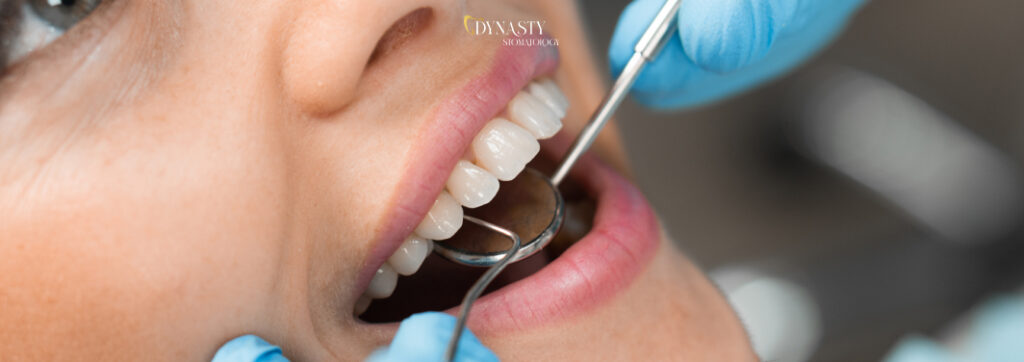

Treatment of dental hypersensitivity in Krakow – Causes, Treatment and Consultation
Tooth sensitivity is a short, sharp pain that occurs after contact with cold, heat, sweet or acidic foods, or a toothbrush. The discomfort often subsides once the trigger is removed, but it should not be ignored, especially if it recurs or affects more than one tooth.
A single twinge after eating ice cream does not always mean there is a health problem. However, if the pain is severe, occurs regularly, interferes with eating or brushing your teeth, a consultation is needed. The dentist will check whether the cause is truly tooth sensitivity rather than, for example, a cavity, pulp inflammation, a gum problem or a cracked tooth.
Why do teeth become sensitive?
The most common causes of tooth sensitivity are linked to exposed dentin. This tissue is located beneath the enamel and root cementum, the outer layer of a tooth root. When enamel wears away or gums recede, the dentin’s natural protective layer no longer shields it from triggers.
How does exposed dentin cause pain?
Dentin is a porous tissue containing microscopic tubules. These tubules contain fluid, and their interior is connected to the dental pulp, the tissue that contains nerves and blood vessels. When dentin is exposed, triggers can more easily reach the inside of the tooth.
A cold drink, hot coffee, a sweet dessert, acidic juice or sometimes even the touch of a toothbrush can then trigger a sudden pain response. The pain is usually brief and related to a specific situation, but recurring episodes are not something you need to simply get used to.
A description of symptoms alone is not enough to make a diagnosis. Similar reactions may occur with tooth decay, a leaking filling or pulp inflammation, which is why an examination at the dental clinic is necessary.
The most common causes of tooth sensitivity
The source of the problem can often be assigned to one of several groups:
- Mechanical wear – brushing too hard, using a hard-bristled toothbrush, using an electric toothbrush with excessive pressure, or frequent use of whitening toothpastes.
- Bite-related overload – bruxism, meaning clenching or grinding your teeth, as well as bite misalignment. These can cause excessive stress on certain tooth surfaces.
- Problems around the gums – gum inflammation, gum recession and cervical lesions, meaning defects close to the gum line.
- Chemical factors – frequent exposure to acidic products, acid reflux and vomiting, which may contribute to enamel erosion.
- The period after procedures – temporary sensitivity may occur after teeth whitening or certain dental procedures.
Appropriate treatment begins with identifying which of these causes is present in a particular patient. A product that only reduces pain may not be enough if the enamel is still being worn away or the teeth remain overloaded.
Habits that can worsen the problem
Some everyday habits can mechanically damage enamel or the edges of teeth. These include biting pencils and pens, biting your nails, and wearing oral piercings that constantly rub against teeth or gums.
It is also worth paying attention to clenching your jaws when stressed. Bruxism does not always involve loud grinding at night. Some people only notice tension in their jaw muscles after waking up, worn tooth edges or cracked fillings.
The goal is not to judge habits, but to identify a factor that can be reduced. A dentist can help assess signs of overload and recommend next steps, such as protecting teeth from nighttime clenching.
How can you tell tooth sensitivity apart from other tooth pain?
Tooth sensitivity usually causes a brief reaction to a specific trigger. However, not every toothache has this cause. Only a thorough dental examination can confirm sensitivity and rule out other diseases of the teeth and gums.
Typical symptoms of tooth sensitivity
Symptoms of tooth sensitivity often occur in everyday situations. This may include sudden pain after a sip of cold water, while eating ice cream, drinking hot tea, or after a sweet or acidic meal. For some patients, brushing a particular area also causes discomfort.
Before your appointment, it is helpful to note down a few details: which tooth reacts, what trigger causes the pain, how long it lasts and whether it happens with every exposure. For example, pain only when brushing near the neck of a tooth may suggest exposed dentin, but this requires confirmation by a dentist.
If the reaction lasts for a long time after the trigger is removed or occurs without an obvious cause, you should not assume that it is ordinary tooth sensitivity.
When is an urgent dental appointment needed?
A prompt consultation is recommended if tooth pain occurs spontaneously, throbs or persists for a long time after a cold or hot drink. You should also book an appointment without delay if the symptoms interfere with sleep or eating.
Concerning symptoms also include swelling of the face or gums, bleeding gums, fever, tooth trauma, a loose tooth and a clear worsening of the condition over a short period of time. Such symptoms may require a different approach than sensitivity treatment.
At Dynasty Stomatology, a patient with acute pain can report the need for an urgent consultation. Whether a same-day appointment is possible depends on the current availability of the team and the nature of the problem.
What does sensitivity diagnosis at the dental clinic involve?
Diagnosis begins with a conversation. The dentist asks about the type of triggers, how long the pain lasts, recent procedures, oral hygiene, diet, reflux and possible teeth clenching. It is also worth mentioning the toothpaste and toothbrush you use.
The dentist then assesses the enamel, cervical lesions, gum condition, the presence of recession, fillings and the bite. If necessary, they may order additional imaging diagnostics. Dynasty Stomatology performs digital diagnostics on-site when it is justified by the clinical assessment.
The goal is not merely to temporarily suppress pain. The treatment plan should identify its cause and explain how to protect the teeth from recurring symptoms.
Treatment of tooth sensitivity in Krakow
Treatment of tooth sensitivity in Krakow should be tailored to the source of the problem. Exposed dentin requires a different approach than a cavity, gum recession, bruxism or temporary sensitivity after whitening. A consultation makes it possible to create an individual treatment and home-care plan.
Procedures that reduce dentin sensitivity
When exposed dentin is the issue, the dentist may use in-office products that limit the transmission of triggers through dentinal tubules. The choice of method depends on the location and extent of the changes, as well as the condition of the teeth and gums.
| Situation | Goal of treatment | Expected effect | Follow-up |
|---|---|---|---|
| Exposed dentin without an extensive defect | Limiting the transmission of triggers | Gradual reduction in reactions to cold or touch | Assessment of effectiveness after the recommended period |
| Cervical lesion | Protecting the exposed tooth surface | Less contact between triggers and dentin | Checking the seal of the restoration |
| Persistent symptoms | Considering additional methods, including laser therapy, if the dentist considers it appropriate | Dependent on the diagnosed cause | Individual follow-up plan |
No method should be presented as guaranteeing an immediate effect. If the cause remains active, such as aggressive brushing or bruxism, the pain may return.
Treating the cause: gums, defects, bite and bruxism
If sensitivity is linked to a cervical lesion, restoration of the defect may be necessary. In cases of gum inflammation or recession, the most important step is to manage the periodontal problem, meaning one affecting the tissues surrounding the tooth.
Bite misalignment and bruxism require an assessment of how the teeth come into contact. The dentist may recommend protective treatment or a consultation in the appropriate area of dentistry. At Dynasty Stomatology, different specialties are available within one clinic, making it easier to plan further stages without searching for additional dental offices.
Follow-up appointments are part of treatment. They make it possible to check whether the pain is subsiding, whether oral hygiene is not damaging the gums, and whether the introduced changes are actually reducing overload.
How much does tooth sensitivity treatment cost?
The cost of tooth sensitivity treatment depends primarily on the cause and the extent of the required care. A single desensitising procedure is priced differently from restoring a cervical lesion, treating the gums, or measures related to bruxism and bite misalignment.
The number of teeth being treated, the need for diagnostics and the necessity of additional procedures also matter. Therefore, the exact cost of treating a sensitive tooth can only be determined after an examination and presentation of the treatment plan.
At Dynasty Stomatology, the plan should include an explanation of the diagnosis, the proposed stages and the costs before procedures begin. Patients can check the current price list and ask the reception team about available payment options. The clinic provides private treatment, including for people without Polish insurance.
If instalment payments are being considered, it is worth asking about the terms available on the day of the consultation. The clinic offers MediPay, MediRaty and an internal payment plan, with details arranged individually.
Home remedies and prevention of tooth sensitivity
Home remedies for tooth sensitivity can relieve symptoms and support treatment, but they do not replace an examination if pain persists. The most important thing is gentle, consistent oral hygiene that protects enamel and gums instead of causing further irritation.
- Choose a toothbrush with soft bristles.
- Place it at the gum line at an angle of about 45 degrees.
- Use a sweeping motion from the gum down toward the tooth crown, rather than vigorously scrubbing horizontally.
- Use oral hygiene products selected after a consultation, especially if you use whitening toothpaste.
- Limit very cold, very hot and acidic triggers if they clearly cause pain.
An electric or sonic toothbrush with pressure control may help people who tend to brush too hard. However, it does not replace proper brushing technique.
If bruxism is suspected, an assessment by a dentist is needed, and if reflux symptoms occur, contact your treating doctor. Prevention of tooth sensitivity works best when it includes both oral hygiene and removal of the cause of enamel or gum damage.
Book a consultation for tooth sensitivity in Krakow
A tooth sensitivity consultation is intended for people who experience pain from cold, heat, sweet products or brushing. It is also worth seeking care after teeth whitening or if you suspect gum recession, cervical lesions, reflux or bruxism.
An appointment at Dynasty Stomatology follows simple steps:
- You choose a convenient appointment time online or contact the reception team.
- During the consultation, the dentist takes a medical history and examines your teeth, gums and bite.
- You discuss the diagnosis, possible tooth sensitivity treatment options, costs and at-home recommendations.
- If further procedures are needed, you receive a plan for the next steps.
The clinic is located at ul. Romanowicza 1/LU3 and ul. Romanowicza 4B in Krakow. Before your appointment, you can indicate your preferred contact language—the team communicates in Polish, English, Ukrainian and Russian. This makes it easier to discuss symptoms and treatment decisions calmly.
Recurring pain does not have to mean complicated treatment, but it does require a reliable assessment. Book a consultation to determine the cause of the sensitivity and receive a plan tailored to the condition of your teeth.