



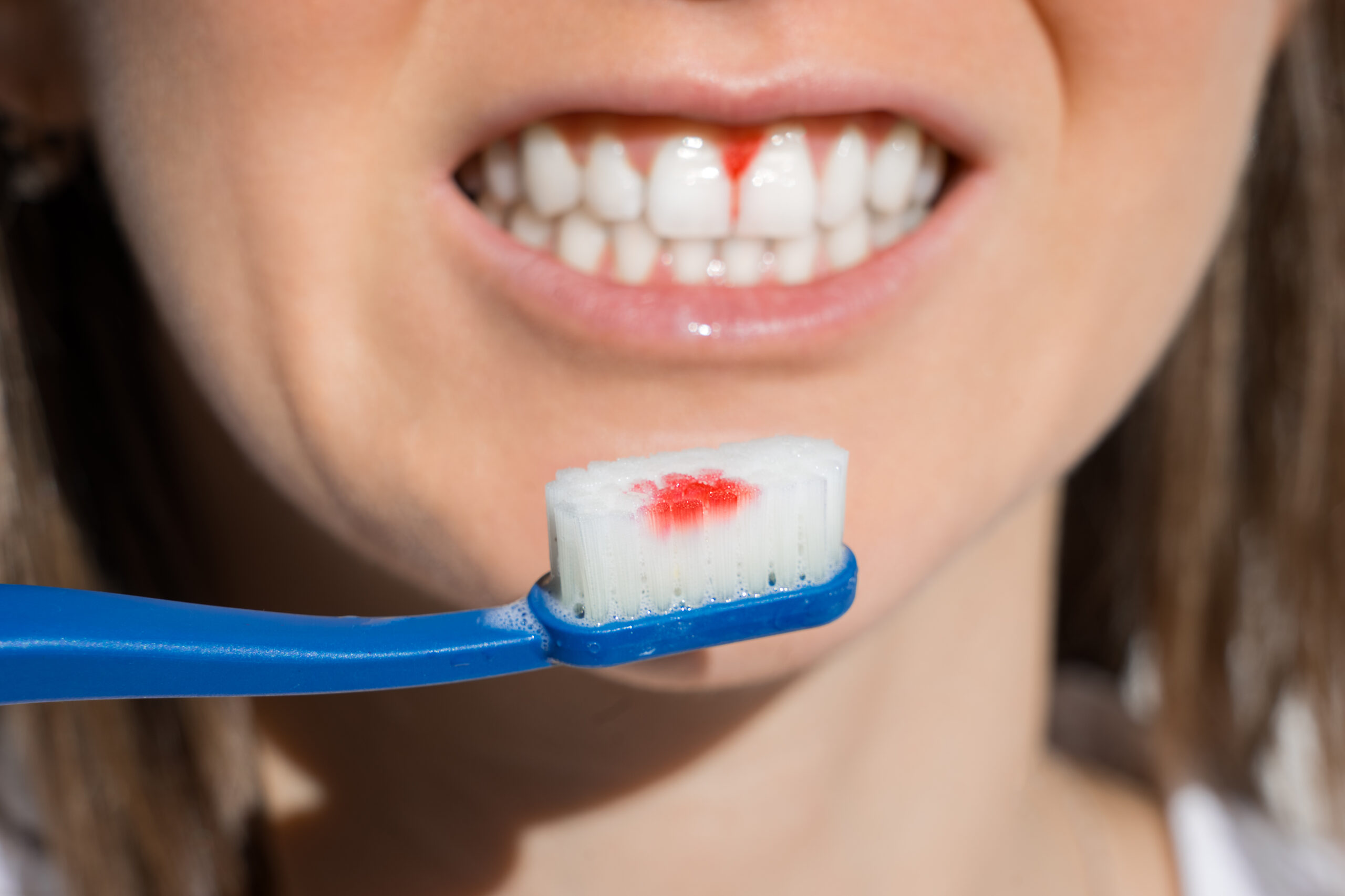
Have you noticed an unpleasant odor from your mouth? Do you experience discomfort when using dental floss? Do your gums bleed when brushing or eating? Gum inflammation and bleeding are very common issues that bother many of our patients. If you are also dealing with this problem, schedule an appointment at Dynasty Stomatology. Our highly qualified dentists will advise you on how to quickly address the issue and prevent complications.

Consequences

Eliminate the cause

Prevent complications
Treatment Results and Prognosis for Bleeding Gums
The most important aspect of treating bleeding gums is not to ignore the problem and to seek professional help promptly. The result will depend on the extent of the gum disease and the patient’s adherence to the prescribed treatment plan. For instance, if you have developed chronic periodontitis, regular maintenance therapy sessions will be required. In the case of gingivitis, it is possible to completely eliminate the discomfort and restore gum health.
At Dynasty Stomatology premium clinic, a team of experienced dentists is ready to help. Our elite center in Poland is equipped with the latest technology that will help eliminate the cause of bleeding gums and the consequences of the disease. We apply innovative treatments, and our service prices are much lower than those of our competitors.
With our modern dental care, therapy is always effective!
Price: Treatment for Bleeding Gums
-
Prosthodontic consultation
250 PLN
How the Dynasty Stomatology dental clinic's loyalty program works
Learn more about the loyalty program
Step 01
Visit the clinic and scan the QR code at the reception desk
Step 02
Register online — enter your details
Step 03
Receive and accumulate points after each visit
Forget about unpleasant odor and bleeding - we know how to help you!
Make an appointment!
By clicking the button, you agree to the processing of personal data in accordance with the privacy policy.
Frequently asked questions about gum bleeding
-
Bleeding occurs due to an inflammatory process, the accumulation of plaque, or the formation of tartar. It can also be a symptom of gingivitis, periodontitis, or periodontal disease. In some cases, bleeding may result from injury or inflammation under a dental prosthesis.
-
The cause and treatment of bleeding gums are closely linked. To stop bleeding gums, professional dental cleaning, antiseptic treatment, and medication are needed. For chronic periodontitis, a curettage procedure may be necessary.
-
To avoid problems with your gums, remember to brush your teeth twice a day. Use dental floss for problem areas and hard-to-reach places. Choose a toothbrush with soft bristles. Include healthy, vitamin- and mineral-rich foods in your diet. Regularly visit your dentist to maintain good oral health.
-
You should schedule an appointment with your dentist at the first signs of bleeding gums or any other oral diseases. Early intervention can help prevent further complications like gingival inflammation or gum disease. By following these guidelines, you can help treat and prevent bleeding gums and maintain optimal dental health.
-
Bleeding gums are most commonly a sign of gum inflammation (gingivitis), usually caused by plaque buildup along the gumline. The best first step is a professional dental cleaning combined with improved daily oral hygiene — gentle brushing twice a day and daily flossing. If bleeding persists, your dentist may recommend a deeper cleaning called scaling and root planing to treat more advanced gum disease. We encourage you to book a consultation at our clinic so we can assess your gums and create a personalized treatment plan to restore your oral health.
-
Bleeding gums are usually a sign of gum disease (gingivitis or periodontitis), and antibiotics alone are not the solution — professional dental cleaning and proper oral hygiene are the most important first steps. However, if your dentist determines that an antibiotic is needed, amoxicillin or metronidazole (or a combination of both) are most commonly prescribed for gum infections. Please do not self-medicate — visit our clinic so we can examine your gums, identify the cause of the bleeding, and recommend the right treatment plan tailored to your needs.
-
Bleeding gums are most commonly associated with a deficiency in vitamin C, a condition historically known as scurvy. Vitamin C is essential for collagen production, which helps keep your gum tissue strong and healthy. A lack of vitamin K, which plays a key role in blood clotting, can also contribute to gum bleeding. However, the most frequent cause of bleeding gums is actually plaque buildup and gum disease (gingivitis), so we recommend scheduling a dental check-up to determine the exact cause and get the right treatment.
-
Hydrogen peroxide rinses (typically diluted to 1–3%) can temporarily reduce gum bleeding by killing some bacteria and reducing inflammation, but it does not treat the underlying cause. Bleeding gums are usually a sign of gum disease caused by plaque buildup, which requires professional cleaning and proper oral hygiene. Regular use of undiluted or concentrated hydrogen peroxide can also irritate your gums and damage soft tissue. We recommend scheduling a dental visit so we can identify the cause of your bleeding gums and provide the right treatment for lasting results.
Doctors who perform gum bleeding treatment
View all doctors
Anastasiia Danyliuk
General dentist, endodontist
Focuses not only on treatment effectiveness but also on patient comfort. Her main goal is to provide long-term results without the need for repeate...

Yana Tereshchenko
General dentist, endodontist
Cares about both the health and the aesthetic and functional aspects of her patients’ teeth, helping preserve a natural, beautiful smile for years.

Yulia Kryzhanovska
General dentist, endodontist
A doctor with a sense of humor who creates a positive atmosphere even in the dental chair.

Borys Minakov
Prosthodontist
His approach focuses on individually tailored treatment plans that not only solve current issues but also prevent future ones. This helps patients ...
Reviews on gum bleeding treatment in Krakow
Expert articles on the topic
View all blog-
18.08.2026
8
13 min. read
Causes of gum recession – what does it look like & how to prevent
Receding gums, also known as gingival recession, involve the gumline moving toward the root of the tooth. This can expose…
Read more -
09.12.2025
1295
5 min. read
What is Dental Splinting and How It Can Save a Loose Tooth?
Loose teeth in adults are often a sign that something important is changing in your mouth. This causes a lot…
Read more -
01.09.2025
638
7 min. read
Periodontal disease – causes, symptoms, treatment options
Periodontal disease is one of the most common oral health issues worldwide, affecting millions of people and often developing silently over time. Left untreated, it can lead to serious complications, including tooth loss and systemic health problems. Understanding the causes, recognizing early symptoms, and exploring effective treatment options are essential for maintaining a healthy smile […]
Read more -
01.08.2025
820
5 min. read
What is Periodontology – What Does a Periodontist Do?
Periodontology focuses on the health of the tissues surrounding and supporting the teeth. It plays a crucial role in preventing and treating gum diseases that can affect overall oral health. Understanding the importance of this dental specialty helps maintain strong teeth and gums throughout life. What is Periodontics? Periodontics is a branch of dentistry that […]
Read more





Symptoms and Causes Bleeding Gums
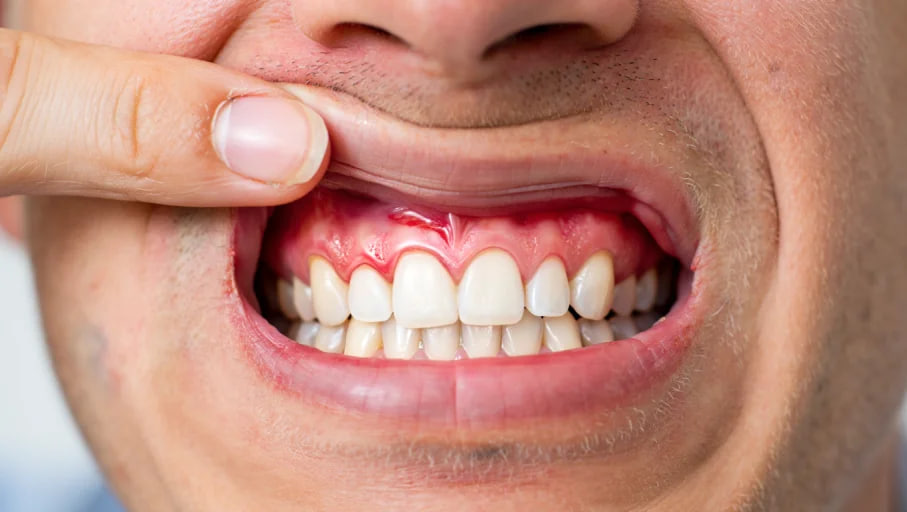
In most cases, gum inflammation is not a standalone issue. Bleeding can be triggered by common dental conditions such as gingivitis or periodontitis. These conditions are primarily caused by inadequate oral hygiene, hormonal changes, or a severe lack of vitamins.
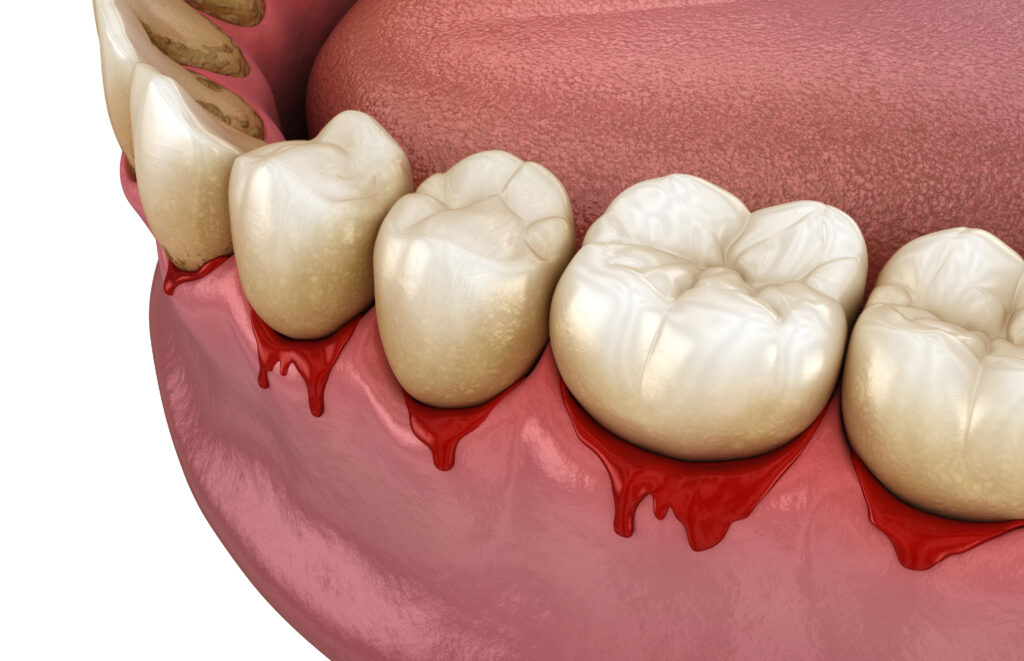
Gingivitis is an inflammation, a mild form of the condition where the infection spreads only to the mucous membrane, causing minor bleeding. Bleeding from the gums occurs when plaque and bacterial infection accumulate, becoming the root cause of the issue. If left untreated, gingivitis can lead to serious consequences.
It is crucial not to ignore the symptoms of bleeding gums. Over time, the infection can spread, affecting the soft tissues around the tooth root, periodontal pockets, and even the jawbone. This is how periodontitis develops – a severe oral inflammation. And this condition is far more likely to cause tooth loss than cavities, which parents often warn their children about.
Medical studies have shown that both gingivitis and periodontal diseases increase the risk of severe health problems such as diabetes, osteoporosis, pneumonia, cardiovascular diseases, and cancer. Therefore, timely diagnosis and professional treatment are the best things you can do for yourself!
How is Bleeding Gums Treated?
Based on the diagnosis, your overall health, and the extent of the damage to the tissues around the tooth, the dentist will recommend an effective comprehensive treatment plan. Patients with bleeding gums may require the following procedures for oral care:
- Professional dental hygiene to remove plaque and harmful bacteria.
- Antiseptic treatment.
- A course of antibacterial therapy.
- Laser therapy.
- Plasma therapy to stimulate blood circulation in the gum tissue.
- Applications and rinses.
- Intake of vitamin complexes and medical medications.
In the most severe cases, the doctor may recommend curettage. This procedure involves cleaning periodontal pockets from purulent accumulations and removing damaged tissues. Additionally, treatment for related conditions, such as stomatitis or cavities, may be necessary.
Your dentist will also advise on what mouthwash to use for bleeding gums, which toothpaste to choose, and which harmful habits you should give up. The most popular antimicrobial agents for treating bleeding gums are Metrogyl Denta, Chlorhexidine, Parodontocid, and Cholisal.
Treatment Results and Prognosis for Bleeding Gums
The most important aspect of treating bleeding gums is not to ignore the problem and to seek professional help promptly. The result will depend on the extent of the gum disease and the patient’s adherence to the prescribed treatment plan. For instance, if you have developed chronic periodontitis, regular maintenance therapy sessions will be required. In the case of gingivitis, it is possible to completely eliminate the discomfort and restore gum health.
At Dynasty Stomatology premium clinic, a team of experienced dentists is ready to help. Our elite center in Poland is equipped with the latest technology that will help eliminate the cause of bleeding gums and the consequences of the disease. We apply innovative treatments, and our service prices are much lower than those of our competitors.
With our modern dental care, therapy is always effective!
Prevention and Recommendations for Bleeding Gums
If you care about the health of your oral cavity, we recommend following these oral care guidelines:
- Use a three-step care procedure: brush your teeth daily with an electric toothbrush, floss, and rinse your mouth with mouthwash.
- Eat a balanced diet rich in vitamins and minerals. Enjoy foods high in nutrients and avoid sweets and carbonated beverages.
- Give up harmful habits.
- Choose an anti-inflammatory toothpaste enriched with extracts like chamomile, oak bark, St. John’s wort, calendula, or sage.
- Use toothbrushes with soft bristles.
- Use a mouthwash recommended by your dentist.
- Apply antibacterial ointments or gels to the inflamed areas.
- Learn to manage stress, as negative emotions can negatively impact your gum health.
- Visit your dentist every six months or more often if necessary.
Comprehensive oral hygiene should become an integral part of your life, a strict rule that should never be broken under any circumstances.
Important! The information in this article is for informational purposes only and does not replace professional consultation.