

Have you ever woken up in the morning, gone to drink coffee, and suddenly noticed an unpleasant burning sensation in your mouth? A day later, it becomes painful to eat, talk, or even just swallow water. Small ulcers appear on the mucous membranes, seemingly out of nowhere.
This is how stomatitis most often begins—a condition that many underestimate until they encounter it firsthand. It can appear suddenly, disrupting your normal routine and turning a normal meal into a real ordeal.
Interestingly, stomatitis occurs in both adults and children, but its causes can be completely different: from simple stress and vitamin deficiencies to viral infections and immune system problems. And although at first glance it seems like a minor issue, without the right approach, the problem can linger or recur again and again.
In this article, we’ll explore the real causes of stomatitis, why it occurs, how to properly treat it, and, most importantly, how to prevent it in the future.
What is Stomatitis?
Stomatitis is an inflammatory disease that affects the tissues of the oral cavity. This condition belongs to a group of diseases associated with inflammation of the mucous membrane. In dentistry, oral stomatitis is considered one of the most common causes of oral discomfort.
The disease can manifest itself in a variety of ways, from mild irritation to severe, painful mouth sores that interfere with eating, speaking, and normal daily activities. In most cases, stomatitis occurs as a reaction to infection, injury, or internal disorders.
Types of Stomatitis
There are several types of stomatitis, classified by cause and clinical presentation. In medicine, stomatitis is distinguished by its origin and course.
Angular stomatitis affects the corners of the mouth and often appears as painful cracks or sores. The skin in these areas becomes dry, may bleed, and crust over. It is often caused by fungi, bacteria, a lack of B vitamins, or lip licking.
Candidal stomatitis, or fungal stomatitis, is caused by fungi of the genus Candida. It is one of the most common forms, especially in children and people with weakened immune systems. The main symptom is a white, curd-like coating on the tongue, palate, or inside of the cheeks.
Contact stomatitis occurs as an allergic reaction to irritants, such as food, toothpaste, medications, or dental materials. In such cases, the mucous membrane reacts with redness, swelling, and rashes.
Denture stomatitis develops in people who wear removable dentures. Most often, the problem is caused by improper fit or poor hygiene. The denture creates a favorable environment for the growth of bacteria and fungi, leading to redness, swelling, and soreness.
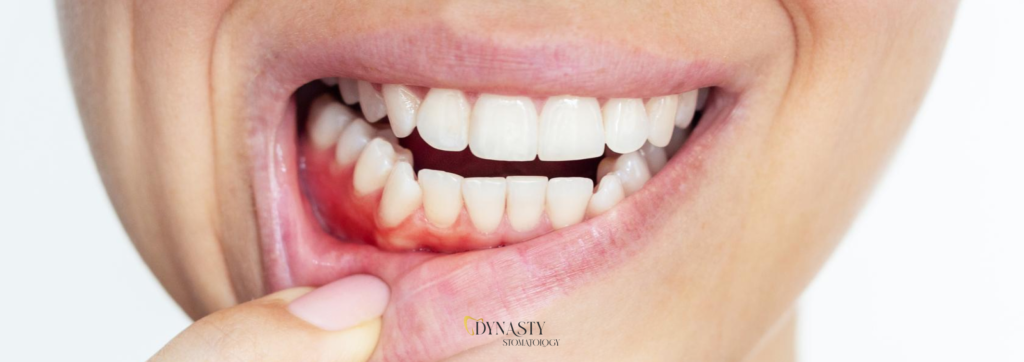
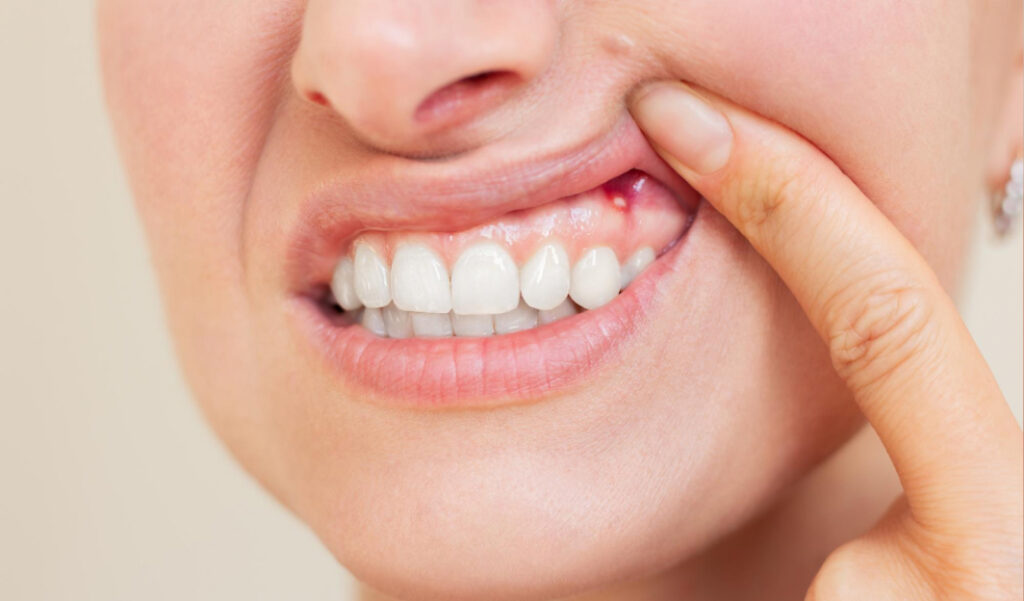
Gingivostomatitis is a form of inflammation that affects the gums. It is often associated with viral infections and is accompanied by extreme sensitivity, bleeding, and painful ulcers. In more severe cases, fever and a general deterioration in well-being may occur.
Nicotine stomatitis develops in smokers. Constant exposure to hot smoke irritates the lining of the palate, causing it to thicken and become rougher. Whitish patches with red dots may appear on the surface—these are inflamed salivary ducts.
Other common forms include:
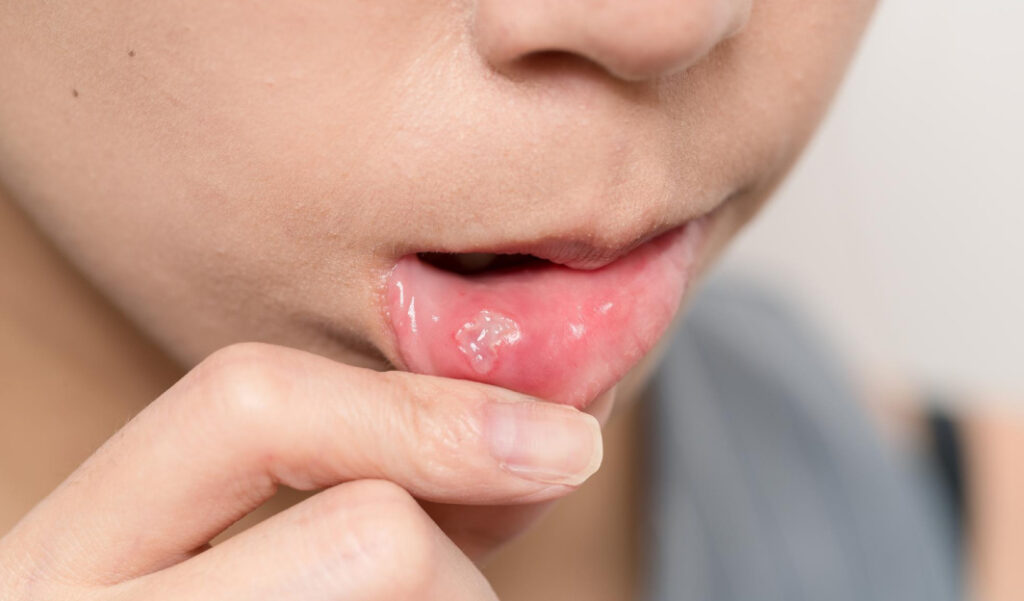
- Aphthous stomatitis — characterized by the appearance of single or multiple ulcers (canker sores) that cause pain when eating.
- Catarrhal stomatitis — the mildest form, characterized by redness and swelling without the formation of deep ulcers.
- Ulcerative stomatitis — a more severe condition with deep tissue lesions and severe pain.
Main Symptoms of Stomatitis
Symptoms of stomatitis may vary depending on the form of the disease, but there are typical manifestations that occur most often. The main symptoms of stomatitis include:
- Severe inflammation of the oral tissues.
- The appearance of small blisters on or near the lips that may burst.
- The formation of one or more painful ulcers with a white, gray, or yellow coating and a red border.
- White or grayish spots on the tongue, palate, or inside of the cheeks.
- An unpleasant burning sensation in the mouth, especially when eating.
- Gum inflammation, including stomatitis on the gums.
- Discomfort or pain of varying degrees that may interfere with eating, swallowing, and speaking.
Causes of Stomatitis
Understanding what exactly causes stomatitis helps to deal with the problem more quickly and avoid recurring episodes. In general, stomatitis includes a variety of causes, which can act either individually or in combination. These involve:
- Viruses, especially those caused by the herpes virus.
- Bacteria that cause inflammation and damage to the mucous membranes.
- Fungi that cause tissue damage.
The following factors also cause stomatitis:
- Poor oral hygiene, which allows bacteria to accumulate.
- Tooth decay and other dental problems.
- Wearing uncomfortable dentures.
- Mechanical trauma to the mucous membrane (biting, hard food, dentures).
- Allergic reactions to food or medications.
- Vitamin deficiencies, especially B vitamins and iron.
- Hormonal imbalances.
Additionally, the development of stomatitis is influenced by:
- Dry mouth and severe dehydration.
- Stress and fatigue.
- Taking certain medications.
- Parasitic infections (helminthic invasions).
- Diseases of the digestive system.
Risk Factors for Stomatitis
Even if there’s no direct cause, there are factors that significantly increase the likelihood of developing stomatitis. These factors don’t always cause the condition themselves, but they create conditions that make the mucous membrane more vulnerable to irritation and infection.
- Poor oral health increases the risk of developing an oral infection, as bacteria accumulate in the mouth.
- A lack of saliva weakens the mucous membrane’s defenses, making the mucous membrane dry and more susceptible to damage.
- Smoking increases inflammation, irritating the tissue and slowing its recovery.
- Stress, poor nutrition, and a weakened immune system also contribute, all of which increase the likelihood of developing stomatitis.
Stomatitis in Children – Why Do Children Get Stomatitis More Often Than Adults?
Stomatitis in children is a fairly common problem, encountered by almost all parents. This is because the child’s body is still developing its defense mechanisms, making it less able to cope with infections and irritants.
The main causes are:
- a weak immune system that is not yet able to fully fight infections;
- frequent contact with bacteria (toys, hands, surrounding objects);
- poor oral hygiene.
Furthermore, children often put various objects in their mouths, which increases the risk of germs being introduced. Therefore, stomatitis in a child can develop even after minor contact with a source of infection.
In general, stomatitis in children and adults progresses differently. In children, symptoms usually appear more quickly and are more pronounced, while in adults, the disease is more often associated with chronic factors and lifestyle.
Modern Methods of Stomatitis Treatment
Treatment for stomatitis is always individualized, as it depends on the cause and form of the condition. One-size-fits-all approaches don’t work for everyone, so it’s important to consider the specific case of stomatitis. Generally, treatment for stomatitis depends on the source of the problem and the condition of the mucous membrane.
Modern stomatitis treatments are aimed not only at relieving symptoms but also at addressing the underlying cause. The primary goal is to quickly and effectively treat stomatitis and prevent its recurrence. To achieve this, a doctor develops a personalized treatment plan.
Depending on the situation, the following may be used:
- Medications.
- Treatment of inflammation.
- Professional teeth cleaning.
- Laser treatment of damaged tissue.
- Correction or replacement of dentures.
- Immune-strengthening procedures.
Medical Treatment of Stomatitis
Topical and systemic medications are most often used for stomatitis treatment. They help reduce inflammation, eliminate infection, and accelerate mucosal healing. The main remedies are:
- Antiseptics, such as an antiseptic mouth rinse.
- Anti-inflammatory medications.
- Antifungal ointments.
- Antibiotics (for bacterial infections).
- Immunomodulators.
- Pain relievers.
- Antihistamines.
- Soothing oral gels.
Prevention of Stomatitis
Although stomatitis is an inflammation of the mucous membrane, it’s impossible to eliminate the risk of its occurrence, as many factors can trigger the condition. However, proper oral hygiene and lifestyle can significantly reduce the risk of stomatitis and susceptibility to stomatitis in both adults and children.
Prevention is especially important because stomatitis often causes painful sores and can develop into chronic forms of stomatitis if the early signs of stomatitis are ignored.
Basic recommendations:
- Brushing your teeth twice a day and flossing helps protect the oral mucosa from inflammation.
- Eating a healthy diet and drinking enough water maintains the health of the oral mucosa and reduces the risk of developing oral inflammation.
- Quitting smoking reduces the likelihood of irritation and mouth ulcers.
- Do not share food, drinks, or lip balm, and avoid close contact with someone who has sores, as infectious stomatitis and viral stomatitis are easily spread through close contact.
It’s also worth considering that some forms, such as herpetic stomatitis or recurrent aphthous stomatitis, can recur, so prevention should be regular.
Conclusion
Stomatitis can be caused by various factors. It is a condition that can significantly affect the quality of life. It is often believed that stomatitis goes away on its own, but in practice, symptoms of stomatitis are often a signal of deeper issues in the body. Without proper attention, the condition may worsen, become chronic, and lead to pronounced mouth inflammation and painful sores that require oral ulcer treatment.
The good news is that with timely medical care, it is possible to achieve truly effective treatment. It is important to remember that treatment of stomatitis depends on the underlying cause, which is why accurate diagnosis of stomatitis and a comprehensive approach are essential for successful results.
Equally important is the prevention of stomatitis. Maintaining good oral hygiene, paying attention to your overall health, and visiting the dentist regularly can help reduce the risk of recurrence.
At Dynasty Stomatology, we provide personalized diagnosis, taking into account each patient’s individual characteristics and what exactly caused the stomatitis.
Frequently Asked Questions About Stomatitis in Adults and Children
-
If left untreated, stomatitis can lead to complications: severe pain, poor nutrition, and even chronic stomatitis. Sometimes the inflammation spreads to the gums and other areas of the mucous membrane of the oral cavity, making swallowing and speaking difficult.
-
Stomatitis usually resolves within a few days, but if it doesn’t resolve within a week, the pain intensifies, or new oral ulcers appear, it’s time to see a doctor. Even mild cases can become chronic if ignored.
-
It is important to clarify with your doctor: what methods of stomatitis diagnosis are applicable, what are the common forms of stomatitis, and what treatment plan is best for you.
-
Stomatitis is diagnosed by examining the oral mucosa, assessing the symptoms of stomatitis in adults or children, and, if necessary, performing laboratory tests. Additional tests are sometimes prescribed to clarify the cause.
-
Treatment for stomatitis depends on the type and cause of the condition. A doctor will prescribe treatment, including stomatitis medicine, healing procedures, oral lesion treatment, and recommendations for home remedies for stomatitis to relieve discomfort. The goal is to maximize treatment effectiveness and prevent recurrence.
Treatment for stomatitis in adults and children may differ. Treatment of stomatitis in adults often involves complex regimens, including medications, antiseptics, and professional dental procedures to eliminate foci of infection.
Treatment of stomatitis in children combines safe medications, gentle topical agents, and enhanced hygiene to avoid complications and damage to the mucous membrane.
Thus, treatment of stomatitis in adults and children is tailored individually, taking into account the patient’s age, the cause of the disease, and the type of stomatitis, in order to achieve optimal results and reduce the risk of recurrence.
-
Timely treatment helps quickly relieve oral inflammation, alleviate pain, and accelerate healing. With proper care and following recommendations, you can completely cure stomatitis and reduce the risk of recurrence.
-
Left untreated, stomatitis can cause severe pain, malnutrition, and weakened immunity. Sometimes the inflammation spreads to other areas of the mucous membrane of the oral cavity, complicating treatment.
-
Some forms, such as viral infections, are easily transmitted through contact with contaminated saliva or household items. Therefore, it is important to take preventive measures against stomatitis.
-
Painkillers, gels, stomatitis medicine, and gentle rinses are used to relieve pain. Correct treatment helps speed healing and reduce discomfort.
-
Depending on the cause, stomatitis can last from a few days to several weeks. Chronic stomatitis may require long-term monitoring and regular treatment.
-
Some forms of stomatitis, especially viral and bacterial ones, are indeed often contagious. However, not all forms are spread from person to person — for example, so called recurrent aphthous stomatitis is not an infection.
Don’t Wait for Symptoms – Prevent Stomatitis Before It Starts
Stomatitis is one of the most common oral conditions affecting both children and adults. It can develop from infections, irritation, or allergies — and early awareness of the triggers is the best way to protect yourself before any symptoms appear.
Because stomatitis can be linked to internal health factors or external irritants, and allergic forms are increasingly common, a preventive consultation is far more effective than waiting until the condition worsens. Understanding your personal risk factors early makes all the difference.
At Dynasty Stomatology, we offer thorough preventive assessments to evaluate your oral health, identify potential triggers, and give you clear, personalized guidance on how to avoid stomatitis altogether. If you have any questions or concerns about your oral health, our team is always ready to consult with you and help you stay ahead of any issues.