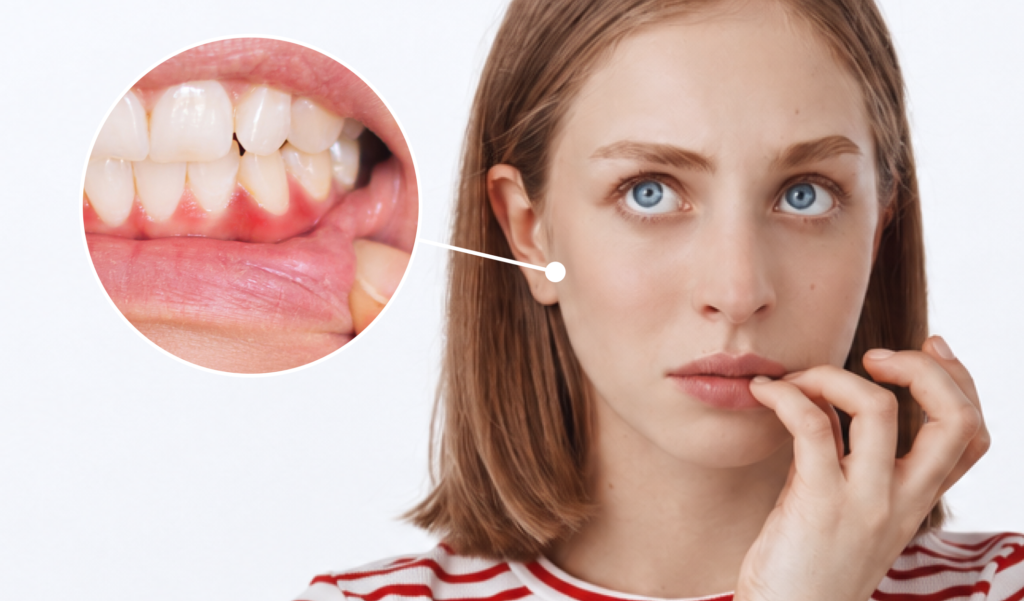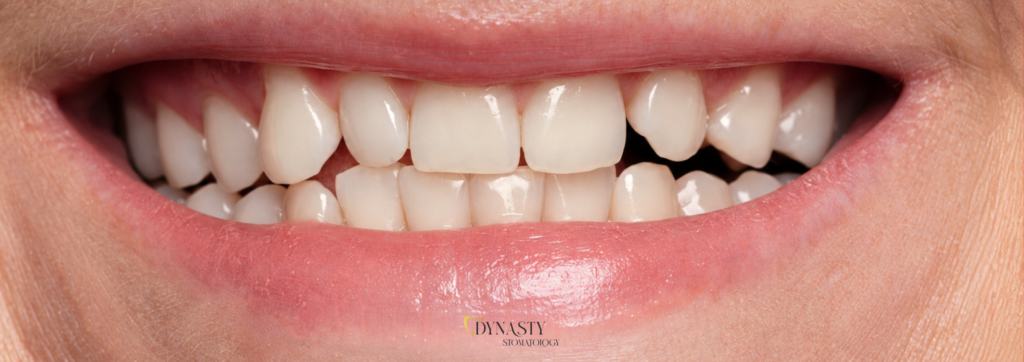

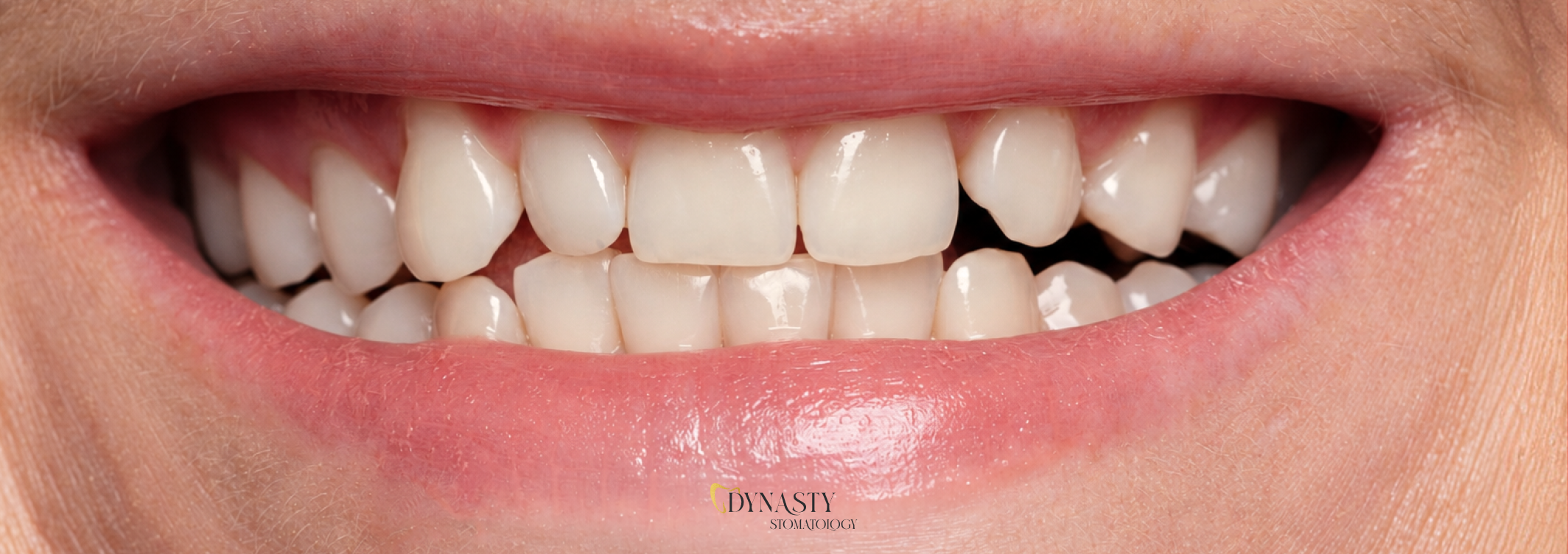
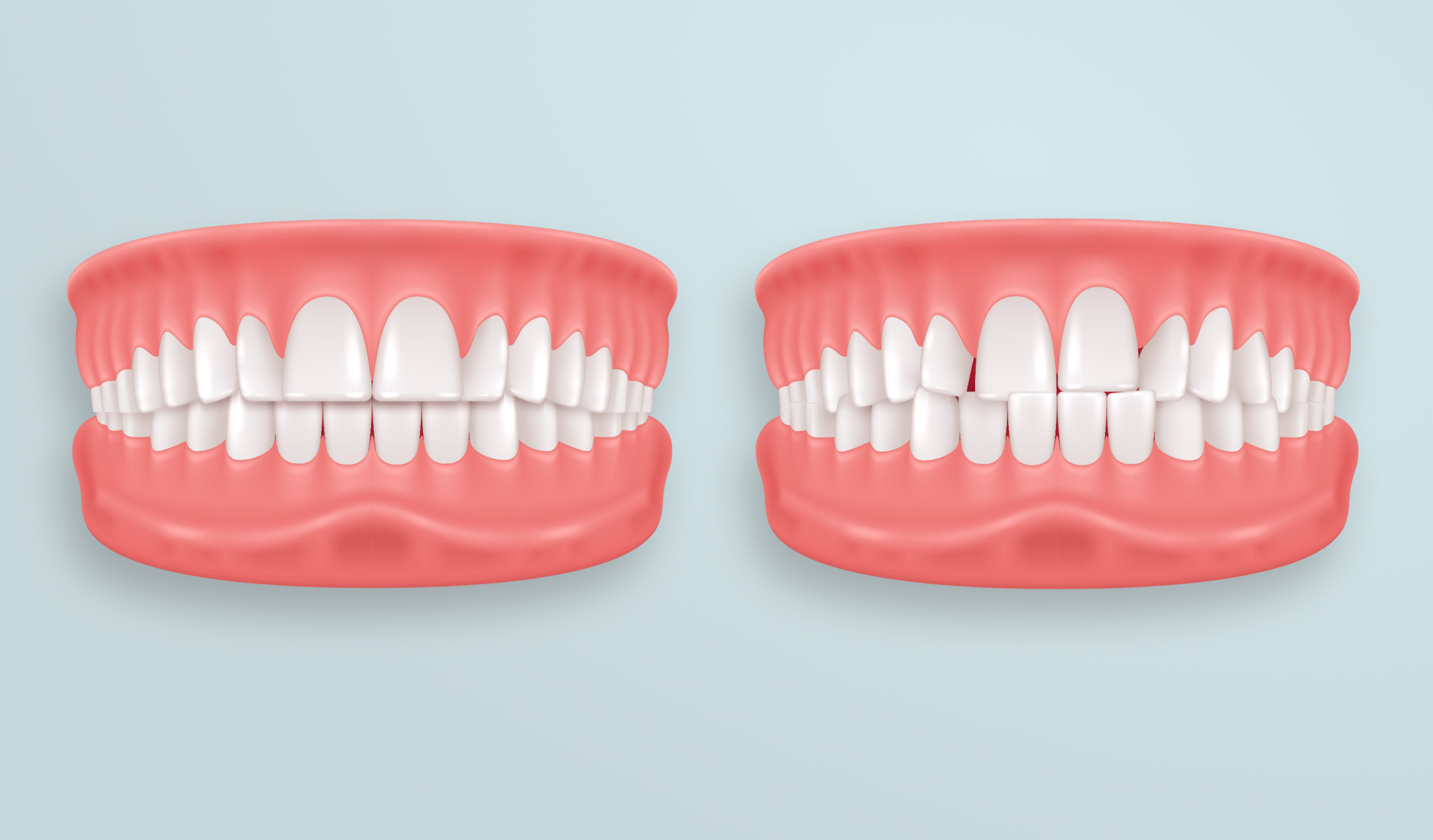
A crossbite is a bite misalignment in which, when the mouth is closed, some upper teeth sit further inward than their corresponding lower teeth. Normally, the opposite should be true: the upper dental arch gently overlaps the lower one. The issue may affect a single tooth, a side section, or a larger part of the bite.
What Is a Crossbite?
A crossbite is an improper bite relationship in which selected upper teeth are positioned on the inside of the lower teeth. It may occur at the front, around the incisors, or along the sides of the dental arch. Not every crossbite looks the same, so it should be diagnosed by an orthodontist after an examination.
In some cases, a crossbite is mainly related to tooth positioning. In others, the growth of the maxilla and mandible—the lower movable part of the chewing system—also plays a role. The cause of the misalignment is what determines the choice of treatment.
|
Normal bite |
Crossbite |
|
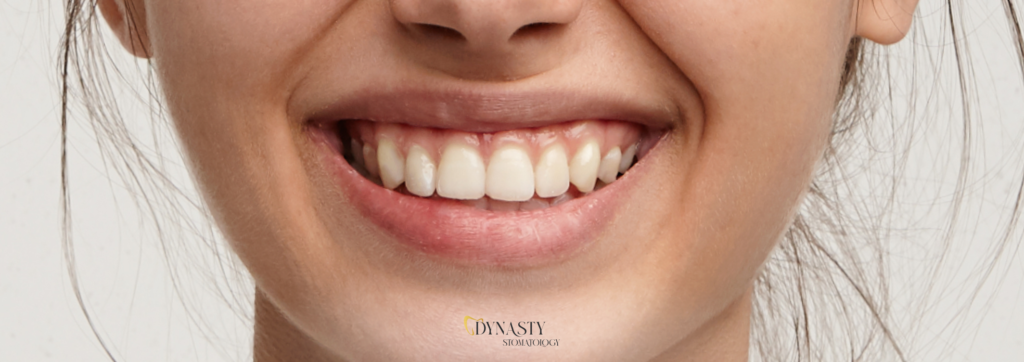
The upper teeth sit slightly further outward than the lower teeth. |
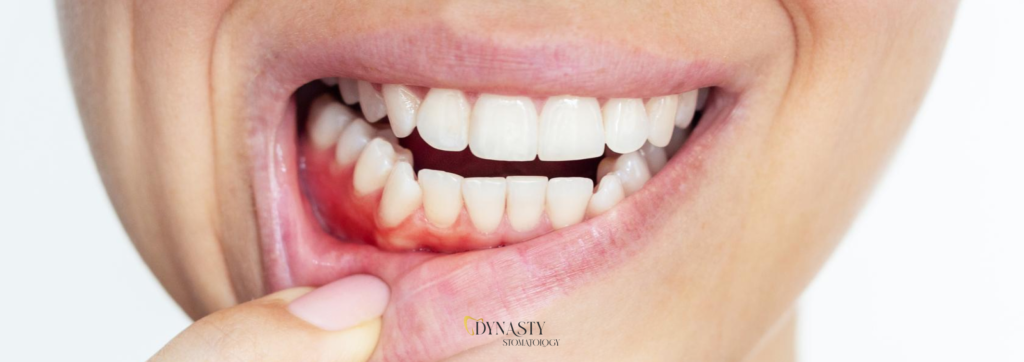
At least one upper tooth sits further inward than the lower tooth. |
|
The upper teeth partially overlap the lower teeth. |
Contact between the teeth may be uneven or may force the mandible to shift. |
How Can You Recognize Proper Tooth Alignment?
In a typical bite, the upper dental arch acts as a slightly wider cover for the lower arch. The upper teeth overlap the lower teeth slightly and are positioned more toward the cheeks. However, this does not mean that every minor irregularity is a problem requiring treatment.
Is a Crossbite Always Visible?
No. A minor crossbite, especially one involving individual back teeth, may be difficult to notice in the mirror. Looking at your teeth at home does not replace an orthodontic assessment, because the doctor also checks how the teeth meet and how the mandible moves.
Types of Crossbite
Types of crossbite are described according to the location and extent of the irregularity. The condition may involve one tooth, several teeth on one side, or both dental arches to a greater extent. This classification helps the orthodontist determine whether the problem is mainly dental or may be related to the relationship between the maxilla and mandible.
The type of misalignment should not be diagnosed based solely on a photo of a smile. A proper diagnosis requires an examination of the bite as well as an assessment of the teeth, face, and chewing function.
Posterior Crossbite
A posterior crossbite affects the premolars and molars, which are used mainly for chewing food. It may occur on one side or on both sides. With a one-sided crossbite, some patients instinctively shift their mandible when biting down, which requires a thorough assessment by an orthodontist.
Anterior and Complete Crossbite
An anterior crossbite mainly involves the incisors and sometimes the canines. A complete crossbite affects a larger area of the dental arches, so treatment planning may be more complex. The extent of the issue alone does not determine the treatment method—age, the condition of the teeth and gums, and the cause of the improper bite are also important.
Symptoms of Crossbite in Children and Adults
Crossbite symptoms can vary. Some patients do not experience pain but notice an uneven bite or improper tooth alignment. Others experience discomfort while biting or wear on certain tooth surfaces.
It is worth seeing an orthodontist if one or more of the following signs occur:
- teeth do not meet evenly when the mouth is closed,
- the mandible shifts when biting down,
- it is difficult to bite into harder foods comfortably,
- certain teeth wear down faster than others,
- there is a feeling of jaw strain while chewing,
- the smile or alignment of the lower part of the face appears asymmetrical.
Jaw pain and bite issues do not always have the same cause. Symptoms in the temporomandibular joint area require separate assessment, as they may also be related to muscle tension, parafunctional habits, injury, or other problems.
What Should You Look Out for in a Child?
Parents may notice crooked tooth alignment, shifting of the mandible while biting, difficulty biting into food, or clear smile asymmetry. In cases of crossbite in children, regular check-ups are helpful because the orthodontist assesses jaw development and the stage of transition from baby teeth to permanent teeth.
What Signs May Occur in Adults?
In adults, uneven tooth wear is often noticeable, especially on the cusps or incisal edges. A patient may also feel that their teeth do not come together evenly or that one side works harder while chewing. Such symptoms do not constitute a diagnosis on their own, but they are a good reason to seek a consultation.
Causes of Crossbite
The causes of a crossbite usually cannot be reduced to a single factor. The issue may result from inherited facial structure traits, differences in the growth of the maxilla and mandible, tooth positioning, or the way teeth erupt. It is not the “fault” of the patient or parent.
During diagnosis, the orthodontist assesses whether the problem mainly affects individual teeth, arch width, the relative position of the jawbones, or several factors at once. This determination is necessary to ensure that treatment addresses the actual mechanism of the misalignment.
Factors Related to Jaw Growth
One possible mechanism is a developmental issue involving the maxilla, for example when the upper dental arch is too narrow in relation to the lower one. In this case, the teeth may meet on the wrong side. In growing patients, assessing jaw growth is particularly important when choosing the timing of treatment.
The Impact of Tooth Positioning and Eruption
A localized crossbite may develop when an individual tooth erupts in the wrong direction or when there is not enough space for it in the arch. Crowding, delayed eruption, and unusual tooth positions should be assessed during a dental and orthodontic examination.
What Can Happen If a Crossbite Is Left Untreated?
An untreated crossbite may lead to uneven loading of the teeth and overloading of certain structures in the chewing system. The level of risk depends on the type and severity of the issue, the patient’s age, and how long the improper bite persists.
Not every crossbite causes obvious symptoms immediately. Nevertheless, it is worth having it assessed, because long-term improper tooth contacts may contribute to enamel wear, discomfort while chewing, and compensatory positioning of the mandible.
|
Possible consequence |
What may cause it |
|
Uneven enamel wear |
Constant overloading of specific tooth surfaces |
|
Discomfort while biting |
Uneven contact between the upper and lower arches |
|
More difficult hygiene in certain areas |
Crowding or improper tooth positioning |
|
Tension in the chewing muscles |
Compensatory shifting of the mandible when closing the mouth |
Impact on Teeth and Gums
Improper tooth contacts may contribute to excessive enamel wear in certain areas. If the teeth are also crowded, daily oral hygiene may be more difficult. Orthodontic treatment improves tooth alignment, but it does not replace professional dental cleaning, periodontal check-ups, or treatment for gum disease.
Impact on Chewing and Jaw Comfort
With a crossbite, some people position their mandible less naturally in order to find comfortable tooth contact. This may cause strain while chewing or muscle tension. It does not automatically indicate temporomandibular joint disorders—their diagnosis requires a separate functional examination.
How Does an Orthodontist Diagnose a Crossbite?
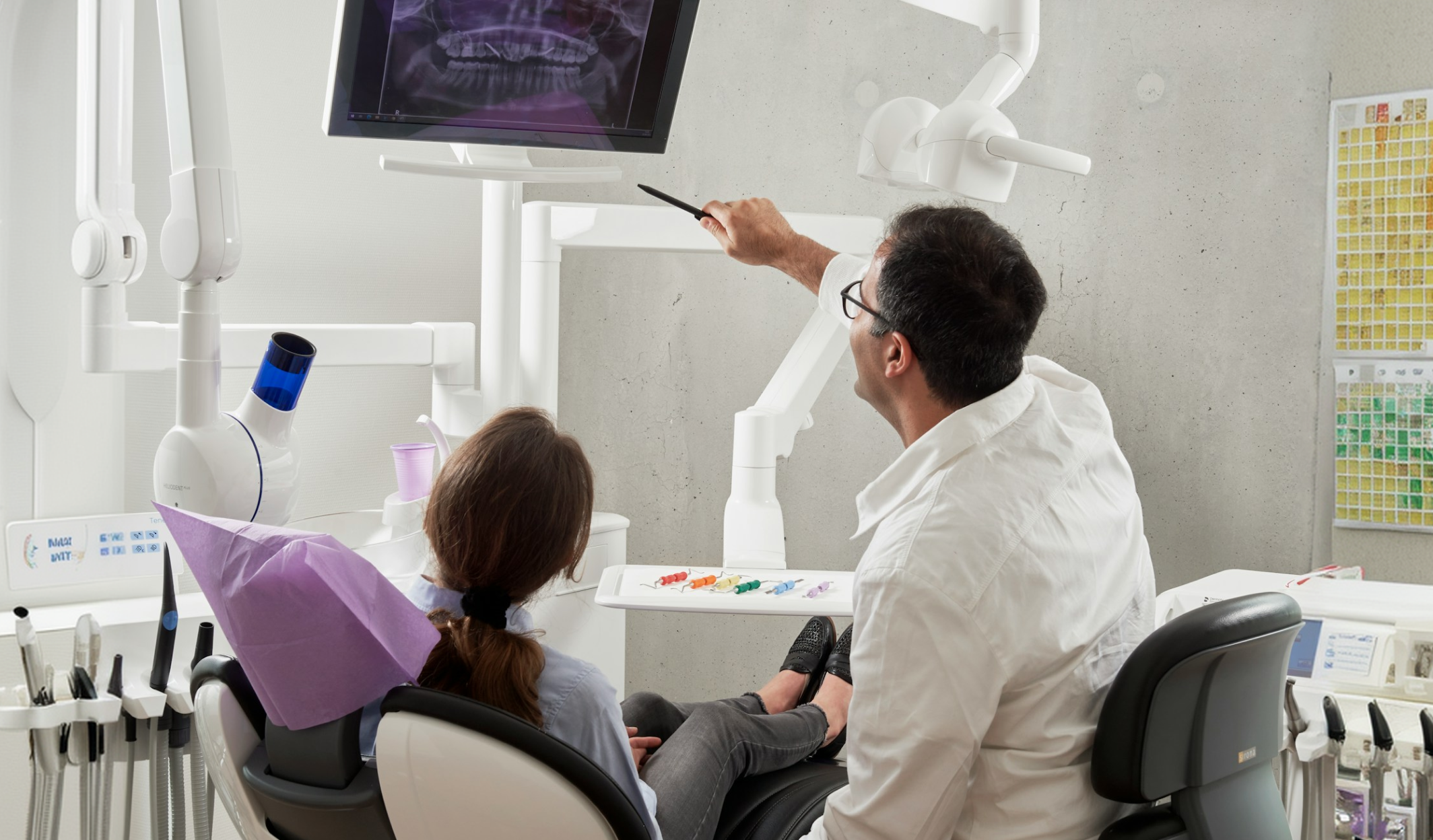
Diagnosing a crossbite begins with a conversation and an oral examination. The orthodontist checks the relationship of the teeth in the bite, the positioning of the maxilla and mandible, the condition of the teeth, and how the patient closes their mouth and chews.
The next stage may involve an analysis of digital records. At Dynasty Stomatology, orthodontic diagnostics may include photographs, intraoral scanning, 3D bite modeling, and X-rays if the doctor considers them necessary. Imaging tests are not automatically standard for every patient.
An orthodontic treatment plan is based on the cause of the issue, age, jaw development, the condition of the gums and teeth, and existing dental restorations. Before making a decision, the patient has the opportunity to ask about treatment options, comfort, follow-up appointments, and costs.
What Is Worth Preparing for the First Consultation?
For an orthodontic appointment, it is worth bringing:
- previous X-rays or dental records, if available,
- a list of noticed symptoms and questions,
- information about previous orthodontic treatment,
- details of facial or dental injuries,
- information about braces, implants, crowns, or other restorations.
When Is Additional Diagnostics Needed?
Additional diagnostics may be recommended when the position of roots, impacted teeth, bone structures, or the relationship between the maxilla and mandible needs to be assessed more precisely. The doctor explains why a particular examination is needed and how it will affect the treatment plan.
Crossbite Treatment: Available Methods and Patient Decisions
Crossbite treatment aims to achieve more stable tooth contacts, improve chewing comfort, and reduce unfavorable strain. There is no single method that is best for everyone. The choice of treatment depends on the type of misalignment and whether the problem is dental, skeletal, or mixed in nature.
|
Method |
When it may be considered |
Benefits |
Limitations and factors affecting treatment time |
|
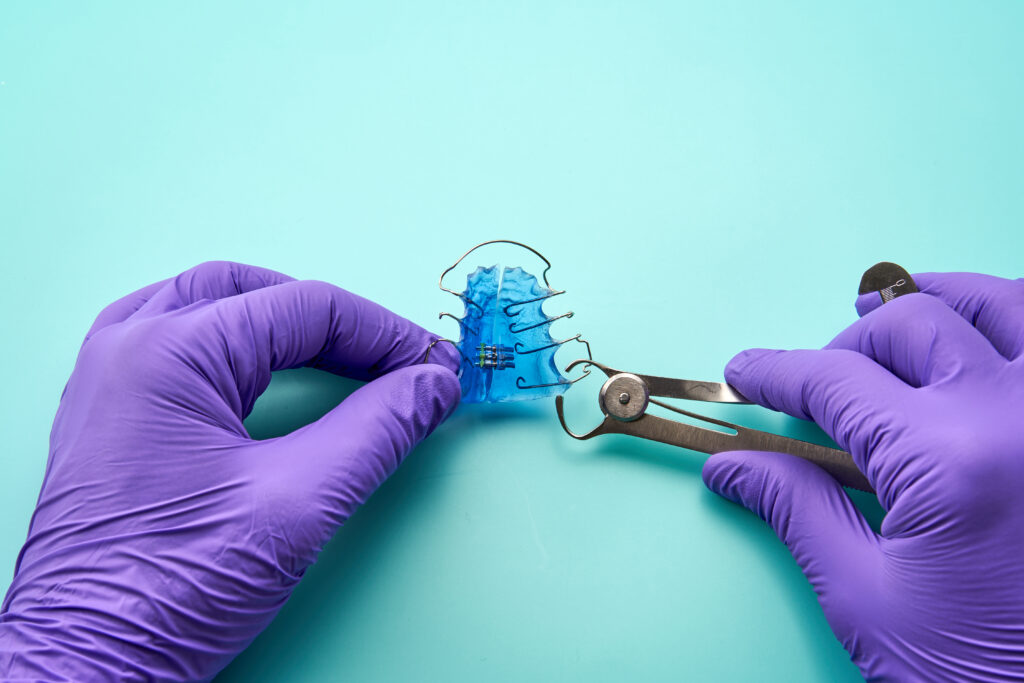
Removable appliance |
More commonly in growing children, for selected bite issues |
Can influence the developing dental arch |
Requires consistent wear according to recommendations |
|
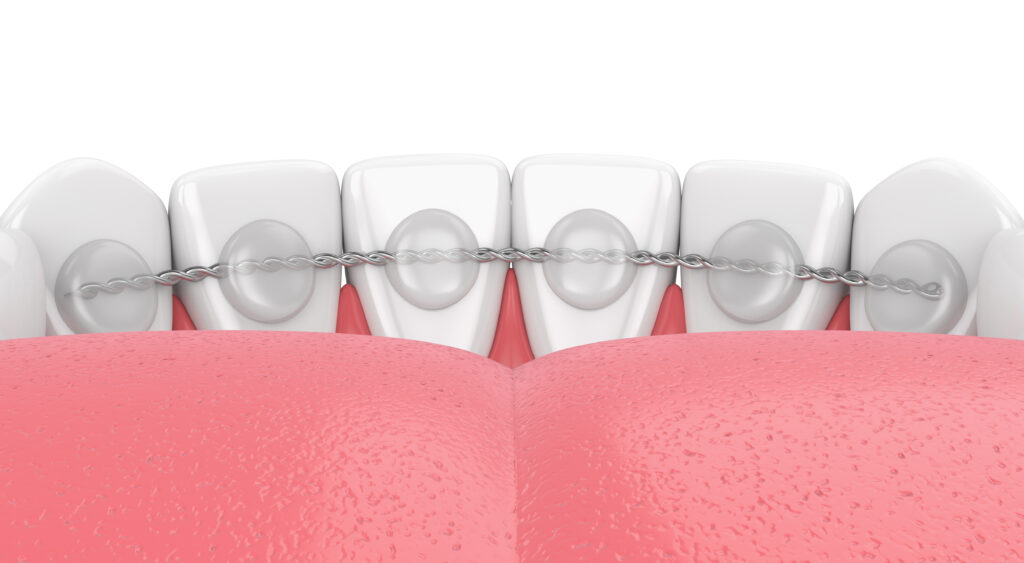
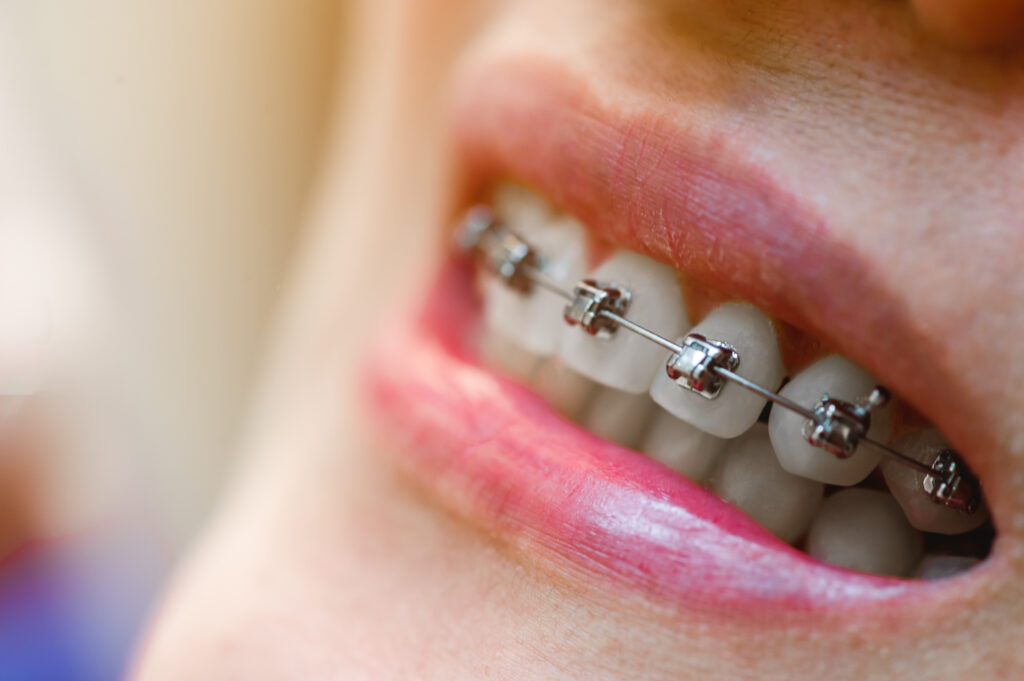
Fixed braces |
For children and adults when precise tooth movements are needed |
High level of control over tooth positioning |
Requires thorough hygiene and regular check-ups |
|
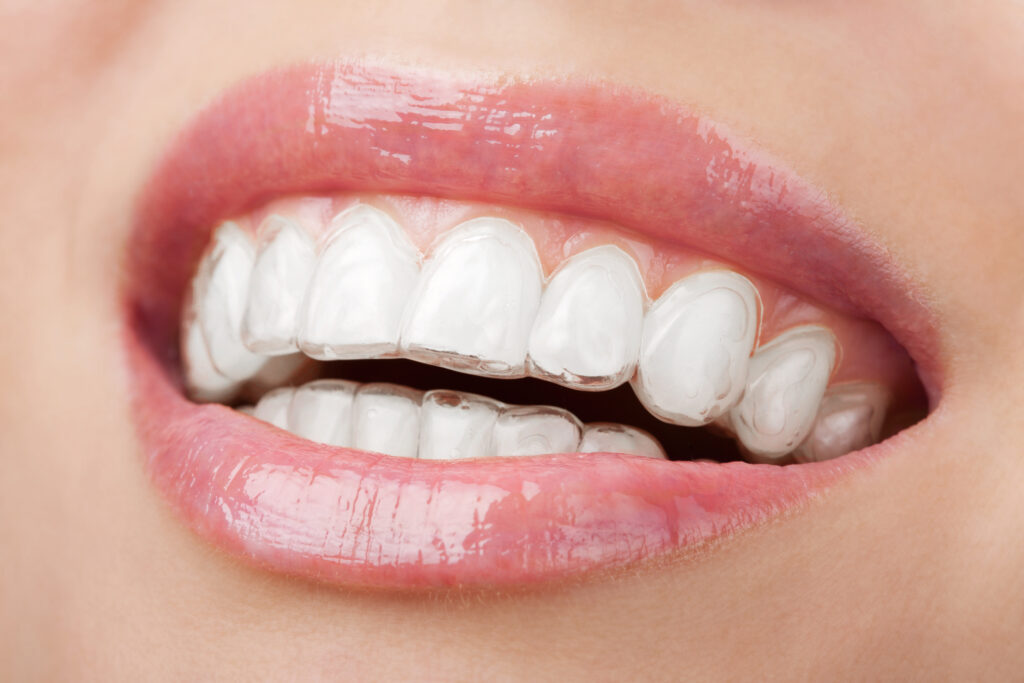
Clear aligners |
In selected cases in adults and older teenagers |
Can be removed for eating and brushing teeth |
Must be worn according to the treatment plan; not every crossbite qualifies for this method |
|
Arch expansion |
When diagnostics indicate a mismatch in arch widths |
May improve bite conditions |
The method and extent depend on age and anatomical structure |
|
Surgical treatment |
In more complex skeletal issues in adults |
May be part of treatment for major jaw discrepancies |
Requires cooperation between an orthodontist and an oral and maxillofacial surgeon |
Orthodontic appliances, braces, or aligners are not selected solely for aesthetic reasons. The most important factors are safety, predictability of tooth movement, and the ability to maintain the result after treatment.
Crossbite Treatment in Children
In children, the timing of treatment is assessed in relation to jaw growth, the type of issue, and the stage of dental development. An early consultation does not always mean immediate braces. Sometimes the best decision is to monitor development, while in other cases treatment should begin at a stage that provides greater potential for correction.
Crossbite Treatment in Adults
Treatment for adults requires an assessment of the teeth, gums, crowns, bridges, implants, and other restorations. Implants cannot be moved orthodontically, so their presence must be taken into account before treatment begins. In complex cases, surgical treatment may be considered together with an oral and maxillofacial surgeon.
How to Book a Consultation and What to Expect From a Treatment Plan?
An orthodontic consultation provides answers to the most important questions: whether the issue requires treatment, which method is justified, and what determines the cost of crossbite treatment. At Dynasty Stomatology, patients receive an explanation of the next steps without procedures being imposed on them.
After booking an appointment, the process usually looks as follows:
- Choosing a consultation date.
- Examination of the bite, teeth, and chewing function.
- Possible digital or imaging diagnostics.
- Discussion of the diagnosis and possible treatment options.
- Presentation of the stages of treatment, follow-up rules, hygiene requirements, and an individual cost estimate.
It is worth asking about the doctor’s experience in treating similar issues, alternatives to the proposed method, the expected number of appointments, daily hygiene, and the comfort of wearing dental braces. Dynasty Stomatology provides service in Polish, Ukrainian, Russian, and English, which may make it easier for patients from Krakow and those travelling for treatment to make an informed decision.
Frequently Asked Questions About Crossbite
-
Treatment does not always need to begin right away, but every crossbite is worth consulting with an orthodontist. The doctor will assess its extent, cause, impact on chewing, and the risk of tooth wear. In some children, monitored observation may be possible, while others will be advised to undergo treatment.
-
It is best to schedule an orthodontic assessment once an irregularity is noticed, regardless of the child’s age. An early consultation allows the orthodontist to assess jaw development and tooth replacement. It does not automatically mean that the child will receive braces immediately.
-
It may become more established or more noticeable, especially when it is accompanied by uneven tooth contacts and shifting of the mandible. However, it is not possible to predict the course of a specific issue without an examination. Regular check-ups help ensure that a decision is made at the right time.
-
Treatment time depends on the type and severity of the issue, the patient’s age, the selected method, and cooperation during treatment. A simpler correction involving individual teeth progresses differently from treatment of an extensive misalignment. The orthodontist provides a detailed schedule after diagnostics.
-
Yes, clear aligners may be a solution in selected cases of crossbite. Their use depends on tooth positioning, the movements required, and the condition of the entire chewing system. Eligibility is not determined by a photo of a smile, but by a complete orthodontic diagnosis.
If you notice an uneven bite, tooth wear, or your child shifts their mandible when biting, it is not worth waiting for the problem to improve on its own. Book an orthodontic consultation at Dynasty Stomatology in Krakow to identify the cause of the issue and calmly discuss the available treatment options.