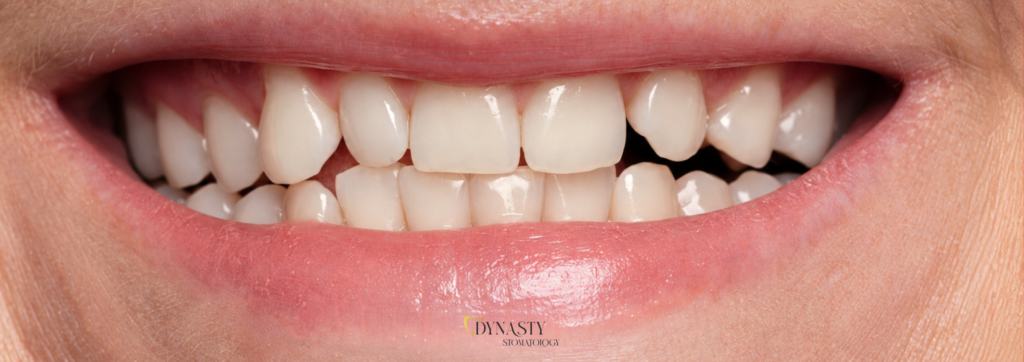


Most patients come to the dentist with a clear request: something hurts, it is uncomfortable to chew, or they do not like the appearance of their teeth. And this is not surprising — people experience a specific problem and want a quick solution.
The difficulty lies in the fact that what hurts or bothers you today is usually not the only problem. What initially manifests itself as an aesthetic defect or discomfort when chewing is often the result of processes that have been going on for years: hidden inflammation, overload of individual teeth, etc. If only the symptom is treated in such a situation, the result will be temporary.
This case study by the Dynasty Stomatology team shows what treatment looks like when doctors first understand the whole picture and only then begin to act.
Customer request
The patient complained of reduced chewing efficiency and expressed a desire to improve the aesthetics of her smile. There was no acute pain. Some of the teeth had already been treated previously, while others looked completely normal.
At this stage, the situation could have followed a familiar scenario: update a few restorations, suggest crowns, and stop there. But at Dynasty Stomatology, a complete diagnosis is standard practice before any decisions are made, especially if the patient mentions chewing problems.
Diagnostic results
After a CT scan and photo protocol, it became clear that the real situation was much more complicated than it seemed from the outside.
In the images, doctors saw secondary caries under old fillings, poorly treated root canals, and chronic inflammatory processes. Some teeth looked healthy, but the CT scan showed defects in the walls: the tissue was already destroyed from the inside, even though it wasn’t visible from the outside.
Additionally, indications for the removal of third molars and the need for implantation in areas where the absence of teeth disrupted the even distribution of chewing load were identified.
It was at this stage that it became clear that treatment required a clear sequence of steps and the involvement of several specialists. Any simplification would have created the risk of recurring problems.
How the plan was formed
After analysing all the data, the general practitioner took on the role of treatment coordinator. At Dynasty Stomatology, the treatment plan is always developed after a complete examination, rather than based on a visual assessment or the initial consultation. The doctor’s task at this stage is not simply to identify the problems, but to develop a clear sequence of actions, prioritise each stage, and explain how they are interrelated.
A detailed treatment plan is drawn up separately, specifying what will be done, in what order and why, as well as the approximate timing and cost of each stage. This gives the patient a complete understanding of the situation right from the start: how long the treatment will take, which stages are mandatory and which can be postponed, and what budget to expect.
In this case, it was obvious that it was impossible to start with crowns or implants. As long as the infection remained in the teeth, any orthopaedic or surgical intervention carried a high risk of complications. That is why the plan was developed sequentially: first, eliminate the hidden infection, then create a reliable foundation, and only then proceed to restore function and aesthetics.
Endodontic treatment stage. Working with what is invisible to the eye
Next, an endodontist was brought in for treatment. His work determines the long-term outcome.
Repeat root canal treatment was performed under a microscope. This made it possible to remove old materials, clean the canals of infected tissue, and find areas that cannot be seen without optical magnification. Additional canals and microcracks were found in several teeth, which could have been the source of chronic inflammation.
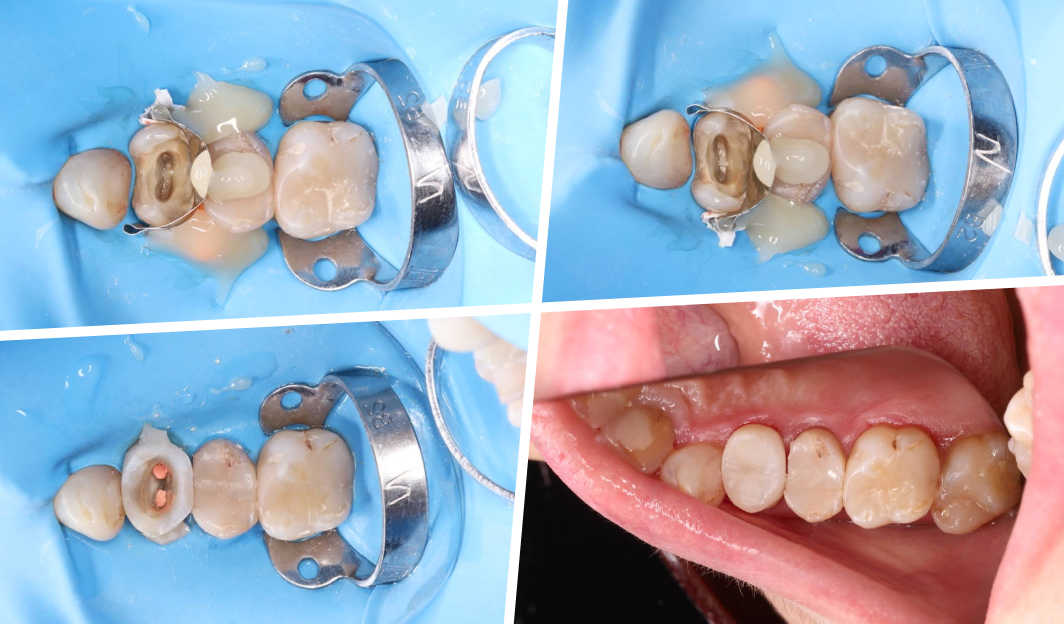
The treatment took a few visits. This was a conscious decision: each stage was monitored using CT scans to make sure the infection was completely gone. This stage set the foundation for all further treatment.
Surgical stage. Preparing the foundation
Once the endodontic treatment was complete, an implant surgeon joined the team. First, he performed wisdom tooth extraction, which created potential sources of inflammation and complicated the overall plan.
Next, implantation was performed in areas where chewing teeth had previously been lost: on the upper jaw on the right side and on the lower jaw on the left side. Restoring these areas was critical for the even distribution of chewing load.
Before the procedure, the doctor used CT data and 3D modelling to accurately assess the volume of bone tissue, identify safe areas and select the optimal position for the implants. This approach minimises risks and ensures predictable osseointegration.
The surgical stage, together with the implant healing period, lasted several months. During this time, the patient’s body adapted to the new structures and the bone tissue stabilised.
Orthopaedic stage. Restoration of function and aesthetics
Once the implants had settled in and become stable, treatment moved on to the prosthetics stage. An orthopaedic surgeon joined the team. It is at this stage that patients usually see the results of all the previous work.
Using intraoral digital scanning, accurate data was obtained for the manufacture of custom crowns. These were placed on both previously installed implants and teeth that had undergone endodontic treatment.
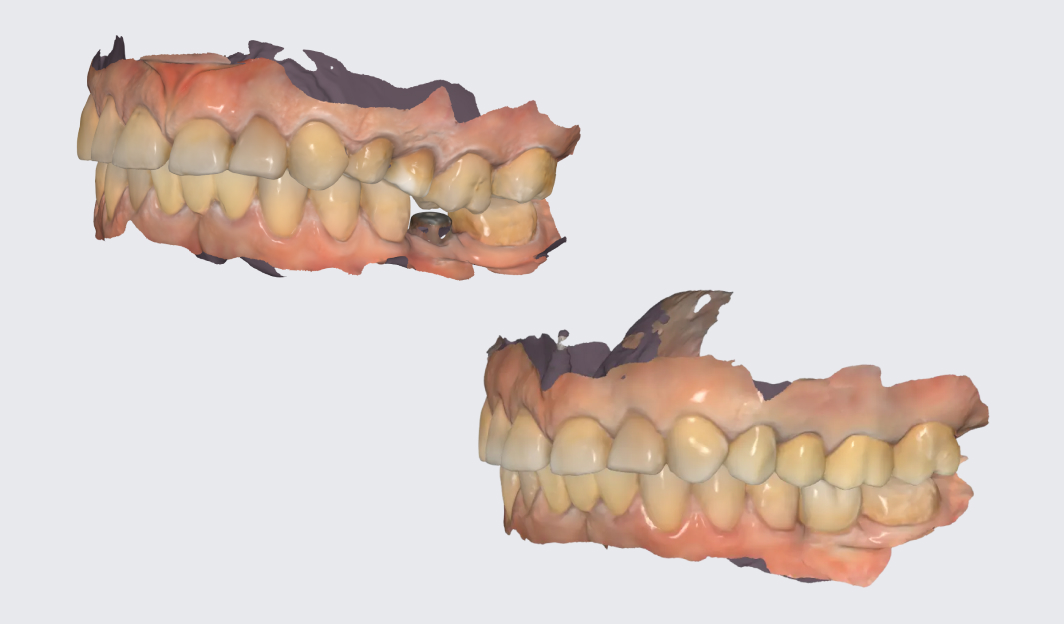
The shape of the crowns, their height and the contact between the teeth were selected to distribute the chewing load evenly. This is important not only for comfort but also for the durability of the entire structure.
Result. What has changed for the patient
As a result, the patient regained what was truly important to her in everyday life: the ability to chew comfortably without thinking about every movement, and a smile that looks natural and confident.
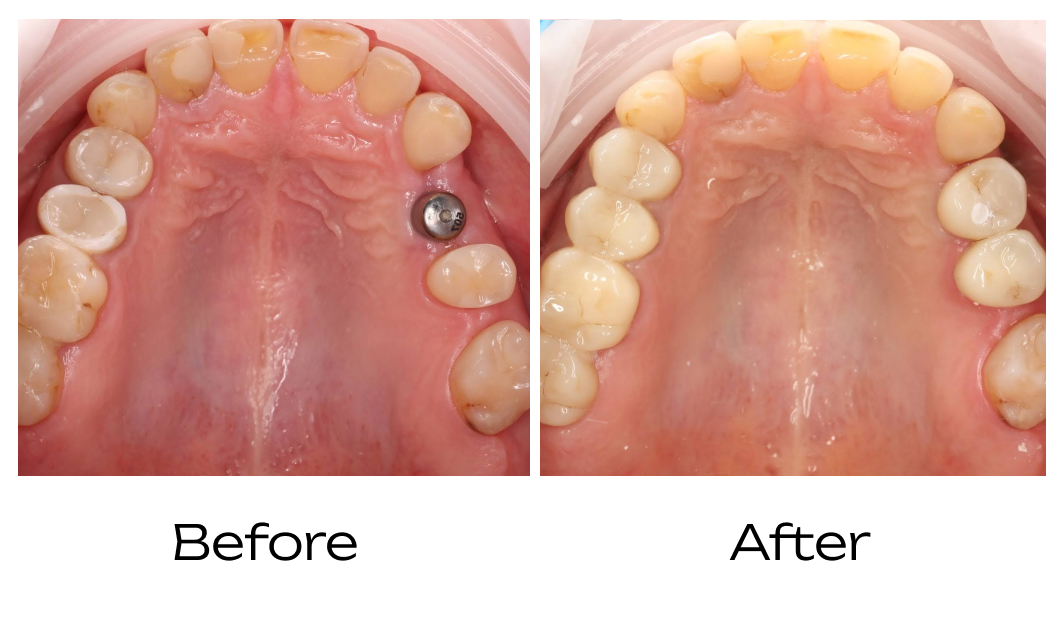
Where possible, the team of doctors preserved the client’s own teeth. In areas where teeth had been lost earlier, they were restored using implants so that the chewing load was distributed evenly and did not damage neighbouring areas. The entire treatment works as a single system — without overload, discomfort or weak spots.
It is also important that the result is not temporary. The sources of infection have been eliminated, the implants are stable, and the crowns have been selected, taking into account the bite and daily load. This means that the patient can calmly plan for the future without having to worry about repeat visits to the dentist or unexpected problems.
As of the date of this article, treatment is still ongoing. The patient is in the process of achieving the planned aesthetic result, so the final appearance of her smile will be even better and fully consistent with the initial treatment plan.
This case clearly illustrates the essence of comprehensive treatment. It is not about the number of doctors, but about clear logic, consistency and predictable results. When all stages are coordinated, the patient understands what is happening to them, how long it will take and what they are paying for.
Why patients choose Dynasty Stomatology
At Dynasty Stomatology, all stages of treatment are carried out in one clinic. Diagnostics, therapy, surgery and prosthetics are carried out within a single plan and under the supervision of one team of doctors.
Patients do not need to visit different specialists in different locations and combine recommendations on their own. All responsibility for the outcome is concentrated in one clinic, which reduces stress and provides a sense of confidence at every stage of treatment.
If you want to understand the real condition of your teeth and get a clear treatment plan without rushing or guessing, start with a comprehensive consultation.
During the first visit, we conduct a comprehensive examination, explain the situation in understandable terms, draw up a step-by-step plan with deadlines and a budget, and only then proceed with treatment.
Sign up for a consultation to gain a clear understanding of your condition and the expected outcome.