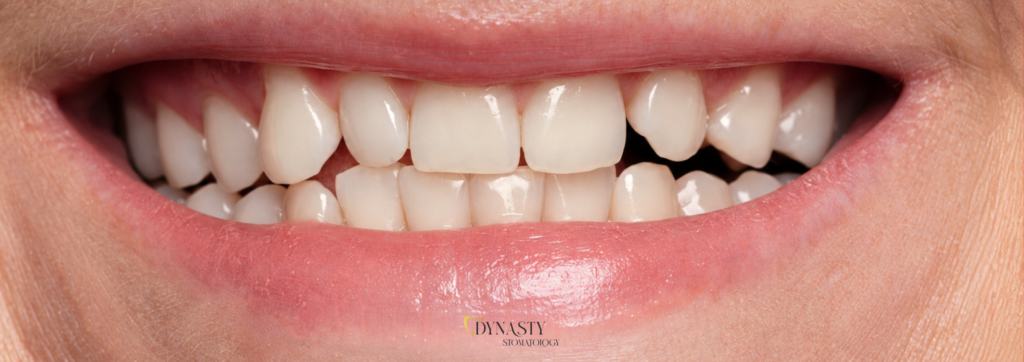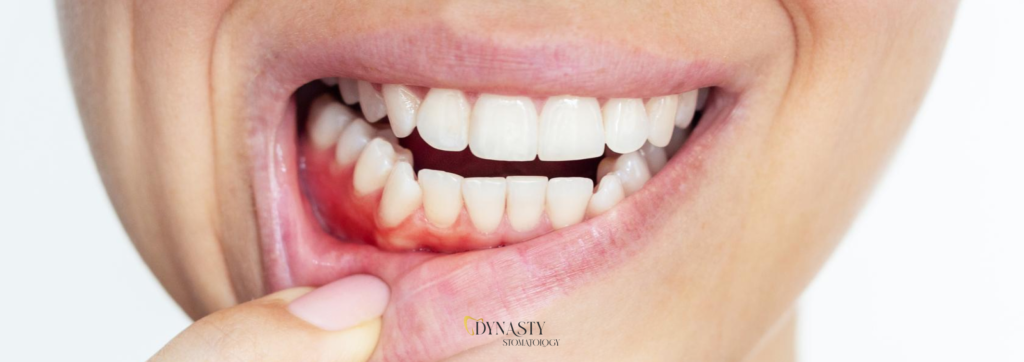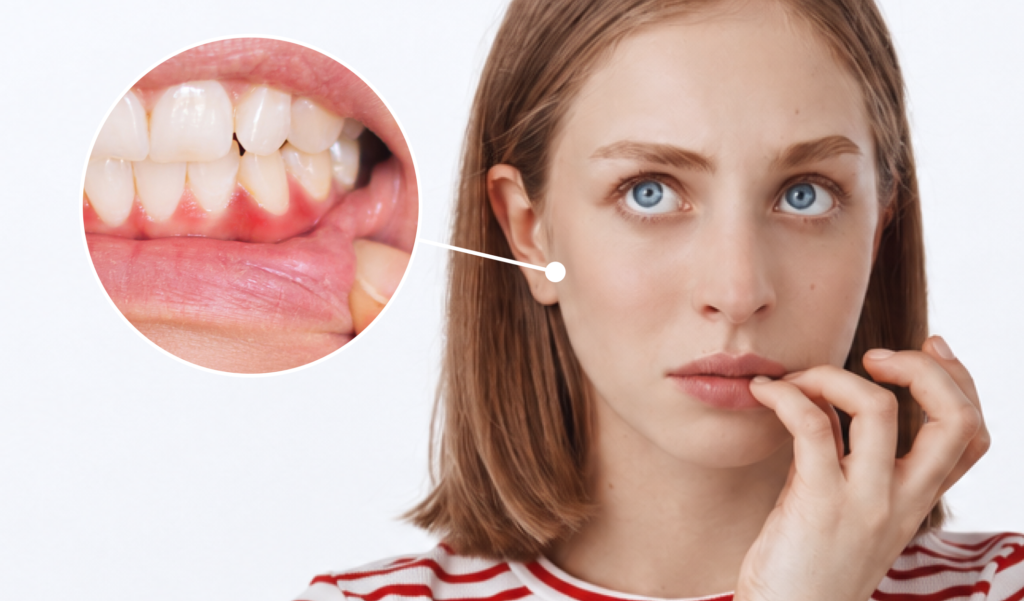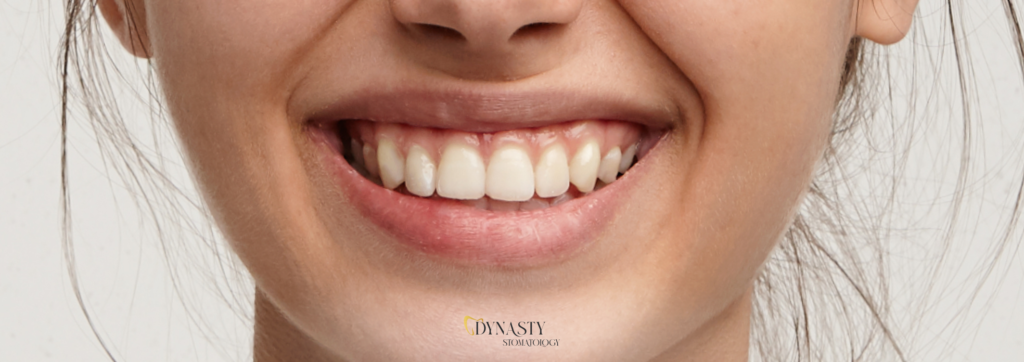

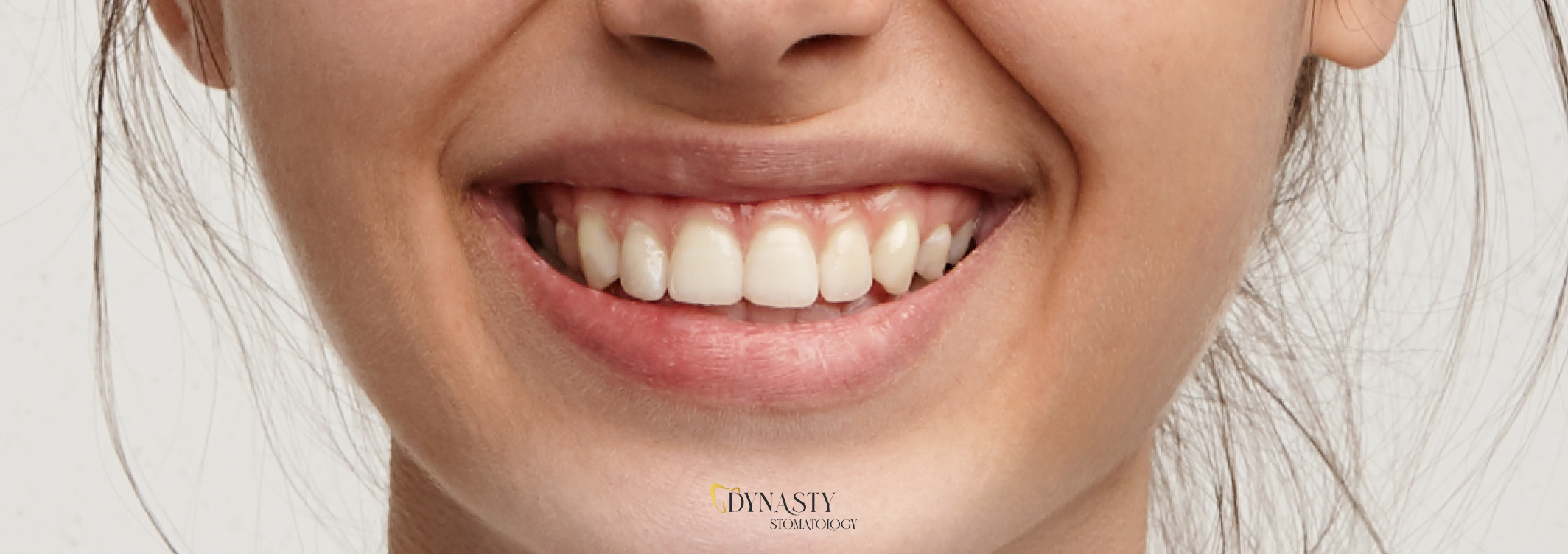
A gummy smile is a situation in which a large portion of the gums above the upper teeth is visible when smiling broadly. It is not a disease in itself or a reason to feel ashamed. For some people, it is simply an individual facial feature, while for others it affects the appearance of their smile and their self-confidence.
Whether and how visible gums can be changed depends on the cause. It may be related to the gums, the length of the tooth crowns, tooth positioning, the jaw, or the movement of the upper lip. Therefore, it is not advisable to choose a procedure based solely on photos found online.
What Causes a Gummy Smile?
The causes of a gummy smile may occur individually, but they often coexist. In one patient, the jaw structure may be responsible; in another, gum position or excessive lifting of the lip. Properly identifying the cause of visible gums is essential for choosing safe treatment.
Jaw Structure, Bite, and Tooth Positioning
One possible cause is excessive vertical growth of the upper jaw, meaning that the upper jaw has an increased vertical dimension. In this case, more tissue above the teeth becomes visible when smiling, even if the gums themselves are healthy.
Bite irregularities and the position of the upper teeth may also play a role. If the teeth protrude, are positioned too low, or the bite requires correction, orthodontic treatment may be part of the treatment plan. Correcting the gum line alone will not solve the issue when its main source lies in the jawbone or in the relationship between the teeth and the face.
Teeth Partly Covered by Gum Tissue and Tissue Overgrowth
Sometimes the crowns of the upper teeth appear short because their visible portion is partly covered by gum tissue. This may result from altered passive eruption — the tooth has reached its proper position, but the gum line has not moved to its typical level.
This does not always mean that the teeth are actually small. The dentist assesses their true length, bone position, and the condition of the periodontium, meaning the tissues surrounding the tooth. Gum overgrowth may also have different causes, including inflammation or the effects of certain medications, which is why an examination and identification of the source of the problem are needed before treatment.
The Upper Lip and Excessive Muscle Activity
In some people, the upper lip covers the teeth typically at rest but lifts high when laughing. This can occur, among other reasons, due to increased activity of the muscles that elevate the upper lip.
A shorter or less voluminous lip may also contribute. For example, when the face is relaxed, the gums may be almost invisible, but during a broad smile the lip exposes noticeably more of them. This is an important diagnostic clue because a muscle-related issue is treated differently from a bone- or gum-related cause.
How Is the Cause of a Gummy Smile Diagnosed?
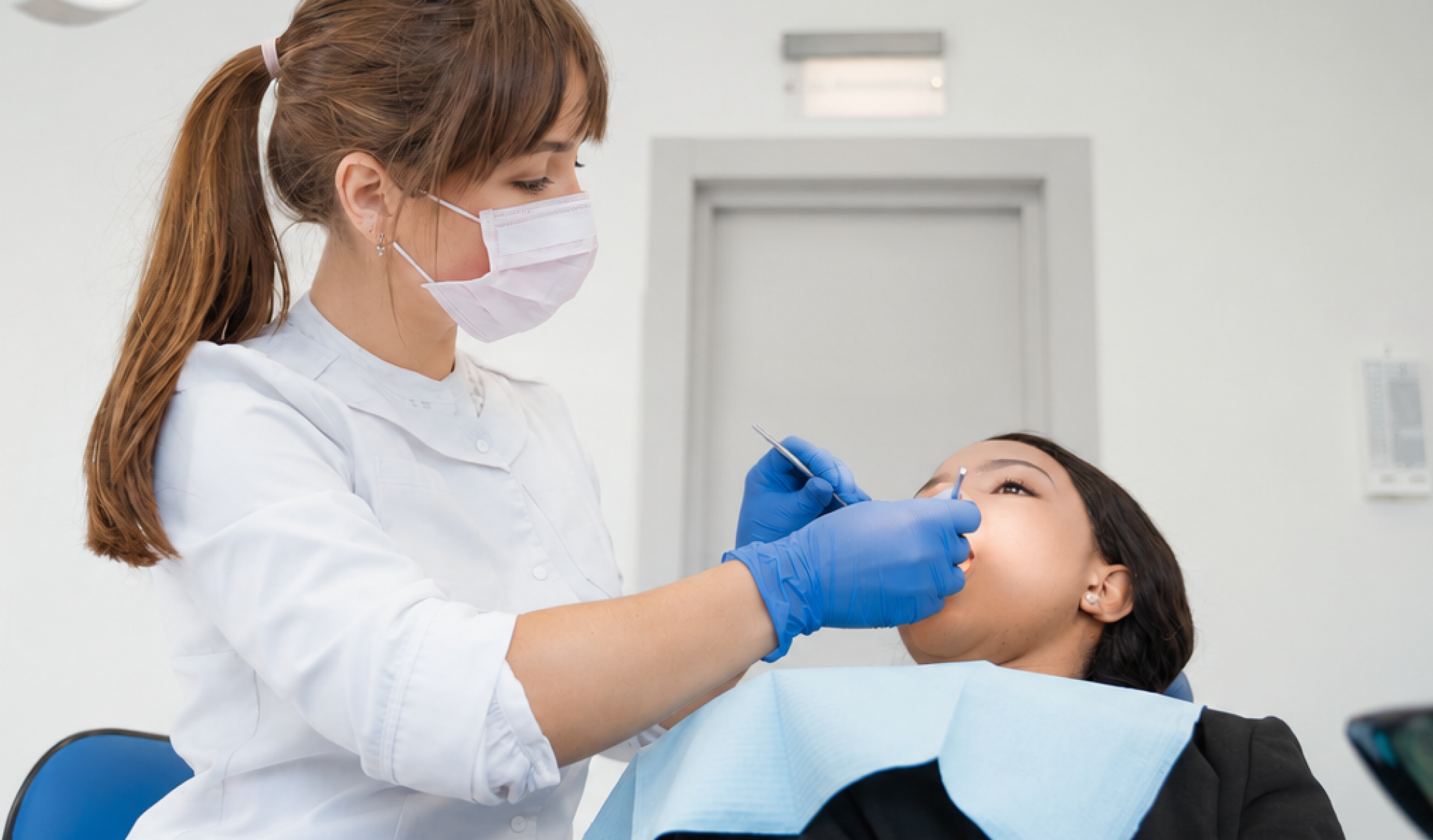
Diagnosis of a gummy smile begins with a discussion about what the patient would like to change and what their expectations are. At Dynasty Stomatology, a dental consultation is not about judging appearance, but about determining why the gums are visible and whether treatment is appropriate.
The doctor evaluates the smile at rest, while speaking, and during full facial expression. They assess the condition of the gums, the length of the visible tooth crowns, the bite, tooth alignment, and facial proportions. Depending on the situation, they may recommend:
- photographic documentation of the smile and face;
- an intraoral scan, meaning a digital image of the teeth and bite;
- an X-ray or CT scan;
- a consultation with an orthodontist, periodontist, or oral surgeon.
Gummy Smile Treatment Methods
Treatment for a gummy smile is selected according to the diagnosed cause, rather than only the amount of visible gum tissue. Sometimes periodontal treatment, meaning treatment of the tissues surrounding the teeth, is sufficient; in other cases, orthodontics, muscle treatment, or a surgical consultation may be needed.
|
Method |
Appropriate cause |
What to expect |
Who qualifies the patient for treatment |
|
Gum line correction and clinical crown lengthening |
Teeth partly covered by gum tissue, selected cases of tissue overgrowth |
Improved proportions between the visible parts of the teeth and gums after healing |
Periodontist or oral surgeon |
|
Orthodontic treatment |
Improper tooth alignment and bite |
Gradual changes in tooth position and bite conditions |
Orthodontist |
|
Surgical treatment |
Selected cases related to jaw structure |
Changes in the relationship between the jaw, teeth, and facial tissues following detailed qualification |
Maxillofacial surgeon in cooperation with an orthodontist |
|
Botulinum toxin |
Excessive activity of the muscles that elevate the upper lip |
Temporary reduction of excessive lip elevation |
Qualified doctor after assessment |
Gum Correction and Restoring Tooth Proportions
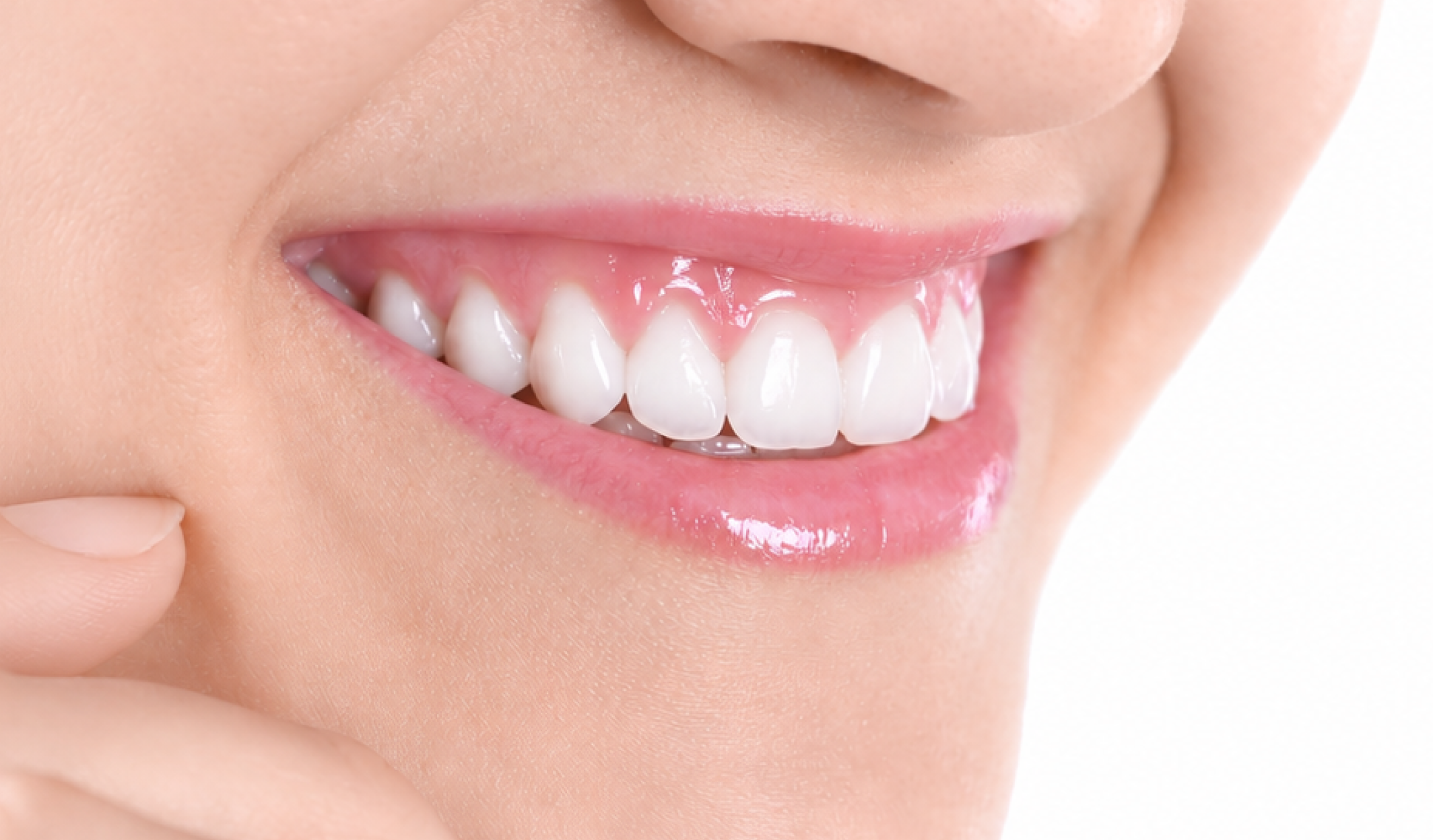
If healthy teeth are excessively covered by gum tissue, the doctor may consider gum line correction or clinical crown lengthening. This procedure aims to expose a greater portion of the natural tooth crown while remaining safe for the periodontium.
Before treatment, the proportions of the teeth, the course of the gum line, and anatomical conditions are planned. In selected cases, after periodontal treatment has been completed, further cosmetic dentistry procedures may be considered, such as restoring the shape of the teeth. Not every patient will achieve the same result, as the limits of treatment are determined by the anatomy of the gums, bone, and teeth.
Orthodontic and Surgical Treatment
Braces or clear aligners may help when visible gums are related to tooth positioning, bite issues, or the need to change tooth position. Treatment is gradual, and its scope is determined by the orthodontist based on the examination and diagnostic records.
At Dynasty Stomatology, patients can begin with a consultation with orthodontist Tetiana Pererva, who assesses whether the issue has an orthodontic component. If the cause is a significant jaw discrepancy, an assessment by a maxillofacial surgeon may also be necessary. Surgical treatment is not standard for every gummy smile, but rather an option considered for specific indications, often as part of a combined plan with orthodontic treatment.
Botox for a Gummy Smile and Lip-Focused Treatments
Botox for a gummy smile, meaning the use of botulinum toxin, may be considered when the main cause is excessive activity of the muscles that elevate the upper lip. The product does not change the position of the teeth, gums, or jaw — it affects only muscle movement.
The effect of this approach is temporary, and its extent and duration vary between patients. The procedure requires assessment by a qualified specialist, discussion of contraindications, and potential side effects, such as temporary smile asymmetry or excessive weakening of lip movement.
How to Prepare for Treatment and What to Expect After the Procedure?
Before undergoing gummy smile treatment, it is worth providing the doctor with information about chronic conditions, medications being taken, allergies, previous dental procedures, and aesthetic expectations. This makes it possible to plan treatment safely and avoid solutions that do not address the true cause of the issue.
Recovery after a gum procedure depends on its type and extent. After surgical procedures, swelling, tenderness, or temporary discomfort may occur. Adaptation after orthodontic treatment differs from recovery after gum correction, and botulinum toxin treatment does not involve a tissue-healing period, but the result still needs to be monitored.
The doctor provides individual recommendations regarding hygiene, eating, activity, and follow-up appointments. These should not be replaced with general advice from the internet. If increasing pain, bleeding, fever, swelling that makes daily functioning difficult, or any other concerning symptom occurs after the procedure, contact the clinic providing the treatment.
How to Choose a Specialist and Book a Consultation?
A gummy smile specialist should first determine the cause and only then recommend a method. In practice, the first step may be a consultation with a dentist, who will refer the patient to a periodontist, orthodontist, oral surgeon, or maxillofacial surgeon if necessary.
Before choosing treatment, it is worth checking:
- whether the doctor assesses the smile, bite, gums, and facial proportions rather than performing only one type of procedure;
- what tests are needed before treatment begins;
- whether the treatment plan includes stages, possible limitations, and follow-up visits;
- who will oversee each stage of treatment;
- what the cost estimate looks like and what it includes;
- whether communication is available in Polish, Ukrainian, Russian, or English.
The cost of gummy smile treatment depends on the cause, the type of procedure, the need for combined treatment, and the number of follow-up appointments. Gum correction has a different cost from orthodontic treatment, and both differ from treatment involving jaw surgery. An exact quote can be provided after an examination and treatment planning. The current Dynasty Stomatology price list should be treated as a general guide, as the scope of treatment is determined individually.
When booking an appointment, briefly explain that the issue concerns visible gums while smiling. Send photos only if the clinic specifically asks for them. You can also request a consultation in your preferred language. Dynasty Stomatology sees patients in Kraków at Romanowicza Street 1/LU3 and Romanowicza Street 4B.
Frequently Asked Questions
-
No, a gummy smile does not necessarily indicate a health problem on its own. It may be an anatomical feature and concern only the appearance of the smile. However, an examination is useful to rule out inflammation or gum overgrowth that requires treatment.
-
Gum visibility depends on the jaw, bite, tooth position, gum line, and movement of the upper lip. For one person, a single factor may be responsible, while for another, several factors may be involved at the same time. Assessment during facial expression helps identify the dominant cause.
-
Botox can temporarily reduce gum visibility only when the issue is mainly caused by excessive activity of the lip muscles. It will not correct the position of the jaw or teeth, nor excess gum tissue. Medical assessment is necessary.
-
Orthodontic treatment may help if the cause is improper tooth alignment or bite issues. However, it will not be the only solution in every case. The orthodontist assesses whether moving the teeth can improve smile proportions.
-
The cost of gummy smile treatment depends on the diagnosed cause and the selected method. The estimate may include diagnostic procedures, periodontal treatment, orthodontics, muscle treatment, or multidisciplinary treatment. The doctor presents the exact plan and price after the consultation.
A gummy smile can be treated, but the right method depends on why the gums are visible. The safest step is diagnostic assessment, which makes it possible to choose a solution appropriate for the structure of the teeth, gums, bite, and lip movement. Book a consultation.