



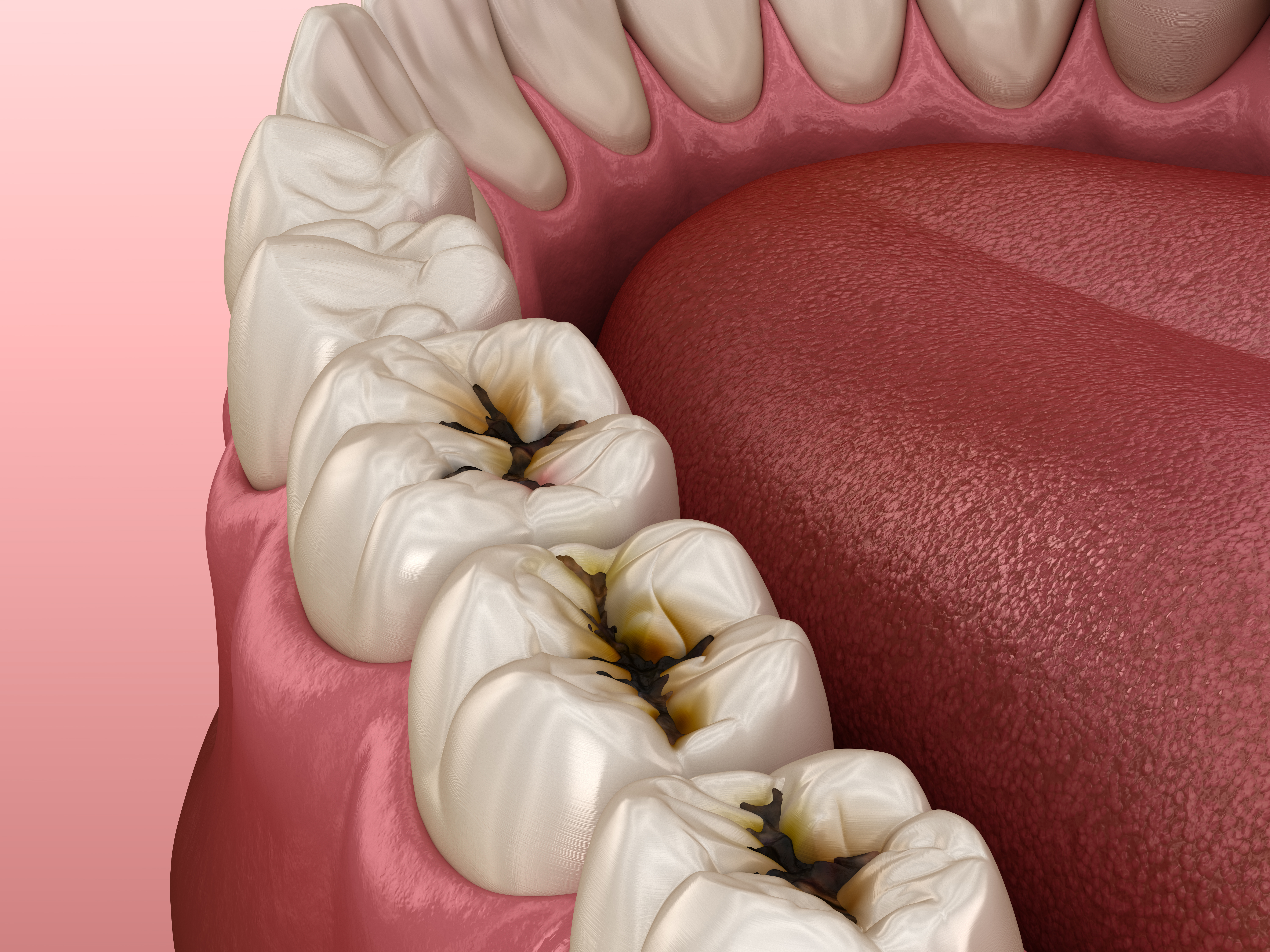
Caries is one of the most common dental diseases affecting the oral cavity. It is the destruction of tooth enamel that gradually affects the deeper tooth tissues. Without timely сaries treatment, it can lead to pain, inflammation, the spread of infection to the pulp, and eventually to tooth decay or even tooth loss. That’s why postponing a visit to the dentist is not recommended.

Initial (surface) caries.
Moderate (middle) caries.
Deep caries.
Benefits of Choosing Dynasty Stomatology
Our patients enjoy comfortable medical care, low service prices, and several other key advantages:
- Expertise. Our dentists have extensive experience and follow European treatment protocols.
- Affordability. We offer reasonable treatment prices while maintaining a high level of service.
- Personalized Approach. We consider each patient’s needs and preferences to ensure comfortable and effective treatment.
- Modern Equipment. Our clinic uses advanced technologies for accurate diagnostics and effective tissue removal.
You can schedule an appointment at a time that suits you via our website or by phone. Trust your dental health to the professionals at Dynasty Stomatology!
Dental caries treatment price in Krakow
-
Online consultation
200 PLN -
Dentist consultation
250 PLN -
Tomography of 1 jaw
250 PLN -
Tomography of 2 jaws
350 PLN -
Tooth restoration (tooth filling)
400‑750 PLN -
Front tooth restoration
500‑900 PLN
How the Dynasty Stomatology dental clinic's loyalty program works
Learn more about the loyalty program
Step 01
Visit the clinic and scan the QR code at the reception desk
Step 02
Register online — enter your details
Step 03
Receive and accumulate points after each visit
Do you want to treat your teeth while you sleep?
Schedule an appointment!
By clicking the button, you give your agreet your personal data in accordance with privacy policy.
Frequently asked questions about caries treatment
-
Cavities are caused by bacteria that process sugar and produce acids, which erode tooth enamel. To prevent decay, maintain proper oral hygiene: brush your teeth twice a day, use dental floss, limit sugar intake, and visit the dentist regularly.
-
No. Thanks to modern anesthesia methods, cavity treatment at our clinic is completely painless. We ensure your comfort at every stage of therapy.
-
The most effective methods include removing decayed tooth tissue followed by filling the cavity. In cases of deep decay, nerve removal and root canal treatment may be necessary. The exact method depends on the stage of the disease and the tooth’s condition.
-
To maintain dental health after cavity treatment, it’s important to: Brush your teeth twice a day using fluoride toothpaste; Use dental floss to clean between your teeth; Limit the consumption of sugary and acidic foods; Visit the dentist for regular check-ups and professional cleanings; Use mouthwash to support hygiene and help prevent dental issues.
-
The best treatment for dental caries depends on how advanced the decay is. In early stages, fluoride treatments or remineralizing agents may be enough to reverse the damage, while more advanced cavities typically require a filling (composite or ceramic) to restore the tooth's structure and function. In severe cases where the decay has reached the nerve, root canal treatment or a crown may be necessary. The most effective approach, however, is prevention — regular check-ups, good oral hygiene, and a balanced diet can help you avoid cavities altogether.
-
The 3-3-3 rule is a simple guideline to help you remember when to replace your toothbrush and maintain good oral hygiene. It means: brush your teeth 3 times a day, replace your toothbrush every 3 months, and visit your dentist every 3 months (or at least every 6 months, depending on your individual needs). Following this easy-to-remember rule helps keep your teeth and gums healthy and allows your dentist to catch any potential problems early.
-
The 2-2-2 rule is a simple guideline for maintaining good oral hygiene: brush your teeth 2 times a day, for 2 minutes each time, and visit your dentist every 2 months (though for most patients, check-ups every 6 months are sufficient — your dentist may recommend more frequent visits based on your individual needs). This easy-to-remember rule helps ensure your teeth and gums stay healthy between professional cleanings.
-
The "7+4 rule" is a simple guideline used to estimate when children's permanent teeth should emerge. It means that by adding 4 to the number 7, you can approximate the age (in years) when specific groups of permanent teeth appear — for example, the first permanent molars typically arrive around age 6–7, and subsequent teeth follow roughly every year or so after that. In practice, this rule helps parents and dentists track whether a child's dental development is on schedule. If you have any concerns about your child's tooth eruption timeline, we're happy to evaluate them at our clinic and put your mind at ease.
Dentists specializing in caries treatment
View all doctors
Anastasiia Danyliuk
General dentist, endodontist
Focuses not only on treatment effectiveness but also on patient comfort. Her main goal is to provide long-term results without the need for repeate...

Yulia Kryzhanovska
General dentist, endodontist
A doctor with a sense of humor who creates a positive atmosphere even in the dental chair.

Vladyslav Karkachov
General dentist, endodontist, prosthodontist
Relies on a well-thought-out treatment plan and good rapport with the patient. A friendly approach helps build trust, even among those afraid of de...

Yana Tereshchenko
General dentist, endodontist
Cares about both the health and the aesthetic and functional aspects of her patients’ teeth, helping preserve a natural, beautiful smile for years.

Yuliia Rudzynska
Pediatric dentist
Helps children not only maintain healthy teeth but also develop a positive attitude toward dentistry, ensuring fear-free visits.

Oleg Vus
General dentist, endodontist, prosthodontist
Oleg Vus is guided by the principles of professionalism, honesty, and patient care. He does not impose unnecessary procedures, but offers only the ...

Rostyslav Savruk
General dentist, endodontist, prosthodontist
Over 16 years of professional experience. Specialization in prosthetic dentistry and dental prosthetics. Use of advanced techniques and modern mate...
Reviews of tooth decay treatment in Krakow
Expert articles on the topic
View all blog-
08.10.2026
1
8 min. read
Sensitive Teeth: Causes, Treatment, and Effective Pain Relief
Sensitive teeth most often cause brief, sharp pain triggered by stimuli such as a cold drink, hot food, or brushing. It occurs when stimuli reach exposed dentin—the tissue located beneath the enamel and root cementum. Dentin contains microscopic tubules connected to the inside of the tooth. When enamel wears away due to erosion or the […]
Read more -
07.10.2026
2
9 min. read
Toothache – How to Relieve It at Home and When to See a Dentist Urgently
This guide is for adults who need safe relief before seeing a dentist. Home remedies may reduce toothache pain for a short time, but they do not address its cause. If the pain is severe, worsening, recurring, or accompanied by swelling, it is worth contacting a dental office the same day. In cases of sudden […]
Read more -
03.07.2026
276
7 min. read
Treating Tooth Decay — How to Get Rid of Tooth Decay, Causes and Symptoms
Dental caries rarely begins with pain. In most cases, it develops silently in its early stages. First, a small spot…
Read more -
22.05.2026
441
8 min. read
Root canal treatment under a microscope – jwhat is microscopic endodontics?
Many people still view root canal treatment as one of the most unpleasant dental procedures. Fear of pain, lengthy treatment,…
Read more -
25.03.2026
657
9 min. read
Causes and Treatment of Stomatitis – What is it and Why Does it Occur?
Have you ever woken up in the morning, gone to drink coffee, and suddenly noticed an unpleasant burning sensation in…
Read more -
09.03.2026
381
9 min. read
Restorative Dentistry Guide — Everything You Need to Know
Sometimes a tooth decays almost unnoticed. There's no sharp pain or warning signs. A small spot, mild sensitivity to cold,…
Read more









Сaries treatment in Krakow – Effective Care Without Unnecessary Stress
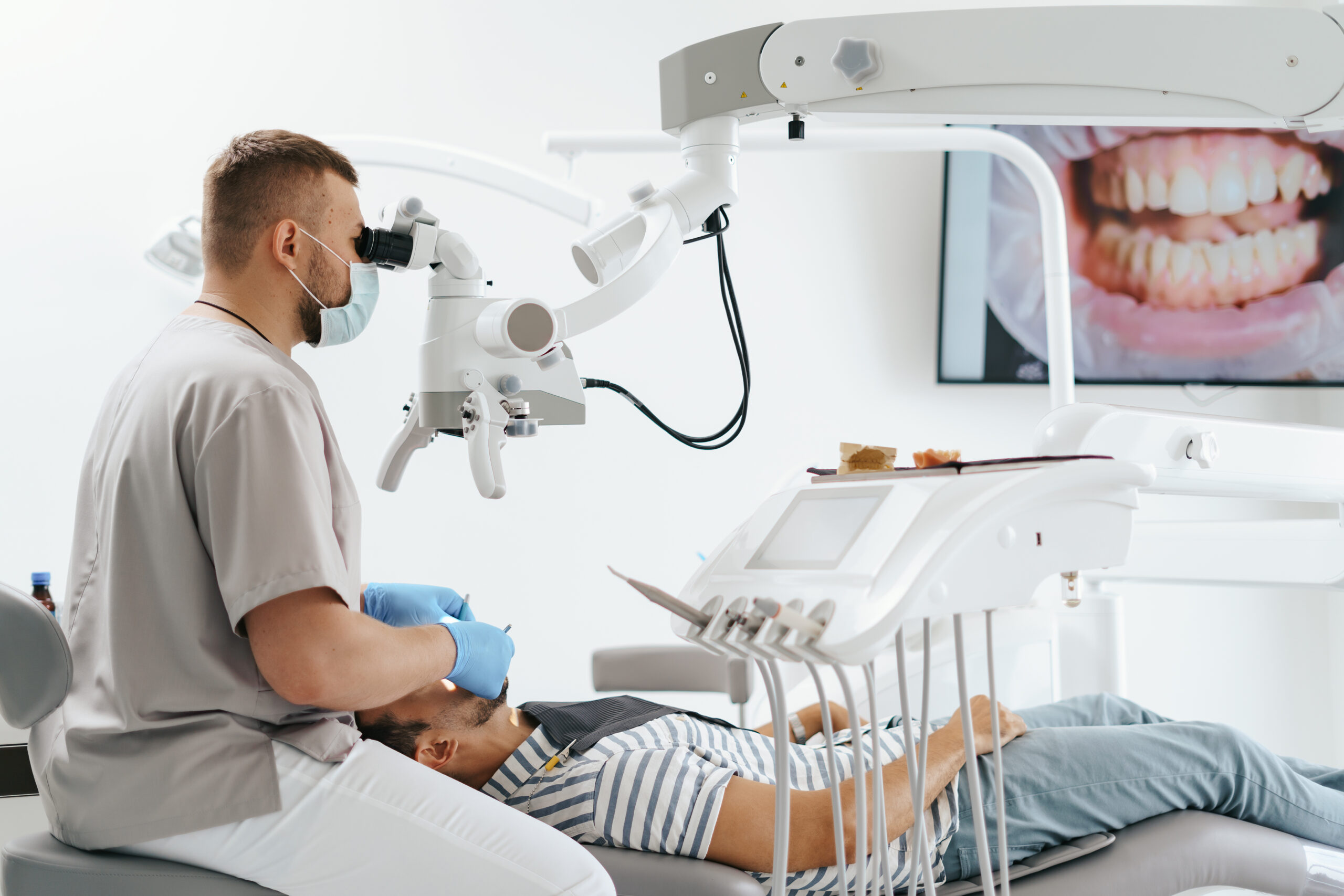
Tooth decay is damage to the hard tissues of a tooth that does not reverse on its own once a cavity has formed. Early tooth decay treatment in Krakow usually makes it possible to limit the procedure to cleaning a small lesion and restoring the tooth. Delaying your appointment may allow bacteria to spread deeper, toward the pulp—the innervated tissue inside the tooth.
This service is intended for those who have noticed changes in their teeth, are experiencing increased sensitivity, or simply want to check whether they need treatment for tooth decay. At Dynasty Stomatology, conservative dentistry includes diagnosis, removal of decayed areas, and restoration of tooth function with minimal intervention.
It’s worth seeing a dentist even if your symptoms are minor. Tooth decay often develops without causing pain, especially in its early stages.
How Can You Recognize Сaries Treatment at an Early Stage?
The first symptoms are not always clear. It is worth booking a consultation if chalky, dull, or darker spots appear, if the tooth surface feels rough, or if there is a visible cavity. Sensitivity to cold, sweet, or acidic foods and drinks can also be a sign.
Pain when biting, food getting stuck in one area, or discomfort while flossing also require assessment. However, the absence of pain does not mean that the tooth is healthy. The dentist checks areas that are not visible in a mirror, including the spaces between teeth and around old fillings.
What Causes Tooth Decay to Develop?
Tooth decay develops when bacteria in dental plaque use sugars from the diet and produce acids that weaken the enamel. Not only the amount of sweets matters, but also how often you snack and drink sweetened beverages between meals.
The risk is increased by inadequate tooth cleaning, less frequent check-ups, difficulty cleaning around orthodontic appliances, and reduced saliva flow. The problem can affect children, adults, and seniors, including people who take good care of their oral hygiene. The good news is that regular prevention, fluoride, and appropriate habits help reduce the formation of further lesions.[^1]
What Does Tooth Decay Treatment Involve?
Treatment begins with a conversation and an examination, not immediate drilling. The dentist assesses the tooth, determines the depth of the lesion, and explains which treatment approach makes sense in the given situation. If the clinical examination is not sufficient, they may recommend on-site imaging diagnostics available as part of the clinic’s services.
A standard appointment usually follows a structured series of steps:
- A discussion of symptoms, health, and previous experiences with local anaesthesia.
- Examination of the teeth, gums, and the area around the cavity.
- An X-ray, if needed to assess a lesion that is not visible externally.
- Discussion of the treatment plan, urgency of treatment, and estimated costs.
- Local anaesthesia, if indicated or needed for comfort.
- Cleaning the affected tissues and restoring the tooth.
The scope of treatment depends on whether the lesion is limited to the enamel or extends into deeper layers of the tooth.
Diagnostics and an Individual Treatment Plan
Before starting the procedure, the dentist assesses the location and depth of the decay, the condition of adjacent teeth, and the seal of any existing fillings. An X-ray may be helpful in the case of lesions between teeth or suspected deeper cavities.
Before treatment, the patient should receive clear information about the proposed solution, alternatives, possible limitations, and the expected cost plan. At Dynasty Stomatology, the treatment plan is discussed before work begins, so you can calmly ask questions and make an informed decision.
Removal of Tooth Decay and Tooth Restoration
During the procedure, the dentist removes infected and weakened tissues while preserving as much healthy tooth structure as possible. The cavity is then prepared for restoration and filled with a material that recreates the tooth’s shape.
Composite fillings are most commonly used, meaning a material colour-matched to the natural tooth. A well-made restoration should restore chewing comfort, allow proper cleaning, and improve aesthetics. For a larger cavity, the dentist may discuss other restoration options, as not every tooth requires the same solution.
Сaries Treatment Methods Matched to the Degree of Progression
Tooth decay treatment methods are selected after an examination because spots that look similar may require different approaches. The earlier a lesion is detected, the greater the chance of conservative treatment without preparing a cavity.
A very early enamel lesion may qualify for strengthening measures. A typical cavity requires cleaning and restoration with a filling. When decay is deep and approaches the pulp, more thorough assessment may be necessary and, in some cases, root canal treatment.
You should not assume that one method will be suitable for everyone. Ozone treatment and enamel-strengthening products do not replace decay removal once an actual cavity has formed.
Early Tooth Decay: Remineralisation and Fluoride Treatments
If the enamel is weakened but its surface remains intact, the dentist may consider non-invasive management. This includes reviewing oral hygiene, changing dietary habits, and using professionally selected fluoride treatments that support enamel remineralisation.
Fluoride does not “fill a hole” in a tooth. Its role is to strengthen the enamel surface and support the arrest of very early lesions if clinical conditions allow. The decision to use this treatment requires dental monitoring because the activity of the lesion must be observed over time.[^2]
A Carious Cavity and Treatment of a Deep Lesion
When tooth decay has caused a cavity, mechanical removal of the affected tissues is necessary. The dentist then restores the tooth, usually using a composite filling. This makes it possible to recreate the chewing surface and reduce the risk of further plaque accumulation in the damaged area.
A deep lesion may be close to the pulp. In this case, the dentist assesses its condition and presents safe options for further treatment. If the pulp is irreversibly damaged or infected, root canal treatment may be needed, involving cleaning the inside of the tooth and sealing it tightly.
Does Tooth Decay Treatment Hurt?
Modern tooth decay treatment can be comfortable thanks to local anaesthesia, calm communication, and adjusting the pace of the procedure to the patient. The sensations depend on the depth of the lesion, the condition of the tooth, the type of procedure, and individual sensitivity.
Painless treatment should not mean making unrealistic promises. You may feel touch, pressure, or vibrations from instruments, but any pain during the procedure should be reported immediately. The dentist can then stop and adjust the treatment.
People who have postponed tooth decay treatment for a long time due to anxiety do not need to explain or justify their situation. It is best to mention your concerns when booking and at the beginning of the appointment.
Local Anaesthesia and Comfort During Treatment
Before treatment, it is worth informing the dentist about previous difficult experiences, severe anxiety, problems with anaesthesia, or chronic health conditions. Local anaesthesia helps reduce pain sensations in the treated area, and its use is discussed individually.
During the procedure, you can agree on a simple signal indicating that you need a break. Patients have the right to ask what will happen next and to report any discomfort. In cases of severe anxiety, Dynasty Stomatology also offers solutions that support patient comfort, although eligibility depends on your health condition and a medical consultation.
What May Happen After a Filling Is Placed?
After treatment, the tooth may be temporarily sensitive to cold, heat, or pressure, especially if the cavity was deep. Following local anaesthesia, be careful not to bite your cheek, tongue, or lip until normal sensation has fully returned.
It is worth contacting the dental practice if pain persists or increases, swelling occurs, or the filling feels too high when you bite down. A high contact point can be adjusted, so you should not simply get used to discomfort.
How Much Does Tooth Decay Treatment Cost in Krakow?
The cost of tooth decay treatment in Krakow depends on the condition of the individual tooth, so a reliable estimate should be preceded by an examination. A small filling in an easily accessible tooth is priced differently from an extensive restoration, diagnostics, or treatment requiring pulp assessment.
The cost of tooth decay treatment is also affected by the need for local anaesthesia, the number of treated surfaces, replacement of an old leaking filling, and the type of restoration used. Current price information can be found in the Dynasty Stomatology price list, keeping in mind that the final financial plan is determined by the dentist after consultation.
| Pricing factor | Why does it affect treatment cost? |
|---|---|
| Size and depth of the cavity | A larger lesion usually requires a more extensive restoration. |
| Tooth location | Access to the cavity and working conditions may vary depending on its location. |
| Number of affected surfaces | Decay affecting several sides of a tooth requires a broader reconstruction. |
| Imaging diagnostics | An X-ray may be needed when the lesion is not clinically visible. |
| Pulp condition | Suspected pulp involvement may change the scope of treatment. |
Dynasty Stomatology offers instalment payments through MediPay, MediRaty, and an internal instalment plan, with terms arranged individually.
What Does the Cost of Tooth Decay Removal Depend On?
The cost of tooth decay removal depends primarily on the number of tooth surfaces affected by the cavity and the amount of tissue that needs to be restored. Access to the lesion also matters, especially when it is located between teeth or beneath an old filling.
The cost may increase if a leaking restoration must first be removed, additional diagnostics are needed, or a significantly weakened part of the tooth crown must be rebuilt. This is why the phrase “tooth decay treatment price” does not have one honest answer without examining the tooth.
Private Treatment vs. Services Funded by the NFZ
Private treatment and services funded by the NFZ may differ in the range of available procedures, materials, appointment times, and eligibility criteria. The availability of services also depends on the current agreement between a particular facility and the National Health Fund.
When booking, it is worth asking about current options, documents needed for the visit, and payment rules. Official information about public services is published by the National Health Fund. Dynasty Stomatology also accepts patients without Polish health insurance.
How Can You Book Tooth Decay Treatment in Krakow?
Booking a consultation is simple: when contacting reception, briefly describe your symptoms, such as pain, a chipped tooth, sensitivity, or a visible cavity. This helps the team arrange a suitable appointment and provide organisational information before your visit.
Dynasty Stomatology operates in Krakow at Romanowicza Street 1/LU3 and Romanowicza Street 4B. Reception can help confirm current availability, payment methods, required documents, and the possibility of communicating in Polish, Ukrainian, Russian, or English. In cases of acute pain, the clinic tries to see patients on the same day, subject to current availability.
The practical process is as follows:
- Contact the clinic by phone at +48 123 002 806 or through the form on the clinic website.
- Describe your symptoms and mention if the appointment concerns pain, treatment anxiety, or an urgent need.
- Attend an examination and diagnostic imaging if recommended by the dentist.
- Learn about the treatment plan, procedure scope, and individual cost estimate.
- Begin treatment during the same appointment or schedule another date, depending on the condition of the tooth.
The most important step is not to wait until a small lesion begins to hurt noticeably. An early consultation offers a better chance of simpler treatment and preserving your natural tooth.