



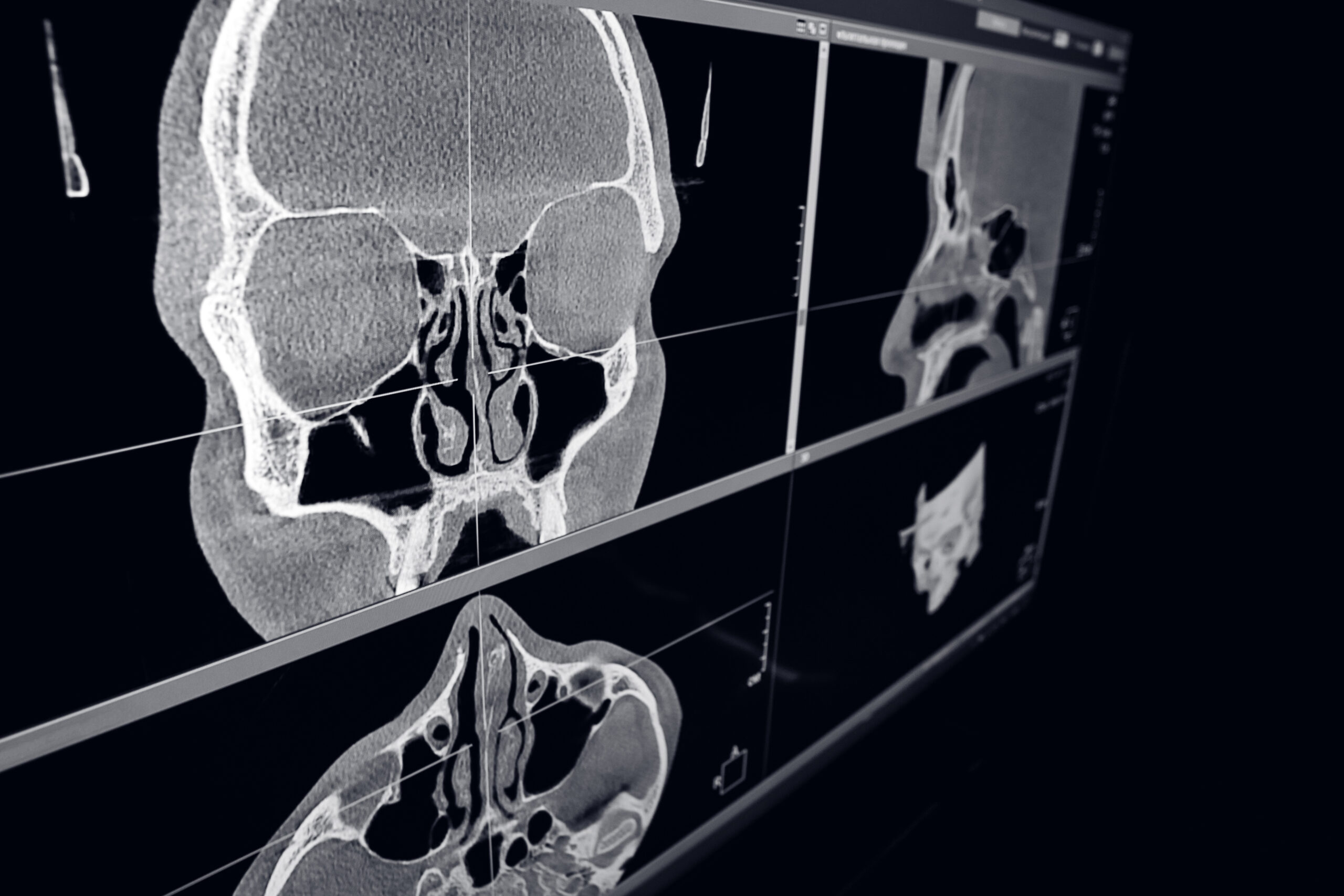
Cone beam computed tomography in radiation refers to a unique kind of X-ray when a regular facial or dental x-ray is not sufficient for diagnosis or any surgical technique. It gives the ENT doctor a detailed image of the air spaces, bones, and soft tissues in your neck and head.

High clarity of the dental and auditory systems

Low dose

Detailed 3D Visualization of ENT Structures
When is a CBCT scan needed?
Your doctor may recommend a CT scan is when you have a nagging pain in the head or neck, or a sinus blockage. With the three-dimensional image obtained, a detailed visualization of the region will give the doctor accurate insight into the mandibular, ossicle, axial, and vestibular areas of the body.
If the doctor suspects sensorineural hearing loss, tumour with inflammatory conditions, a lesion, vestibule complications, endolymphatic complications congenital abnormalities, atresia, acquired cholesteatoma, cranial nerve problems, tinnitus, conductive hearing loss, or ganglion problems, this scan is usually recommended.
Price: Computed tomography of ENT organs
-
Laryngological sinus tomography
250 PLN
How the Dynasty Stomatology dental clinic's loyalty program works
Learn more about the loyalty program
Step 01
Visit the clinic and scan the QR code at the reception desk
Step 02
Register online — enter your details
Step 03
Receive and accumulate points after each visit
Do you experience discomfort in the ENT area and want to undergo a routine diagnostic examination?
Schedule an appointment!
By clicking the button, you give your agreet your personal data in accordance with privacy policy.
Frequently asked questions about ENT CT scans
-
You can get an insight into the inner structures of the sinuses, nasal passages, and ears needed for the diagnosis and treatment of ENT infections.
-
The procedure is simple and quick. It is completed in a few minutes There is no pain or discomfort felt in the area scanned.
-
No. You do not need any special preparation for ENT CT scans, just wear comfortable and loose clothes during the appointment.
-
Yes. the ENT CT procedure is completely safe as it involved a very small dose of radiation, and the scanner machine does not touch you.
-
Yes, the CT of ENT organs can safely be used for children as there is a minor dose of radiation involved with no fear of side effects.
-
At Dynasty Stomatology, we offer computed tomography (CT) of ENT organs, which provides detailed 3D images of your sinuses, nasal passages, and surrounding structures. This quick, painless scan helps us accurately diagnose conditions such as sinusitis, nasal septum deviation, or other issues affecting your ear, nose, and throat area. The examination takes just a few minutes and plays a key role in planning effective treatment tailored to your needs. Please contact our clinic to schedule your scan — no lengthy preparation is required.
-
An ENT CT scan provides detailed images of the sinuses, nasal passages, ear structures, and surrounding bones, helping us identify conditions such as chronic sinusitis, nasal polyps, deviated septum, ear infections, and bone abnormalities. It can also reveal tumors, fluid buildup, or blockages that may be causing your symptoms. This quick and painless scan is an invaluable tool that allows us to plan the most effective treatment tailored to your needs.
-
A CT scan can visualize a wide range of structures depending on the area being scanned, including bones, soft tissues, blood vessels, and internal organs such as the brain, lungs, heart, liver, kidneys, and more. In our dental clinic, we use cone beam CT (CBCT) scans, which focus specifically on the teeth, jawbones, sinuses, nasal cavity, and surrounding facial structures. This type of scan gives us detailed 3D images that help us plan treatments like implants, extractions, or orthodontic procedures with great precision.
-
CT (Computed Tomography) scanners have evolved through seven generations based on how they acquire images. 1st generation used a single X-ray beam and detector with translate-rotate movements. 2nd generation introduced a small fan beam with multiple detectors, speeding up scans. 3rd generation featured a wider fan beam with a rotating detector array. 4th generation used a fixed ring of detectors around the patient. 5th generation (electron beam CT) eliminated mechanical rotation for ultra-fast cardiac imaging. 6th generation introduced helical/spiral scanning, allowing continuous data acquisition as the patient moves through the scanner. 7th generation represents modern multi-slice (multi-detector) CT, capable of capturing multiple image slices simultaneously for faster, higher-resolution scans — this is the technology commonly used in advanced dental and medical imaging today, including the CBCT systems we use at our clinic for precise 3D diagnostics.
-
Yes, a CT scan can reveal certain inner ear problems, such as structural abnormalities, infections, bone changes, or fluid buildup in the inner ear. However, for soft tissue details and conditions like inflammation of the inner ear nerves, an MRI is often the preferred imaging method. If you're experiencing symptoms like dizziness, hearing loss, or ear pain, your doctor will recommend the most appropriate scan based on your specific situation. Feel free to contact our clinic if you'd like guidance on which imaging option is right for you.
Specialists who perform ENT CT scans
View all doctors
Anastasiia Danyliuk
General dentist, endodontist
Focuses not only on treatment effectiveness but also on patient comfort. Her main goal is to provide long-term results without the need for repeate...

Borys Minakov
Prosthodontist
His approach focuses on individually tailored treatment plans that not only solve current issues but also prevent future ones. This helps patients ...

Dmytro Ostrovskyi
Prosthodontist
Over 30 hands-on courses completed in 9 years of practice. A comprehensive approach guarantees stable, durable, and predictable results.

Oleg Vus
General dentist, endodontist, prosthodontist
Oleg Vus is guided by the principles of professionalism, honesty, and patient care. He does not impose unnecessary procedures, but offers only the ...

Rostyslav Savruk
General dentist, endodontist, prosthodontist
Over 16 years of professional experience. Specialization in prosthetic dentistry and dental prosthetics. Use of advanced techniques and modern mate...

Vladyslav Karkachov
General dentist, endodontist, prosthodontist
Relies on a well-thought-out treatment plan and good rapport with the patient. A friendly approach helps build trust, even among those afraid of de...

Yana Tereshchenko
General dentist, endodontist
Cares about both the health and the aesthetic and functional aspects of her patients’ teeth, helping preserve a natural, beautiful smile for years.

Yulia Kryzhanovska
General dentist, endodontist
A doctor with a sense of humor who creates a positive atmosphere even in the dental chair.

Yuliia Rudzynska
Pediatric dentist
Helps children not only maintain healthy teeth but also develop a positive attitude toward dentistry, ensuring fear-free visits.
Reviews of ENT CT scans in Krakow
Expert articles on the topic
View all blog-
25.08.2026
20
4 min. read
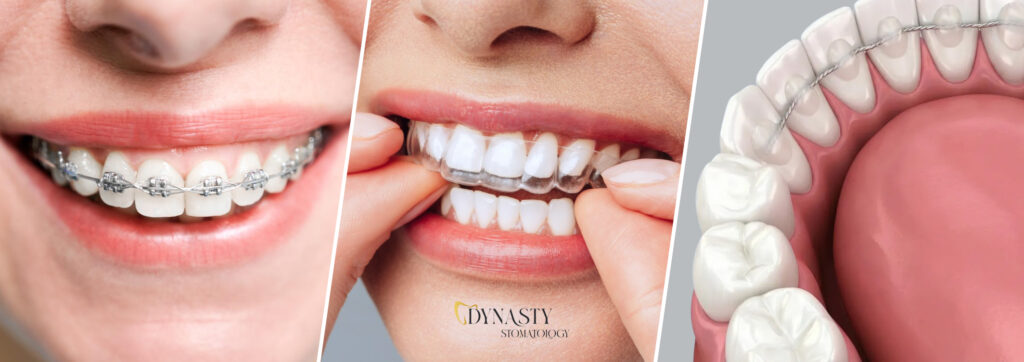
Braces, aligners or retainers – what to choose for bite alignment?
Malocclusion is not just about aesthetics. It can cause headaches, jaw overload, increased teeth clenching, speech problems, and even sleep…
Read more -
20.08.2026
8
11 min. read
Retainer after removing orthodontic braces – what is it and what does it look like?
Retainer After Braces Removal – What Is It and What Does It Look Like? For patients who have completed treatment…
Read more -
07.08.2026
94
5 min. read
A new smile in 3 days — All-on-4 case in a complex clinical situation
Volodymyr came to Dynasty Stomatology with a clear request: to restore his teeth as quickly and efficiently as possible, improve…
Read more -
11.02.2026
485
8 min. read
What is Digital Dentistry — Everything you Need to Know
Until recently, a visit to the dentist was associated with significant discomfort. Uncomfortable impressions, long waits, and the need for…
Read more -
15.01.2026
539
8 min. read
Composite dental filling – what is it and when is it used?
For most people, a filling is a matter of appearance, comfort, and the assurance of long-lasting tooth health. It's important…
Read more -
12.12.2025
557
6 min. read
Can dental treatment be done during pregnancy – Dental care during pregnancy
Pregnancy is an important, but at the same time exciting and responsible event in a woman’s life. After all, in addition to being responsible for her own health, a woman is now responsible for the life of her child. During pregnancy, it’s important to monitor not only your general health but also your oral health. […]
Read more







At Dynasty Stomatology, we deploy CBCT to enable ENT doctors and dentists to get an insight into the detailed images of your nose, ears, sinus, throat, and sinuses. The radiation exposure is fast, accurate, and safe for adults and children. It is increasingly used in the diagnosis of ENT and dental issues for planning comfortable custom treatment plans for the patient.
Dental CT Scanning at Dynasty Stomatology
We at Dynasty Stomatology, we use dental CT scanning with advanced non-invasive CBCT technology. This radiotherapy scan gives the doctor a 3D high-resolution image of the jaw, teeth, basal skull, oral cavity, larynx and surrounding regions. ENT and radiologists deploy this technology for detecting benign infections, check the density of the jawbone, and extend with ENT surgery, and dental implants.
Why Choose CBCT Scanning?
CBCT scanning gives you more details than a regular ENT or an X-ray. The radiation dose is less and helps in the detection of sinus infections, examination of the middle ear and ear canal, check the nasal airways and passages.
Advantages of CT scan of ENT organs
How CBCT scan of ENT organs works with a scanner?
CBCT deploys an X-ray beam that looks like a cone to take the 3D pictures for accurate diagnosis and treatment. It rotates around the head and captures hundreds of images in a few seconds. When connected to a computer, these images become crystal clear to allow the doctor to look into inner structures of the neck and head like the facial nerve, skull base, temporal bone region, cochlea and other anatomical regions. It is extremely helpful for detecting diseases, squamous cell carcinoma, auditory disorders, and inner ear infections.
How is a CT scan of the ENT performed?
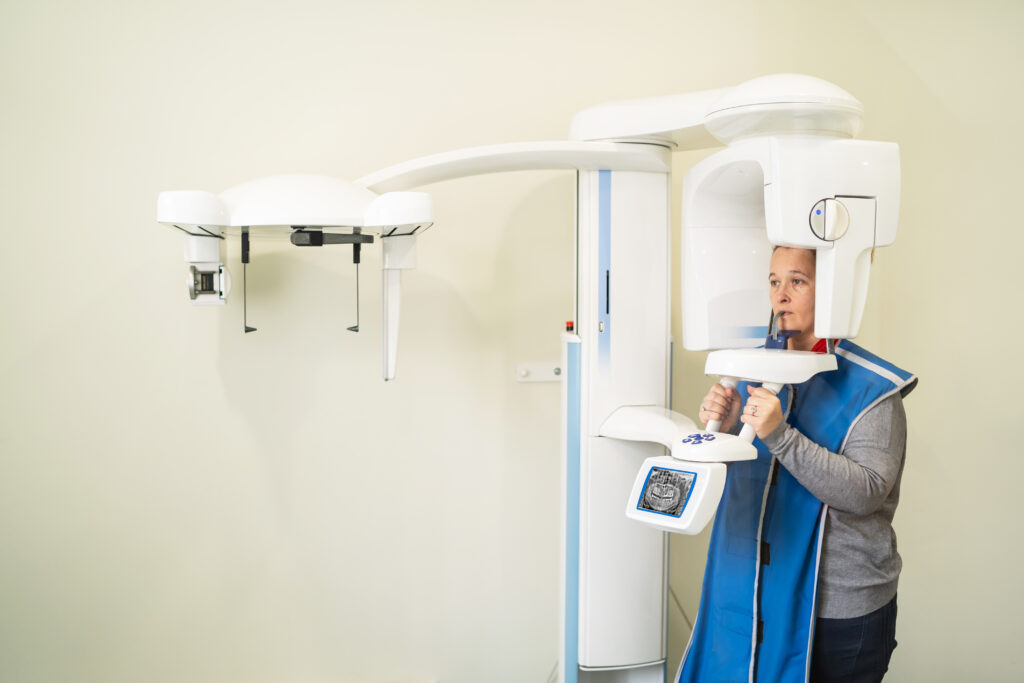
The scan uses a low radiation dose and takes place in a diagnostics center. It is a simple and quick scan where you need to either sit or stand. The rotational machine with a round window goes around the head at an oblique angle and is used to assess the IAC area for capturing the images. It will not touch you, but you need to be still for the process to be completed accurately. You will feel no discomfort or pain.
Preparation for CT scan of ENT organs
Like magnetic resonance imaging (MRI), you must remove all metallic objects from the body like earrings, hairpins, etc. Though it involves low radiation however if you are pregnant, inform your doctor.
Price for CT scan of ENT organs
The price for a CT scan of ENT organs will depend upon the volume of area being scanned for diagnosis and treatment.