
What is Inlay, Onlay and Overlay in dental restoration – pros & cons, purpose and cost


31.07.2025
230
6 min. read
Why Patients Trust Dynasty Stomatology
The trust in Dynasty Stomatology is built on a combination of many years of experience and an individual approach to every patient. We understand that a visit to the dentist is often accompanied by anxiety, so we place special emphasis on creating a comfortable and calm atmosphere where every patient feels safe.
The clinic is equipped with modern technology and uses advanced treatment methods, ensuring that procedures are carried out with maximum precision, efficiency, and comfort. All materials undergo strict quality control, and our doctors regularly improve their qualifications to offer only the most up-to-date and proven techniques.
In addition, Dynasty Stomatology values long-term relationships with patients. Our goal is not only to solve the problem at hand but also to maintain the health of teeth and gums for years to come. Openness, honesty, and transparency are the key principles that have earned the clinic its reputation as a reliable dental partner.
Facts about Dynasty Stomatology:
✅ Over 10 years of successful work in dentistry.
✅ Hundreds of positive reviews from patients in [Страна в соответствии с регионом] and abroad.
✅ We use premium materials from leading global brands.
✅ We offer treatment under sedation and general anesthesia.
✅ A full range of services — from pediatric dentistry to complex surgical operations.
Dynasty Stomatology — trust, expertise, reliability, and care for the beauty of your smile.
Learn about usMedical Expertise
Dynasty Stomatology’s doctors conduct medical reviews of all materials on the website to ensure their accuracy and practical value. Our authors and editors are experienced specialists in the fields of therapeutic, surgical, orthopedic, and pediatric dentistry. This approach allows us to maintain high professional standards and provide our readers with only verified, up-to-date, and useful information.
In modern dentistry, there are several advanced options for restoring damaged teeth with precision and durability. Inlay, onlay, and overlay treatments offer an effective alternative to traditional fillings or crowns. Understanding their purpose, advantages, and limitations can help you choose the most suitable solution for your dental needs.
What are inlays, onlays, and overlays?
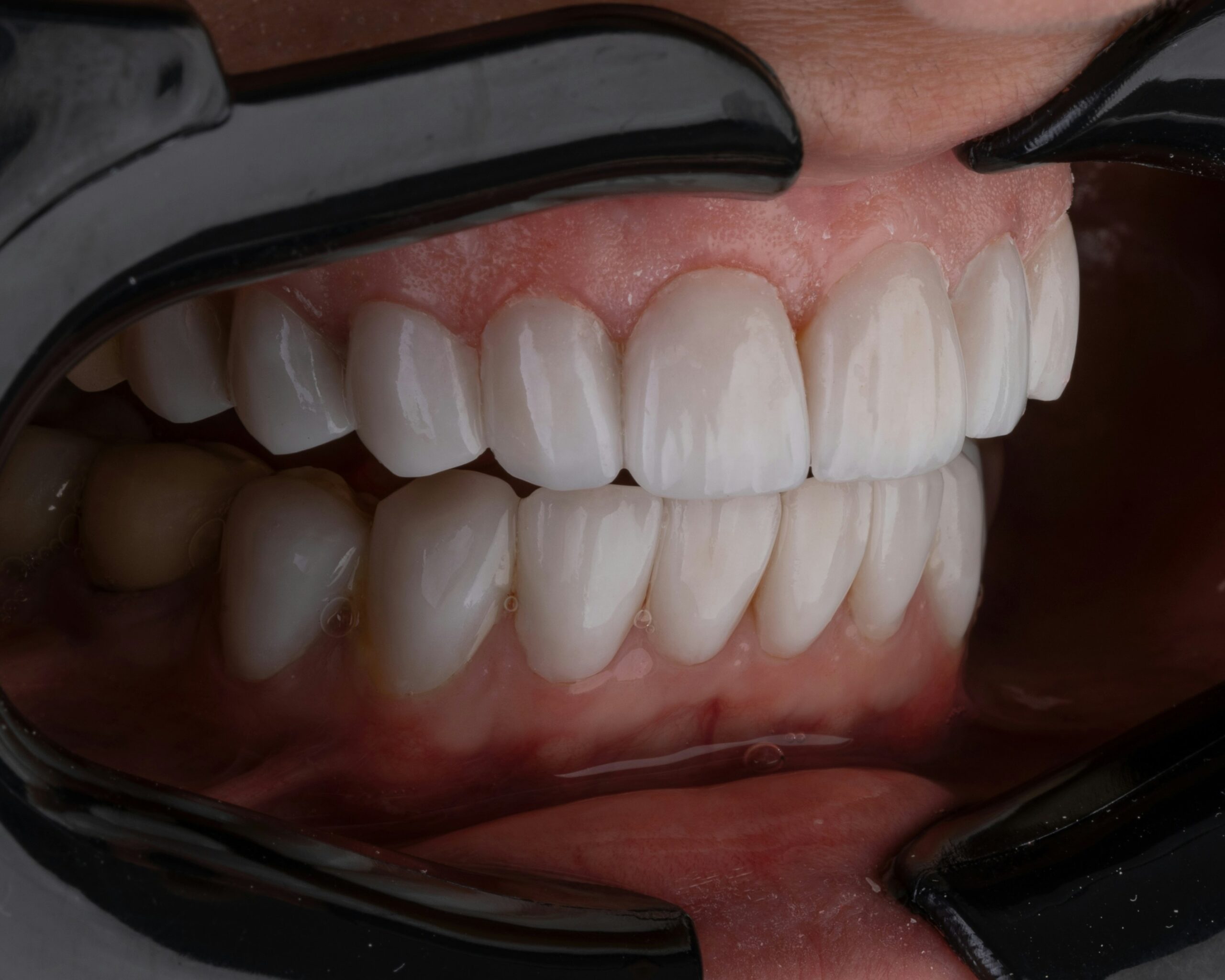
These are types of indirect tooth restorations used when damage is too extensive for a regular dental filling, but a full dental crown is not required.
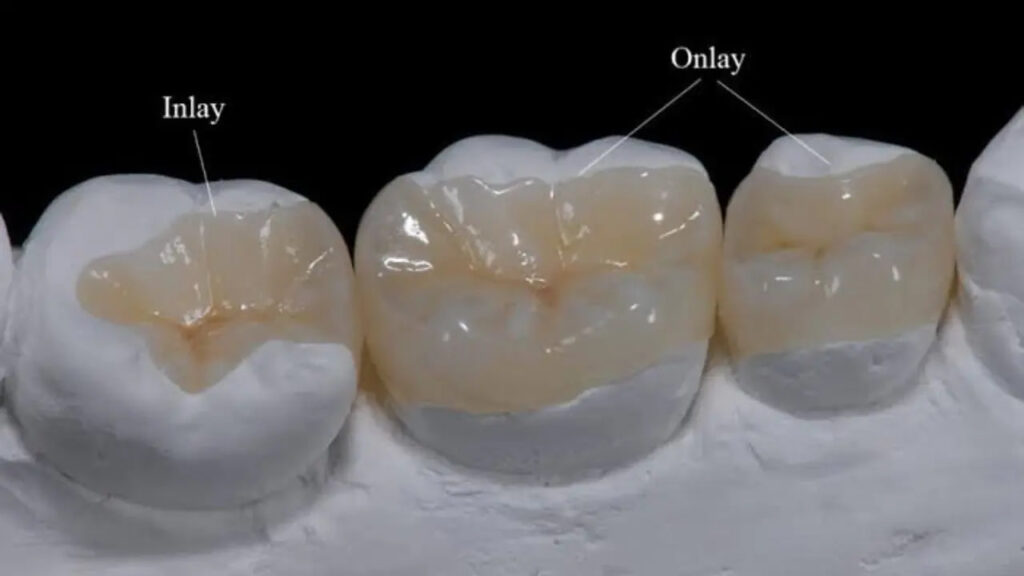
- Inlays fit within the chewing surface of the tooth, without covering the cusps.
- Onlays extend to cover one or more cusps and a larger portion of the biting surface.
- Overlays cover the entire chewing surface, offering more protection while preserving natural tooth structure.
They are usually made of porcelain or composite, custom-crafted in a dental lab, and bonded to the treated tooth using dental cement.
What is the difference between Inlay, Onlay and Overlay?
The main difference between an inlay, onlay, and overlay lies in how much of the tooth they cover. An inlay fits into the cavity and restores the area inside the tooth between the cusps, without covering them. An onlay extends further, covering one or more cusps and part of the biting surface. An overlay offers the most coverage, restoring the entire chewing surface of the tooth, sometimes replacing the need for a full dental crown, while still preserving more of the natural tooth structure.
Inlay, Onlay & Overlay – Pros and Cons
Inlays, onlays, and overlays are often recommended by a dentist when a traditional composite filling is not enough, but a full tooth crown isn’t yet necessary.
Benefits of Inlays and Onlays:
- Preserve more of the natural tooth structure.
- Stronger and more durable than general dental fillings.
- Offer high aesthetics – closely match natural teeth.
- Custom-made in a dental laboratory for precise fit.
- Help rebuild the biting surface of the tooth.
- Provide excellent protection for the deep tissues of the tooth.
- Ideal for tooth decay or fractured areas in part of the tooth.
- Dentists will use dental glue for secure bonding.
- Less invasive than full tooth crown placement.
- Help maintain function and shape of the chewing surface of a tooth.
Cons – Limitations and Drawbacks:
- Require two visits to the dental clinic or dental office.
- Higher cost compared to general fillings.
- May involve longer waiting time (sent to a dental laboratory).
- Temporary onlay or filling may be needed before final placement.
- Not suitable if most of the tooth tissue is missing.
- Risk of detachment if the onlay covers a weak structure.
- Overlay dental restorations may require more extensive reshaping.
- Dentist takes the impression – more complex process.
- Not ideal for small cavities that can be used to fill with simpler materials.
When do you need Inlay, Onlay & Overlay?
You don’t always need a full crown to restore a damaged tooth. In some cases, an inlay, onlay, or overlay is a more conservative and effective solution.
Dentists perform restorations using inlays, onlays, or onlays in the following situations
Inlays are used in the following cases:
- Damage to the chewing surface of a tooth;
- Moderate tooth decay;
- Replacement of old fillings;
- Need for enhanced strength;
- Intact deep tooth tissues;
- Aesthetic restoration.
Onlays are used in the following cases:
- Extensive tooth decay;
- Fractured or cracked tooth;
- Damage involving one or more cusps;
- Weakened tooth structure;
- Replacement of large fillings;
- Preserving natural tooth tissue.
Overlays are used in the following cases:
- Large tooth damage;
- Extensive decay on chewing surface;
- Need to cover the entire biting surface;
- Replace old or damaged restorations;
- Restore worn-down teeth.
Inlay, Onlay & Overlay vs Filling
Inlays, onlays, and overlays differ from traditional fillings by providing stronger and more durable restorations for damaged teeth. While fillings are typically used for small to moderate cavities and applied directly, inlays and onlays are custom-made in a dental laboratory to fit precisely. Overlays cover larger areas, preserving more natural tooth structure compared to fillings. These restorations offer better aesthetics, longevity, and protection, especially for teeth with extensive decay or damage that fillings alone cannot adequately repair.
Inlay, Onlay & Overlay vs Crown
Inlays, onlays, and overlays differ from dental crowns primarily in how much tooth structure they preserve. While crowns cover the entire tooth and require significant reshaping, inlays and onlays are designed to restore only the damaged portion, keeping more of the patient’s natural teeth intact.
Overlays cover a larger chewing surface but still conserve more tooth structure compared with crowns. These restorations are typically made from composite material or porcelain in a dental laboratory and are bonded to the tooth using dental glue, offering a modern dental solution that rebuilds the tooth while preserving its strength.
Types of Inlay, Onlay & Overlay
There are several types of dental inlay, onlay & overlay materials, each with specific benefits depending on the clinical case and patient preferences:
- Gold – durable and long-lasting; ideal for strong back teeth.
- Porcelain – aesthetic and tooth-colored; blends with natural tooth structure.
- Composite – more affordable; used for smaller onlay fillings and temporary solutions.
Each inlay and onlay is typically made by the dentist or lab and bonded with dental glue to the portion of the tooth, preserving structure and function.
Dental inlay, onlay & overlay procedure
The procedure is minimally invasive and aims to restore the tooth while preserving its natural structure.
Main steps:
- Examination at the dental center to assess the structure of the tooth
- Removal of decay and reshaping of the tooth.
- Taking impressions with dental putty or digital scan.
- Placement of a temporary filling or crown if needed.
- Laboratory fabrication (e.g., the inlay is made or dental onlay created).
- Placing the inlay, dental onlay, or overlay filling using dental glue to stick it to the point of the treated tooth.
- Final adjustments to fit the tooth and surrounding area.
This method is suitable when traditional materials used to fill cavities are not sufficient, but a full crown is unnecessary. It’s a conservative solution for getting an inlay, onlay teeth, or overlays that maintain the natural tooth structure intact.
Dental Inlay, Onlay & Overlay alternatives
In cases where damage is minimal, standard inlay fillings or composite restorations may be sufficient. For more extensive issues, full crowns or veneers are often used compared with inlay or dental onlays, depending on the condition of the tooth as well. The main difference is overlays keep more of the natural tooth, making them a conservative option offered by many dental practices.
How Much Do Inlays, Onlays and Overlays Cost at Dynasty Stomatology
The cost of inlays, onlays, and overlays at Dynasty Stomatology is affordable and calculated individually based on the complexity and materials used. To get a personalized treatment plan, book your consultation today.
FAQ
-
Can I eat normally after getting an inlay, onlay, or overlay?
Yes, but it's best to wait until the anesthesia wears off and avoid hard foods for 24 hours after you receive the inlay or onlay.
-
Is anesthesia used during the procedure?
Yes, local anesthesia is typically used to ensure comfort.
-
Are inlays, onlays, or overlays recommended for children or teenagers?
They may be used in select cases, but fillings are more common for younger patients.
-
How should I care for my tooth after getting an inlay, onlay, or overlay?
Brush and floss regularly and avoid chewing hard objects on the treated tooth.
-
Can these restorations fall out or become loose over time?
Yes, especially if dental hygiene is poor or the bite changes.
-
Are inlays, onlays, and overlays covered by dental insurance?
Coverage varies, but many dental plans include partial reimbursement.
-
What should I do if I feel discomfort after the restoration?
Contact your dental center to have the point of the treated tooth checked.
-
Can I whiten my teeth after receiving an onlay or overlay?
Yes, but whitening won't affect the color of the restoration.
-
Do inlays, onlays, or overlays trigger metal allergies or sensitivities?
Modern materials are generally biocompatible, but special dental options are available if needed.
-
How do I know if my old filling should be replaced with an inlay or onlay?
If the filling is large or failing, an onlay may offer better protection—consult your dentist to assess the difference between the two.


Do you want to treat your teeth while you sleep?
Schedule an appointment!
By clicking the button, you give your agreet your personal data in accordance with privacy policy.
Services
All services-
Dental treatment for elderly patients in Krakow – gerontostomatology
As we age, dental care requires special attention due to changes in the body and oral health. Dynasty Stomatology in Krakow offers specialized treatment for elderly patients, taking into account age-related features. Contact our experienced specialists for comfortable and effective dental care, dental treatment, prosthetics, implantation or other services.
Read more -
Manufacturing of removable dentures in case of partial or complete absence of teeth
The problem of partial or complete tooth loss can significantly affect the quality of life – from difficulties in eating to aesthetic and psychological discomfort. Removable dentures allow you to restore both chewing function and self-confidence.
Read more -
Prosthetics on implants
The absence of several or all teeth is not only an aesthetic issue but also a serious impairment of jaw function, which can lead to reduced chewing ability, bite changes, and even deformation of the facial skeleton. In such cases, it is important to timely restore lost teeth to prevent further complications and improve quality […]
Read more -
Dental prosthetics
Dental prosthetics is an effective way to restore damaged or missing patient’s teeth and improve the overall dentition. Modern prosthetic methods not only bring back chewing function but also ensure a natural-looking smile by matching the color of teeth and preserving the aesthetics of the visible part of the tooth.
Read more -
Microprosthetics of teeth
After tooth damage, many people face a number of unpleasant problems and urgent challenges. First, constant discomfort and painful sensations appear in the oral cavity. Second, it becomes difficult to bite and thoroughly chew solid food. Third, your psychological well-being may suffer, as your smile loses its aesthetic appeal.
Read more -
Dental veneers
Are you dreaming of achieving that perfect “Hollywood smile” like your favorite movie star? Well, the good news is you can make your wish come true thanks to dental veneers. They not only enhance your appearance, but they improve front teeth bite functionality after your dental treatment. Hollywood smile refers to comprehensive procedure that involves […]
Read more -
Ceramic crowns
Ceramic dental crowns offer protection to damaged, or decayed teeth. These crowns, used for various dental procedures are made from safe, bio-compatible and metal-free materials like porcelain, resin, and zirconia for front teeth.
Read more




Read also
View all blog-
20.03.2026
15
8 min. read
What You Need to Know About Professional Teeth Whitening
A white smile makes a face look fresher and more well-groomed. However, over time, the shade of teeth changes. Diet,…
Read more -
19.03.2026
24
8 min. read
Professional hygiene in a dental office — The complete guide
Most people believe they take proper care of their teeth. They brush their teeth morning and night, floss, and buy…
Read more -
09.03.2026
13
9 min. read
Restorative Dentistry Guide — Everything You Need to Know
Sometimes a tooth decays almost unnoticed. There's no sharp pain or warning signs. A small spot, mild sensitivity to cold,…
Read more -
04.03.2026
21
5 min. read
How to avoid surgery in the future — a case study of early orthodontic treatment at age 6
A mother brought her 6-year-old son to the Dynasty Stomatology clinic. She was confused: her son had already been examined…
Read more -
26.02.2026
23
11 min. read
What is Dental Implant Procedure — A Complete Guide
Losing a tooth isn't always just about aesthetics. It's about self-confidence, the ability to smile without tension, the ability to…
Read more -
24.02.2026
41
9 min. read
Understanding Oral Surgery — What You Need to Know
Until recently, a visit to the dentist was associated with significant discomfort. Uncomfortable impressions, long waits, and the need for…
Read more -
19.02.2026
25
5 min. read
Online consultation with a dentist — how it works, how much it costs, and when it is really needed
There are many reasons why people put off visiting the dentist. Especially when they live in countries where it is…
Read more