



Accidents can happen in the blink of an eye and affect permanent teeth to cause serious mouth injuries or tooth loss. In case of a slip, fall, or sudden force or collision impact, you must see a dentist as soon as possible for appropriate treatment.


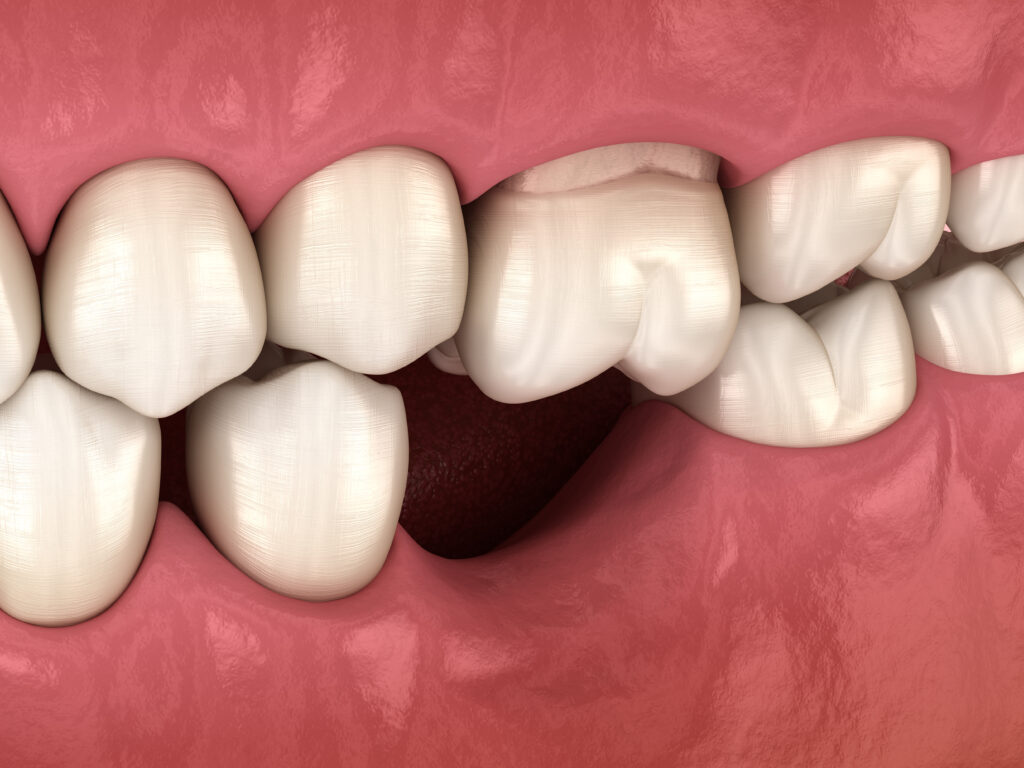
Intrusion

Extrusion
Avulsion
Stages of treatment of tooth dislocation at the dentist
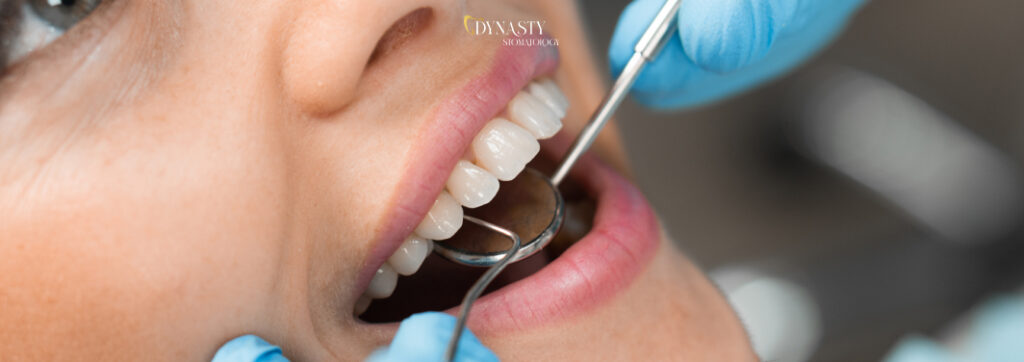
First of all, your doctor will perform a visual examination of the injured tooth. After that, he will prescribe an X-ray examination, which will allow you to draw conclusions about the location of the tooth root, as well as the degree of damage to the periodontium. This information is needed to accurately assess the patient’s condition and the chances of restoring the tooth. The decision to remove is made only in the case of significant destruction of the crown. In other cases, the dentist will prescribe treatment and return the injured canine or incisor to its natural position.
To avoid possible complications, after the procedure, the doctor will prescribe anti-inflammatory drugs and a gentle diet. Monitoring the condition of the tooth after dislocation will last for six months. During this time, you will need to take several X-rays.
Price: Tooth dislocation treatment
-
Dental point X-ray examination
50 PLN -
Tomography of 2-3 teeth
200 PLN
How the Dynasty Stomatology dental clinic's loyalty program works
Learn more about the loyalty program
Step 01
Visit the clinic and scan the QR code at the reception desk
Step 02
Register online — enter your details
Step 03
Receive and accumulate points after each visit
Need to put a tooth back in place?
Make an appointment!
By clicking the button, you agree to the processing of personal data in accordance with the privacy policy.
Frequently asked questions about dislocated tooth first aid
-
To keep the tooth from falling, do not chew, apply pressure to push tooth back gently in the socket within 30 minutes.
-
The loose tooth without avulsion may be saved if you visit the dentist immediately after the injury.
-
Causes of tooth dislodge are slips, sports injuries, falls, or a collision impact causes a dislodged tooth. Gently place it back in the socket and see a dentist immediately for a mouthguard and treatment.
-
A dislodged teeth will often damage your bite alignment. You need to consult a dental specialist to get it back in place safely.
-
If the dentist uses a splint to support and push back tooth into its socket, healing takes 2 to 4 weeks. Recovery takes longer for an avulsed tooth or severe injury cases.
-
If a tooth gets knocked out, pick it up by the crown (the white part) — never touch the root. Gently rinse it with milk or saline solution and try to place it back into the socket if possible; if not, store it in a cup of milk or hold it inside your cheek to keep it moist. Then come to our clinic or visit the nearest dental emergency as quickly as possible — ideally within 30 minutes, as the chances of saving the tooth decrease significantly with time.
-
The 3-3-3 rule is a simple guideline to help you decide when a toothache requires professional attention: if your pain lasts longer than 3 days, is 3 times more intense than mild discomfort, or keeps you awake for 3 nights, it's time to see a dentist. This rule serves as a helpful reminder that persistent or severe tooth pain is your body's way of signaling that something needs treatment. However, if you experience sudden, sharp pain, swelling, or fever at any point, don't wait — contact us right away for an evaluation.
-
If your tooth has been knocked out or displaced, time is critical — see a dentist immediately, ideally within 30 minutes. If the tooth is completely knocked out, gently rinse it without touching the root, try to place it back in the socket, or keep it in milk or saliva while heading to the clinic. For a tooth that has shifted position but is still attached, avoid touching or wiggling it and come in for emergency care right away. At Dynasty Stomatology, we can reposition and stabilize the tooth using a splint, giving it the best chance to heal and be saved.
Specialists who provide first aid and treat loose or dislocated teeth
View all doctors
Kostiantyn Danyliuk
Oral Surgeon, Implantologist
Konstantin is a skilled specialist who combines in-depth knowledge and cutting-edge technology to achieve the best results. He maintains active com...

Rafal Kazanecki
Oral surgeon, implantologist
His experience in implantology and surgery allows him to effectively implement modern technologies, enabling quick and safe procedures. Rafał activ...
Reviews of dislocated tooth and loose tooth treatment in Krakow
Expert articles on the topic
View all blog-
08.10.2026
1
8 min. read
Sensitive Teeth: Causes, Treatment, and Effective Pain Relief
Sensitive teeth most often cause brief, sharp pain triggered by stimuli such as a cold drink, hot food, or brushing. It occurs when stimuli reach exposed dentin—the tissue located beneath the enamel and root cementum. Dentin contains microscopic tubules connected to the inside of the tooth. When enamel wears away due to erosion or the […]
Read more -
07.10.2026
2
9 min. read
Toothache – How to Relieve It at Home and When to See a Dentist Urgently
This guide is for adults who need safe relief before seeing a dentist. Home remedies may reduce toothache pain for a short time, but they do not address its cause. If the pain is severe, worsening, recurring, or accompanied by swelling, it is worth contacting a dental office the same day. In cases of sudden […]
Read more -
03.07.2026
276
7 min. read
Treating Tooth Decay — How to Get Rid of Tooth Decay, Causes and Symptoms
Dental caries rarely begins with pain. In most cases, it develops silently in its early stages. First, a small spot…
Read more -
22.05.2026
441
8 min. read
Root canal treatment under a microscope – jwhat is microscopic endodontics?
Many people still view root canal treatment as one of the most unpleasant dental procedures. Fear of pain, lengthy treatment,…
Read more -
25.03.2026
657
9 min. read
Causes and Treatment of Stomatitis – What is it and Why Does it Occur?
Have you ever woken up in the morning, gone to drink coffee, and suddenly noticed an unpleasant burning sensation in…
Read more -
09.03.2026
381
9 min. read
Restorative Dentistry Guide — Everything You Need to Know
Sometimes a tooth decays almost unnoticed. There's no sharp pain or warning signs. A small spot, mild sensitivity to cold,…
Read more



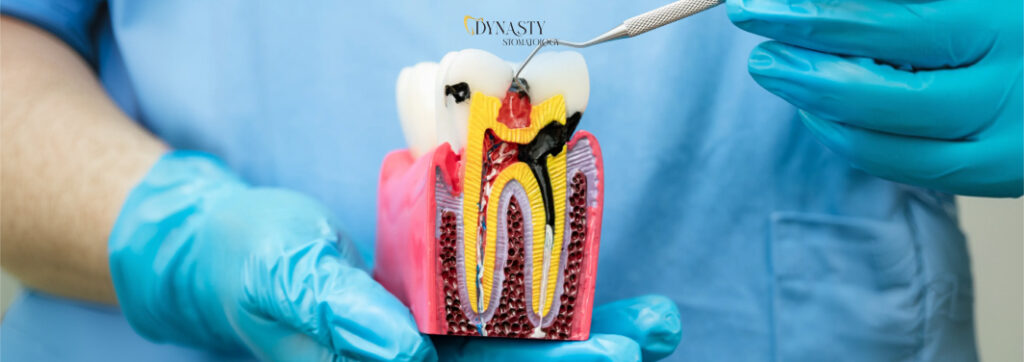



Types of Displacement Injuries and How to Recognise Them?
Concussion
A primary tooth concussion affects the ligament or bone of a child or adult tooth. You can keep the tooth in place as its original position does not change. See your dentist immediately for an enamel chip, damage, pain, or bleeding.
Subluxation
Subluxation is caused when the knocked-out tooth causes injury to the periodontal ligament. The tooth may be saved as it is only loose from the root. Signs include discomfort, bleeding, or pain.
Extrusive luxation
Extrusive luxation occurs when the tooth hasn’t been fully pulled out from its socket. Put your tooth back, bite gently on gauze, and call your dentist right away. Signs here are pain, discomfort, bleeding, and gum inflammation.
Lateral luxation
Lateral luxation makes the displaced tooth tilts sideways towards the palate, cheek, or tongue. Hold the tooth in the socket, bite on clean gauze, and call your dentist. Its signs may be swollen gums, stuck tooth, and bleeding.
Intrusive luxation
Serious dental injuries cause intrusive laxation. The tooth is pushed inwards inside the jaw causing damage to surrounding structure. Immediately consult an emergency dentist to help keep the tooth free from further damage.
What to Do Immediately if Your Tooth Gets Dislodged?
Whether it’s an adult or baby tooth, do not hold the tooth by the root. Gently put the tooth back in the crown and use tap water to gently rinse it. If it falls out, place the tooth in water and visit the dentist’s office.
Post-Treatment Care for Dislodged Teeth
Maintain good oral hygiene and follow your doctor’s advice to hold the tooth in place. If your child has a tooth injury, keep him/her under supervision. Your child’s dentist will give you a personalized post-treatment plan to be followed at home.
How to Take Care of a Knocked-Out Tooth
For permanent teeth or an avulsed tooth, rinse and bite on clean gauze. For milk teeth avoid replantation of the baby tooth. If your child has a loose tooth, it’s best to call a dentist. The child may touch and dislocate it. If it falls out keep the tooth in milk and take your child to the dentist for treatment.
How Does a Dentist Save a Dislodged or Loose Tooth?
The dentist may use a splint to stabilize the tooth before putting it back in the correct position. You will be advised home care, and medicines to accelerate healing.
Signs and Symptoms of a Dislodged Tooth
Bleeding, pain, discomfort, gum, soreness, and swelling are signs of a loosen or dislodged tooth. You need to visit a doctor to place the tooth back into its socket and appropriate treatment.
Why choose Dynasty Stomatology?
We specialize in the management of dental injuries and oral health in Krakow, Poland. Our dentistry team is recognized by the Dental Association and give you the highest standards of personalized dental care.
How much does it cost to treat a dislodged tooth?
Treatment costs vary if you need to put the tooth back into the socket, perform root canal, or design a mouth guard to protect your teeth.