



Initial caries is a damage to the enamel that has not yet affected the deeper layers of the tooth. It often appears as a white spot on the enamel and may remain unnoticed for a long time. However, it is crucial to detect such changes early to carry out a gentle treatment — without pain, drill, or filling.
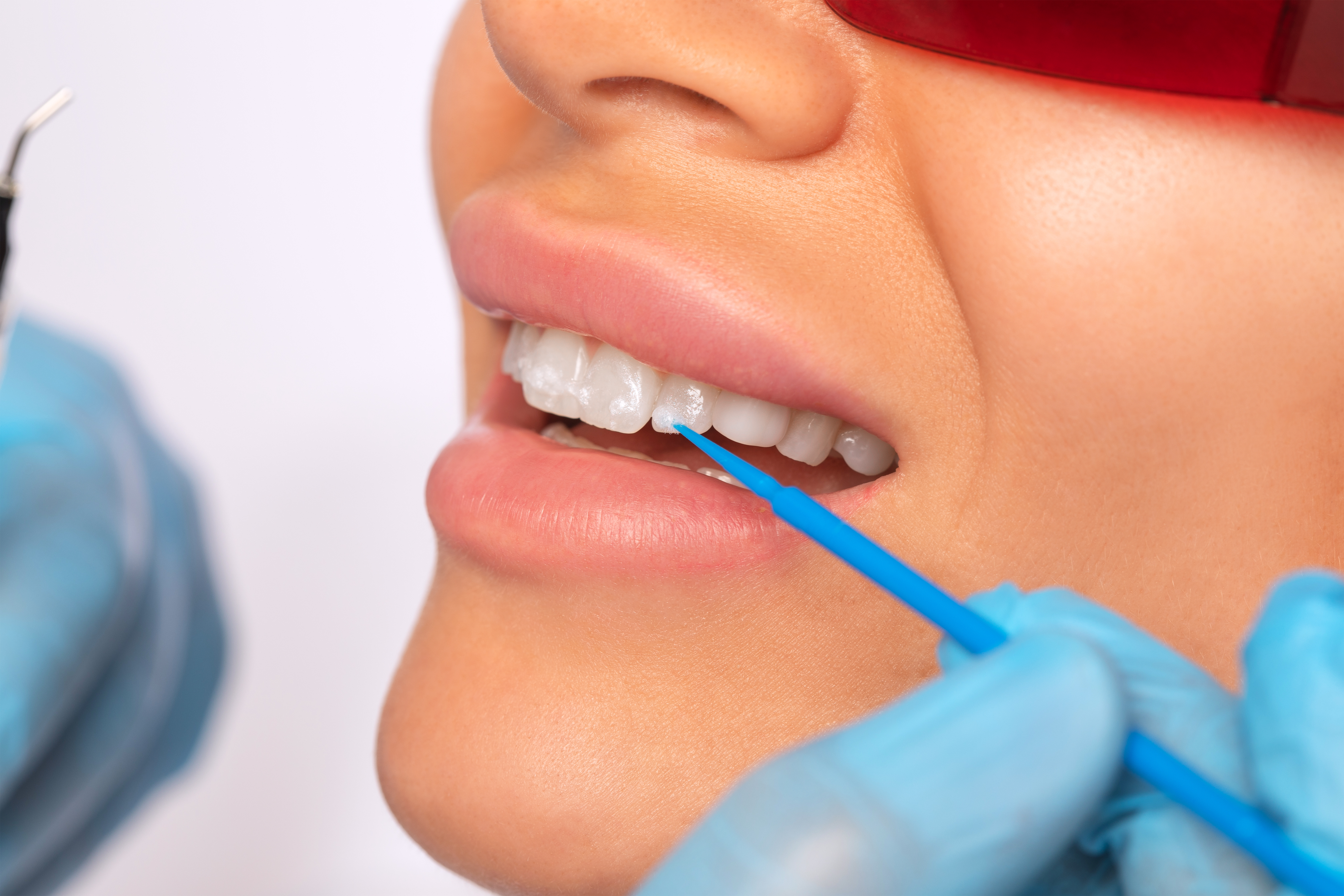

Modern solution for stopping destruction

Caries treatment without drilling

Painless and effective procedure
When is the ICON method suitable?
The ICON method is recommended at the initial stage of caries, when the enamel shows early signs such as small white spots due to demineralization. These changes occur due to bacterial activity, creating acidic pH on the tooth surface and forming micro-damages in the enamel.
The ICON system is an innovative method of treating caries proven to be effective when the lesion has not reached the dentin. It helps stop the pathological process, restore enamel structure, and preserve the tooth without drilling.

Prices for the treatment of initial caries using the ICON method
-
Dentist consultation
250 PLN -
Tomography of 1 jaw
250 PLN -
Tomography of 2 jaws
350 PLN
How the Dynasty Stomatology dental clinic's loyalty program works
Learn more about the loyalty program
Step 01
Visit the clinic and scan the QR code at the reception desk
Step 02
Register online — enter your details
Step 03
Receive and accumulate points after each visit
Do you want to undergo modern treatment without a drill?
Schedule an appointment!
By clicking the button, you give your agreet your personal data in accordance with privacy policy.
Frequently asked questions about ICON caries treatment
-
No, treatment of tooth decay with the ICON method is a common dental procedure that is completely painless, as it does not require tooth drilling or the use of a dental drill.
-
The ICON method is suitable during the initial stage of caries, when enamel damage is minimal and no deep intervention is needed.
-
Yes, the ICON system is icon suitable for children, as the procedure is painless and does not involve the removal of tissues or noisy equipment, which could otherwise cause fear in young patients.
-
ICON is a proven method that offers guaranteed results. The effect of this treatment can last from 3 to 5 years, depending on the condition of the tooth, oral care, and other factors.
Dentists specializing in ICON non-drilling caries treatment
View all doctors
Anastasiia Danyliuk
General dentist, endodontist
Focuses not only on treatment effectiveness but also on patient comfort. Her main goal is to provide long-term results without the need for repeate...

Yuliia Rudzynska
Pediatric dentist
Helps children not only maintain healthy teeth but also develop a positive attitude toward dentistry, ensuring fear-free visits.

Yulia Kryzhanovska
General dentist, endodontist
A doctor with a sense of humor who creates a positive atmosphere even in the dental chair.

Vladyslav Karkachov
General dentist, endodontist, prosthodontist
Relies on a well-thought-out treatment plan and good rapport with the patient. A friendly approach helps build trust, even among those afraid of de...

Yana Tereshchenko
General dentist, endodontist
Cares about both the health and the aesthetic and functional aspects of her patients’ teeth, helping preserve a natural, beautiful smile for years.

Oleg Vus
General dentist, endodontist, prosthodontist
Oleg Vus is guided by the principles of professionalism, honesty, and patient care. He does not impose unnecessary procedures, but offers only the ...

Rostyslav Savruk
General dentist, endodontist, prosthodontist
Over 16 years of professional experience. Specialization in prosthetic dentistry and dental prosthetics. Use of advanced techniques and modern mate...
Reviews of early caries treatment using the ICON method in Krakow
Expert articles on the topic
View all blog-
08.10.2026
1
8 min. read
Sensitive Teeth: Causes, Treatment, and Effective Pain Relief
Sensitive teeth most often cause brief, sharp pain triggered by stimuli such as a cold drink, hot food, or brushing. It occurs when stimuli reach exposed dentin—the tissue located beneath the enamel and root cementum. Dentin contains microscopic tubules connected to the inside of the tooth. When enamel wears away due to erosion or the […]
Read more -
07.10.2026
2
9 min. read
Toothache – How to Relieve It at Home and When to See a Dentist Urgently
This guide is for adults who need safe relief before seeing a dentist. Home remedies may reduce toothache pain for a short time, but they do not address its cause. If the pain is severe, worsening, recurring, or accompanied by swelling, it is worth contacting a dental office the same day. In cases of sudden […]
Read more -
03.07.2026
276
7 min. read
Treating Tooth Decay — How to Get Rid of Tooth Decay, Causes and Symptoms
Dental caries rarely begins with pain. In most cases, it develops silently in its early stages. First, a small spot…
Read more -
22.05.2026
441
8 min. read
Root canal treatment under a microscope – jwhat is microscopic endodontics?
Many people still view root canal treatment as one of the most unpleasant dental procedures. Fear of pain, lengthy treatment,…
Read more -
25.03.2026
657
9 min. read
Causes and Treatment of Stomatitis – What is it and Why Does it Occur?
Have you ever woken up in the morning, gone to drink coffee, and suddenly noticed an unpleasant burning sensation in…
Read more -
09.03.2026
381
9 min. read
Restorative Dentistry Guide — Everything You Need to Know
Sometimes a tooth decays almost unnoticed. There's no sharp pain or warning signs. A small spot, mild sensitivity to cold,…
Read more







ICON Caries Infiltration in Kraków – Treatment Without Drilling
For adult patients in Kraków who have noticed white spots on their teeth or have been told they have early-stage caries, ICON may be a method that helps limit the lesion without traditional drilling. Eligibility is always determined during an in-office examination, as not every spot and not every carious lesion is suitable for infiltration.
At Dynasty Stomatology, we discuss the treatment plan in a straightforward way: we explain what is visible in the enamel, what the options are, and what can realistically be expected from the procedure.
ICON Caries Infiltration in Kraków – What Does It Involve?
ICON caries infiltration is a minimally invasive treatment for early enamel lesions using a liquid resin. The material penetrates the microporosities of demineralized enamel, meaning the tiny spaces formed at the beginning of the caries process. The aim is to limit further progression of the lesion and, in selected cases, reduce the visibility of a white spot.
The ICON method does not involve placing a traditional filling and does not replace tooth restoration when a clear cavity has already developed. It is ICON treatment for early-stage caries, used after a dentist assesses the condition of the enamel.
In practice, ICON resin seals the structure of altered enamel. This makes it more difficult for acids and bacteria to reach the interior of the lesion. For the patient, this means the possibility of treatment without drilling if the lesion is at an appropriate stage.
Who Is the ICON Method Intended For?
ICON treatment for teeth is considered primarily for early carious lesions limited to the enamel and for certain white spots. However, the appearance of the spot alone is not enough to make a decision. The dentist must assess its location, depth, activity, and whether the tooth surface remains intact.
Indications for the ICON method are determined during the appointment. If necessary, the dentist may use imaging diagnostics, especially when the lesion is located between teeth and is not clearly visible during a standard examination.
Early-Stage Caries on Smooth Surfaces
Early-stage caries on smooth surfaces may appear as a dull, chalky white spot. This is a sign of demineralization, meaning a loss of minerals from the enamel. The tooth may not yet have a cavity, but its surface requires assessment and appropriate preventive care.
If the lesion is sufficiently shallow and suitable for infiltration, ICON may help stop its progression and improve the appearance of the enamel. If a cavity has already developed, composite restoration, commonly called a filling, is usually needed.
Interdental Lesions and White Spots After Orthodontic Treatment
Caries infiltrant may also be used for selected lesions on contact surfaces, meaning between the teeth. In this location, clinical assessment often requires additional diagnostics because the depth of the lesion cannot be reliably determined by looking at the teeth alone.
White spots after braces may also be an indication for assessment for ICON treatment. However, not every spot after orthodontic treatment has the same characteristics. The scope of use depends on whether it is an enamel lesion, how long it has been present, and whether the tooth surface remains smooth.
How Does the ICON Procedure Work Step by Step?
The ICON procedure in Kraków is performed after the patient has been assessed and qualified for treatment. The procedure is planned and precise, involving tooth preparation, resin application, and evaluation of the result. Comfort and appointment duration depend, among other things, on the number of teeth being treated and the location of the lesions.
- The dentist confirms the indications for infiltration.
- The tooth is cleaned and protected from saliva.
- The enamel surface is prepared according to the treatment protocol.
- Liquid ICON resin is applied.
- The material is cured, and the surface is smoothed and polished.
Consultation and Qualification for Infiltration
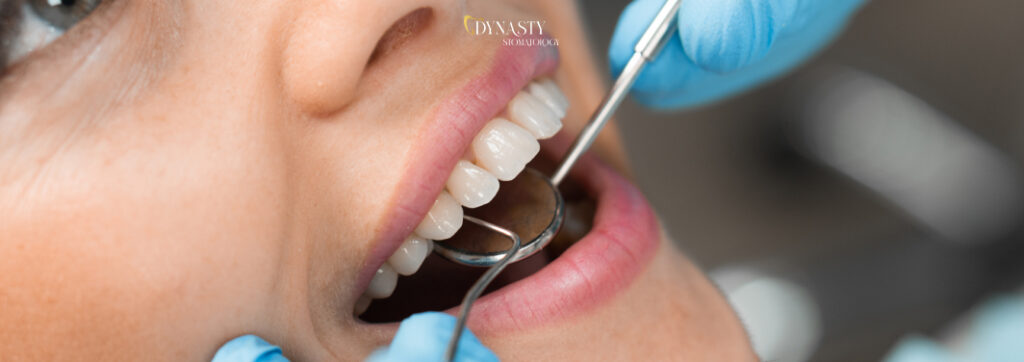
The consultation begins with an examination of the teeth and a discussion of the issue, such as a white spot noticed after braces were removed or a lesion detected between the teeth. The dentist evaluates the condition of the enamel, the extent of the lesion, and its activity.
Depending on the situation, imaging diagnostics may be needed. Only after this information has been collected can it be honestly confirmed whether the ICON method will be appropriate or whether remineralization, observation, professional cleaning, or conventional restorative treatment would be a better solution.
Tooth Preparation and ICON Resin Application
First, the tooth surface is thoroughly cleaned and the treatment area is isolated. Isolation limits the tooth’s contact with saliva and allows the procedure to be carried out under dry, controlled conditions.
The dentist then prepares the altered enamel according to the procedure intended for the material. Liquid ICON resin penetrates microporosities, meaning very small spaces in the demineralized enamel structure. The visibility of the aesthetic result depends precisely on the depth and nature of the lesion.
Curing, Polishing, and Evaluation of the Result
After application, the material is cured with a dental light. The dentist then smooths and polishes the tooth surface so that it is as smooth as possible and easy to maintain with proper oral hygiene.
Finally, the clinical and aesthetic result is assessed. The white spot may become less visible, but an identical outcome should not be expected in every case. Factors such as the original depth of the lesion, its location, and the shade of the enamel are important.
Effects, Benefits, and Limitations of ICON Treatment
The greatest benefit of infiltration is the preservation of tooth tissue. In properly selected cases, ICON treatment for early-stage caries does not require conventional mechanical preparation of the tooth with a drill. It may also limit the progression of an early lesion and improve the appearance of certain white spots.
Treatment without drilling does not mean, however, that this method is a solution for every type of caries. ICON does not repair lost tooth tissue, remove a large cavity, or replace everyday preventive care. The effects of an ICON procedure should be evaluated together with the dentist, without promises of immediate, perfect aesthetics.
When Can ICON Be an Alternative to Drilling?
ICON may be an alternative to drilling when the lesion is early-stage and the enamel has no cavity requiring restoration. This is a minimally invasive approach that makes sense when the dentist can seal the lesion rather than remove a larger amount of tooth tissue.
If there is pain, a visible hole in the tooth, extensive decay, or the lesion extends deeper, another treatment may be necessary. In such situations, postponing restoration in favor of infiltration alone would not be appropriate.
How Should You Care for Your Teeth After ICON Infiltration?
After infiltration, preventive care should be treated as part of the treatment. The patient can implement several simple measures right away:
- brush teeth with a fluoride toothpaste selected by the dentist;
- clean interdental spaces every day with floss, interdental brushes, or another recommended tool;
- limit frequent snacking and sipping sweetened products;
- attend follow-up appointments and professional hygiene visits at the scheduled time.
Good oral hygiene not only protects the treated tooth but also reduces the risk of new lesions developing on other surfaces.
ICON for Teeth – Price in Kraków and Payment Method
The price of ICON treatment in Kraków depends on the actual scope of the procedure. Important factors include the number of teeth and surfaces requiring treatment, the location of the lesion, the need for diagnostics, and any necessary oral preparation, such as professional cleaning.
The price of ICON treatment in Kraków should be presented after an examination rather than as one fixed amount for every patient. A reliable cost estimate makes it possible to compare the planned stages and make an informed decision before treatment begins.
| Pricing element | Why it affects the cost |
|---|---|
| Number of treated teeth | Each tooth requires separate preparation and material application |
| Location of the lesion | Interdental lesions may require different access and diagnostics |
| Diagnostics | Examination and X-rays are performed only when indicated |
| Professional cleaning or additional treatment | Sometimes oral hygiene must first be improved or other problems treated |
What Does an Individual Treatment Plan Include?
An individual plan should indicate which teeth have been qualified for infiltration, what the scope of the procedure will be, and whether prior preparation is needed. The patient should receive information about the expected costs of each stage.
Before treatment begins, it is worth asking about the full scope of the price, diagnostics, possible alternatives, and what will happen if the lesion turns out not to be suitable for ICON during the appointment.
Private Treatment and Services Funded by the NFZ
The availability of services funded by the National Health Fund depends on current regulations and the agreement that a particular facility has with the NFZ. It should not be assumed in advance that qualification, diagnostics, or ICON infiltration will be billed in a particular way.
Before the appointment, it is worth confirming with reception whether a given service is provided privately or as part of available covered services. This will help avoid uncertainty about payment and allow you to prepare for the consultation.
Book an ICON Consultation in Kraków
A consultation for caries infiltration in Kraków includes a medical history, an assessment of the teeth, and a discussion of the indications for ICON. The dentist explains whether the lesion can be treated with infiltration or requires another approach. The patient also receives information about preparation, the estimated cost range, and further preventive care.
At Dynasty Stomatology, we operate at ul. Romanowicza 1/LU3 and ul. Romanowicza 4B in Kraków. If you notice white spots, have a lesion between your teeth, or want to assess your enamel after orthodontic treatment, mention this reason when contacting reception. The dental clinic in Kraków can then schedule the appropriate type of appointment and the necessary time for diagnostics.
Reception is open Monday to Friday from 8:00 a.m. to 8:00 p.m. and on Saturdays from 8:00 a.m. to 2:00 p.m. Telephone contact: +48 123 002 806.
How Should You Prepare for Your Appointment?
Before the appointment, you do not need to assess the depth of the lesion yourself. However, it is worth preparing information that will help the dentist make a reliable qualification:
- previous dental X-rays, if available;
- information about current or completed orthodontic treatment;
- details about tooth sensitivity and previous procedures;
- a list of questions regarding aesthetics, treatment time, and costs;
- information about your preferred language of communication.
Multilingual patients may confirm with reception before booking whether communication is available in their preferred language.
Communication and Recommendations After the Consultation
After qualification, the patient should receive an understandable plan: diagnosis, proposed treatment scope, possible alternatives, and expected costs. It is worth asking whether professional cleaning, an additional X-ray, or a follow-up appointment is needed before the procedure.
Before booking, you can also confirm the payment method and the possibility of spreading the costs into installments if this form of payment is needed. Dynasty Stomatology offers MediPay and MediRaty installment solutions as well as an internal plan, with details determined individually. The most important thing is to make a decision after understanding the treatment plan, rather than based solely on the appearance of the spot.