

The absence of several or all teeth is not only an aesthetic issue but also a serious impairment of jaw function, which can lead to reduced chewing ability, bite changes, and even deformation of the facial skeleton. In such cases, it is important to timely restore lost teeth to prevent further complications and improve quality of life.


Multi-unit prostheses (screw-retained).

Removable dentures on implants.

Fixed implant-supported prostheses.
Stages of Implant-Supported Prosthetics
Implants and prosthetic restorations are carried out in several structured stages to ensure a successful and functional outcome:
- Consultation and Diagnostics. The process begins with a comprehensive examination, including a CT scan to evaluate bone volume, followed by selection of the appropriate method for restoring the dentition.
- Surgical Stage – Implant Placement. A titanium implant is inserted into the jawbone during a painless surgical procedure.
- Osseointegration. The healing period allows the implant (artificial root) to integrate with the bone, usually taking 3 to 6 months depending on individual anatomical and maxillofacial factors.
- Placement of the Healing Abutment. This component shapes the gum contour around the future crown or prosthesis, helping to achieve high aesthetics.
- Impression Taking and Prosthesis Fabrication. A dental technician fabricates a custom prosthesis (i.e., a crown, bridge, or full denture), ensuring it matches the patient’s positioned teeth and bite.
- Permanent Prosthesis Attachment. The final crown, porcelain bridge, or full prosthetic structure is attached to the implant with optimal fit and stability.
- Follow-Up and Care Recommendations. The dentist checks the bite and provides individual aftercare instructions to support long-term success.

Price: Prosthetics on implants
All price-
Prosthetic examination
150 PLN -
General consultation + treatment plan
250 PLN -
Tomography of 1 jaw
250 PLN -
Tomography of 2 jaws
350 PLN
Dental implant placement
-
JDental (Italy)
2 500 PLN -
Megagen (South Korea)
4 000 PLN -
Straumann (Switzerland)
5000 PLN -
Zirconia implant crown
3 000 PLN -
Temporary implant crown
1 200 PLN -
Tooth extraction
310-800 PLN
Do you want to treat your teeth while you sleep?
Schedule an appointment!
By clicking the button, you give your agreet your personal data in accordance with privacy policy.
Frequently asked questions about implant prosthetics
-
What is implant-supported dental prosthetics?
This is a method of restoring teeth by placing artificial crowns onto titanium roots (implants) surgically embedded into the jawbone.
-
How is implant prosthetics different from traditional dentures?
Unlike removable dentures that rely on gums or adjacent teeth, implant prosthetics are fixed onto implants integrated into the bone. This makes them significantly more stable, comfortable, and durable.
-
How long does the process take?
On average, the entire treatment takes between 3 to 6 months, including implant placement, healing (osseointegration), and final prosthetic attachment.
-
How long do prosthetics on implants last?
Implant-supported prostheses typically last 10–15 years, and with proper care, even longer. The implants themselves can last a lifetime with routine check-ups and good hygiene.
Dentists performing implant-supported restorations
View all doctors
Vladyslav Karkachov
General dentist, endodontist, prosthodontist
Relies on a well-thought-out treatment plan and good rapport with the patient. A friendly approach helps build trust, even among those afraid of de...

Borys Minakov
Prosthodontist
His approach focuses on individually tailored treatment plans that not only solve current issues but also prevent future ones. This helps patients ...

Dmytro Ostrovskyi
Prosthodontist
Over 30 hands-on courses completed in 9 years of practice. A comprehensive approach guarantees stable, durable, and predictable results.

Rostyslav Kulykovskyi
Oral surgeon, implantologist
Treatment is always carefully planned and carried out precisely and predictably. With the use of digital technologies, patients receive safe, effic...
Reviews of prosthetics on dental implants in Krakow
Expert articles on the topic
View all blog-
21.01.2026
50
6 min. read
The Best Dental Restoration Options for Damaged Teeth
When something happens to a tooth, the first reaction is often anxiety. People often assume that treatment will be expensive…
Read more -
06.01.2026
70
8 min. read
Dental Prosthetics – The Secret to a Beautiful Smile
A healthy smile isn’t just about looking perfect. It’s about how comfortable you are when you eat, how freely you speak, and how confident you feel when you smile. After all, if you have chips, cracks, or missing teeth, your lifestyle changes. That’s why dental prosthetics plays a crucial role in restoring your sense of […]
Read more -
09.12.2025
330
6 min. read
What is Dental Splinting and How It Can Save a Loose Tooth?
Loose teeth in adults are often a sign that something important is changing in your mouth. This causes a lot of discomfort and further problems, interferes with speaking and chewing, and, unfortunately, can lead to tooth loss. However, there is a procedure called teeth splinting, which can strengthen the tooth and prevent further damage or […]
Read more -
31.07.2025
231
6 min. read
What is Inlay, Onlay and Overlay in dental restoration – pros & cons, purpose and cost
In modern dentistry, there are several advanced options for restoring damaged teeth with precision and durability. Inlay, onlay, and overlay treatments offer an effective alternative to traditional fillings or crowns. Understanding their purpose, advantages, and limitations can help you choose the most suitable solution for your dental needs. What are inlays, onlays, and overlays? These […]
Read more -
24.07.2025
251
10 min. read
Dental Crowns: Types, Costs, and the Procedure
Dental crowns play a vital role in restoring the strength, function, and appearance of damaged or weakened teeth. Whether due to decay, injury, or extensive dental work, a crown can protect the remaining tooth structure while improving your smile’s aesthetics. In this article, we’ll explore everything you need to know about dental crowns — including […]
Read more
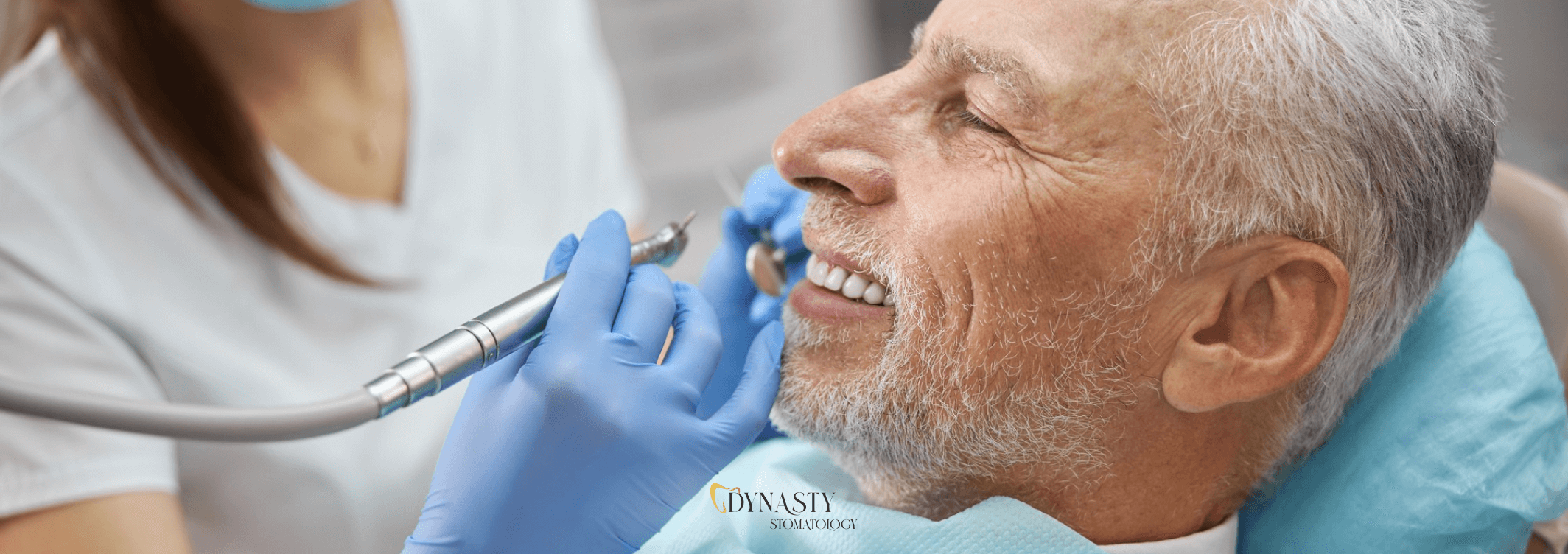

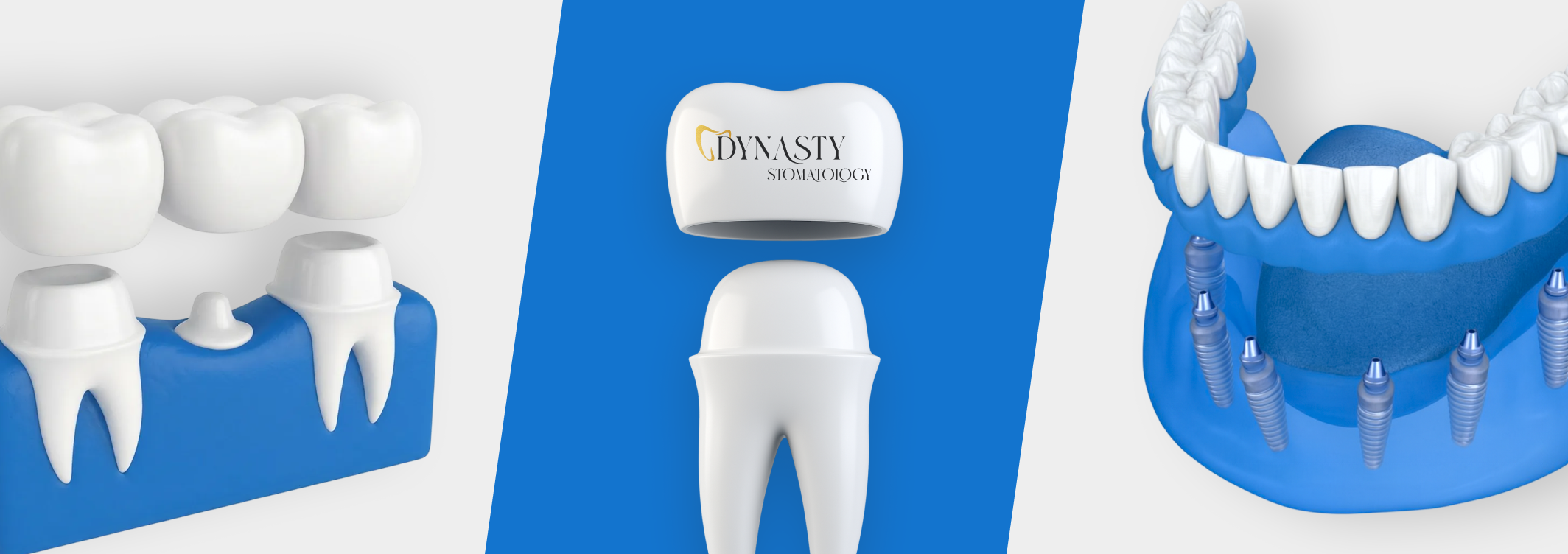




Implant prosthetics is a modern method that allows you not only to restore a beautiful smile but also to return the natural function of your teeth. Unlike traditional dental bridges or removable dentures, implants integrate with the bone tissue, providing stability and durability, while also preventing bone loss.
If you face the problem of missing one or multiple teeth, contact Dynasty Stomatology clinic in Poland. Our dental specialists use advanced implant prosthetics methods and constructions to deliver high-quality and long-lasting results. We will help you restore your oral health and confidence.
Indications and Contraindications
Implant prosthetics is an effective and durable way to restore lost teeth. However, like any medical procedure, it has its indications and contraindications. It is important to consider these factors to choose a safe treatment approach.
Indications for Implant Prosthetics:
- Partial or complete tooth loss;
- Tooth loss due to trauma or disease;
- Insufficient tooth roots for traditional dental bridges;
- Desire to restore an aesthetic dental appearance;
- Desire for a stable, long-lasting result without removable dentures on implants.
Contraindications for Implant Prosthetics in Partial or Complete Tooth Loss:
- Acute inflammatory diseases of the oral cavity (caries, gum inflammation);
- Conditions affecting bone tissue (e.g., osteoporosis);
- Severe cardiovascular diseases;
- Oncological diseases;
- Underage patients;
- Allergies to materials used in implantation;
- Pregnancy and lactation (at the discretion of the dentist).
Before the procedure, our clinician performs a thorough diagnosis to exclude contraindications and helps choose the best prosthetic treatment option, considering your individual condition.
Methods of Dental Prosthetics on Implants
Implant-supported prosthetics for the complete or partial absence of teeth involve several approaches, each with its own characteristics and indications depending on the patient’s condition:
- Single-stage implantation. A titanium dental implant is placed in a single visit without the need for additional surgical procedures. This method is suitable for patients with sufficient bone volume and good overall health. It offers a fast and effective solution for replacing missing teeth with minimal recovery time.
- Two-stage implantation. In this method, an artificial tooth root is first inserted into the bone, followed by a healing period. During the second stage, the abutment and prosthetic crown or bridge are attached. This technique ensures secure integration of the implant system into the bone tissue and is commonly used when reconstruction or bone healing is required.
- Immediate-load partial or full prosthesis. A dental implant is placed and immediately loaded with temporary crowns, allowing the patient to regain chewing function and aesthetics without delay. This technique requires optimal bone condition and precise manipulation by a dental specialist.
- All-on-4 method. A fixed denture is supported by four implants, typically used for full-arch restorations of the upper or lower jaw. This technique is especially beneficial for patients with complete tooth loss and limited bone tissue. All-on-4 provides a stable, economical, and aesthetic solution without the need for bone grafting in many cases.
- All-on-6 method. This approach involves a permanent prosthesis supported by six dental implants. It offers enhanced stability and is recommended when additional support is needed due to anatomical or maxillary considerations. It enables the replacement of all teeth in a jaw with high aesthetics and chewing function.
If the patient’s jawbone volume is insufficient for implant placement, bone grafting (augmentation) may be performed as part of the overall prosthetic treatment plan.
The choice of implant placement method depends on numerous factors, including the quality of bone tissue, general health, and personal preferences. The dental professionals at our clinic perform a thorough consultation and accurate diagnosis to design an individualized treatment plan for every patient. Our field of dentistry combines advanced implant systems, modern materials such as zirconium and porcelain crowns, and conservative treatment options to restore not only functionality but also a radiant smile.
Types of Dental Prostheses on Implants: Features and Advantages
Modern prosthetics and implantology offer a wide range of prosthetic restorations tailored to the clinical condition, the patient’s wishes, and available budget. Each type of prosthesis comes with specific advantages and is chosen based on individual dental needs:
Rehabilitation After Implant-Supported Prosthetics
Post-surgical recovery and proper care are essential for successful adaptation and the longevity of the prosthetic structure. Most patients adjust quickly to their new dental restorations and can resume normal activities within a few days. Prosthetic components typically last 10–15 years, while the dental implants themselves can function for 20+ years with correct maintenance and routine check-ups.
Care Recommendations for Patients:
- Maintain oral hygiene by brushing twice a day and using interdental brushes or an irrigator.
- Avoid hard foods during the initial healing period to protect the movable soft tissues and metal frame of the structure.
- Follow the dentist’s advice, take prescribed medications, and attend all scheduled follow-ups.
- Refrain from smoking and alcohol consumption during recovery.
- Do not overload the implants—especially during the healing and adaptation stages.
- Undergo professional cleaning at least twice a year to preserve the health of the orthopedic and prosthetic elements, such as composite, all-ceramic crowns, or skeletal dentures.
Prices for Implant-Supported Dental Prosthetics
Dental prosthetics is a branch of dentistry that not only restores the anatomical structure of the dentition but also addresses functional and periodontal aspects. Our clinic offers advanced solutions in implants and prosthetics, including fixed and removable dentures of any complexity. Using up-to-date technologies in the field of dentistry, we help patients restore their radiant smile and oral health, even in cases involving damaged teeth, bone defects, or complete loss of natural dentition.
At Dynasty Stomatology, patients can receive a bridge prosthesis or explore other types of implant-based restorations at an affordable cost. The final price depends on several factors, including the selected treatment method, the number of implants, and the type of prosthetic construction.
Our clinic focuses on individual patient care — our experienced specialists will recommend the most suitable option based on the clinical situation, anatomical specifics (i.e., bone volume in mm, incisor position), and budget.
To ensure maximum comfort and long-term success, Dynasty Stomatology uses prosthetics from reliable manufacturers and provides high-quality anesthesia for all procedures. Whether it’s acrylic dentures, telescopic crowns, or other types of restorations, our goal is to combine advanced dentistry dealing with modern technologies and patients’ personal needs.
Book your consultation at Dynasty Stomatology today — and restore the functionality and aesthetics of your natural dentition with confidence.