

Sinus lift in dentistry is a surgical procedure aimed at restoring bone volume in the upper jaw. It becomes necessary when the bone has thinned or decreased in volume after tooth extraction, especially in the posterior regions. This sinus lift surgery makes it possible to place dental implants even in cases of significant bone atrophy. A sinus augmentation helps preserve the integrity of the dental arch, restore full chewing function, and eliminate the need for removable dentures.


Initial consultation.

X-ray or CT scan.

Laboratory tests.
Indications for Bone Grafting
This surgical procedure is performed prior to implant placement when there is not enough bone volume in the upper jaw to ensure stable fixation of the artificial root. It is especially relevant in cases of bone loss near the bottom of the maxillary sinus, typically in the posterior region of the jaw.
Main indications for sinus-lift surgery include:
- Severe bone atrophy in the upper jaw;
- Reduced height of the alveolar ridge after tooth extraction;
- Bone thickness of less than 5 mm in the planned implant site;
- The sinus floor is located too close to the intended implant bed;
- The need to create a stable foundation for implant installation;
- Bone deficiency due to long-term absence of teeth.
This sinus lift procedure allows for the creation of a durable base for successful implant placement, even in complex oral cavity anatomical conditions.

Price: Sinus-lift
All price-
Surgical examination
150 PLN -
Tomography of 1 jaw
250 PLN -
Tomography of 2 jaws
350 PLN
Sinus-lifting
-
Open
3000 PLN -
Closed
1000 PLN
Do you want to treat your teeth while you sleep?
Schedule an appointment!
By clicking the button, you give your agreet your personal data in accordance with privacy policy.
Frequently asked questions about sinus lift surgery
-
Is the sinus lift procedure painful?
The procedure is performed under anesthesia, so the patient does not feel pain. Some discomfort during the recovery period is possible, but it is easily managed with medication.
-
How long does recovery take after a sinus lift?
The main recovery period lasts 7-10 days, while full integration of the bone material takes from 4 to 6 months.
-
Can I smoke after a sinus lift?
Smoking slows down healing and increases the risk of complications, so it is recommended to avoid smoking for at least 7-10 days after the procedure.
-
When can an implant be placed after bone grafting?
An implant can be placed 4-6 months after bone grafting, once the bone material has fully integrated and sufficient bone volume has formed.
-
Is sinus lift always necessary for implantation?
If the bone thickness is sufficient (8-10 mm or more), a sinus lift is not required. In other cases, it is necessary for reliable implant fixation and long-lasting results.
Surgeons who perform sinus lift procedures
View all doctors
Kostiantyn Danyliuk
Oral Surgeon, Implantologist
Konstantin is a skilled specialist who combines in-depth knowledge and cutting-edge technology to achieve the best results. He maintains active com...
Reviews of sinus lift surgery in Krakow
Expert articles on the topic
View all blog-
24.02.2026
42
9 min. read
Understanding Oral Surgery — What You Need to Know
Until recently, a visit to the dentist was associated with significant discomfort. Uncomfortable impressions, long waits, and the need for…
Read more -
19.12.2025
121
8 min. read
Tooth root resection – when should the apicoectomy be performed?
Sometimes dental problems develop unnoticed. Everything appears normal on the outside, but inflammation can gradually develop inside, right at the root. Pain may be intermittent or absent altogether. Only a dentist can detect the problem from an X-ray. In such cases, standard root canal treatment isn’t always effective. A dentist can offer a more precise […]
Read more -
17.12.2025
150
5 min. read
Do Wisdom teeth always need to be removed – Debunking Common Myths
Wisdom teeth are the teeth that most often cause unexpected issues. Some people live with them comfortably throughout their lives, while for others, they develop into impacted teeth, causing complications. Wisdom teeth behave differently, and there’s no single answer — to remove or not to remove. A personalized approach is essential to determine whether wisdom […]
Read more -
25.11.2025
201
7 min. read
Frenulum cutting in children – when should the frenulum be cut
Many children struggle with a problem that can impact proper speech development and eating comfort – a tongue or lip frenulum that is too short or improperly attached. While this is often noticeable in infants, the problem may go unnoticed until preschool age. Lip frenulum cutting in adults may be indicated in cases of limited […]
Read more -
21.11.2025
342
8 min. read
Dry socket – one of the complications after tooth extraction
Most tooth extractions heal normally, but some patients may experience a condition known as dry socket. This painful post-extraction complication can develop when the tooth extraction clot fails to remain in the wound, leaving the socket exposed. In this situation, severe pain often occurs, which can radiate to the ear, temple, or jaw, and home […]
Read more -
23.07.2025
609
7 min. read
What to Expect After Wisdom Tooth Extraction: Recovery Tips
Wisdom tooth extraction is a common dental procedure, often necessary to prevent or resolve issues such as overcrowding, infection, or impaction. While the surgery itself is typically quick and routine, knowing what to expect during the recovery process can make a significant difference in healing smoothly and comfortably. In this article, we’ll walk you through […]
Read more
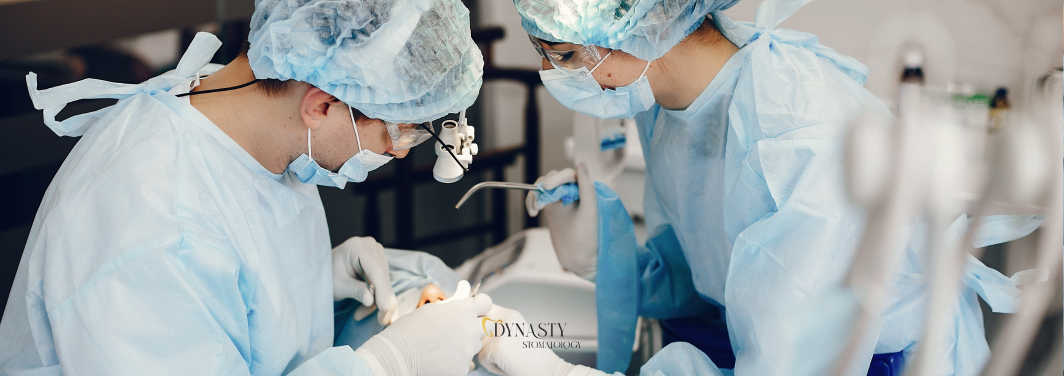




You can undergo this dental surgery in Poland at Dynasty Stomatology in Warsaw. Our specialists will perform accurate diagnostics, assess the condition of the bone tissue, and select the optimal type of sinus lift procedure. The treatment is carried out using modern equipment and advanced materials, ensuring high precision, minimal risk, and excellent aesthetic outcomes.
What is a sinus lift?
A sinus lift is a surgical procedure used to augment bone tissue in the upper jaw, most often in the region of the molars and premolars. It prepares the jaw for implant placement when the existing bone volume or height is insufficient to ensure stable fixation. The procedure involves the use of grafting material that stimulates the growth of new bone.
Causes of bone tissue atrophy
A sinus lift is indicated in cases of advanced bone loss in the maxilla when implantation is required in areas with reduced bone thickness. In such conditions, it is impossible to place a stable implant without first rebuilding the sinus bone.
Normally, the thickness of the upper jaw bone for implant installation should be at least 10 mm. A height below 7 mm is considered insufficient, and a sinus lift is recommended to increase it. If the bone height is less than 4 mm, osteoplasty becomes essential for successful implantation.
Bone atrophy may develop due to:
- Long-term absence of teeth in the upper jaw without prosthetic replacement;
- Age-related changes;
- Periodontal inflammatory diseases;
- Jaw trauma;
- Individual anatomical features;
- Previous surgeries or failed dental procedures.
Atrophy occurs due to the lack of chewing load in areas of missing teeth. Without pressure, the bone tissue gradually resorbs, decreasing in volume. A common result is the descent of the sinus floor, reducing bone height in the alveolar ridge. Additionally, changes in the mucous membrane of the maxillary sinus can further complicate implant placement.
Contraindications to Sinus-Lift Surgery
There are both absolute and temporary contraindications, in which case the procedure is postponed or avoided. The primary goal is to ensure patient safety and a predictable outcome of treatment.
Situations in which the sinus-lift procedure should be postponed:
- Acute inflammatory processes in the oral cavity;
- Chronic sinusitis or other diseases of the maxillary sinuses;
- Advanced osteoporosis;
- Uncontrolled diabetes;
- Active phase of oncological diseases;
- Blood disorders affecting clotting;
- Pregnancy;
- Severe immune deficiency;
- Psychoneurological conditions that interfere with surgical treatment.
If contraindications are present, the dental clinic specialist will prescribe alternative methods to restore lost bone or make an appointment for the procedure after the patient’s condition has stabilized.
Types of Sinus Lift
A sinus lift is a surgical procedure performed to increase bone volume in the upper jaw, specifically in the area of the sinus cavity, when there is not enough bone height to install an implant. Depending on the patient’s anatomy and the level of bone loss, the dentist or surgeon will choose between two main techniques.
Open Sinus Lift
This technique is used when there is a significant lack of bone — usually less than 4-5 mm of sufficient bone. Key features:
- During an open sinus lift, the sinus cavity is accessed through a lateral incision in the jawbone, creating a small window.
- The sinus membrane is carefully “lifted”, and the resulting space is filled with bone material — often synthetic or donor bone.
- This method is ideal for substantial bone grafting prior to implant placement.
- Implantation may be done as a separate procedure or simultaneously, depending on the case.
- The procedure is performed under local anesthesia, though sedation may be used for comfort.
Closed Sinus Lift
Used when the bone height is 6 mm or more, this is a minimally invasive method. Characteristics include:
- A less traumatic technique, as the access point is created directly through the implant site.
- The sinus membrane is “lifted” using specialized tools through a small tunnel.
- Typically combined with immediate implant placement in the same session.
- Reduced discomfort and swelling, and a shorter healing process.
Both sinus lift methods are considered safe and effective. The final choice depends on individual anatomy, existing sufficient bone volume, and the professional assessment by qualified dentists.
Preparing for a Sinus Lift
Proper preparation is crucial for a successful outcome. Here’s what to expect:
- Evaluation of the oral cavity. Any gum disease, cavities, or inflammation must be treated before the procedure.
- Discussion of the procedure. Patients are informed about what to expect, from the incision to the healing process, including advice on avoiding sneeze pressure and other post-op care.
With the guidance of qualified dentists, a sinus lift in the clinic can provide the sufficient amount of bone needed for successful implantation, even in challenging anatomical conditions.
How Is the Procedure Performed?
The sinus lift in the clinic begins with preparing the patient:
- Local anesthesia is typically used, but in some cases, general anesthesia or sedation may be applied;
- The oral cavity is treated with antiseptics to ensure sterile conditions.
After preparation, the dentist proceeds based on the selected type of sinus floor elevation.
Stages of a Closed Sinus Lift
With the closed sinus lift, access is achieved through the gum, and a small incision is made directly above the area of the back teeth that requires restoration. The sinus membrane is gently lifted using special instruments, and the resulting space is filled with bone material. This method is minimally invasive and ideal when only minor increase bone volume is needed.
Stages of an Open Sinus Lift
For the open sinus lift, the surgeon creates a larger access window or several incisions to reach the floor of the sinus cavity. This technique is chosen when a significant increase bone volume is necessary due to severe atrophy. After reaching the sinus membrane, it is carefully lifted, and the space is filled with either synthetic, donor, or patient-derived bone material.
After the procedure:
- The bone material is placed;
- A membrane may be added if needed;
- The gum is sutured;
- Post-operative care instructions are provided to ensure proper healing.
Recovery Period
After a sinus lift in the clinic, following your dentist’s recommendations is crucial. The healing process can take several weeks or even several months, depending on the complexity and individual factors.
Key stages:
- Early Recovery (first 3-7 days): Rest, avoid heavy activity, maintain oral hygiene.
- Suture Removal: Usually done within 7-14 days, depending on healing.
- Regular Visits: Important to monitor progress and address any concerns early.
- Restrictions: Avoid hard foods, hot/cold drinks, and pressure on the operated area.
After several months, when a sufficient amount of bone has formed, the patient is ready to install an implant or undergo other dental treatments.
Possible Complications
While the sinus lift procedure is generally safe, potential risks include:
- Discomfort and swelling;
- Bleeding;
- Inflammation;
- Delayed healing;
- Displacement or rejection of the bone material;
- Damage to the sinus membrane.
These risks can be minimized by following your treatment plan and choosing a qualified dentist or surgeon experienced in sinus floor elevation.
Cost of Sinus Lift
The cost depends on the technique (open sinus lift or closed sinus lift), the amount of bone material, and the clinical situation. A precise quote is given after diagnostics and consultation.
Contact Dynasty Stomatology for a personalized treatment plan. Schedule a consultation with our experts — we’ll help restore both functionality and aesthetics to your back teeth!