

Bite disorders are a common dental problem in both children and adults. If uncorrected, occlusal disorders can lead to difficulties in hygiene, increased enamel abrasion, increased stress on the jaw joints and aesthetic discomfort. Orthodontic plates and appliances are effective and gentle in correcting this problem, especially in the early stages.

Diagnosis

Treatment planning

Taking impressions.
What are orthodontic appliances and plates?
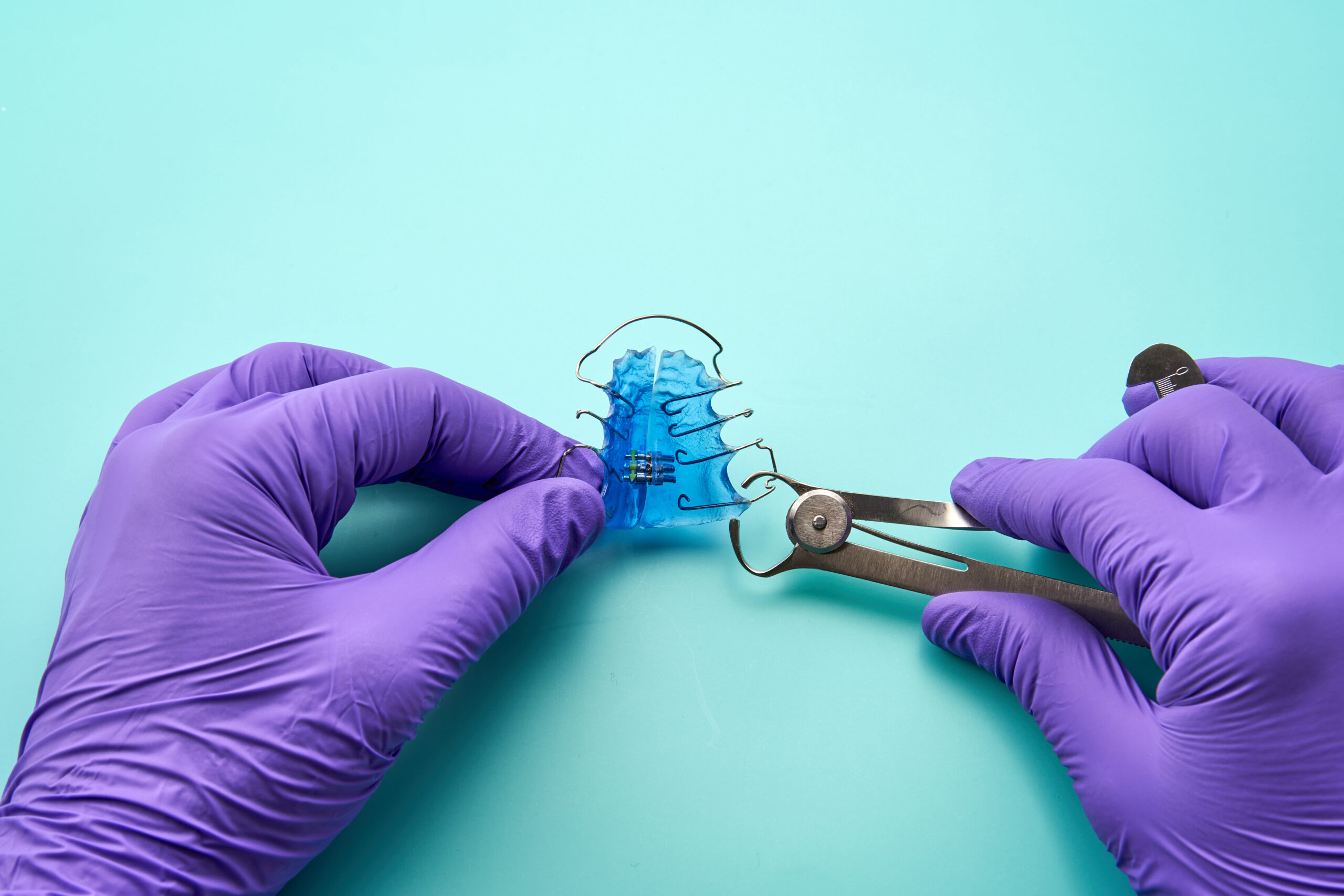
Orthodontic appliances and plates are special removable or fixed structures designed to correct the bite, align teeth and normalize jaw growth. They affect the teeth and surrounding tissues, gradually moving the teeth into a physiologically correct position.
Possible purposes of application:
- correcting an incorrect bite;
- aligning the position of the teeth;
- expanding the jaw if there is not enough space for permanent teeth to erupt;
- forming the correct position of the jaw in children and adolescents during active growth;
- preventing complications (tooth decay, enamel abrasion, stress on joints);
- improving the appearance of the smile and chewing function.

Price: Orthodontic plates and appliances for children and adults
All price-
Orthodontic consultation
300 PLN -
Orthodontic consultation (children < 10 years)
150 PLN -
Diagnostic (foto, CT jaws, CT joints, cephalometric, treatment plan)
800 PLN -
Diagnostic (foto, CT jaws, CT joints, cephalometric, treatment plan) children < 10 years
450 PLN
Do you want to treat your teeth while you sleep?
Schedule an appointment!
By clicking the button, you give your agreet your personal data in accordance with privacy policy.
Frequently asked questions about orthodontic plates and appliances
-
At what age is it best to begin orthodontic treatment with plates?
The optimal age is from 5-6 years old, when active jaw growth begins and the bite can be corrected at an early stage. But the exact period is determined by the doctor after examination.
-
Can plates be used to correct the bite in adults?
Yes, but the effectiveness is limited - plates are more suitable for mild forms of disorders and retention treatment.
-
Is it painful to wear orthodontic plates?
For the first few days there may be slight discomfort, but it quickly passes - adaptation takes 2-3 days.
-
How long can the process of bite correction with plates on the teeth last?
The average period is from 6 months to 2 years. It all depends on the complexity of the case and compliance with the wearing regimen.
-
What results can be expected after treatment?
Orthodontic appliances provide teeth alignment, improved bite, prevention of complications and improved smile aesthetics.
-
Can I remove my braces while eating?
Yes, removable plates must be removed from the mouth at mealtime. What is the difference between wafers and appliances? Plates are a type of orthodontic appliance. The term "appliances" includes both plates and more complex designs.
-
Why in some cases treatment with plates does not bring the desired result?
The reason for the lack of effectiveness of correction may be due to irregular wearing of the structure, non-compliance with recommendations, incorrect choice of appliance or a complex clinical situation.
-
Is there a guarantee that an orthodontic plate will help?
The guarantee depends on proper diagnosis, adherence to the wearing regimen and regular check-ups with the orthodontist.
-
How to store the plates?
orthodontic structures should be stored in a clean and dry container, away from high temperatures and direct sunlight.
-
Do I need to wear my plates at night?
Yes, you should wear the plate at night - it is an important part of the treatment regimen.
-
What is the difference between braces and plates?
Braces are fixed to the teeth and help correct more serious orthodontic problems. Plates are a gentler removable option, optimal for correcting minor occlusal disorders.
Specialists who fit orthodontic plates and appliances
View all doctors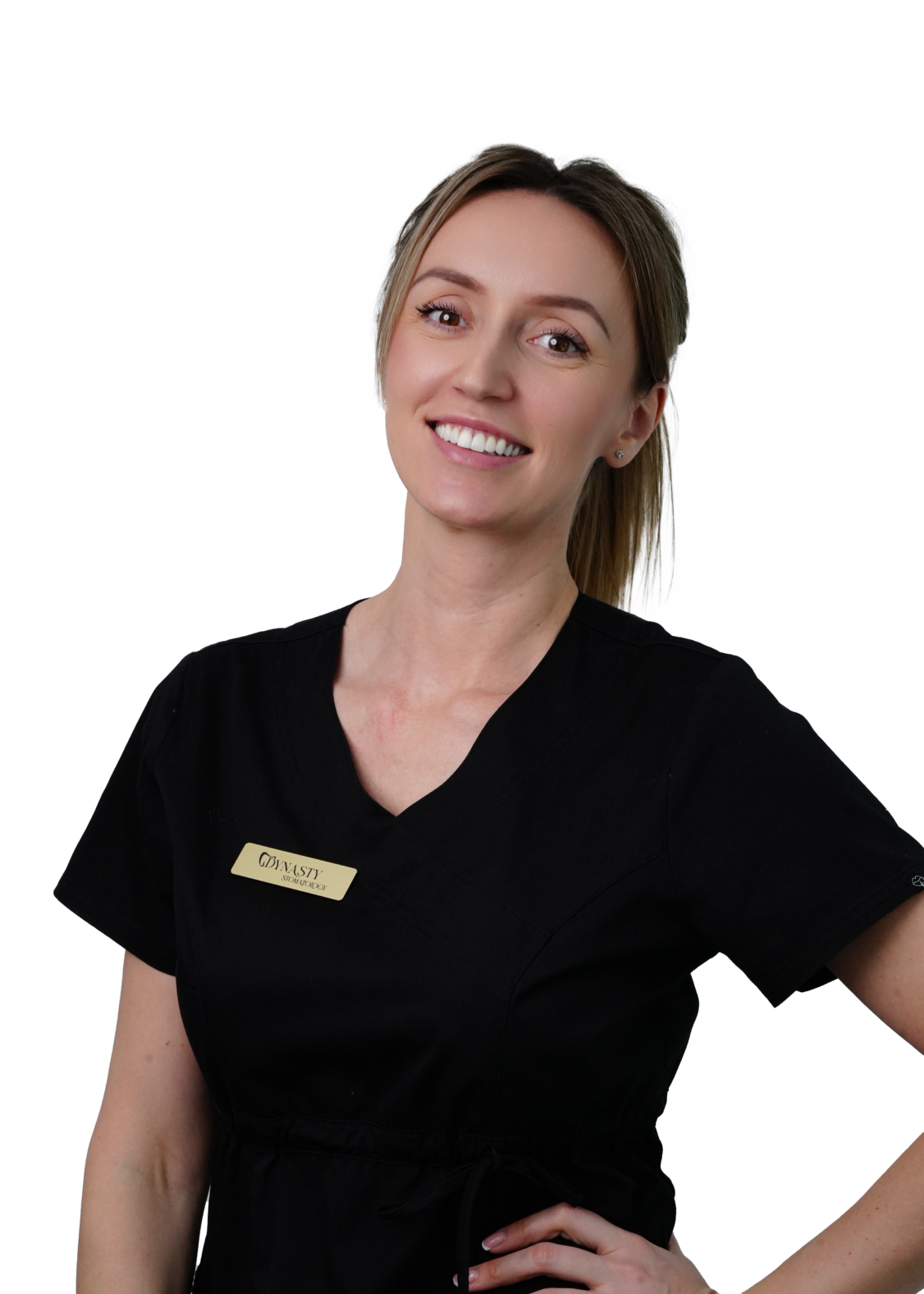
Tetiana Pererva
Orthodontist
Over 5000 orthodontic cases in 16 years of practice. Believes orthodontics is about more than straight teeth — it’s about facial harmony. Actively ...
Reviews of orthodontic plates and appliances in Krakow
Expert articles on the topic
View all blog-
23.12.2025
143
9 min. read
Occlusion – What It Is and What the Treatments Are
We rarely think about our bite when it’s functioning properly. We chew, talk, smile, and do it all automatically. But something can go wrong, and the body will send signals. For example, teeth may wear down faster than usual, the jaw may become tired in the evening, headaches may appear, neck tension may develop, or […]
Read more -
04.09.2025
297
7 min. read
Open bite – how to treat, is surgery necessary?
An open bite can affect more than just the way your teeth come together—it can influence your speech, chewing efficiency, and even your confidence. While some cases are mild and manageable, others may require comprehensive orthodontic care or even surgical intervention to restore proper bite function. Understanding the available treatment options, from braces and aligners […]
Read more -
29.08.2025
233
6 min. read
Underbite – main symptoms and treatment options
An underbite can affect more than just the appearance of your smile — it may also impact speech, chewing efficiency, and overall oral health. Many people are unaware of the functional challenges it can cause until symptoms become more pronounced. Early diagnosis and timely treatment can greatly improve both aesthetics and dental function, leading to […]
Read more -
26.08.2025
406
5 min. read
The Role of Orthodontic Elastics in Treatment
Orthodontic treatment isn’t just about braces and wires — sometimes, it’s the smallest components that make the biggest difference in your smile’s transformation. Among these, orthodontic elastics play a surprisingly powerful role in guiding teeth into their ideal positions and fine-tuning your bite. They may look simple, but their impact on treatment outcomes is anything […]
Read more -
24.07.2025
498
7 min. read
What is dental occlusion and what are the methods of its treatment?
Dental occlusion refers to the way your upper and lower teeth come together when you bite, chew, or speak. While proper occlusion is essential for healthy oral function, many people experience occlusal issues that can lead to discomfort, uneven tooth wear, jaw pain, or even headaches. These bite-related problems often go unnoticed but can significantly […]
Read more





If you notice bite abnormalities or crooked teeth, please contact Dynasty Stomatology in Poland. We will find orthodontic appliances for any age so that you can smile with confidence.
Types of orthodontic appliances
Orthodontic plates and appliances are divided into two main types – depending on the way they are worn and their impact:
- Removable orthodontic appliances. They are made individually and can be removed by the patient (e.g. for eating or brushing). Removable plates for teeth are usually used in children aged 6-12 years. They correct the position of the teeth, stimulate jaw growth and form a correct bite. Removable appliances are easy to maintain and are suitable for initial correction.
- Non-removable orthodontic appliances for children and adults. They are fitted by a dentist and fixed on the teeth for the entire duration of treatment, providing more precise and long-lasting effects. May include active elements (screws, springs) to change the position of the teeth or jaws. They are effective for more serious orthodontic disorders.
The choice of design depends on the patient’s individual characteristics, age, degree of bite disturbance and treatment goals.
Advantages and disadvantages of removable and fixed orthodontic appliances
The choice between removable and fixed appliances depends on the patient’s age, bite characteristics and treatment goals. Both options have advantages and limitations that should be considered when planning to correct the bite in children and adult patients.
Removable structures have the following advantages:
- customized fabrication;
- ease of care (can be removed for meals or brushing);
- gentle treatment;
- are suitable for children during the period of a changing bite;
- lower cost compared to non-removable systems.
But there are some disadvantages of removable devices for teeth alignment:
- require discipline in wearing;
- less effective for serious pathologies;
- the need for regular visits to the orthodontist for activation.
Non-removable orthodontic appliances are designs that can only be removed by a dentist. They have the following advantages:
- more stable and predictable result;
- are effective for complex bite disorders;
- do not depend on the patient’s self-control.
Among the disadvantages are worth noting:
- more difficult to maintain (cannot be removed);
- possible discomfort in the first days after fixation of the appliance;
- higher cost;
- the need for diet and careful hygiene.
If you need bite correction and teeth alignment, Dynasty Stomatology specialists will help you choose the best option depending on your age, type of occlusion and lifestyle.
Peculiarities of using orthodontic appliances at different ages
Orthodontic appliances and plates for teeth alignment are selected taking into account age, bite condition and anatomical features of the jaw. The principles of treatment are different for children and adults, which is important to consider when choosing a correction method:
- From the age of 5-6 years it is possible to correct the bite with removable plates and mouthguards on baby teeth.
- From 7-12 years of age, the jaw growth activity increases, which allows effective influence on the development of the dento-alveolar system.
- From 12-14 years of age, treatment is carried out with both plates and fixed appliances for permanent teeth. Braces may also be fitted.
- At 6-13 years of age, mouth guards for nighttime use may also be prescribed. They are recommended as protection against nighttime grinding (bruxism), especially if it affects jaw development and dental health.
- In adults, jaw growth is complete, so appliances are used to correct the bite and align the teeth only to move them. More often fixed structures or complex orthodontic treatment with a longer period of wear are used.
Thus, removable appliances are used mainly in children, while fixed appliances are used in adolescents and adults.
Indications for treatment with orthodontic plates
Orthodontic plates are an effective solution for early and moderate bite disorders. They are often used in children when the jaws are still in the active growth stage, but can also be used in adolescents and adults for certain problems in forming a proper bite.
Indications for the use of plates are:
- crowding of teeth;
- narrowing of the jaw or palate;
- malocclusion (distal, mesial, crossbite, etc.);
- bone build-up in case of lack of space;
- correction of the jaw position;
- alignment of the tooth row;
- prevention of teeth shifting after eruption;
- breathing disorders (e.g., narrowed palate);
- habits affecting the bite (finger sucking, lip biting, etc.); improper position of the tongue; prevention of teeth shifting after eruption; breathing disorders (e.g., narrowed palate); habits affecting the bite (finger sucking, lip biting, etc.). etc.);
- incorrect position of the tongue, as it puts pressure on the dentition and can lead to bite deformities;
- maintaining the result of orthodontic treatment (retention function).
After the examination, the orthodontist determines individually whether the plate will be an effective method in a particular case or whether it is better to use another orthodontic appliance.
Contraindications for placing a plate on teeth
Orthodontic plates for teeth alignment are a gentle method of correction, but in some cases their use may be ineffective or even undesirable. Therefore, before starting treatment, a diagnosis is necessarily carried out.
The main contraindications to the installation of orthodontic apparatus:
- severe forms of bite that require more invasive correction (e.g., surgery);
- lack of motivation and discipline in the patient (for removable plates);
- allergy to the materials from which the appliance is made;
- inflammatory diseases of the oral cavity (gingivitis, periodontitis);
- diseases of the temporomandibular joint (in the acute stage);
- serious speech disorders that require speech therapy correction before orthodontic treatment;
- poor oral hygiene, which contributes to an increased risk of tooth decay;
- insufficient tooth eruption (if there is no support for the structure).
In each clinical case, the decision is made on an individual basis.
Stages of treatment with orthodontic plates in children and adults
Correction of the position of the jaws and teeth with the help of plates takes place in stages and requires regular monitoring by the doctor. This approach allows you to align the bite effectively, safely, taking into account the individual characteristics of the patient and get a pronounced result of treatment.
The main stages of correcting the position of teeth with plates:
- Fabrication and installation of the appliance. The finished appliance is tried on and fitted. Removable plates do not require fixation, but the doctor explains the rules of wear and care.
- The process of treatment. The patient regularly wears the plate (usually 14-22 hours a day), comes for check-ups on a set schedule to monitor and activate the device.
- Removal of the device. After achieving the result, the doctor removes the construction, if necessary, prescribes a retention plate to consolidate the effect.
Successful correction of the bite is possible only with regular wear of the structure and compliance with the recommendations of the orthodontist.
Instructions for use and care
Proper care and compliance with the doctor’s recommendations are the key to successful and comfortable orthodontic treatment. Main recommendations:
- Regular cleaning. Clean the plate every day with a soft brush and warm water, you can use special products for orthodontic appliances. Avoid hot water, so as not to deform the material.
- Compliance with the wearing regimen. Wear the plate as long as recommended by the doctor – usually 14-22 hours a day. You can take it off only for eating and hygiene.
- Regular visits to the orthodontist. Visit your doctor to monitor treatment, activate the appliance in a timely manner, and evaluate progress.
- Caution in use. Avoid chewing hard foods or objects to avoid damaging the structure.
- Storage. When you remove the plate, store it in a special container to avoid contamination and accidental damage.
- Keep an eye on the condition of your teeth and gums. If you experience discomfort, pain, or inflammation, see an orthodontist.
How much do orthodontic plates for children and adults cost
The cost of orthodontic treatment depends on the complexity of the case, the type of construction and the duration of the course. We offer transparent pricing and an individual approach to each patient. The price of Dynasty Stomatology services is much more affordable than other clinics in Europe.
For accurate information and an initial consultation, make an appointment at Dynasty Stomatology for a convenient time. Our orthodontists can help you find the best solution for your budget and needs.