

Ceramic braces are a modern and aesthetic way to correct malocclusion and straighten the tooth row. They are made from a durable ceramic material that matches the tooth colour, making them almost invisible against the enamel. An orthodontic ceramic brace system looks much more aesthetic and less noticeable compared to traditional metal braces. Additionally, ceramics cause less discomfort and irritation to the oral mucosa, are resistant to external influences, and have high durability.

Creating an Individual Treatment Plan

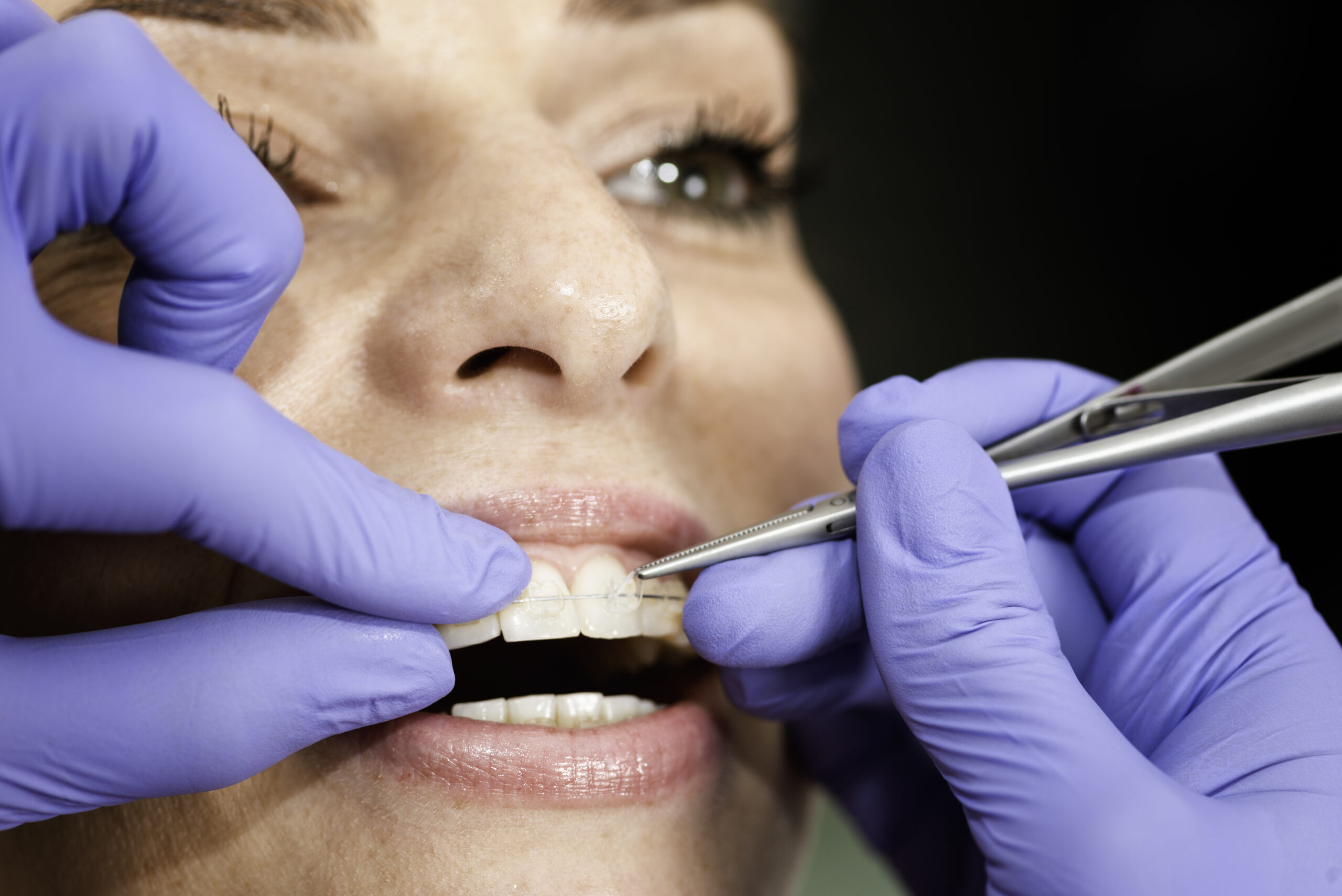
Ceramic braces fitted

Follow-up Appointments and Adjustments
Advantages of Choosing Dynasty Stomatology
Our dentistry combines professionalism, comfort, and modern technology. We care for each patient and always strive for the best results. The advantages of choosing Dynasty Stomatology:
- Experienced dentists and orthodontists with extensive practical experience;
- Modern equipment and certified materials;
- Individual selection of the type of treatment and transparent pricing for services;
- Comfort — every procedure is pain-free;
- Cozy atmosphere and attentive staff;
- Convenient location and flexible appointment schedule.
If you need orthodontic treatment, book a consultation at a time that suits you, and we will help you achieve the beautiful smile you dream of!

Price: Ceramic braces
All price-
Orthodontic consultation
300 PLN -
Orthodontic consultation (children < 10 years)
150 PLN -
Diagnostic (foto, CT jaws, CT joints, cephalometric, treatment plan)
800 PLN -
Diagnostic (foto, CT jaws, CT joints, cephalometric, treatment plan) children < 10 years
450 PLN
Braces (installation)
-
Ceramic
4 500 PLN
Do you dream of a perfect smile?
Make an appointment!
By clicking the button, you agree to the processing of personal data in accordance with the privacy policy.
Frequently asked questions about ceramic braces
-
How long does it take to install ceramic braces, and how often should I visit the orthodontist?
The installation of the braces takes 1-2 hours. You will need to visit the orthodontist about once every 4-6 weeks for check-ups and adjustments. After the examination, the doctor will recommend an individual visit schedule.
-
Do teeth hurt a lot after getting braces?
Ceramic braces may cause pain during the first few days after placement, and this is normal. The discomfort typically disappears within a few days. If needed, you can take pain relief medication during the adjustment period.
-
Can adults wear ceramic braces?
Yes, ceramic braces are commonly used for adults. They are often used to correct bite issues and straighten teeth at any age, providing an aesthetically pleasing appearance and comfort.
Specialists who place ceramic braces
View all doctors
Tetiana Pererva
Orthodontist
Over 5000 orthodontic cases in 16 years of practice. Believes orthodontics is about more than straight teeth — it’s about facial harmony. Actively ...
Reviews of ceramic braces in Krakow
Expert articles on the topic
View all blog-
23.12.2025
144
9 min. read
Occlusion – What It Is and What the Treatments Are
We rarely think about our bite when it’s functioning properly. We chew, talk, smile, and do it all automatically. But something can go wrong, and the body will send signals. For example, teeth may wear down faster than usual, the jaw may become tired in the evening, headaches may appear, neck tension may develop, or […]
Read more -
04.09.2025
298
7 min. read
Open bite – how to treat, is surgery necessary?
An open bite can affect more than just the way your teeth come together—it can influence your speech, chewing efficiency, and even your confidence. While some cases are mild and manageable, others may require comprehensive orthodontic care or even surgical intervention to restore proper bite function. Understanding the available treatment options, from braces and aligners […]
Read more -
29.08.2025
235
6 min. read
Underbite – main symptoms and treatment options
An underbite can affect more than just the appearance of your smile — it may also impact speech, chewing efficiency, and overall oral health. Many people are unaware of the functional challenges it can cause until symptoms become more pronounced. Early diagnosis and timely treatment can greatly improve both aesthetics and dental function, leading to […]
Read more -
26.08.2025
407
5 min. read
The Role of Orthodontic Elastics in Treatment
Orthodontic treatment isn’t just about braces and wires — sometimes, it’s the smallest components that make the biggest difference in your smile’s transformation. Among these, orthodontic elastics play a surprisingly powerful role in guiding teeth into their ideal positions and fine-tuning your bite. They may look simple, but their impact on treatment outcomes is anything […]
Read more -
24.07.2025
498
7 min. read
What is dental occlusion and what are the methods of its treatment?
Dental occlusion refers to the way your upper and lower teeth come together when you bite, chew, or speak. While proper occlusion is essential for healthy oral function, many people experience occlusal issues that can lead to discomfort, uneven tooth wear, jaw pain, or even headaches. These bite-related problems often go unnoticed but can significantly […]
Read more





If you want to achieve an ideal smile and correct bite defects, schedule a consultation with an orthodontist at Dynasty Stomatology dental clinic in Poland. We offer various types of ceramic braces as well as modern alternatives like Invisalign aligners for discreet and comfortable teeth straightening. A specialist will examine you and help you choose the optimal course of treatment.
What Are Ceramic Braces?
Ceramic braces are an orthodontic appliance designed to correct bite issues and align teeth. The ceramic brace system consists of brackets fixed to the teeth and an arch connecting them. Ceramic brackets are made from polycrystalline aluminium oxide, giving it a highly aesthetic appearance and making it nearly invisible on the teeth.
The working principle of ceramic systems is based on the gradual movement of teeth into the desired position. The brackets, attached to the teeth, securely hold the arch, which applies constant pressure. This process steadily corrects the bite, straightens the row of teeth, improves jaw function, and enhances facial proportions.
Difference Between Ceramic, Metal, and Sapphire Braces
The difference between ceramic braces, metal braces, and sapphire braces lies in several aspects:
- Ceramic braces are less noticeable on the teeth because the material closely matches the natural enamel colour. They are ideal for those who value aesthetics and prefer not to attract unnecessary attention from others.
- Metal bracket systems are more visible and are often used for treating complex clinical cases in orthodontics. The construction is more durable, but its appearance does not always satisfy patients.
- Sapphire braces are even more transparent than ceramic ones, thanks to the use of sapphire in their design. These braces are an excellent choice for people who want to maintain maximum smile aesthetics during orthodontic treatment.
Ceramic brackets deliver excellent results in bite correction and have fewer visual drawbacks compared to metal brackets.
Ideal Age for Straightening Teeth with Ceramic Braces
The optimal age to start ceramic brace treatment is between 12 and 16 years, when the teeth and jaws are still developing and more adaptable. During this period, correcting bite issues is most effective and faster. However, ceramic braces systems are also suitable for adults, providing excellent effectiveness and comfort in teeth straightening at any age.
We offer adult braces as well as options for teenagers, ensuring effective teeth straightening for all ages.
Types of braces made of ceramic
Ceramic braces are divided into several types based on how the archwire is attached to the brackets. This affects convenience, the frequency of visits to the orthodontist, and the overall cost of treatment. Let’s take a look at the features of each option available at our dental clinic.
Ligature Ceramic Braces
In ligature ceramic braces, the archwire is secured using elastic rings called ligatures. Regular replacement of these ligatures is required. They provide reliable fixation but demand more frequent visits to the orthodontist. However, the price of ceramic brace systems with ligatures is lower compared to self-ligating options.
Self-Ligating (Non-Ligature) Ceramic Braces
These systems do not use ligatures. Instead, the archwire is fixed with a special clip mechanism. This reduces friction, ensures more comfortable wearing, and simplifies oral hygiene. As a result, fewer visits to the dentist are needed. Self-ligating braces are also more aesthetically pleasing and hygienic.
The choice between ligature and self-ligating ceramic braces depends on the clinical case, treatment duration, and the patient’s preferences. During the consultation, our specialist will recommend the most suitable option.
Benefits of Ceramic Braces
Ceramic brace systems have become a popular choice among patients due to their attractive appearance and effectiveness in correcting bite defects. They offer features that make them an excellent solution for those seeking quality orthodontic treatment without compromising aesthetics.
Choose ceramic braces for their advantages, such as:
- High aesthetic. Ceramic braces, also known as tooth colored braces, are made from materials that match the natural color of tooth enamel, making them almost invisible.
- High durability. Despite their transparency, ceramic constructions are highly resistant to stress and damage.
- Hypoallergenic. The biocompatible material does not cause allergic reactions or irritation in the oral cavity.
- Wearing comfort. The smooth surface of ceramics does not damage gum tissues and causes less discomfort.
- Longevity. Ceramic orthodontic systems are wear-resistant and maintain their appearance throughout the entire treatment period.
- Less noticeable in everyday life. Ideal for patients who value their appearance and prefer discreet treatment.
Disadvantages of Ceramic Brace Systems
While ceramic orthodontic constructions offer many benefits, it is also important to consider some drawbacks:
- Ceramics are less impact-resistant compared to metal braces.
- Over time, they may lose their shine or slightly change color.
- Treatment cost is usually higher compared to metal alternatives.
- Brackets can be slightly larger than metal ones, which may affect wearing comfort and oral hygiene maintenance.
However, despite these factors, the aesthetic and functional advantages of ceramic braces make them a popular choice among patients.
Indications for Ceramic Braces Installation
Ceramic fixed braces are an excellent solution for correcting various bite issues and aligning teeth. They are used to address both aesthetic and functional problems, offering a balance between treatment effectiveness and appearance.
Dental Conditions and Bite Problems Corrected with Ceramic Braces:
- Tooth crowding — when teeth are misaligned due to limited space in the jaw.
- Diastema (gap between teeth) — to reduce or completely close the space between front teeth.
- Crossbite — when one jaw is improperly positioned relative to the other.
- Open bite — a condition where the upper and lower teeth do not meet when the mouth is closed.
- Deep bite — when upper teeth excessively overlap the lower teeth, potentially affecting jaw function.
Ceramic braces are an effective method for correcting defects in bite alignment and other dental issues, offering high aesthetic appeal and lasting comfort throughout the treatment.
Stages of Installation and Correction
Before placing transparent ceramic braces, the patient undergoes comprehensive diagnostics and treatment planning. Each stage of the procedure is aimed at effective and safe teeth alignment, taking into account the specifics of each individual case.
Main Stages of Orthodontic Treatment with Braces:
- Initial Examination and Diagnostics. The orthodontist examines the oral cavity, assesses tooth positioning, bite type, and evaluates the condition of the gums and mucosa. X-rays are taken, dental impressions are made, and a plaster model of the jaws is created.
- Preparation. Any dental issues such as cavities, gum inflammation, or other oral diseases must be treated before starting orthodontic therapy. Professional cleaning is also performed, as the brace system is attached only to clean teeth.
- Removal of the Braces System. Once the desired result is achieved, the braces are carefully removed, and any remaining adhesive is cleaned off the teeth.
- Retention Period (Result Stabilization). Retainers or special aligner trays are placed to maintain the new tooth position and prevent shifting.
Each of these stages depends on the clinical condition and oral health of the individual patient, requiring a personalized approach.
How Long Do You Need to Wear Ceramic Braces?
The duration of treatment depends on the severity of tooth misalignment, bite type, and individual patient characteristics. On average, the correction period ranges from 1 to 3 years, specifically:
- 12 to 24 months — for moderate bite issues;
- up to 30 months — for severe crowding or complex jaw correction needs.
Factors Affecting the Time Required to Achieve Perfectly Aligned Teeth:
- Complexity of the clinical case;
- Patient’s age (results are achieved faster in adolescence);
- Adherence to orthodontist’s recommendations;
- Regular clinic visits for adjustments.
The estimated treatment duration can only be determined after an examination and thorough diagnostics.
How to Care for Ceramic Braces?
Proper care for ceramic braces is essential for effective treatment and maintaining oral health. These braces are made of polycrystalline aluminum oxide, which makes them durable but requires gentle handling.
Key Care Recommendations:
- Brush your teeth after every meal using a soft-bristled toothbrush and non-abrasive toothpaste;
- Use an irrigator to effectively remove plaque and food particles around brackets and archwires;
- Clean interdental spaces and brackets with special interdental brushes;
- Avoid staining foods and drinks such as coffee, tea, beetroot, and sauces;
- Regularly visit your dentist for professional cleanings and to monitor treatment progress.
Thorough care of ceramic braces reduces the risk of cavities and ensures a more comfortable treatment experience.
Also, when wearing clear braces, it is not recommended to engage in contact sports because the braces can be damaged upon impact and may cause injury to the mouth or teeth.
What Should Not Be Eaten While Wearing Ceramic Braces?
While undergoing treatment with ceramic braces, it is recommended to avoid:
- Hard foods (such as nuts, crackers, and hard apples) as they can damage the brackets;
- Sticky foods (like caramel and gummy candies), as they can pull and detach components;
- Staining foods (such as coffee, curry, and beets) — these can discolor the ligatures;
- Excessive sugary foods and soda due to the increased risk of cavities.
It’s better to choose soft, non-staining foods and thoroughly clean the braces after eating.
Cost of Ceramic Braces Installation
The cost of installation of braces depends on the chosen system (ligature or self-ligating), the complexity of the clinical case, and the treatment duration. In our clinic, the price is calculated individually after a consultation with the orthodontist. The approximate prices are listed in the price list. We offer transparent conditions and affordable prices.