

Bone grafting in dentistry is a surgical procedure aimed at restoring the volume of the jaw bone required for dental implantation or correcting defects caused by tooth loss. This technique helps create a solid foundation for a dental implant, enhances smile aesthetics, and prevents facial contour deformation. The use of modern equipment and advanced materials makes bone augmentation procedures safe, effective, and predictable.
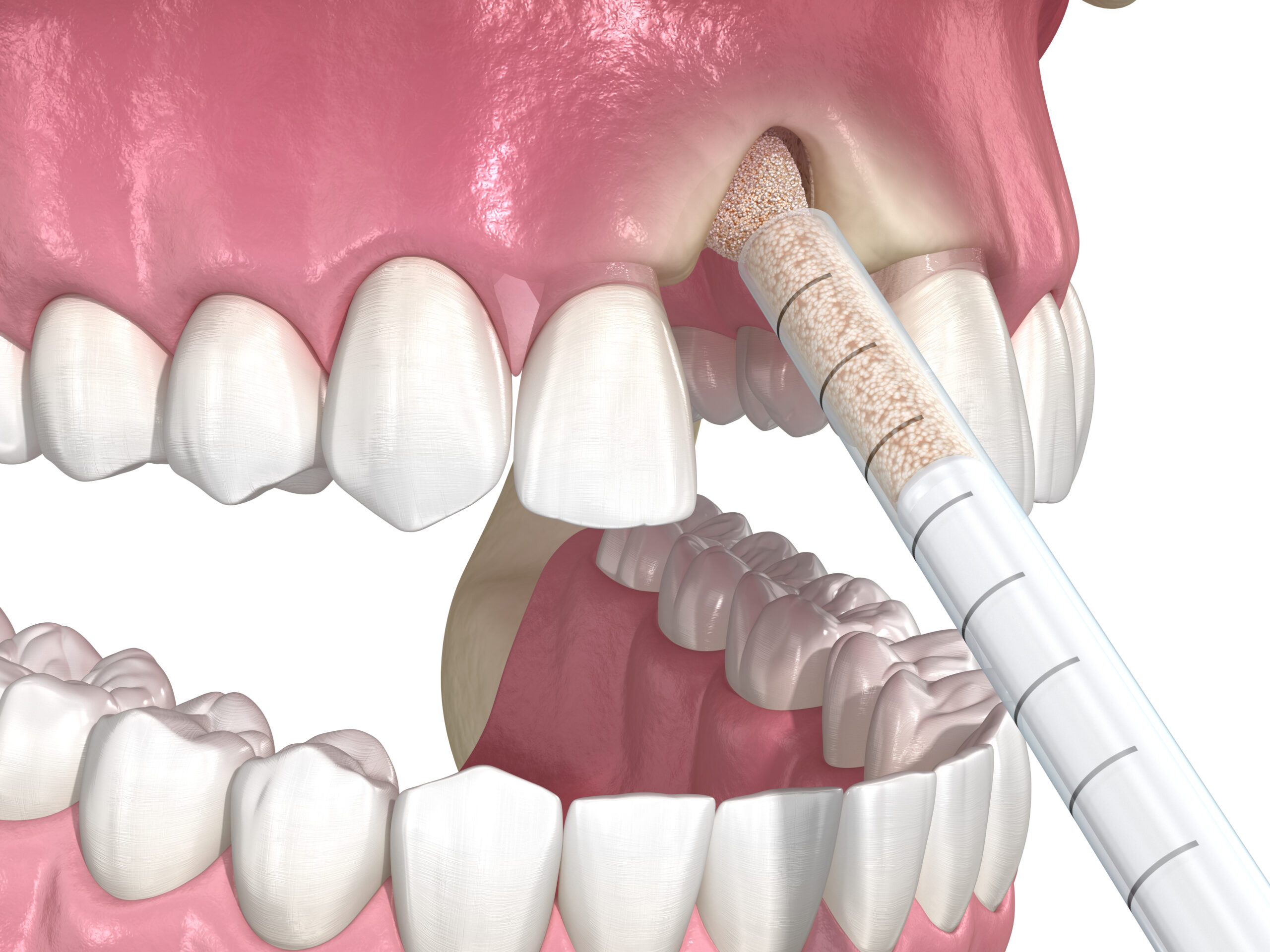

Closed sinus lifting.

Open sinus lifting.

Alveolar ridge splitting.
When Bone Grafting Is Indicated
Osteoplasty is performed when there is insufficient bone tissue in the upper and lower jaw—most often in the area of molars or prior to installing a dental implant. The bone graft procedure allows for the restoration of lost bone, reshaping the alveolar ridge, and providing a strong base for further treatment. It may involve using graft material from the patient’s own body, donor bone, or synthetic substances, often combined with a membrane to accelerate regeneration.
Bone grafting may be required in the following cases:
- Atrophy of bone tissue after tooth extraction;
- Volume loss in the gum area;
- Preparation for dental implantation with insufficient natural bone;
- Sinus lifting to raise the maxillary sinus floor;
- Splitting of the alveolar ridge;
- Restoring the shape of the dental arch before prosthetics;
- Consequences of injury or inflammation of the jaw bone;
- Supporting the aesthetics in the smile zone.
Guided bone regeneration may be performed on one or both jaws depending on the clinical case.

Price: Bone grafting
All price-
Surgical examination
150 PLN -
Tomography of 1 jaw
250 PLN -
Tomography of 2 jaws
350 PLN
Do you want to treat your teeth while you sleep?
Schedule an appointment!
By clicking the button, you give your agreet your personal data in accordance with privacy policy.
Frequently asked questions about bone grafting
-
What materials are used for bone grafting?
Bone grafting may involve autogenous grafts (the patient’s own bone), allografts (uses bone from a deceased donor), xenografts (animal-derived), or synthetic materials. These materials help provide structural support and stimulate regeneration in the oral cavity.
-
Is bone grafting painful?
The procedure is performed under local anesthesia or sedation, making it painless. Some mild discomfort may occur during the healing phase, but it is easily managed with pain medication.
-
How long does recovery after bone grafting take?
Recovery can take 3-6 months. During this time, the graft material integrates and transforms into living bone tissue. Many patients resume normal activities within a few days, but complete healing may take several months.
-
Can a dental implant be placed immediately after bone grafting?
In some cases, an implant can be placed at the same time as the bone graft. However, in most situations, it is necessary to wait approximately 4-6 months until the graft has healed and fully integrated with the alveolar process before implant placement.
Surgeons who perform bone grafting procedures
View all doctors
Kostiantyn Danyliuk
Oral Surgeon, Implantologist
Konstantin is a skilled specialist who combines in-depth knowledge and cutting-edge technology to achieve the best results. He maintains active com...
Reviews of bone grafting (osteoplasty) in Krakow
Expert articles on the topic
View all blog-
24.02.2026
41
9 min. read
Understanding Oral Surgery — What You Need to Know
Until recently, a visit to the dentist was associated with significant discomfort. Uncomfortable impressions, long waits, and the need for…
Read more -
19.12.2025
121
8 min. read
Tooth root resection – when should the apicoectomy be performed?
Sometimes dental problems develop unnoticed. Everything appears normal on the outside, but inflammation can gradually develop inside, right at the root. Pain may be intermittent or absent altogether. Only a dentist can detect the problem from an X-ray. In such cases, standard root canal treatment isn’t always effective. A dentist can offer a more precise […]
Read more -
17.12.2025
149
5 min. read
Do Wisdom teeth always need to be removed – Debunking Common Myths
Wisdom teeth are the teeth that most often cause unexpected issues. Some people live with them comfortably throughout their lives, while for others, they develop into impacted teeth, causing complications. Wisdom teeth behave differently, and there’s no single answer — to remove or not to remove. A personalized approach is essential to determine whether wisdom […]
Read more -
25.11.2025
200
7 min. read
Frenulum cutting in children – when should the frenulum be cut
Many children struggle with a problem that can impact proper speech development and eating comfort – a tongue or lip frenulum that is too short or improperly attached. While this is often noticeable in infants, the problem may go unnoticed until preschool age. Lip frenulum cutting in adults may be indicated in cases of limited […]
Read more -
21.11.2025
342
8 min. read
Dry socket – one of the complications after tooth extraction
Most tooth extractions heal normally, but some patients may experience a condition known as dry socket. This painful post-extraction complication can develop when the tooth extraction clot fails to remain in the wound, leaving the socket exposed. In this situation, severe pain often occurs, which can radiate to the ear, temple, or jaw, and home […]
Read more -
23.07.2025
609
7 min. read
What to Expect After Wisdom Tooth Extraction: Recovery Tips
Wisdom tooth extraction is a common dental procedure, often necessary to prevent or resolve issues such as overcrowding, infection, or impaction. While the surgery itself is typically quick and routine, knowing what to expect during the recovery process can make a significant difference in healing smoothly and comfortably. In this article, we’ll walk you through […]
Read more





At the Dynasty Stomatology dental clinic in Poland, you can undergo bone grafting for dental implantation using sterile biomaterials and innovative technology. We provide maximum comfort and a personalized approach. Schedule a consultation, and our experienced surgeons will help you restore the health and aesthetics of your smile.
Contraindications
Bone grafting is a surgical procedure and may be contraindicated in the following situations:
- Exacerbation of chronic diseases;
- Blood clotting disorders;
- Increased gum bleeding;
- Severe swelling and inflammation of soft tissues;
- Active oral infections;
- Pregnancy and lactation periods;
- Decompensated diabetes mellitus;
- Oncological diseases;
- Autoimmune conditions.
Before the procedure, our dental clinic performs a thorough diagnosis to eliminate potential risks and develop a safe treatment plan.
Bone Grafting Methods
Bone grafting is a surgical procedure aimed at restoring the volume of bone lost due to resorption, trauma, or tooth extraction. There are several types of bone grafts used depending on the lack of bone, anatomical specifics, and location of the deficiency.
The most common procedures include:
- Augmentation. Increases the volume of the jaw bone using either synthetic bone, allograft, or transplanted bone. It may be performed alone or combined with other methods. It may include bone from a cadaver or artificial biocompatible materials.
- Autotransplantation (grafting from the patient’s body). Involves taking bone from another part of the jaw, such as the chin or mandibular branch. Often chosen for advanced grafting of the lower jaw and cases requiring a high engraftment rate.
The dentist or oral surgeon chooses the best option after careful examination of the patient’s medical history, including potential risks such as risk of rejection, risk of infection, or if the patient is a smoker.
Preparation and Stages of the Bone Grafting Procedure
Bone grafting is a preparatory step before installing dental implants. Proper preparation is essential to support a successful healing process and avoid complications.
Key stages of the procedure:
- Initial consultation and 3D diagnostic imaging.
- Identification of the indication and selection of the suitable bone grafting technique.
- Surgery with placement of a protective membrane.
- Suturing and beginning of the recovery period.
- Gradual resorption of the membrane and sutures.
- Removal of sutures after 7-10 days.
The procedure is usually performed under local anesthesia, with the option of sedation. The recovery from bone grafting and bone growth period typically can take from 3 to 6 months, allowing the bone material to fully integrate with the surrounding bone.
This stage lays a solid foundation for implant success, helps prevent complications, and ensures long-term results.
Postoperative Recovery Features
The recovery period plays a crucial role in the successful regeneration of bone tissue. When following all medical recommendations, the healing process usually proceeds without complications.
Key Features of Rehabilitation:
- Moderate swelling and discomfort may occur during the first 2-3 days — these symptoms are typically managed with pain relievers and, in some cases, antibiotics.
- Patients should avoid physical exertion and overheating (e.g., saunas or steam baths).
- It is essential to maintain proper oral hygiene while avoiding any trauma to the surgical site.
- Follow-up visits with the dentist are mandatory.
Nutritional Recommendations After Bone Grafting:
- In the first few days, consume only soft and cooled foods (such as purees, yogurt, or broths).
- Avoid hot, spicy, hard, or acidic foods.
- Do not chew on the side of the bone grafting site.
- Drink plenty of fluids, avoiding carbonated beverages and alcohol.
Possible Complications
While bone grafting for dental implants is a common procedure, there is always a risk of complications, such as:
- Inflammation or infection at the site of bone grafting;
- Bleeding and swelling of the gums;
- Rejection of the artificial material;
- Pain when biting or moving the jaw;
- Damage to nearby tissues or nerves;
- Delayed or failed engraftment of the transplanted bone.
To reduce these risks, such procedures should only be performed by an experienced specialist.
Important! Contact your dentist immediately if you experience any of the following after bone grafting:
- Severe, persistent pain;
- Heavy or prolonged bleeding;
- Pus or discharge from the surgical site;
- Fever;
- Swelling that worsens over time;
- Numbness lasting more than 24 hours.
✅ Price of Bone Grafting at Dynasty Stomatology
The price of bone grafting is determined individually based on the volume of intervention, the chosen method (e.g., closed or open sinus lift, bone block grafting), the type of bone or artificial material used, whether bone from a deceased donor or bone block is involved, and the need for additional surgery such as augmentation or preparation to install implants.
The final cost is calculated after a detailed consultation and diagnostic evaluation.
If you have indications for this type of surgical treatment, we invite you to Dynasty Stomatology. Our skilled implant surgeon will select the most suitable method and perform the bone grafting comfortably and safely. You can book a consultation at a convenient time.