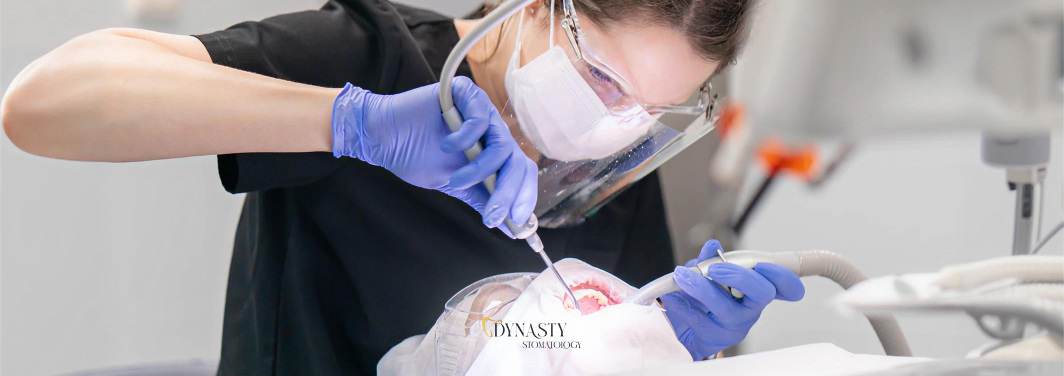

Dry socket – one of the complications after tooth extraction


21.11.2025
341
8 min. read
Why Patients Trust Dynasty Stomatology
The trust in Dynasty Stomatology is built on a combination of many years of experience and an individual approach to every patient. We understand that a visit to the dentist is often accompanied by anxiety, so we place special emphasis on creating a comfortable and calm atmosphere where every patient feels safe.
The clinic is equipped with modern technology and uses advanced treatment methods, ensuring that procedures are carried out with maximum precision, efficiency, and comfort. All materials undergo strict quality control, and our doctors regularly improve their qualifications to offer only the most up-to-date and proven techniques.
In addition, Dynasty Stomatology values long-term relationships with patients. Our goal is not only to solve the problem at hand but also to maintain the health of teeth and gums for years to come. Openness, honesty, and transparency are the key principles that have earned the clinic its reputation as a reliable dental partner.
Facts about Dynasty Stomatology:
✅ Over 10 years of successful work in dentistry.
✅ Hundreds of positive reviews from patients in [Страна в соответствии с регионом] and abroad.
✅ We use premium materials from leading global brands.
✅ We offer treatment under sedation and general anesthesia.
✅ A full range of services — from pediatric dentistry to complex surgical operations.
Dynasty Stomatology — trust, expertise, reliability, and care for the beauty of your smile.
Learn about usMedical Expertise
Dynasty Stomatology’s doctors conduct medical reviews of all materials on the website to ensure their accuracy and practical value. Our authors and editors are experienced specialists in the fields of therapeutic, surgical, orthopedic, and pediatric dentistry. This approach allows us to maintain high professional standards and provide our readers with only verified, up-to-date, and useful information.
Most tooth extractions heal normally, but some patients may experience a condition known as dry socket. This painful post-extraction complication can develop when the tooth extraction clot fails to remain in the wound, leaving the socket exposed. In this situation, severe pain often occurs, which can radiate to the ear, temple, or jaw, and home treatment usually provides no relief.
Therefore, it’s important to know how to recognize a dry socket and when prompt dental care is necessary. In the following article, we’ll explain what a dry socket is, its symptoms, and why early dental care can prevent a more serious condition.
What is dry socket?
Many patients don’t understand what a dry socket is or why it causes such severe discomfort. A dry socket is a condition in which, after a tooth is extracted, the blood clot in the socket fails, leaving the exposed bone and nerve endings susceptible to irritation. The dry socket can be seen in the photos. This leads to intense pain and requires appropriate dental treatment to prevent inflammation.
Does a dry socket hurt and does a dry socket always hurt? These are the first questions patients ask. How much a dry socket hurts depends on individual characteristics, and how long a dry socket hurts will be determined by the doctor during the visit.

Correct tooth socket – what should it look like?
It’s important to understand what a dry socket clot looks like to avoid complications. A healthy tooth socket after a tooth extraction is filled with a stable blood clot, which protects the wound and facilitates the healing process. This means that a healthy socket doesn’t cause severe pain or produce an unpleasant odor, and gradually grows over with new tissue. If a dry socket does form, you can see what the clot looks like after a tooth extraction in photos to avoid possible complications.
What are the causes of dry spells?
Dry socket causes can stem from both individual patient factors and the procedure itself. How does a dry socket develop? It occurs when a blood clot fails to remain in the tooth socket after tooth extraction, or when it is prematurely removed, exposing the underlying bone and causing pain and delayed healing.
Patient-related factors:
- failure to follow the dentist’s recommendations after the procedure;
- nicotine addiction;
- use of oral contraceptives;
- systemic diseases;
- blood clotting problems.
Factors related to the procedure:
- incorrectly performed procedure;
- extraction site (e.g. molars and wisdom teeth are more likely to cause complications);
- long and complicated extraction;
- bone destruction in the socket;
- use of strong anesthetic drugs.
Main symptoms of dry socket
Dry socket is a painful complication following tooth extraction, with characteristic symptoms requiring immediate attention. How can you recognize a dry socket? Typical symptoms usually appear a few days after the procedure and gradually worsen.
Symptoms of dry socket:
- what does dry socket hurt like – severe, throbbing pain that may radiate to the ear, temple or eye socket;
- what does a dry socket look like – a visible empty socket or no blood clot;
- redness and swelling around the extraction wound;
- unpleasant odor from the mouth and an unpleasant taste in the mouth;
- difficulty eating and drinking;
- taste disturbances;
- lockjaw (difficulty opening the mouth);
- fever and enlarged lymph nodes;
- general weakness and malaise.
Can a dry socket be painless? Dry sockets typically cause severe pain, but in the very early stages, they may not produce any obvious symptoms.
If you experience such symptoms, you should contact your dentist as soon as possible, because dry socket is a complication that, if left untreated, can lead to bone inflammation and a prolonged healing process.
How long a dry socket takes to heal depends on individual factors, how long a dry socket takes to close is determined by the dentist.

Dry socket – treatment
If you suspect a dry socket, it’s best to see a dentist as soon as possible. The dentist will explain how to treat a dry socket, showing you what a dry socket looks like and informing you when a dry socket appears. A dry socket is a complication that, if left untreated, can cause more pain and slow healing. Your dentist will choose the treatment for a dry socket individually.
The most commonly used treatment methods:
- cleaning the socket and removing food debris and inflammatory tissues;
- a dry socket dressing with an analgesic and anti-inflammatory substance, replaced regularly;
- rinsing the mouth with antiseptic solutions (what the doctor recommends to rinse the dry socket with);
- painkillers and anti-inflammatory drugs, sometimes also antibiotics if there is a risk of infection (the dentist decides which antibiotic to use for dry socket);
- recommendations regarding oral hygiene and what to use for a dry socket during the healing period.
The treatment process aims to accelerate healing, relieve pain, and heal the wound as quickly and as free from complications as possible. The duration of a dry socket and its healing time depend on the size of the wound, individual tissue regeneration, and consistent adherence to the doctor’s recommendations.
Dry socket – how to prevent it?
To avoid dry socket, it’s important to follow your dentist’s post-procedure recommendations and maintain good oral hygiene. Proper preventative care helps reduce the risk of complications after tooth extraction:
- After tooth extraction, it is particularly important for smokers to limit or stop smoking, at least for 72 hours after the tooth extraction procedure.
- Do not create negative pressure, which may damage the clot
- Consuming a semi-liquid or liquid diet.
- Abstinence from drinking alcohol.
- Avoiding excessive physical exertion.
- Refrain from excessively hot baths and sauna visits.
- Avoiding drinks that are too hot.
Will dry socket heal on its own?
Patients ask: will a dry socket heal on its own? A dry socket usually doesn’t heal on its own, so prompt dental intervention is crucial. A dry socket is a complication that, if left untreated, can lead to increased pain after tooth extraction and a prolonged healing process. After a thorough examination, the dentist will determine how to treat a dry socket, using a special dressing and painkillers and anti-inflammatory medications to accelerate healing and reduce discomfort.
Many patients wonder if a dry socket will go away on its own, but the safest thing is to know what to do and consult a dentist. The dentist will explain how to treat a dry socket and how to accelerate healing. In the office, you can check for a dry socket, how to recognize it, and learn how to avoid complications. Additionally, the doctor will show the patient how to rinse the dry socket and how to care for a dry socket near the sutures or under the sutures.
Untreated dry socket – what are the possible complications?
Dry socket is a complication that can be unpleasant, so it’s important to know whether a dry socket is dangerous. Untreated dry socket can lead to serious complications after tooth extraction:
- severe pain after tooth extraction, which may persist for many days after the procedure;
- prolonged wound healing process, i.e. dry socket does not heal;
- increased risk of infection and bacterial complications in the tooth socket;
- the possibility of the socket becoming empty, which may require a special dressing or dental intervention;
- extended recovery time after tooth extraction;
- worsening of symptoms in the area of a blood clot after tooth extraction, dry socket;
- difficulties in proper wound healing and the development of chronic dental problems.
Is a dry socket dangerous? A dry socket can be painful and cause inflammation, but it rarely poses an immediate threat if treatment is initiated in a timely manner. If you have a dry socket, only your dentist can tell you what to do, so it’s important to get a checkup as soon as possible.
What to do for a dry socket – how to speed up healing?
To speed healing, it’s first important to understand what dry socket is – a condition where, after a tooth extraction, a blood clot fails to form or disappears, and the wound heals more slowly. If you’re wondering what to do about dry socket, use gentle mouthwashes as recommended by your dentist, and avoid hot beverages and strenuous exercise.
Nimesil for dry socket can help with pain. Proper hygiene and dental checkups support the healing process. The healing time of a dry socket depends on individual circumstances, but proper care can significantly shorten this period.
FAQ
-
How soon after tooth extraction can dry socket appear?
Patients often ask how long it takes for a dry socket to appear. Dry sockets typically develop within a few days of the procedure, most often between days 2 and 4 after extraction.
-
Is every patient at risk of dry socket after tooth extraction?
The answer to the question of what causes a dry socket varies from person to person. Not every patient is at risk for this complication, but dry sockets are more common after wisdom tooth extraction.
-
Can dry socket be diagnosed at home?
If a dry socket develops, symptoms typically include severe, throbbing pain, foul breath, and exposed bone in the socket. And if you're wondering whether a dry socket will heal on its own, it's best to avoid experimenting and see a dentist as soon as possible.
-
How to distinguish dry socket from normal post-extraction pain?
Dry socket and normal socket are two different conditions that are important to distinguish. When a dry socket begins to hurt, the pain is usually sharp, throbbing, and increasing, as opposed to the mild discomfort of a healing wound.
-
Can dry socket occur after the removal of a baby tooth?
Dry sockets can occur rarely, but even after the extraction of a primary tooth. Therefore, parents should check the dry socket image and ask their dentist what a dry socket is.
-
How long does dry socket treatment take at the dentist's office?
If you're wondering how long a dry socket takes to heal, the process usually takes from a few days to about a week, depending on individual circumstances. Your dentist will determine the exact time it takes to heal a dry socket after an examination.
-
Do antibiotics help treat dry socket?
Antibiotics aren't always necessary; treatment focuses primarily on cleaning the socket, applying a dressing, and relieving pain. Your dentist will determine how to treat a dry socket individually after assessing the wound.
-
Can dry socket cause bad breath?
Yes, a clot after a tooth extraction and dry socket can lead to bad breath because the wound is left exposed and the tissues in the socket dry out.
-
What are some home remedies for dry socket pain relief?
Patients often ask: what to rinse a dry socket with? In practice, doctors select rinses individually, depending on the condition of the wound. Mild antiseptic solutions and Nimesil are sometimes used for dry sockets to relieve pain and inflammation.
-
Does a single complication increase the risk of dry socket during a subsequent extraction?
Yes, some people experience dry socket more often if they've had this complication before. Therefore, it's worth informing your dentist about additional preventative measures before your next extraction.
📍 Krakow | Romanowicza 1/LU3, 30-702
Romanowicza 4B/B.L.U.1, 30-702
📞 In Ukrainian, Russian, English — with understanding and care.


Do you want to treat your teeth while you sleep?
Schedule an appointment!
By clicking the button, you give your agreet your personal data in accordance with privacy policy.
Services
All services-
Orthognathic surgery in Krakow – surgical correction of malocclusion
Orthognathic surgery helps to solve problems with the bite that cannot be treated with braces or aligners. If you have difficulty chewing, speech disorders or are unhappy with the shape of your face, surgical correction may be the best solution.
Read more -
Maxillofacial surgery in Poland
Maxillofacial surgery covers a wide range of interventions, from trauma treatment to complex reconstructive and resection surgeries. All these services are available at the Dynasty Stomatology clinic in Poland. Assistance is provided by experienced surgeons who will ensure a professional approach at every stage of treatment. We use modern technologies and comply with all international […]
Read more -
Frenulum of the tongue or lip in children and adults
A frenulum of the tongue or lip that is too short or incorrectly attached can cause serious difficulties: speech impairment, feeding problems in infants, discomfort with chewing and hygiene, and in adults, effects on the bite and the aesthetics of the smile. These limitations can seriously affect quality of life, especially if not addressed in […]
Read more -
Removal of a dental cyst
A tooth cyst is a fairly common dental problem that often develops without symptoms and remains unnoticed for a long time. It is characterized by a pathological formation, most frequently occurring near the apex of the tooth root due to inflammation, trauma, or infection. If the cyst is not removed in time, it may grow, […]
Read more -
Tooth extraction
Tooth extraction is a necessary dental procedure often required when a tooth cannot be preserved. Extraction may be needed due to severe tooth damage, untreatable decay, chronic inflammation, trauma, advanced mobility, or as preparation for orthodontic treatment, prosthetics, or dental implants. Timely removal of a tooth can help prevent complications and support overall dental care.
Read more -
Removal of a Retained Wisdom Tooth
A retained wisdom tooth (also called an “impacted tooth”) is one that remains partially or fully trapped in the gum or jawbone and cannot erupt completely. This condition often leads to inflammation, pain, swelling, damage to adjacent teeth, cyst formation, and other complications. Without timely removal, the problem may worsen and affect your bite, chewing […]
Read more -
Sinus-lift
Sinus lift in dentistry is a surgical procedure aimed at restoring bone volume in the upper jaw. It becomes necessary when the bone has thinned or decreased in volume after tooth extraction, especially in the posterior regions. This sinus lift surgery makes it possible to place dental implants even in cases of significant bone atrophy. […]
Read more -
Bone grafting
Bone grafting in dentistry is a surgical procedure aimed at restoring the volume of the jaw bone required for dental implantation or correcting defects caused by tooth loss. This technique helps create a solid foundation for a dental implant, enhances smile aesthetics, and prevents facial contour deformation. The use of modern equipment and advanced materials […]
Read more -
Autotransplantation teeth
Autotransplantation in dental practice is a treatment method where a patient’s own tooth is transplanted from one area of the jaw to another. This procedure serves as an alternative to dental implantation. It helps preserve living dental tissue, the periodontal ligament, and the natural function of the tooth. This method is especially valuable in cases […]
Read more





Read also
View all blog-
20.03.2026
15
8 min. read
What You Need to Know About Professional Teeth Whitening
A white smile makes a face look fresher and more well-groomed. However, over time, the shade of teeth changes. Diet,…
Read more -
19.03.2026
24
8 min. read
Professional hygiene in a dental office — The complete guide
Most people believe they take proper care of their teeth. They brush their teeth morning and night, floss, and buy…
Read more -
09.03.2026
13
9 min. read
Restorative Dentistry Guide — Everything You Need to Know
Sometimes a tooth decays almost unnoticed. There's no sharp pain or warning signs. A small spot, mild sensitivity to cold,…
Read more -
04.03.2026
21
5 min. read
How to avoid surgery in the future — a case study of early orthodontic treatment at age 6
A mother brought her 6-year-old son to the Dynasty Stomatology clinic. She was confused: her son had already been examined…
Read more -
26.02.2026
23
11 min. read
What is Dental Implant Procedure — A Complete Guide
Losing a tooth isn't always just about aesthetics. It's about self-confidence, the ability to smile without tension, the ability to…
Read more -
24.02.2026
41
9 min. read
Understanding Oral Surgery — What You Need to Know
Until recently, a visit to the dentist was associated with significant discomfort. Uncomfortable impressions, long waits, and the need for…
Read more -
19.02.2026
25
5 min. read
Online consultation with a dentist — how it works, how much it costs, and when it is really needed
There are many reasons why people put off visiting the dentist. Especially when they live in countries where it is…
Read more