

Fissure sealing in children is one of the most effective ways to protect teeth from decay. Deep natural cavities on the chewing surface often become a place where plaque, food debris and bacteria accumulate, leading to the destruction of enamel. Timely dental sealants can help prevent cavities and keep teeth healthy from an early age.
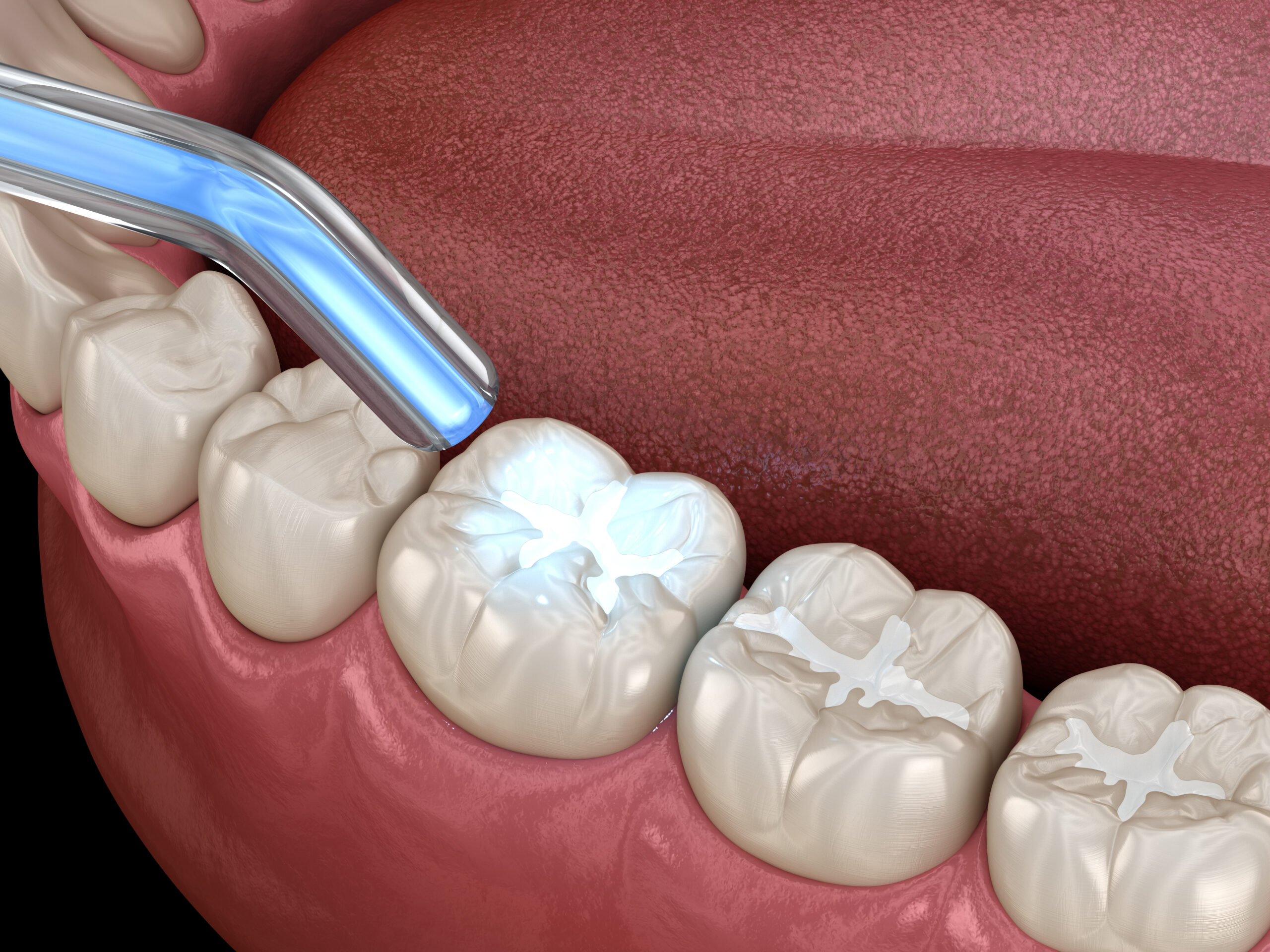
Fissure sealing for children

Diagnosis

Professional oral hygiene

Sanation of fissures
Methods of fissure sealing in children
Pediatric dentistry offers two main methods of fissure sealing, which are chosen depending on the condition of the teeth and the depth of the cavities:
- Non-invasive dental sealant. It is performed without drilling and damaging the tooth surface. It is thoroughly cleaned and dried, after which a special sealant is applied to the fissures, which fills the cavities and reliably protects the enamel.
- Invasive sealing of tooth fissures. It is used in the presence of initial enamel damage or very deep canals. In this case, before applying sealants, the dentist lightly treats (drills) the tooth surface to remove the affected areas and provide better adhesion of the material.
Thus, in the first case, prevention is performed, and in the second case it is possible to treat caries at the primary stage of development (white spot stage).

Price: Fissure sealing for children
All price-
Dental consultation (first attendance)
250 PLN
Do you want to treat your teeth while you sleep?
Schedule an appointment!
By clicking the button, you give your agreet your personal data in accordance with privacy policy.
Frequently asked questions about fissure sealing for kids
-
Is anesthesia required for fissure sealing?
Fissure sealing is a painless procedure that usually does not require the use of anesthetics. In rare cases, if the child is very sensitive, the doctor may suggest light anesthesia.
-
What materials are used for fissure sealing?
Composite resins, sometimes enriched with fluoride for additional enamel protection, are used to fill the recesses. These materials provide a strong and long-lasting coating of the fissures, preventing bacterial penetration.
-
How often do I need to have my teeth sealed?
Sealant typically lasts on teeth for 3 to 5 years, but it is recommended that you visit your dentist once a year to monitor the condition. If necessary, the teeth can be sealed again to maintain protection against decay.
-
How long does the effect of dental sealants last?
The effects of sealants can last for several years with proper care and regular checkups. It is important to monitor the integrity of the coating to renew the sealant in a timely manner.
-
How do I care for my teeth after fissure sealing?
After the procedure, you should brush and floss at least twice a day. It is also recommended that you visit your dentist for preventive checkups and timely monitoring of the sealant.
-
How long does it take to seal the fissures of baby teeth?
The procedure takes only a few minutes per tooth and does not cause discomfort to the child. Manipulation is carried out quickly and accurately.
-
At what age is it better to seal the teeth?
It is optimal to do the procedure immediately after the chewing teeth have erupted. However, sealants can also be performed later if there are indications.
-
Can sealing of baby teeth cause harm?
If done correctly, sealants are safe for your child's health. Our doctors use materials that are strictly tested and do not cause allergies.
-
Is dental sealants performed on adults?
Sealing is more often used in children as a preventive measure, but if necessary, it can also be done in adults, especially if there are deep fissures and a risk of decay.
-
On which teeth is fissure sealing usually performed?
Fissure sealing is usually performed on chewing teeth - premolars and molars, where deep fissures create favorable conditions for the development of caries. These are the teeth that most often need additional protection.
Pediatric dentists performing fissure sealing
View all doctors
Yuliia Rudzynska
Pediatric dentist
Helps children not only maintain healthy teeth but also develop a positive attitude toward dentistry, ensuring fear-free visits.
Reviews of dental fissure sealing for children in Krakow
If you want to protect your child’s teeth safely and painlessly, contact Dynasty Stomatology in Poland. Our specialists use modern materials and methods, ensuring safety and comfort at all stages of smile health care.
What is fissure sealing?
Fissure sealing is a dental procedure in which deep and narrow depressions (fissures) on the chewing surfaces of teeth are filled with a special sealant. This material creates a protective barrier that prevents the penetration of bacteria and food debris.
The sealing procedure may be necessary for these reasons:
- Mineralization problem: in some children, tooth enamel is not strong enough and is more susceptible to decay.
- Anatomical problem: deep and narrow fissures are difficult to clean with a normal toothbrush, creating ideal conditions for tooth decay.
Fissure sealing helps reduce the risk of tooth decay, especially in areas that are difficult to clean.
Fissure sealing is performed on both baby teeth and permanent teeth. Sealing baby teeth helps protect temporary chewing teeth from decay, especially during the period of their active use and the formation of a permanent bite.
Sealing the fissures of permanent teeth – especially first and second molars – prevents decay in grooves that are difficult to clean with a normal brush. If there are pronounced depressions on the surface, the procedure can be done immediately after the tooth erupts.
Indications and contraindications
For successful and safe fissure sealing of baby teeth, it is important to consider both indications and contraindications to the procedure. This allows you to choose the right approach and achieve the maximum effect in the prevention of caries.
Conditions that require sealing of cavities on the surface of the teeth:
- narrow and deep fissures that make it difficult to clean with a toothbrush;
- baby teeth that are prone to rapid decay;
- developmental abnormalities of incisors, premolars and molars;
- prevention of caries on chewing teeth (premolars and molars);
- increased susceptibility of the child to caries (e.g. due to weak enamel mineralization).
Filling open fissures is a safe procedure, but it is not recommended in these cases:
- fissures are not sufficiently formed or are too narrow for sealant application;
- active tooth decay;
- fillings or other restorations on the chewing surface of the tooth;
- allergic reactions to sealants;
- acute inflammatory processes in the oral cavity (stomatitis, gingivitis, etc.)
Careful assessment of the condition of the teeth by a specialist will help to exclude contraindications and reduce the risk of tooth decay.
How is dental sealantization performed in children?
In our clinic, this procedure is performed in the following sequence:
- Application of composite. A special sealant is applied to the tooth surface that has been cleaned and dried from saliva to fill the cavities. Orthophosphoric acid treatment may also be performed to help the composite adhere better.
- Checking and grinding. After polymerization of the material, the doctor checks the bite, corrects the height of the sealant if necessary, and grinds the surface for a comfortable clamping of the jaws.
The procedure is painless and takes only a few minutes, but provides reliable protection of teeth from carious lesions.
Advantages and disadvantages of fissure sealing
Fissure sealing for children is performed quite often because of the advantages of the procedure:
- Prevents the accumulation of bacteria and plaque in deep fissures, reducing the risk of tooth decay.
- Provides long-term protection for the chewing surface of children’s teeth.
- Does not require tooth grinding – quick and painless.
- Helps strengthen tooth enamel, as sealants often contain fluoride.
- Preserves the natural appearance of the teeth, as the material is transparent or close to the color of the enamel.
But there are some disadvantages to the procedure:
- is ineffective in the presence of active caries inside the fissures – in such cases, preliminary treatment is required;
- is impossible if the fissures are too deep, narrow or abnormally formed, when the sealant will not be able to fully fill the cavities.
Cost of fissure sealing in Dynasty Stomatology
The price of fissure sealing in children depends on the number of teeth to be treated and the material chosen. Our clinic offers affordable cost of the procedure compared to most European clinics. We will take care of your little patient’s health without excessive costs and with comfort.
For an accurate calculation and consultation, make an appointment at Dynasty Stomatology – our specialists will choose the optimal treatment plan, ensure quality and safe protection of your child’s teeth.
Dynasty Stomatology is a modern dentistry in Poland, equipped with state-of-the-art facilities for accurate diagnostics and procedures. We employ the best pediatric dentists who will find an approach to kids of any age. After the procedure, the doctor of our clinic will also teach proper home hygiene and provide personalized recommendations.