





Tooth Pain Under a Crown or Filling – What Could Be Causing It?
Tooth pain under a dental crown or filling may result from tooth decay, inflammation of the dental pulp, changes in the tissues surrounding the root, or an improperly fitted restoration. Both crowns and fillings restore the function and appearance of a tooth, but they do not completely eliminate the risk of oral diseases.
This article presents the most common causes of pain under a crown or filling, symptoms that require a dental consultation, and available diagnostic and treatment methods. Determining the source of discomfort requires an individual dental assessment.
When Is Tooth Sensitivity After Crown Placement a Temporary Issue?
During the first few days after a dental crown is placed, mild tenderness and temporary sensitivity to temperature stimuli may occur, especially in teeth with living pulp. Symptoms should gradually subside, although they may sometimes persist for several weeks.
Increasing pain, discomfort when biting, or symptoms that appear long after crown placement require a dental check-up.
Symptoms Requiring an Urgent Dental Consultation
An urgent dental consultation is recommended in the case of:
- persistent or worsening tooth pain,
- discomfort when biting,
- pain that appears a long time after treatment,
- swelling, fever, pus discharge, or an unpleasant odor from the mouth.
Diagnosing the Causes of Tooth Pain Under a Crown or Filling
Diagnosis begins with a detailed medical history and clinical examination, including an assessment of the tooth’s condition, the seal of the prosthetic restoration, periodontal tissues, and bite contacts. Depending on the symptoms, the dentist may perform additional diagnostic tests and take an appropriate X-ray.
In more complex cases, when standard diagnostics do not allow the cause of the symptoms to be clearly determined, the dentist may recommend CBCT computed tomography, which enables a three-dimensional assessment of tooth structures and surrounding tissues.
At Dynasty Stomatology, radiological diagnostics are available, including CBCT scans, allowing for a more precise assessment of the clinical situation and planning of appropriate treatment.
Causes of Tooth Pain and Pain in the Tissues Surrounding the Root
Tooth pain under a dental crown may be associated with the development of decay around its edges, pulp inflammation, or inflammatory changes in the tissues around the root tip. The nature of the symptoms is diagnostically important, especially the response to cold, heat, sweet foods, and pressure when biting. These symptoms help identify possible causes of pain, but a final diagnosis requires a dental examination.
Secondary Decay Under a Dental Crown or Filling
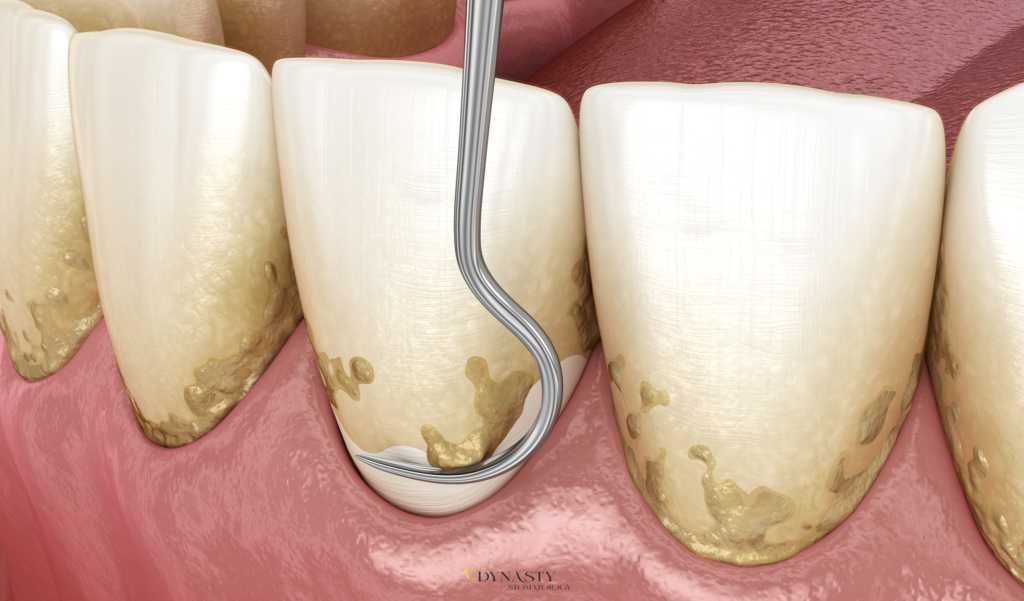
Secondary decay may develop around the edges of a dental crown or filling, particularly when the restoration loses its seal and bacterial plaque accumulates. This process may occur without visible changes on the tooth surface.
Possible symptoms include sensitivity to cold and sweet foods, occasional pain, and bad breath. However, in its early stages, secondary decay may cause no symptoms at all.
Pulp Inflammation as an Indication for Root Canal Treatment
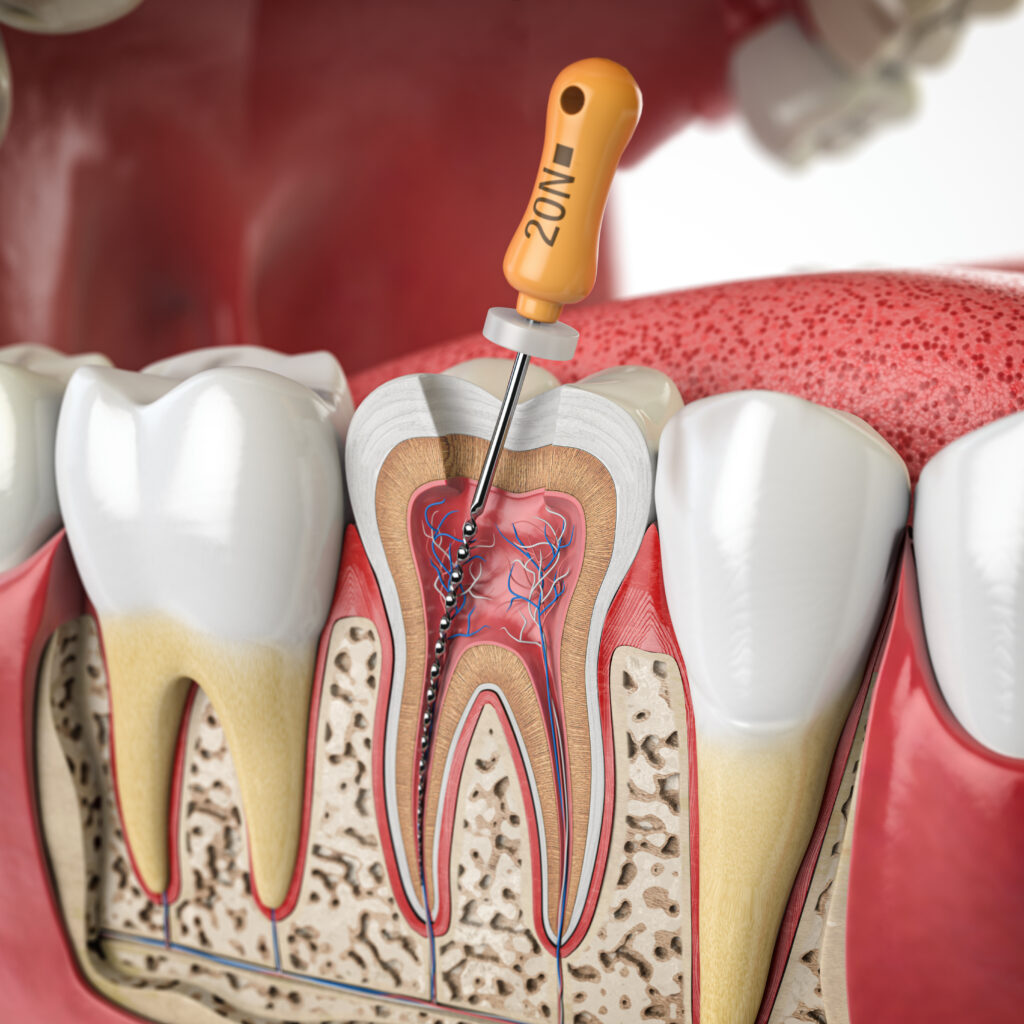
The dental pulp is tissue containing blood vessels and nerve fibers. Inflammation may develop as a result of advanced decay, mechanical trauma, or irritation during tooth preparation for a dental crown.
Typical symptoms may include spontaneous, throbbing pain and a prolonged response to temperature stimuli. In the case of irreversible inflammation or pulp necrosis, root canal treatment may be necessary to preserve the tooth.
Tooth Abscess and Infection of the Tissues Around the Root Tip
An infection of the tissues around the root tip of a tooth under a dental crown may lead to the formation of an abscess. Typical symptoms include severe, throbbing pain, swelling of the gums or face, a feeling of pressure, and the presence of pus discharge.
This condition requires urgent dental intervention. Pain medication may only temporarily relieve symptoms without eliminating the cause of the infection.
Pain When Biting – Gum Disease and Tooth Cracks
Pain when biting is not always related to tooth decay. It may result from improper bite contacts, periodontal disease, or a cracked tooth beneath a dental crown.
It is diagnostically important to determine whether symptoms occur only while chewing or also in response to temperature stimuli. This allows the dentist to narrow down the possible causes of pain and select appropriate diagnostic procedures.
Incorrect Crown Height and Bite Problems
An improperly adjusted dental crown height may lead to excessive pressure on the tooth when biting. Typical symptoms include a feeling that the teeth make contact too early, discomfort while chewing, and tenderness around the treated tooth.
During the examination, the dentist assesses bite contacts and, if necessary, adjusts the crown to restore the proper distribution of chewing forces.
Gum Inflammation and Recession Around a Dental Crown
The buildup of bacterial plaque around the edges of a dental crown may lead to gum inflammation, manifested by redness, swelling, tenderness, and bleeding during brushing.
Gum recession, which involves the lowering of the gumline, may expose the root surface and increase sensitivity to temperature stimuli. In such cases, a periodontal assessment and appropriate adjustment of oral hygiene practices are important.
Tooth Microcracks and Root Cracks as Causes of Pain
Tooth microcracks or a root crack may cause sharp, recurring pain when biting, especially when chewing hard foods. Symptoms often occur irregularly, which can make it difficult to identify their cause.
Diagnosis includes a clinical examination and, where indicated, appropriate imaging tests. Until the consultation, it is recommended to avoid putting excessive pressure on the painful tooth.
Pain Under a Filling vs. Pain Under a Crown – Key Differences
Tooth pain under a filling and a dental crown may have similar causes, such as secondary decay, pulp irritation, or loss of the restoration’s seal. The differences mainly concern the extent of tooth tissue restoration and the options for potential treatment.
|
Problem |
Tooth Under a Dental Crown |
Tooth With a Filling |
|
Secondary decay |
May develop around the crown margins |
May occur at the edges of or beneath a leaking filling |
|
Pain when biting |
May result from bite overload or a cracked tooth |
May be related to a filling that is too high or damage to the tooth structure |
|
Repair options |
In some cases, crown replacement is necessary |
Adjustment or replacement of the filling is possible |
|
Condition of the dental pulp |
Root canal treatment may be necessary in the case of irreversible pulp inflammation |
Advanced changes may also require root canal treatment |
Tooth Sensitivity After a Filling Is Placed
Temporary sensitivity after a filling is placed may result from pulp irritation during cavity preparation, especially in cases of deep decay. Symptoms should gradually subside.
Persistent, worsening, or spontaneous tooth pain requires a dental check-up to rule out complications.
Indications for Filling Replacement or Further Tooth Treatment
Replacing a filling may be necessary if it is damaged, loses its seal, or secondary decay develops. If improper bite contacts are causing the symptoms, adjustment of the filling may be sufficient.
In the case of irreversible inflammation or pulp necrosis, the dentist may recommend root canal treatment.
Methods of Treating Tooth Pain Under a Crown or Filling
The treatment method for pain under a dental crown or filling depends on the diagnosed cause. In cases of gum disease, periodontal treatment may be indicated; for bite overload, bite contact adjustment may be needed; while loss of restoration seal may require its replacement. Decay or pulp disease may indicate the need for restorative or root canal treatment.
The main goal of therapy is to eliminate the cause of symptoms and preserve the natural tooth, if its clinical condition allows. Before treatment begins, the dentist presents the available treatment options, anticipated stages, and associated costs.
Does Root Canal Treatment Require Removal of a Dental Crown?
Root canal treatment does not always require removal of a dental crown. In some cases, the procedure can be performed through a properly prepared opening in the existing restoration.
The decision depends on the crown’s seal and technical condition, the material it is made from, and the ability to access the root canals. The dentist also assesses whether the crown will still be able to function properly after treatment is completed.
What Does a Dental Consultation Involve and Why Is It Necessary?
Before a dental consultation, it is worth preparing information about the duration and nature of the pain, factors that worsen the symptoms, and the date when the dental crown or filling was placed. Previous radiological documentation may also be helpful.
Based on the diagnostics performed, the dentist presents the possible causes of the symptoms, proposed treatment methods, treatment stages, and anticipated costs.
How Can You Relieve Pain Before Your Appointment and Prevent Symptoms From Returning?
Until your dental appointment, it is recommended to avoid chewing hard foods on the side of the painful tooth and to maintain gentle, thorough oral hygiene. Pain medication should be used according to the package leaflet, taking contraindications into account. Do not attempt to alter the dental crown or filling yourself.
Prevention includes regular tooth brushing, cleaning between the teeth, and monitoring the condition of dental restorations. Proper hygiene helps reduce the risk of secondary decay and gum inflammation.
If you experience pain under a dental crown or filling, we encourage you to schedule a dental consultation at Dynasty Stomatology by calling +48 576 676 266.
Frequently Asked Questions
-
Pain appearing several years after a dental crown was placed may indicate secondary decay, inflammatory changes, or tooth damage. Determining the cause requires a dental examination and, if indicated, radiological diagnostics.
-
The cause may be an uneven restoration surface, damage to the restoration, or an improper fit. If floss regularly catches or frays during cleaning, a dental check-up is recommended.
-
Yes. Decay may develop around the edges of a crown even if it does not show any visible irregularities externally. Regular check-ups make it possible to detect changes that may go unnoticed by the patient.
-
Yes, but extraction is considered primarily when the degree of tooth damage makes effective treatment or further preservation impossible. The decision depends on the condition of the root, surrounding tissues, and prognosis.
-
In some cases, this is possible. It depends on the crown’s technical condition, its seal, and the extent of treatment performed. The dentist decides whether the restoration can be reused after a clinical assessment.