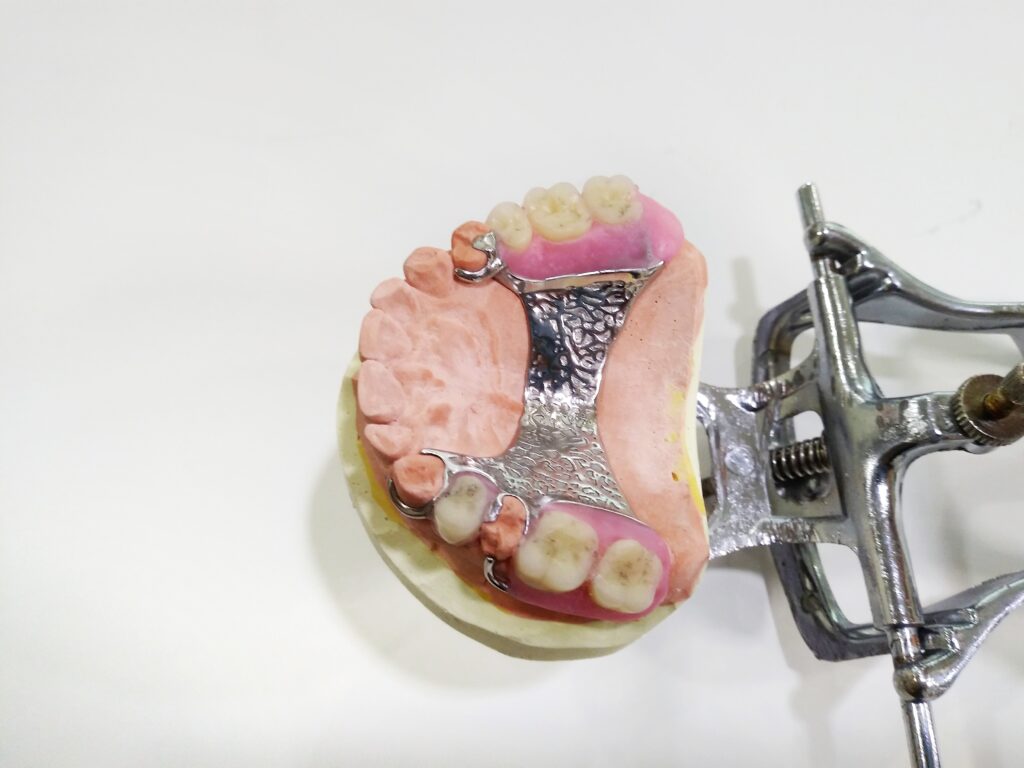

The process of full prosthetics restoration is actually more extensive than it might seem at first glance. It involves restoring the entire dentition: the bite, chewing function, tooth proportions and long-term stability. This was precisely the request we received from a patient — she wanted a comprehensive transformation of her smile and a predictable result that would last for years.
She made it clear straight away: she wasn’t interested in half-measures. No stopgap solutions to mask the problem. Only comprehensive orthopaedic rehabilitation.
The initial situation: why it wasn’t possible to simply fit crowns
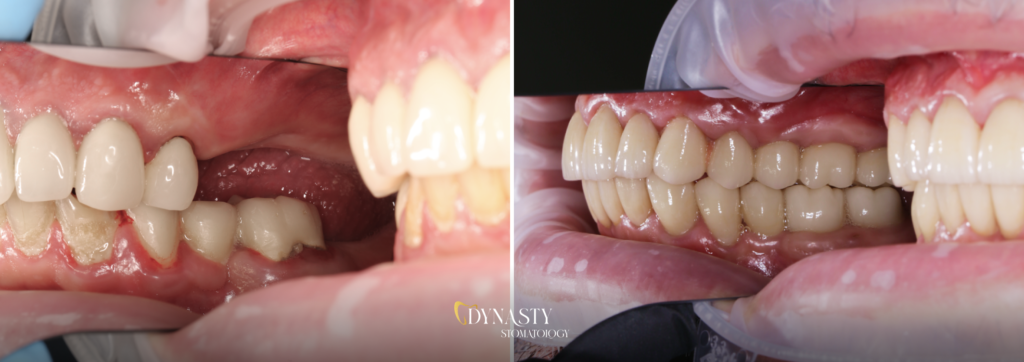
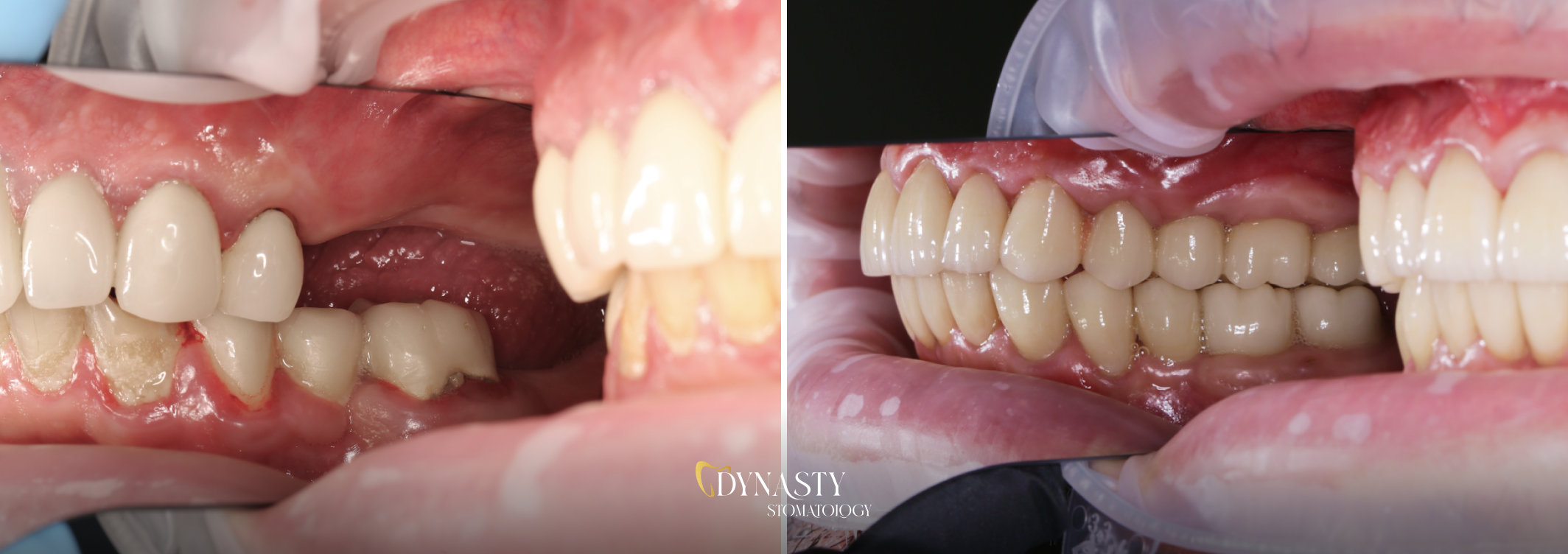
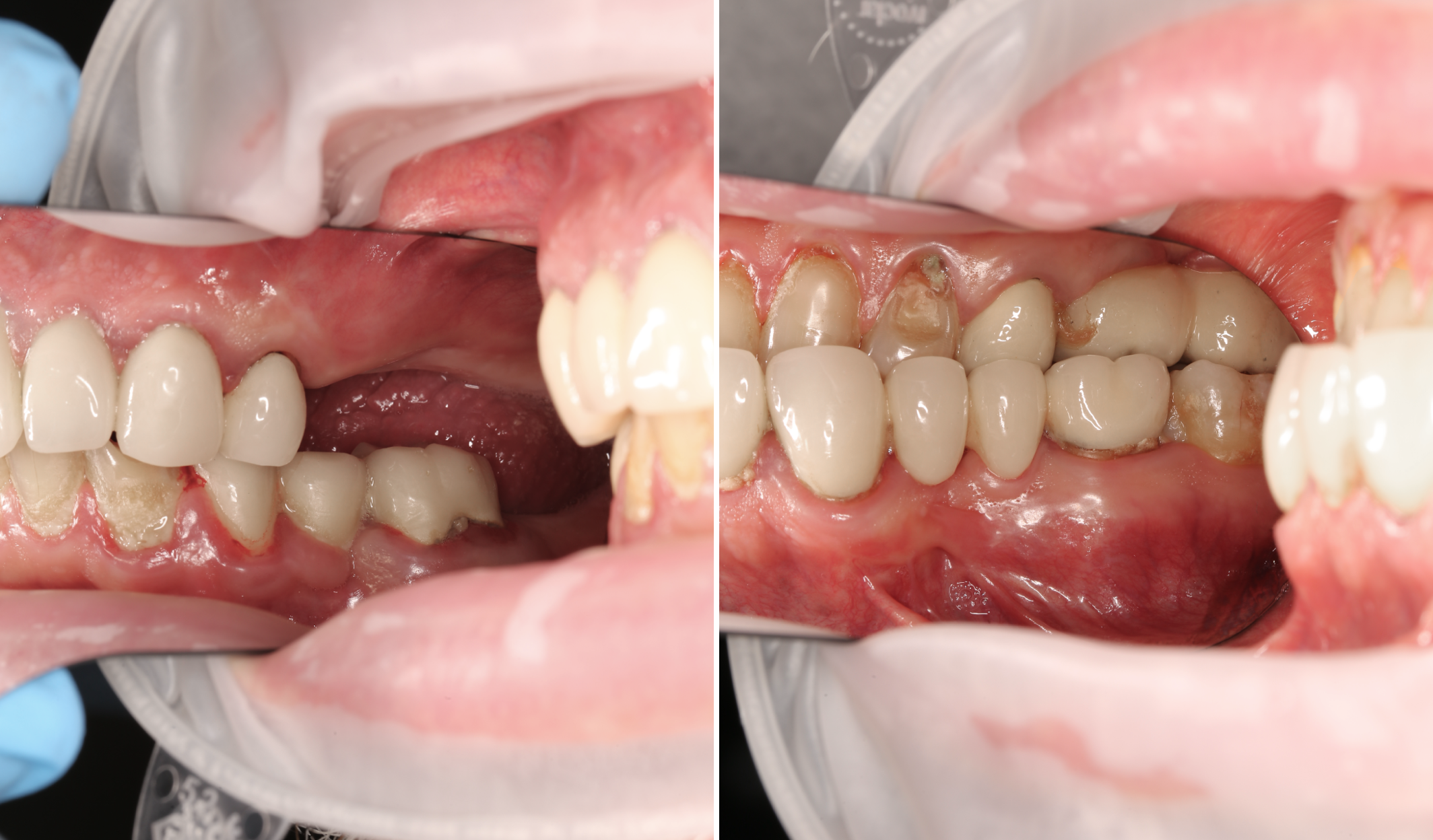
During the initial consultation, it became clear that aesthetic restoration within the existing bite would be a mistake. The bite was functionally unstable: occlusal contacts were uneven, the load was distributed incorrectly, and some teeth were in the wrong spatial position.
In addition, teeth were missing in positions 3.6 (lower left first molar) and 1.6 (upper right first molar). This was already placing excessive strain on other segments of the dental arch. A bone deficiency was observed in the area of the missing teeth. There were also teeth requiring therapeutic treatment and replacement of old restorations.
In such a situation, fitting crowns without prior preparation would simply be setting ourselves up for problems down the line. The restorations would be operating within an unstable system, which would almost certainly shorten their lifespan.
That is precisely why a fundamental decision was taken: first to establish the correct functional foundation, and only then to proceed with prosthetics.
Diagnosis as the foundation of treatment
We carried out a comprehensive diagnostic assessment: photographic records, an orthopantomogram, a CBCT scan, digital imaging and orthodontic assessment. This enabled us to evaluate not only the condition of individual teeth, but also the biomechanics of the entire dental system.
Following the assessment, it became clear that stable prosthetic treatment would not be possible without orthodontic preparation. It was necessary to align the teeth, establish a correct bite, prepare space for the future implants and restore the bite height.
We discussed two options with the patient. The first involved prosthetic treatment without an orthodontic phase. Whilst theoretically possible, this carries a high risk of overloading and instability. At our clinic, we do not consider this approach to be acceptable.
The second option involved comprehensive rehabilitation comprising orthodontics, a surgical phase, implantation and final prosthetic restoration. It was this option that was chosen.
Treatment plan: 18–24 months of systemic treatment
The treatment was scheduled to last 18–24 months. We began with a comprehensive oral hygiene programme and professional cleaning. This was followed by orthodontic treatment using braces to achieve a stable bite.
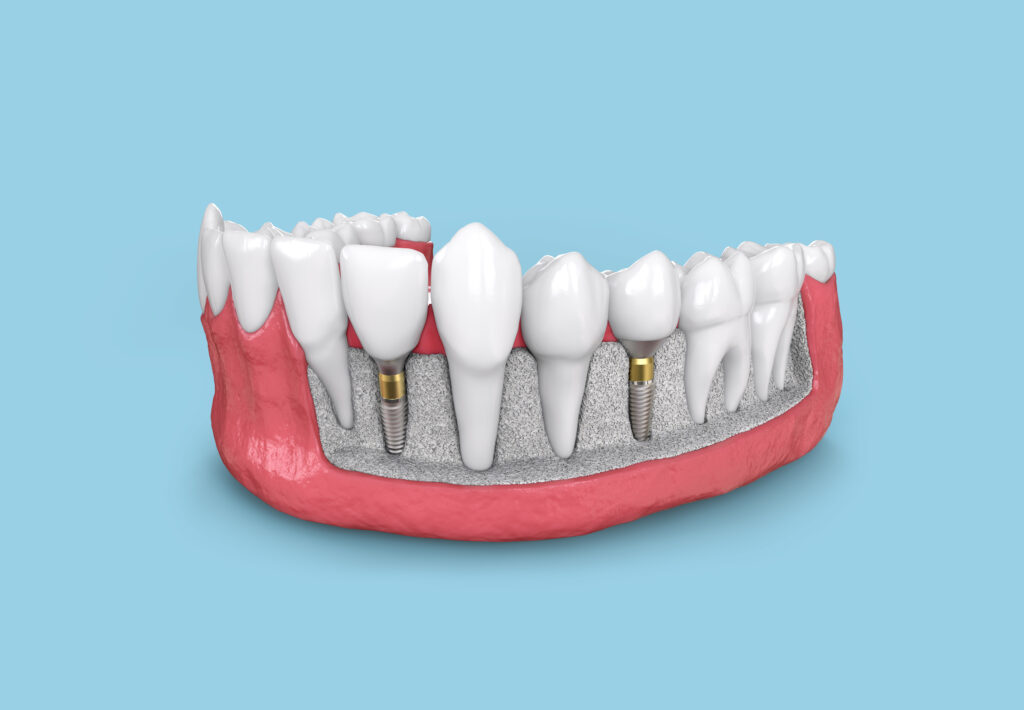
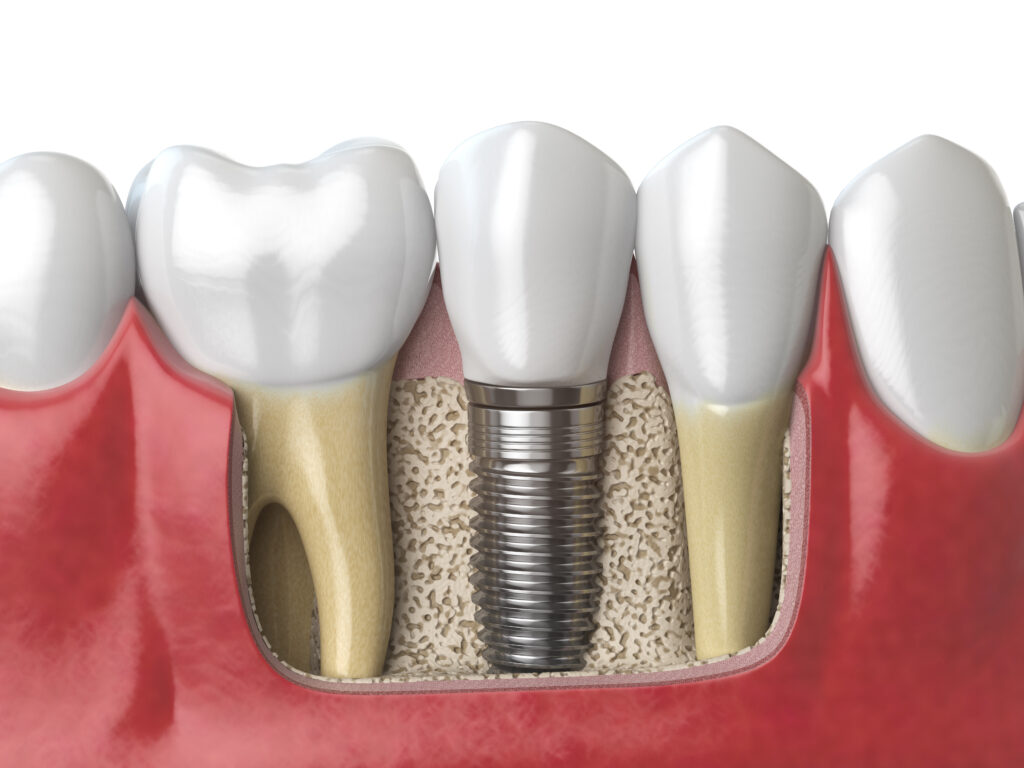
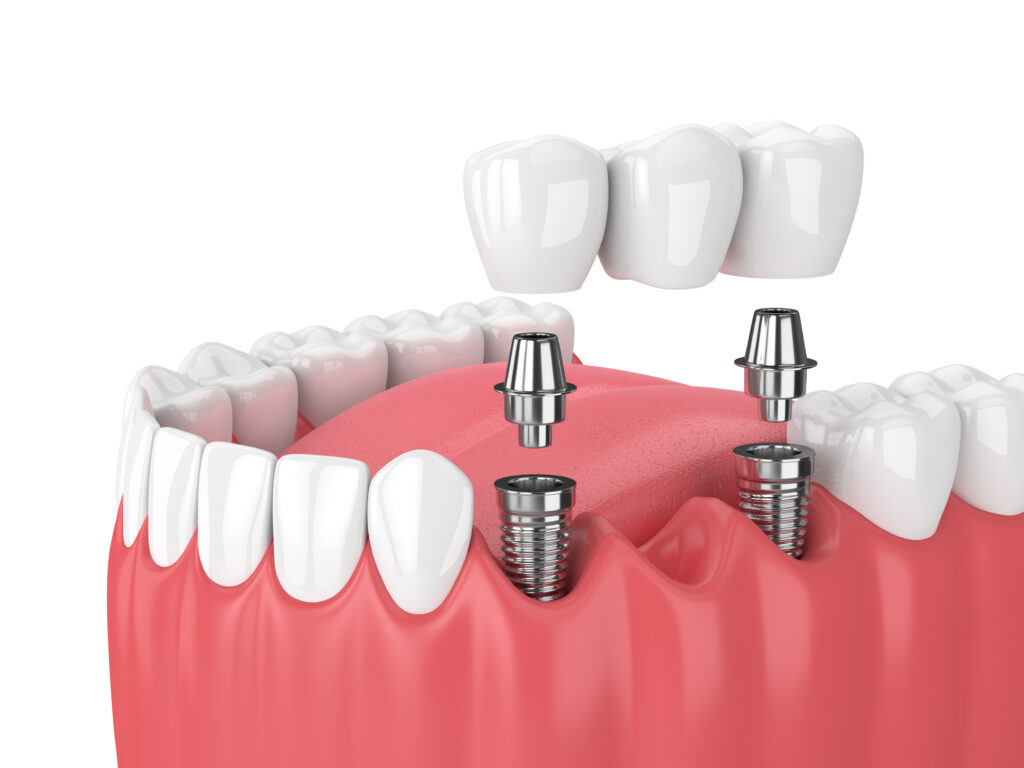
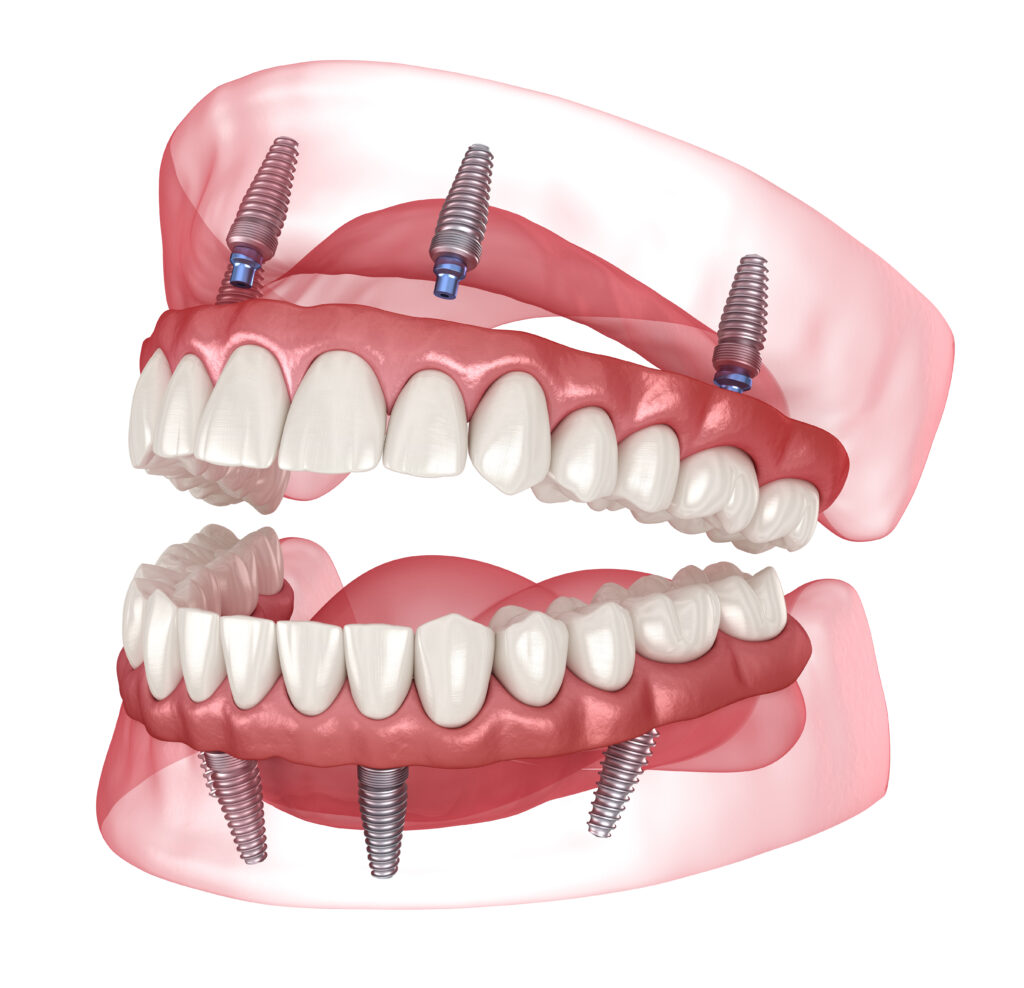
Once the teeth had been correctly positioned, the surgical phase was carried out: removal of the wisdom teeth, implantation in positions 3.6 and 1.6, and bone augmentation in the area of tissue deficiency.
Following the osseointegration phase, we moved on to the prosthetic stage. Ceramic crowns were fitted onto the implants. In the anterior region, IPS e.max crowns were chosen for their combination of high aesthetics and strength.
It was crucial not simply to “repair the defect”, but to restore the correct functional occlusal height and an even distribution of the load.
Monitoring at every stage
In comprehensive rehabilitation, no stage is of secondary importance. Therapeutic preparation lays a healthy foundation. Orthodontics ensures proper function. The surgical stage requires precision and biological control of the tissues. Prosthodontics determines both aesthetics and long-term stability.
Throughout the treatment, follow-up X-rays, a photographic record, an analysis of occlusal contacts and fittings of temporary restorations were carried out. This made it possible to assess the interim results and make adjustments to the details prior to the final stage.
There were no clinically significant complications, but the treatment required careful planning and discipline on the part of the patient.
The result: a balance between function and aesthetics
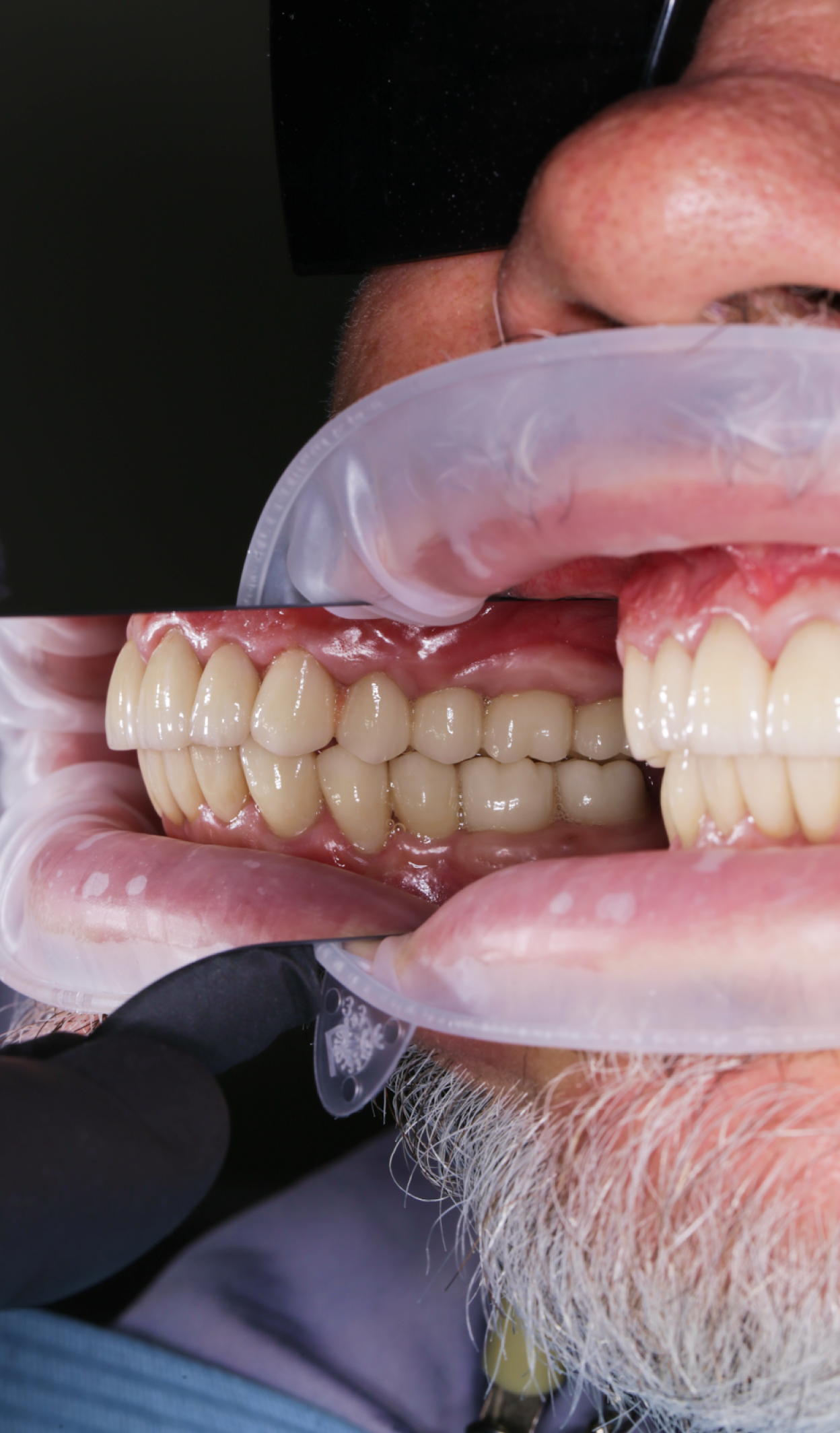
Ultimately, stable occlusion and complete osseointegration of the implants were achieved. Masticatory function has been restored, the load is distributed evenly, and the bite is stable.
Aesthetically — a harmonious smile line, correct proportions of the front teeth and a natural appearance of the restorations.
For a dentist, however, the key measure of success is not just a beautiful smile. It is when a patient can speak with confidence, chew comfortably, feels no discomfort and does not feel as though they are living with a “temporary solution”.
Why a comprehensive approach to treatment is important
Full prosthetics involves restoring the entire dentition, rather than individual teeth. If the procedure is carried out without a clear plan, in a piecemeal manner and without analysing function, there is a risk of incorrect load distribution, premature wear of the prostheses and the need for repeat treatment.
The most common mistake patients make is to delay getting an implant after losing a tooth. This leads to bone loss and complicates further treatment. Another common mistake is to have individual crowns fitted without a comprehensive treatment plan.
In complex cases, dental prosthetics is no longer just about aesthetics, but about health. Malocclusion affects the temporomandibular joint, the masticatory muscles, digestion and overall quality of life.
If you are considering comprehensive rehabilitation, book a consultation to receive a photographic record and a detailed treatment plan.
We will present the true picture and propose a clear path to a stable outcome.