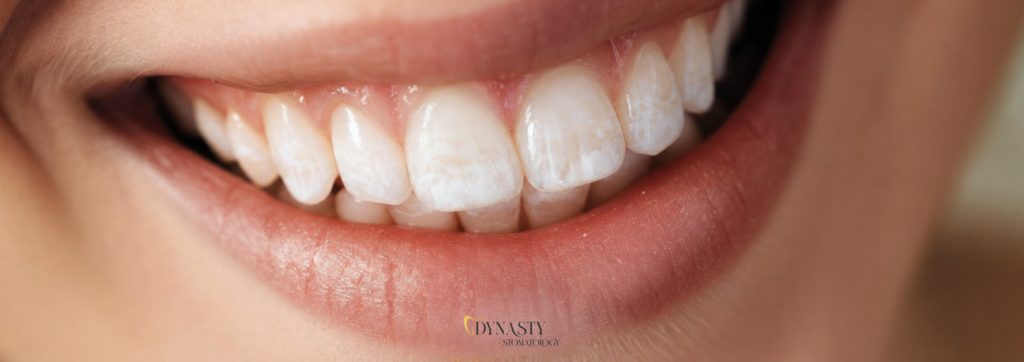

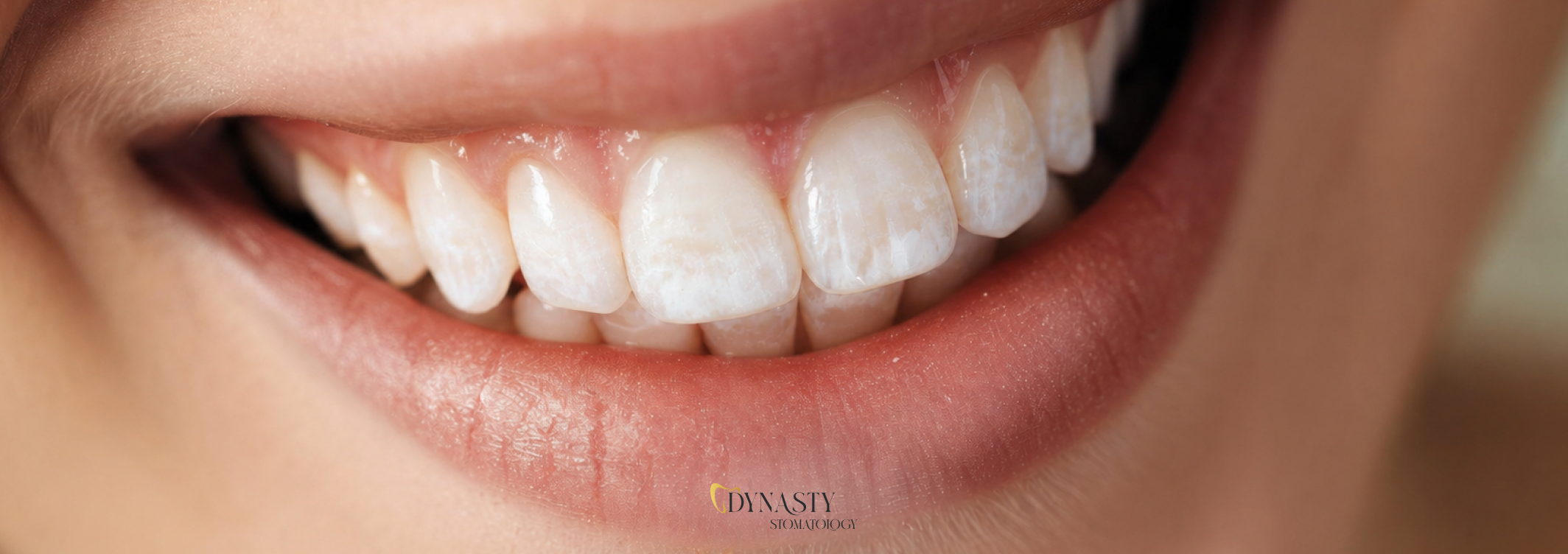
A white spot on a tooth may look like a minor cosmetic flaw, but it is not always purely an aesthetic issue. Sometimes it is the first visible sign of enamel demineralization; at other times, it is a trace of a condition that developed while the tooth was still forming.
That is why, before whitening, filing, or attempting to remove the spot at home, it is worth determining what caused it. The cause matters not only for the tooth’s appearance but also for choosing a safe course of action.
What Are White Spots on Teeth and When Should You Consult a Dentist?
White spots on teeth are changes in the enamel that may indicate mineral loss, early tooth decay, or a developmental defect of the tooth. However, the appearance of the spot alone is not enough to diagnose the problem or choose treatment.
It is worth booking an appointment if the spot is dull, chalky, rough, growing larger, appears near the gum line, or develops around orthodontic brackets. A consultation is also needed in cases of tooth sensitivity, pain, a change in color to yellowish or brown, or when a parent notices a change on a child’s newly erupted tooth.
Not every white spot requires drilling. Early enamel demineralization can often be stopped with conservative methods if it is identified early enough.

Causes of White Spots on Teeth
The causes of white spots on teeth can be divided into acquired and developmental causes. Acquired changes are most often linked to enamel demineralization, meaning mineral loss caused by acids produced in bacterial plaque. Developmental changes occur earlier, during tooth formation.
Possible causes also include enamel hypoplasia, meaning underdevelopment of the enamel, and fluorosis. Proper diagnosis is important because an active carious lesion is treated differently from a stable discoloration or enamel defect.
Early Tooth Decay and Enamel Demineralization
Early enamel demineralization develops when bacteria in dental plaque use sugars and produce acids that weaken the tooth surface. The risk increases with frequent snacking, sweet drinks, acidic foods, and inadequate tooth cleaning.
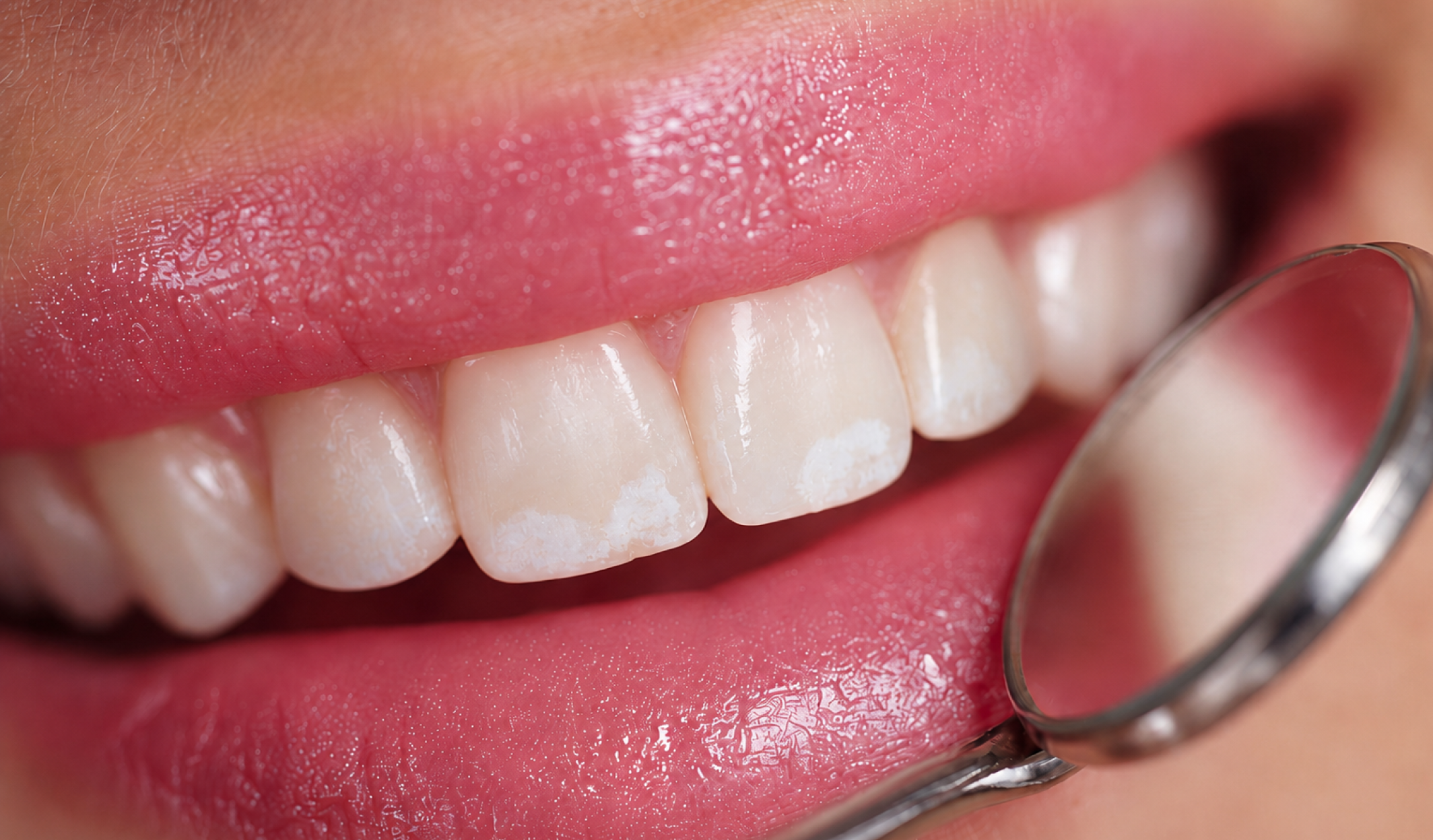
A typical lesion has a dull, chalky-white appearance. It often occurs near the gums, between teeth, or around orthodontic appliances. At this stage, the process can sometimes be stopped without removing tooth tissue, but this requires dental monitoring and consistent prevention.
Enamel Hypoplasia and Other Tooth Development Disorders
Enamel hypoplasia means that the enamel is thinner, uneven, or did not form properly. The change may look like a white or yellowish spot, a depression, a groove, or an area with a different texture than the rest of the tooth.
It may affect one tooth or multiple teeth. Such a surface can be more prone to wear, discoloration, and tooth decay, so the dentist evaluates both aesthetics and the condition of the enamel’s protective layer.
Fluorosis and White Discoloration Caused by Fluoride
Fluorosis is a condition that develops during tooth formation as a result of excessive fluoride intake. It may be visible as diffuse, symmetrical white streaks or spots, usually on several teeth.
Fluorosis should not be confused with active caries-related demineralization. Fluoride used according to a dentist’s recommendations remains an important part of tooth decay prevention, especially in children at increased risk of developing cavities.
White Spots on Teeth in Children and Adults
In children, white spots may affect baby teeth as well as newly erupted permanent teeth. In these cases, developmental enamel changes and protecting immature enamel from decay are particularly important.
In adults, the assessment more often includes daily oral hygiene, diet, snacking frequency, gum health, and orthodontic treatment history. Every patient requires an individual assessment—the same-looking spot may have different causes.
What Can White Spots on a Child’s Teeth Mean?
A white spot on a child’s tooth is not a reason for a parent to feel guilty, but it should not be ignored. A prompt check-up is especially recommended if the change becomes rough, grows larger, is located close to the gum line, or the child reports sensitivity.
The dentist can assess the risk of tooth decay, show parents effective brushing techniques, and plan preventive care. Depending on the situation, this may include dental sealants or fluoride treatments following an appropriate assessment.
Why Do White Spots Appear in Adults?
In adults, the problem is often associated with plaque buildup, gum recession, frequent eating between meals, and drinking acidic beverages. Cleaning may also be more difficult around orthodontic brackets, under the archwire, and near wisdom teeth.
Before whitening teeth on your own, it is worth having an examination. Whitening does not stop active tooth decay, and color contrast may temporarily make white spots more noticeable.
How Are White Spots on Teeth Diagnosed?
Diagnosing white spots is a calm, step-by-step examination. The dentist asks about oral hygiene, diet, sensitivity, when the changes appeared, orthodontic treatment, and previous dental problems, among other things.
Next, the dentist evaluates the tooth surfaces, often after drying them, as differences in enamel are more visible then. They also check areas where plaque tends to accumulate, the condition of the gums, and the individual risk of tooth decay.
At Dynasty Stomatology, diagnostic imaging is available on site, but X-rays are taken only when there are clinical indications. Only after identifying the cause can remineralization, resin infiltration, or aesthetic restoration be discussed safely.
How Can Active Demineralization Be Distinguished From Inactive Discoloration?
The dentist assesses not only the color of the spot but also its shine, texture, location, and surrounding area. Active demineralization is often dull and occurs in areas where bacterial plaque easily accumulates.
An inactive change may be smoother and shinier, but this is not a rule that allows for self-diagnosis. A photo taken with a phone cannot replace an examination in a dental office.
When Is an X-ray or Additional Assessment Needed?
An X-ray may be needed when the dentist suspects a lesion hidden between the teeth, decay in a hard-to-reach area, or wants to assess the depth of the process before treatment. It is not a mandatory examination for everyone with a white spot.
The decision depends on the oral examination, the risk of tooth decay, and whether the X-ray result will genuinely affect the treatment plan.
Treatment of White Spots on Teeth: From Remineralization to Aesthetic Restoration
Treatment for white spots depends on their cause, depth, activity, and the patient’s aesthetic expectations. The first step is always to protect healthy enamel and manage active tooth decay, rather than automatically masking the change.
|
Method |
When It May Be Considered |
Main Goal |
|
Oral hygiene and diet review |
In cases of increased tooth decay risk |
Limiting further demineralization |
|
Remineralization |
For early, non-cavitated lesions |
Stopping the process and strengthening enamel |
|
Resin infiltration |
For selected superficial lesions |
Improving appearance without extensive filing |
|
Microabrasion |
For certain shallow enamel discolorations |
Gently smoothing the surface |
|
Filling |
When a cavity has formed or the enamel is damaged |
Restoring tooth function and shape |
|
Veneers or other prosthetic restorations |
For more significant aesthetic concerns after assessment |
Long-lasting improvement in the appearance of teeth |
Remineralization and Stopping Early Tooth Decay
In cases of early demineralization, the dentist may recommend more thorough oral hygiene, reducing frequent exposure to sugars and acids, and products that support remineralization. Follow-up visits are also needed to assess whether the lesion remains stable.
The main goal is to stop the decay process. A white spot does not always disappear completely right away, but healthy and stable enamel is more important than an immediate cosmetic result.
Infiltration, Microabrasion, Fillings, and Veneers
Resin infiltration involves introducing a material into the porous structure of a selected enamel lesion. It may improve its appearance and reduce the visibility of the spot, but it is not suitable in every case.
Microabrasion may be considered for certain superficial discolorations. If the spot is associated with a cavity or weakening of the tooth, a filling may be a better solution. Veneers are used after careful planning when less invasive methods do not provide an acceptable result. The color, location, and depth of the change affect the outcome of every procedure.
How Can New White Spots Be Prevented?
Prevention involves daily habits that limit bacterial plaque and frequent exposure of enamel to acids. The most practical steps include:
- brushing your teeth twice a day with toothpaste selected for your age and risk of tooth decay;
- cleaning between the teeth with floss, interdental brushes, or another method recommended by your dentist;
- limiting frequent snacking on sweet foods and sipping sweet or acidic drinks;
- drinking water between meals;
- attending regular check-ups and professional dental cleanings;
- cleaning especially thoroughly around orthodontic appliances.
It is not advisable to scrub away spots using home methods or to use random whitening products. Such actions may irritate the gums or damage the enamel surface and will not remove the cause of the problem.
Dental Consultation: How Should You Prepare for Treatment of White Spots?
Before your appointment, it is worth recalling when the spots were first noticed and whether their appearance has changed. Information about the toothpaste and toothbrush you use, diet, sensitivity, orthodontic appliances, and previous issues with tooth decay can be helpful.
After the examination, the dentist will explain whether the change requires observation, preventive care, conservative treatment, or an aesthetic procedure. The plan may include several stages, especially if the enamel condition needs to be stabilized and oral hygiene improved first.
The cost depends on the number of teeth, the type of change, and the chosen method. An exact estimate can only be determined after a consultation and discussion of safe treatment options. At Dynasty Stomatology, patients receive a plan explaining the next steps, without being pressured into unnecessary procedures.
Frequently Asked Questions
-
No, white spots on teeth do not always mean tooth decay. They may be a sign of early demineralization, but they can also result from enamel hypoplasia, fluorosis, or stable developmental discoloration. A dentist assesses their surface, location, and activity, so it is best not to make a diagnosis based on appearance alone.
-
You should not try to remove white spots with home methods. Abrasive toothpastes, acids, and random products may damage enamel or irritate the gums. Home oral hygiene is important for stopping demineralization, but the choice of treatment—remineralization, infiltration, or restoration—should be based on a dental examination.
-
Teeth whitening usually does not remove white spots and may sometimes make them more visible because of color contrast. It also does not treat active demineralization or a cavity caused by tooth decay. Before whitening, the condition of the enamel should be assessed, active changes should be treated, and only then should improving tooth color be considered.
A white spot does not always mean tooth decay, but its appearance should not be assessed solely based on a reflection in the mirror. The earlier the cause is determined, the more options there are for conservative and minimally invasive treatment. If you notice a change on your own tooth or your child’s tooth, book a consultation at Dynasty Stomatology.