
Many people struggle with stained or uneven teeth that affect their smile and confidence. Teeth polishing can help address these issues, leaving your teeth looking smoother and brighter. Understanding what the procedure involves can help you decide if it’s worth adding to your dental care routine.
What Is Teeth Polishing?
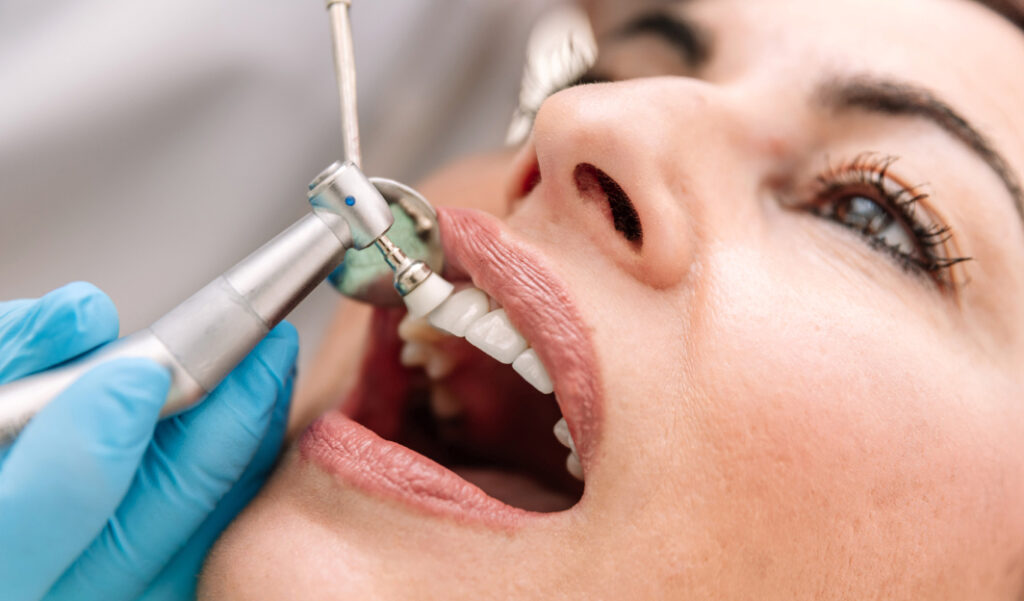
Teeth polishing is a dental procedure designed to remove surface stains and plaque, leaving the teeth smooth and shiny. This procedure not only improves the appearance of your teeth but also helps protect enamel and maintain overall oral health. Polishing is often performed during a routine dental hygiene visit to enhance your smile and maintain long-term oral health.
Who Can Get Teeth Polishing?
Polishing can benefit a wide range of patients, especially those looking to enhance their smile and maintain healthy teeth.
- People With Extrinsic Teeth Stains. Ideal for individuals with discoloration from coffee, tea, or smoking, helping to remove visible stains and improve smile appearance.
- Individuals With Dental Plaque. Helps eliminate accumulated plaque, smooth the tooth surface, and support long-term enamel protection during regular dental visits.
What Does Polishing Teeth Do?
Teeth polishing addresses common dental concerns while enhancing enamel protection and overall oral care:
- Tartar Removal. Polishing helps remove hardened tartar buildup, reducing the risk of gum disease and supporting overall dental health.
- Get Rid Of Teeth Stains. Effective at removing extrinsic stains caused by coffee, tea, smoking, or other foods, leaving your teeth visibly whiter and enhancing your smile.
- Gives Teeth A Glossy Appearance. Smooths the tooth surface, creating a glossy finish that improves the overall look of your teeth and makes them easier to clean in the future.
Understanding what does teeth polishing do helps patients appreciate its benefits. Check out our teeth polishing before and after photos to see the visible improvement in tooth surface smoothness and whiteness.
Benefits of tooth polishing
Tooth polishing provides several important advantages that go beyond aesthetics, contributing to overall oral and systemic health:
- Prevents Cavities. By removing plaque and food particles with a dental polishing procedure, professional polishing reduces the risk of enamel decay and cavities.
- Freshens the Breath. Polishing removes odor-causing bacteria, leaving your mouth cleaner and breath noticeably fresher.
- Prevents Tooth Loss. Regular removal of tartar and plaque helps maintain healthy gums, reducing the likelihood of periodontal disease and tooth loss.
- Improves Overall Health. Maintaining oral hygiene through dentist cleaning and polishing supports systemic health, as untreated dental issues can contribute to other health conditions.
After professional polishing, teeth appear whiter and have a glossy, smooth surface that enhances your smile.
Teeth Polishing Paste: The Materials Used
During a professional polishing is a procedure, specialized polishing paste for teeth is applied using a polishing tool to remove surface stains and smooth the surface of the teeth.
These pastes often contain mild abrasives, fluoride, and polishing agents that remove stains from teeth, reduce plaque, and protect tooth enamel, leaving teeth cleaner and enhancing a healthy smile. Some pastes are designed for sensitive teeth, while others are more abrasive to remove coffee stains teeth or heavy discoloration.
Regular professional polishing to prevent plaque buildup helps maintain healthy teeth and gums.
How Is Teeth Polishing Done?
Teeth polishing is usually recommended during a professional dental cleaning or if specific dental conditions are detected during a routine dental check-up. The procedure follows several key polish dental procedure steps:
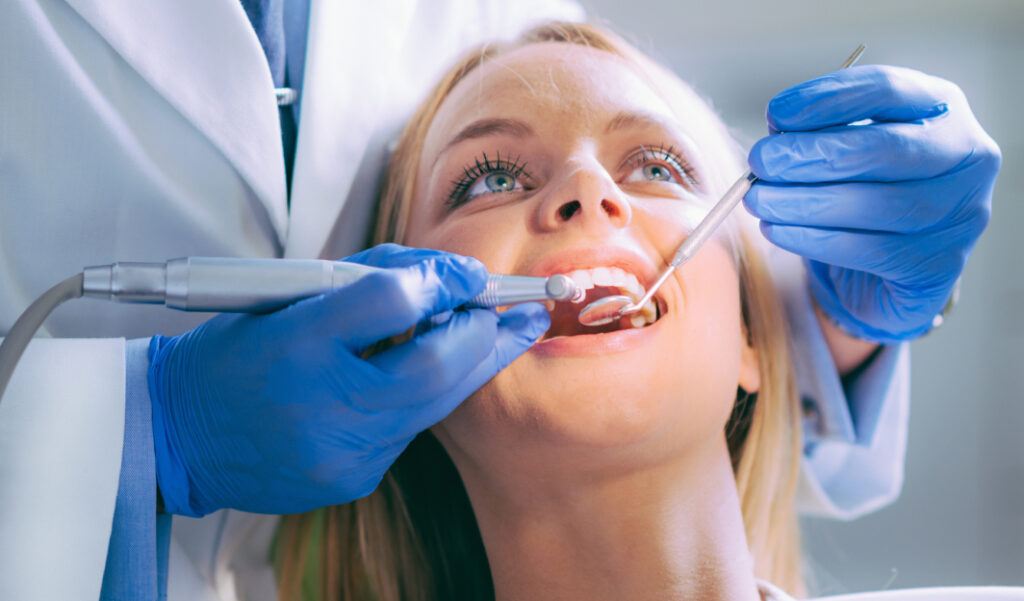
- Teeth Inspection – the dentist examines teeth and gums for plaque and tartar, enamel damage, stains, or dental conditions that may require special attention.
- Scaling – removes plaque and tartar buildup to prepare teeth for polishing and prevent damage the enamel.
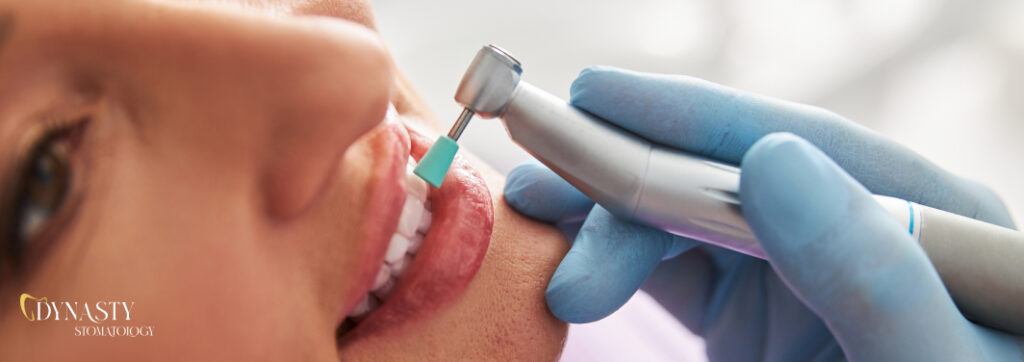
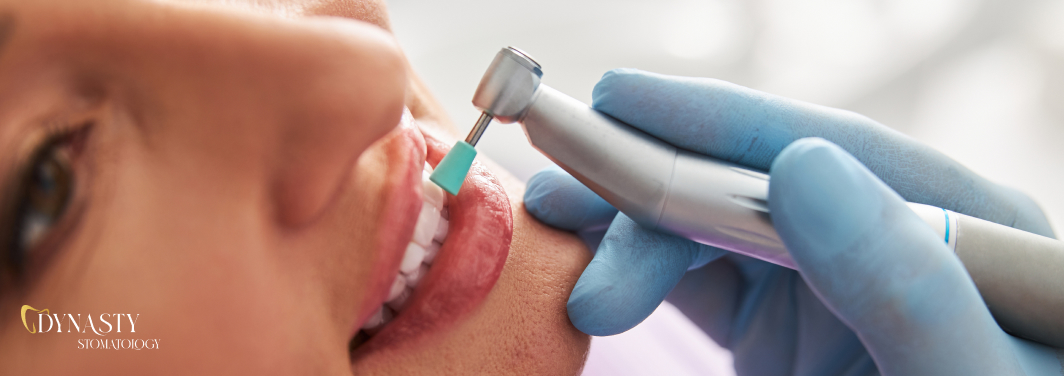
- Application of Polish – a polishing paste is applied with a rubber cup or air polishing device to smooth the surface of the teeth, remove superficial stains, and enhance a healthy smile.
While polishing alone can remove surface stains, combining it with scaling provides more comprehensive dental care.
The exact method and type of polish are individually chosen depending on patient needs. After the procedure, your dentist may provide recommendations regarding diet, oral hygiene, or temporary restrictions to protect sensitive teeth.
Teeth Polishing Vs Teeth Whitening
While both teeth polishing and teeth whitening aim to improve the appearance of your smile, they serve different purposes. Teeth polishing focuses on removing plaque, tartar, and surface stains to create a smooth tooth surface and maintain oral health, whereas teeth whitening targets deeper discoloration to lighten the color of your teeth.
Key differences:
- Teeth Polishing – improves teeth polishing result by removing external stains from coffee, tea, or tobacco, enhances a healthy smile, and supports routine dental cleaning.
- Teeth Whitening – changes tooth color, ideal for intrinsic stains or yellowing, does not remove plaque or tartar.
Both procedures can be performed together during a polishing and whitening session for optimal cosmetic results. Teeth polishing vs whitening comparison helps determine which procedure is most suitable depending on the patient’s goals and dental condition.
Teeth Polishing Side Effects
Although professional teeth polishing is generally safe, some patients may experience minor side effects:
- Temporary tooth sensitivity – especially in patients with sensitive teeth or thin enamel.
- Gum irritation – caused by the polishing method or abrasive polishing paste.
- Enamel wear – if polishing is done too frequently or incorrectly.
- Uneven surface – rare, but improper technique during polishing teeth at dentist visits can leave some areas less smooth.
To avoid complications, it’s important to consult an experienced teeth polishing dentist and not attempt teeth at home polishing. Proper polishing treatments ensure safety and optimal results.
Teeth Polishing at Dynasty Stomatology
At Krakow dental clinic teeth polishing in Dynasty Stomatology, every procedure done is tailored to your individual needs and performed by an experienced dental hygienist using safe, professional techniques. During your visit, our dentist will carefully examine your oral condition, perform scaling and polishing if needed, and select a special polishing paste to clean and polish the teeth gently yet effectively.
Whether you’re looking to make your teeth smoother, remove stains from teeth, or achieve naturally white teeth, we ensure optimal results and lasting freshness. Our dental clinic combines comfort, technology, and expertise to protect your teeth and maintain your healthy smile.
FAQ
-
Yes, polishing helps remove plaque and surface stains to keep your teeth smooth and healthy.
-
Results usually last several months, depending on oral care habits.
-
Prices vary by clinic and location, but dental scaling and polishing cost is generally affordable and covered by some dental insurance plans.
-
You can get your teeth polished and eat right after, though avoiding dark foods helps maintain results.
-
No, tooth polishing is a simple and painless procedure done by a professional hygienist.
-
Most dentists recommend polishing every six months during regular dental appointments. After a dental examination, your dentist will tell you how often polish teeth should be performed specifically for your needs.
-
No, polishing can remove only surface discoloration — deep stains need whitening.
-
Yes, when performed at trusted dental offices, polishing is also safe for sensitive patients.
-
No, traditional polishing uses gentle abrasives that do not harm enamel.
-
You should avoid polishing at home with tooth polishing kits, as DIY methods are not safe and their effectiveness is not guaranteed — it’s best to get your teeth polished by a professional.
-
Professional tooth cleaning removes tartar, while polishing smooths and shines teeth as well.
-
Avoid items that can stain your teeth, like coffee or red wine, for at least 24 hours.
-
Yes, the polishing process eliminates bacteria that cause bad odor.
-
Yes, polishing after scaling helps seal the enamel and protect your teeth from buildup.
-
Air polishing uses a fine powder instead of a cup polishing tool for gentle stain removal.
📍 Krakow | Romanowicza 1/LU3, 30-702
Romanowicza 4B/B.L.U.1, 30-702
📞 In Ukrainian, Russian, English — with understanding and care.