
A whiter smile can boost confidence, but many concerns still surround teeth whitening. Can whitening products really damage enamel? Does sensitivity mean that teeth have been weakened? And are at-home methods as safe as whitening performed under a dentist’s supervision?
In fact, whitening itself does not have to mean enamel damage. However, the condition of the teeth before treatment, the method used, how the product is applied, and following the dentist’s recommendations are all crucial. In this article, we explain how whitening affects teeth, what causes sensitivity, and when treatment can be considered safe.
Does teeth whitening damage enamel? The short answer
Properly assessed and performed teeth whitening should not permanently damage enamel. Products used according to a dentist’s recommendations work mainly on the pigments within the tooth structure, rather than by mechanically removing its outer layer.
Is teeth whitening harmful? The risk increases when someone uses random products without an oral examination, extends the application time, combines several methods at once, or ignores pain and gum irritation. Untreated cavities, leaking fillings, or active gum inflammation can also be a problem.
At Dynasty Stomatology, we first assess the condition of the teeth and the cause of discoloration, and only then discuss the method. This helps patients understand what results they can realistically expect and how to reduce sensitivity.
How does whitening affect enamel and tooth color?
Chemical whitening does not involve “scrubbing away” enamel. The active substance penetrates the surface structures of the tooth and lightens the compounds responsible for a darker shade. Abrasive methods work differently and can mechanically damage the tooth surface.
Why can enamel be temporarily more sensitive?
After whitening, some patients experience short-term sensitivity to cold, heat, sweet, or acidic foods and drinks. It may feel like a sudden sharp twinge or piercing discomfort when drinking cold water. This does not automatically mean permanent enamel damage.
The severity of symptoms depends, among other things, on the teeth’s initial sensitivity, gum condition, product concentration, and how long it remains in contact with the teeth. A dentist can modify the whitening plan, shorten subsequent applications, or recommend products that help manage sensitivity.
If the pain is severe, persists, occurs spontaneously, or is accompanied by noticeable gum irritation, stop using the product and contact the dental office. Safe whitening does not require “waiting out” severe symptoms.
Whitening vs. enamel abrasion: what should you avoid?
The greatest risk to tooth surfaces is linked not to professional whitening, but to aggressive abrasion. Particular caution is needed with vigorous brushing using a hard-bristled toothbrush, frequent use of highly abrasive toothpastes, and at-home methods based on acidic ingredients.
Do not rub lemon, vinegar, salt, or powders with unknown ingredients onto your teeth. Acids can weaken the enamel surface, while scrubbing can worsen wear. Over-the-counter whitening products should also be used only according to the manufacturer’s instructions.
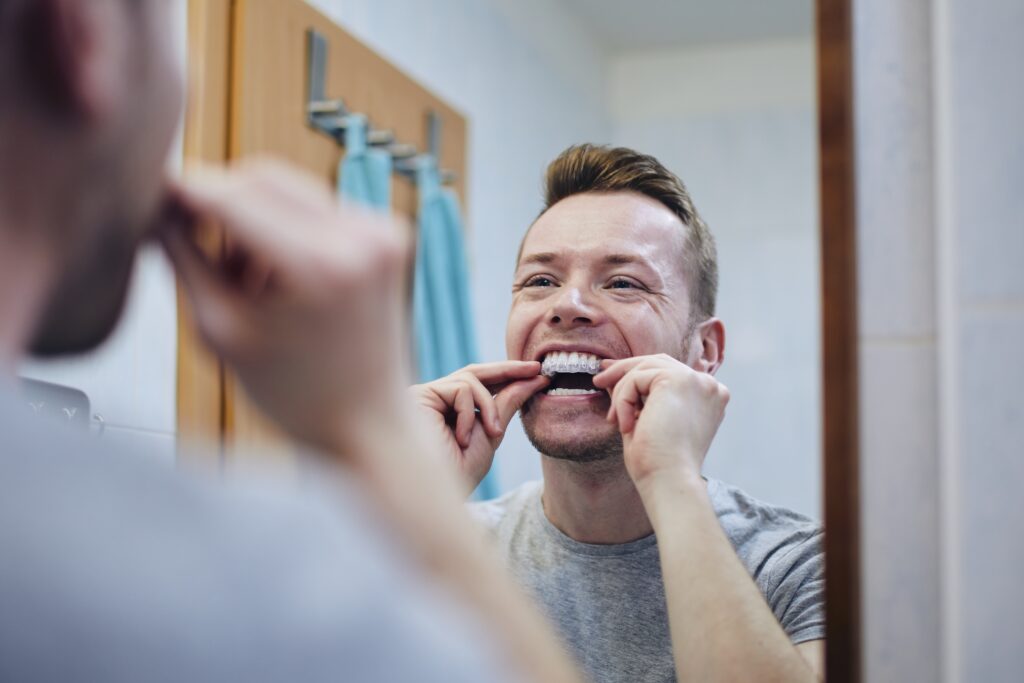
An at-home method is not necessarily unsafe if it has been selected by a dentist, as is the case with custom whitening trays. Diagnosis, the right product, and control over the application time are key.
Teeth whitening methods: safety, effectiveness, and control
Different whitening methods provide different levels of control over the process. The best option depends on the cause of discoloration, the condition of the enamel, the presence of fillings, and the patient’s expectations.
|
Method |
Dentist supervision |
Predictability of results |
Possible limitations |
|
In-office whitening |
High |
Usually good after assessment |
Temporary sensitivity may occur |
|
Dentist-supervised tray whitening |
High, using an individual treatment plan |
Good, depending on regular use |
Requires following recommendations at home |
|
Over-the-counter products |
Limited |
Variable |
It is more difficult to assess contraindications and choose the right method |
|
Abrasive toothpastes and methods |
No medical supervision |
Mainly affects surface stains |
Excessive use may wear down tooth surfaces |
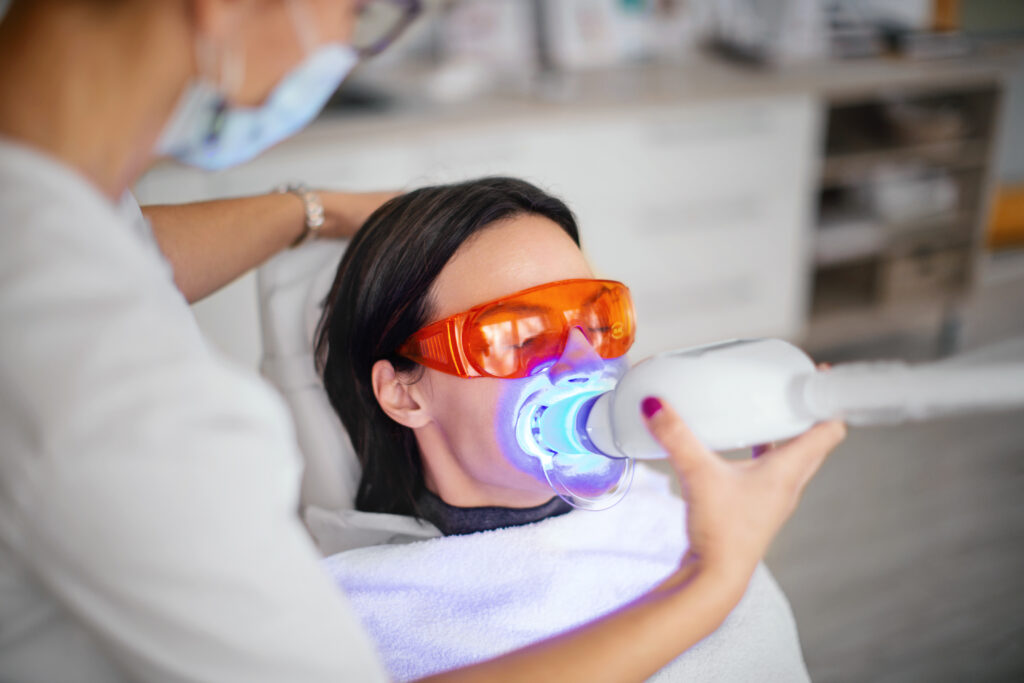
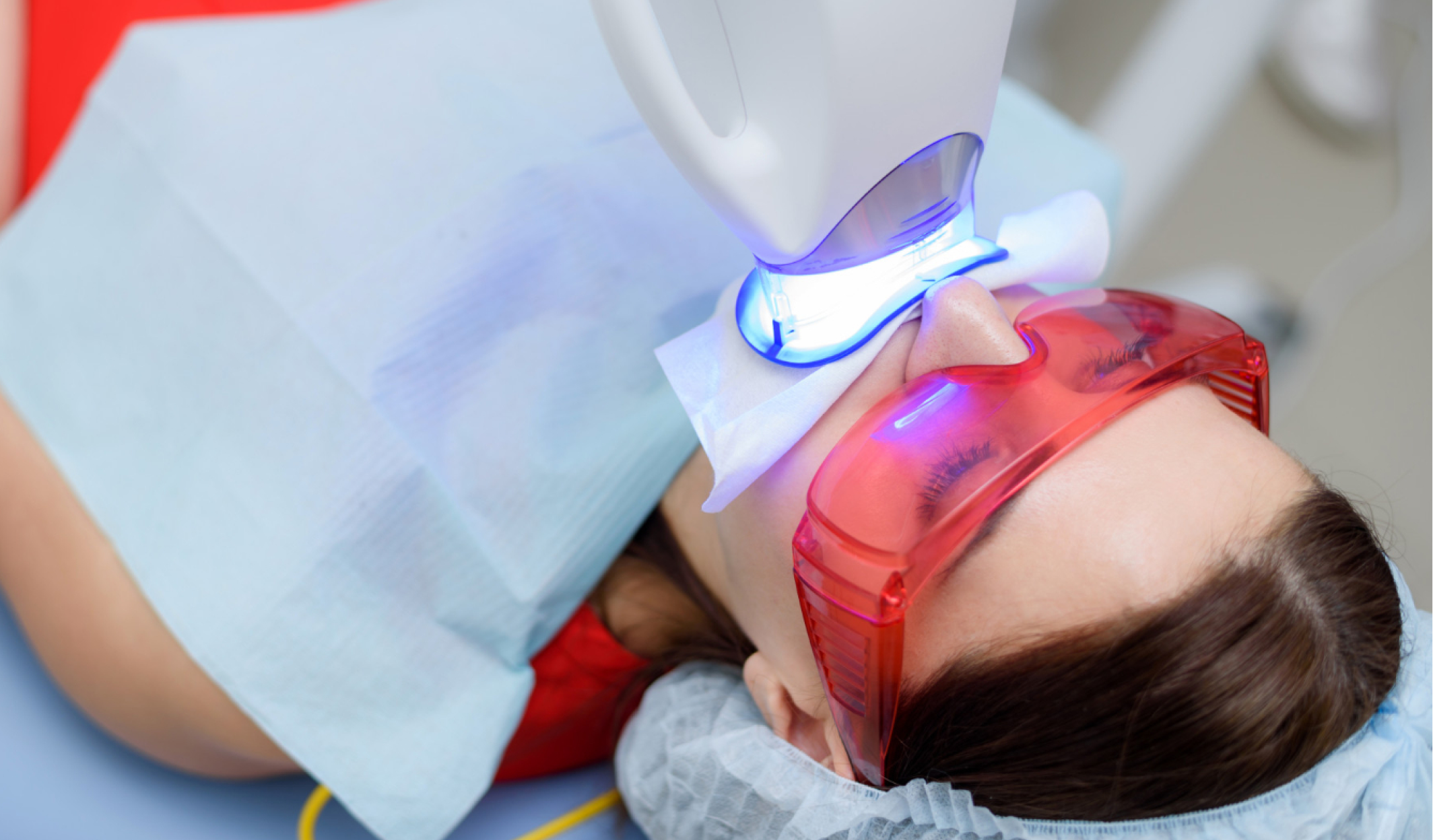
In-office whitening allows the dentist to evaluate the teeth before starting the procedure and respond if the patient reports discomfort. Dentist-supervised tray whitening, in turn, offers greater flexibility because the product is used according to individual recommendations.
Products purchased independently may be an option for some people, but they do not replace an examination. They also will not solve discoloration caused, for example, by a leaking filling, tooth trauma, or internal changes. Abrasive methods are not a substitute for chemical whitening.
When is teeth whitening safe?
Safe whitening begins with a consultation, an oral examination, and determining the cause of the change in tooth color. The dentist selects a method based on the condition of the enamel and gums, as well as the desired result, rather than offering the same approach to every patient.
Dental examination and treatment before whitening
Before whitening, it is worth detecting and treating tooth decay, leaking fillings, cracked teeth, and gum inflammation. Whitening products should not come into contact with untreated cavities or cause additional irritation in areas affected by diseased gums.
Professional dental cleaning, including the removal of tartar and plaque, is also often helpful. It makes it possible to assess the natural shade of the teeth after the surface has been cleaned. Only then can color lightening be planned sensibly.
Contraindications and situations that require postponing whitening
A dentist may recommend postponing whitening in cases of active tooth decay, gum disease, significant sensitivity, untreated cavities, or irritation of the oral mucosa. Specific health circumstances and ongoing treatment also require careful individual assessment.
It is not worth starting whitening simply because a product is readily available. An examination and medical history help determine whether treatment is appropriate now or whether oral health should be addressed first.
Crowns, veneers, and fillings vs. whitening results
Crowns, veneers, bridges, and fillings do not lighten in the same way as natural tooth structure. After whitening, natural teeth may therefore appear lighter than existing restorations.
This does not mean that people with crowns or fillings cannot consider whitening. However, it requires an aesthetic treatment plan. The dentist may first assess the result on the patient’s natural teeth and then discuss possible replacement of visible restorations with a shade matched to the new color.
Does teeth whitening cause sensitivity?
Sensitivity is one of the most common side effects of whitening. It is usually temporary and appears as short episodes of pain when teeth come into contact with cold, heat, or sweet foods and drinks. It is not the same as permanent enamel damage.
Discomfort may be greater in people who already experience pain from cold drinks, have exposed tooth roots, or use the product for too long. For this reason, you should not increase the frequency of applications on your own in order to achieve a lighter shade faster.
During whitening, it can be helpful to limit very cold and acidic foods and drinks and follow the recommendations provided by the dentist. If severe pain, gum irritation, burning, or symptoms that do not resolve after the application ends occur, contact your dentist. A Cochrane review on at-home whitening also identifies sensitivity as an important factor to consider when choosing a method.
How long do whitening results last and how should you maintain them?
Whitening results do not last a lifetime. Their longevity depends on the initial tooth color, the type of discoloration, oral hygiene, diet, and habits such as smoking or frequently drinking strongly staining beverages.
To maintain a lighter shade for longer, it is worth:
- brushing regularly and cleaning between the teeth,
- attending professional dental cleanings at the interval agreed with your dentist,
- limiting frequent exposure to coffee, tea, red wine, and tobacco,
- avoiding aggressive abrasive toothpastes as a way to “refresh” whiteness,
- consulting the condition of your enamel and gums before whitening again.
Refreshing the result should be part of a plan agreed with your dentist, rather than a reaction to every minor color change. This helps maintain a natural-looking smile and reduce the risk of unnecessary sensitivity.

Consultation before whitening: what can you expect at the dental office?
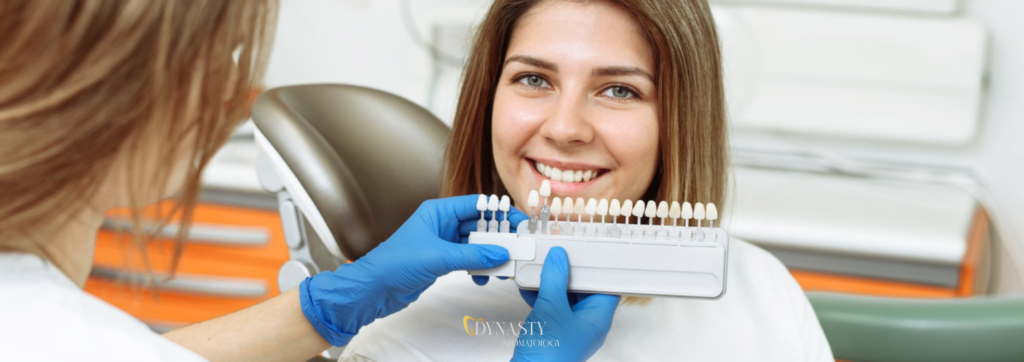
The assessment appointment includes a discussion about the expected result, general health, and previous sensitivity issues. The dentist then examines the teeth and gums, evaluates the type of discoloration, and checks the condition of fillings, crowns, or veneers.
After the examination, we discuss the available methods, possible side effects, post-treatment recommendations, and next steps. At Dynasty Stomatology, patients can receive explanations in Polish, Ukrainian, Russian, or English, which is especially important when making an informed medical decision.
Frequently asked questions
-
Yes, after proper assessment, dentist-performed whitening is considered a safe method of improving tooth color. The dentist first checks the enamel, gums, cavities, and existing restorations, then selects the method and recommendations for the patient’s individual situation.
-
At-home whitening can increase the risk of problems if the product is used contrary to instructions or without a prior examination. Acidic and abrasive at-home methods should be avoided in particular. Trays recommended by a dentist are a different situation because the process is planned and supervised.
-
Sensitivity after whitening is most often temporary and should lessen after you stop using the product. If symptoms are severe, persistent, or affect one specific tooth, it is worth contacting a dentist rather than continuing whitening on your own.
-
Yes, but it is important to remember that fillings, crowns, and veneers will not change color during whitening. The dentist will assess whether visible restorations will need color matching or replacement after the natural teeth have been lightened.
Take care of safe teeth whitening
If you want a brighter smile, start by assessing the condition of your teeth and determining whether whitening is the right method for you. During a consultation at Dynasty Stomatology, a dentist will evaluate your enamel and gums, check existing fillings, and select a whitening approach tailored to your needs. Book a consultation in Krakow and find out what results you can safely achieve.