
Have you ever caught yourself feeling chills at the thought of sitting in a dentist’s chair? Or sat in line outside the dentist’s office with the feeling that your heart was about to jump out of your chest? Fear of dentistry is a completely normal reaction, and at Dynasty Stomatology, we encounter it quite often. But for our doctors, the comfort of our patients is our top priority.
And it is precisely for such situations that surface anaesthesia exists — treatment while asleep. This is not general anaesthesia or “switching off”, as patients often think. On the contrary, it is a controlled, gentle state of light drowsiness in which you are seemingly present during the procedure, but all unpleasant sensations are somewhere far away. Moreover, many of our patients compare this state after the procedure to waking up in the morning after a very good night’s sleep.
What is treatment during sleep, and why is it not scary?
Sedation is designed specifically to relieve tension and relax the nervous system. You can hear the doctor and respond, but at the same time, you are not afraid and do not react to triggers — the sounds of instruments, bright lights or the very fact of manipulation in the oral cavity.
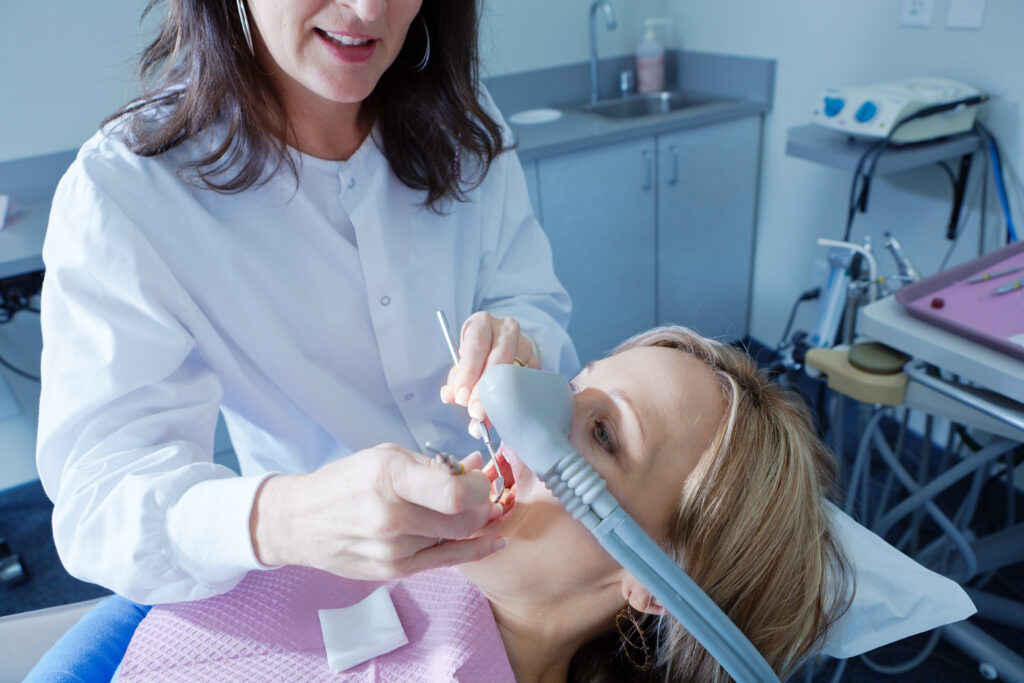
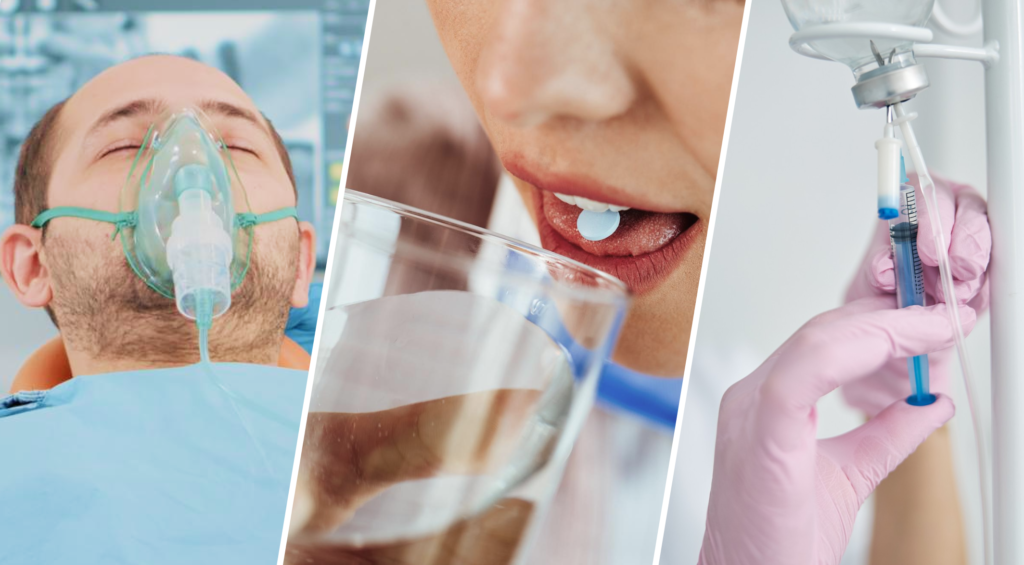
At Dynasty Stomatology, we use two types of anaesthesia: inhalation and intravenous. They differ in depth of effect, but they have one thing in common: both are administered only by a certified specialist who monitors your condition from the first second until you have fully recovered.
Who is this method suitable for?
It is not the most fearful people who resort to anaesthesia. These are often patients with long-term treatment plans, complex procedures or negative experiences in the past. Sometimes, they are those with a strong gag reflex or chronic anxiety.
Sedation helps children cope with hyperactivity or the fear of unfamiliar surroundings. For adults, it helps relieve tension and undergo treatment in a calm state. Patients often compare sedation to the feeling that the doctor has turned off the panic button on a remote control, which is a fairly accurate description.
How the procedure works — from the first visit to waking up
The entire process begins with a consultation. The doctor collects your medical history, clarifies your health status and previous treatment history, studies the treatment plan and selects the safest type of anaesthesia. Tests are also prescribed — you can never be too safe.
Next comes preparation. The doctor explains when you can eat and drink, what medications you can take, and how long before the procedure you need to be at the clinic. Sedation is always performed on an empty stomach — this is an important condition for a comfortable and safe process.
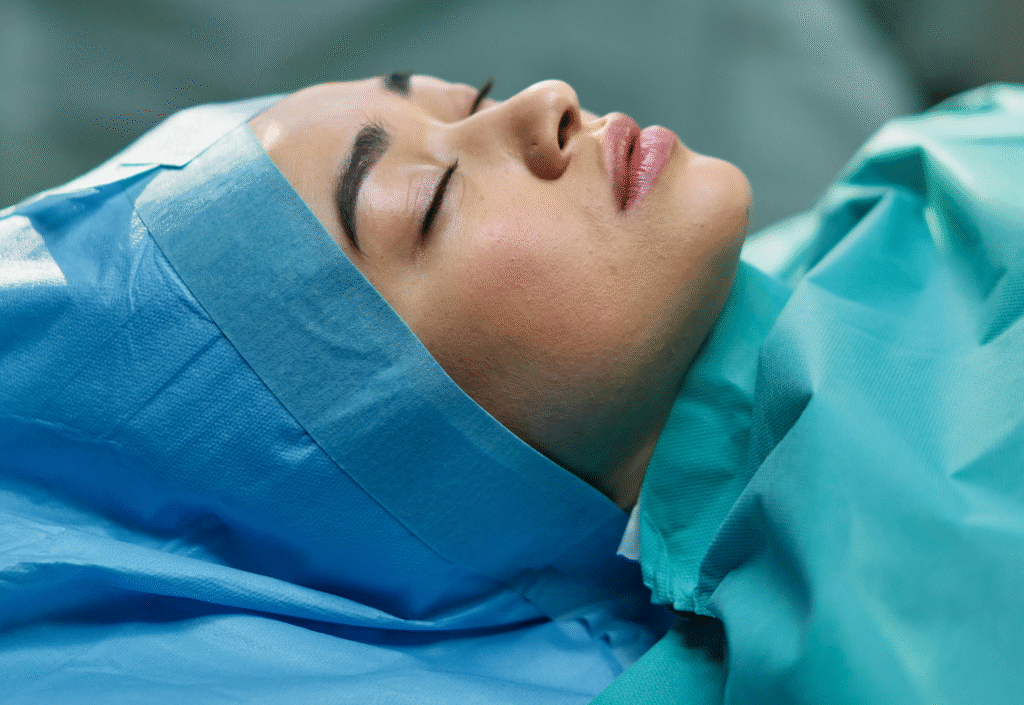
The treatment itself takes place in a state of light sleep. The patient is relaxed, breathing evenly, and the anaesthesiologist constantly monitors the parameters. The doctor works faster and more comfortably because the patient is not tense, does not move out of fear, and does not clench their jaw. The entire scope of manipulations is often performed in one visit — something that used to be divided into several sessions.
After completion, you wake up easily, without fogginess in your head or unpleasant sensations. Recovery from inhalation anaesthesia takes 30 to 60 minutes, and from intravenous anaesthesia, 15 to 30 minutes, but it is just as gentle. The only restriction is that you should not drive for a while.
When sedation cannot be used
Like any medical procedure, sedation has contraindications: pregnancy, age under three years, severe cardiovascular or respiratory pathologies, acute inflammatory processes, or individual intolerance to medications. That is why the first stage — consultation — is crucial: the doctor assesses the safety of this method specifically for you.
Patient history — wisdom tooth removal without pain or fear
Just a few years ago, our patient (aged 34) could not even think about visiting the dentist without panicking. Negative experiences in childhood, numerous attempts at treatment “by force” and pronounced dentophobia made any intervention impossible. But the situation required action: impacted (uncut) wisdom teeth periodically caused severe pain and inflammation.
During the initial consultation, he honestly admitted that even the thought of local anaesthesia caused him to panic. The doctors at Dynasty Stomatology offered the optimal solution — performing the procedure under intravenous sedation. This allowed them to relieve tension, ensure complete safety, and perform the complex removal comfortably.
How the procedure went
- Before the procedure, the patient had a chat with an anaesthesiologist and got a CT scan, which helped plan the surgery as precisely as possible.
- We opted for intravenous sedation — a light medically induced sleep under the supervision of an anaesthesiologist.
- During the procedure, the patient was completely relaxed, maintained independent breathing, felt no fear or pain, and did not respond to external stimuli.
- The entire removal procedure (which involved the two lower impacted wisdom teeth) took about 40 minutes. For the patient, it felt like 2–3 minutes.
Postoperative period
Recovery was easy. Within 10–15 minutes after the sedation wore off, our patient was already talking calmly and did not feel disoriented. During the first few days, there was minimal swelling and moderate pain, which was well controlled by the prescribed medications. After 3–4 days, he returned to his normal routine, and on the 14th day, the stitches were removed — everything healed without complications.
“It was completely different from my previous experience. No pain, no fear. I literally didn’t notice how it all happened. If I had known earlier that treatment in my sleep was so comfortable, I would have solved this problem years ago,” he shared his impressions.
Why patients choose sedation at Dynasty Stomatology
All the magic lies not in the drugs, but in the approach. Everything is important in therapy during sleep: equipment, the anaesthesiologist’s experience, communication with the patient, preparation, monitoring during the procedure, and observation afterwards. At our clinic, this is a refined protocol designed to relieve stress and make treatment not only painless, but as comfortable and predictable as possible.
Sedation is a premium service where your sense of security is the top priority.
Ready to treat your teeth without fear?
Write to us in the chat or leave a request — we will help you choose the type of sedation and draw up a personal treatment plan. You will be surprised at how calm your next visit can be.