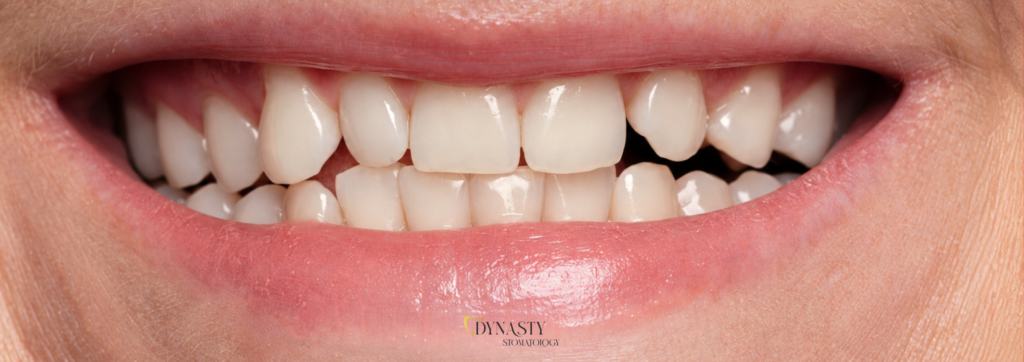


Insufficient bone volume may make it impossible to place an implant. In such cases, the dentist may recommend a bone graft—a procedure that helps restore the necessary volume and create more favorable conditions for later implant placement.
A bone graft is not necessary for every patient. The need for the procedure depends on the condition of the jaw, the amount of remaining bone, the location of the future implant, and other individual factors. In this article, we discuss when a bone graft may be necessary, how it is performed, and what to expect during the recovery process.
What Is Bone Augmentation and When Is It Needed?
Bone augmentation is a procedure to rebuild bone at the planned implant site. A dentist uses it when the bone is too low, narrow, or weakened to provide adequate support for an implant.
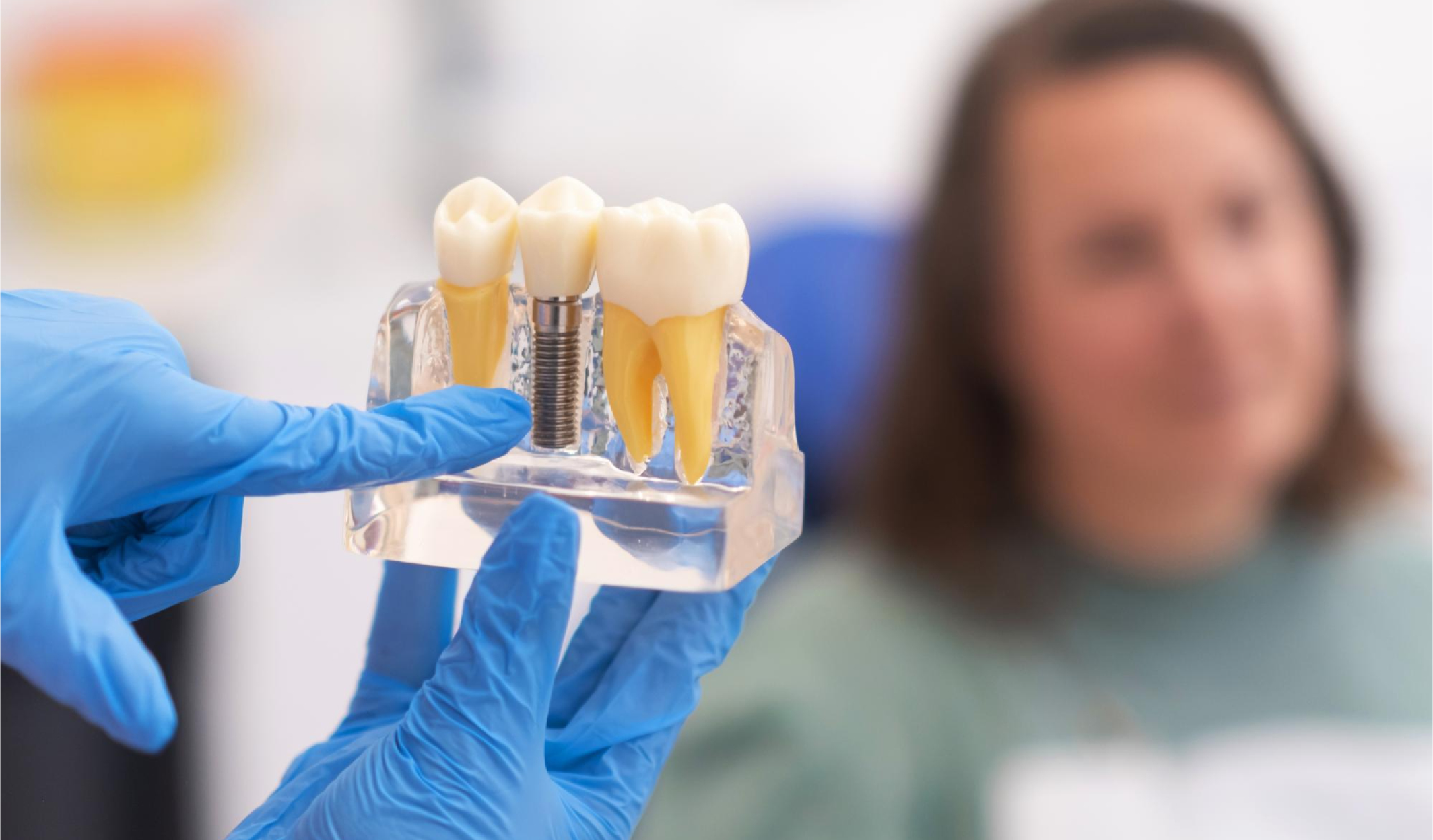
A dental implant replaces the root of a tooth, so it must be placed in bone with suitable anatomical conditions. If bone loss has occurred in the tooth-bearing ridge after tooth loss, rebuilding bone tissue may be one stage of implant treatment.
Not every bone deficiency means that an extensive procedure is necessary. In some situations, the dentist may consider a different implant size or position, an alternative restorative solution, or staged treatment. The choice is based on an oral examination, the condition of the gums, the bite, and imaging, often a CBCT scan.
Indications for Bone Augmentation Before an Implant
The most common indication is an insufficient amount of bone at the site where the implant is to be placed. This may concern its height, width, or quality. However, a missing tooth alone does not determine whether augmentation will be necessary.
Situations requiring thorough assessment include:
- long-term absence of one or more teeth,
- bone loss in the upper or lower jaw after an extraction,
- defects resulting from injuries,
- previous inflammation around the tooth root,
- challenging anatomical conditions, such as proximity to the maxillary sinus.
The dentist analyzes these factors during an implant consultation, rather than relying solely on an X-ray or the appearance of the gums.
Why Does Bone Shrink After Tooth Loss?
The tooth root transfers forces created during biting and chewing to the bone. After it is lost, the body gradually remodels the area that is no longer used in the same way. This can be compared to a structure that gradually loses part of its support when it no longer carries a load.
The rate and extent of bone loss vary from person to person. Factors that may affect it include the time since extraction, inflammation, gum disease, injury, the healing process, and the patient’s overall health.
How Is Bone Volume Assessed Before Treatment?
The assessment begins with a consultation, an oral examination, and a discussion of the patient’s treatment history. The dentist checks the condition of the gums, neighboring teeth, bite, and oral hygiene, then analyzes diagnostic images.
A CBCT scan, or three-dimensional imaging examination, makes it possible to assess the height, width, and shape of the bone. It also helps with safe planning near the maxillary sinuses, nerves, and other important anatomical structures.
Bone Augmentation Methods: Comparing the Options
The method of bone reconstruction depends on the size of the defect, its location, the planned implant, and the patient’s health. Oral conditions, habits such as smoking, and whether the implant can be safely placed immediately or staged treatment is needed also matter.
Cost is an important part of the discussion, but it should not be the only criterion when choosing a technique. Above all, the treatment plan should provide conditions for safe care and make it possible to properly plan a crown, bridge, or other dental restoration.
|
Approach |
Typical use |
Main advantages |
Limitations and impact on the treatment plan |
|
Local bone augmentation |
Small defects in bone width or contour |
Allows reconstruction of a specific site |
The scope and timing of subsequent stages depend on healing |
|
Autogenous bone graft |
More demanding defects when the dentist qualifies the patient for use of their own bone |
Uses the patient’s own material |
Requires an additional donor site to obtain the material |
|
Bone substitute biomaterial with a membrane |
Defects requiring maintenance of space for regeneration |
May support reconstruction in the planned area |
Requires stable protection and monitoring |
|
Sinus lift |
Posterior upper jaw with limited bone below the sinus |
Makes it possible to increase the available space for an implant |
Applies only to a specific anatomical location |
Materials Used for Bone Reconstruction
Bone augmentation may use the patient’s own material, human donor material used in accordance with medical procedures, or bone substitute biomaterials. Their purpose is to support the rebuilding process and maintain a space in which the body can form new bone tissue.
The dentist may also use a membrane, which is a thin barrier that protects the regeneration site from soft tissue growing into it. Material selection is not universal. It depends on the extent of the defect, local conditions, and the planned implant treatment.
Sinus Lift Versus Bone Augmentation
A sinus lift, or maxillary sinus floor elevation, is a procedure performed in the posterior part of the upper jaw. The maxillary sinus is a natural air-filled space above the roots of the back teeth. When there is too little bone beneath the sinus after tooth loss, it may limit the possibility of implant placement.
During the procedure, the dentist creates conditions for bone reconstruction beneath the sinus floor. Not every implant in the upper jaw requires a sinus lift—the indication is determined by CBCT diagnostics.
How Is Bone Augmentation Performed Step by Step?
The course of bone augmentation depends on the selected technique, but treatment usually follows an organized plan. Patients should know that the consultation, the procedure itself, and the follow-up period are separate stages.
- Consultation and diagnostics. The dentist takes a medical history, examines the oral cavity, and evaluates X-rays or a CBCT scan.
- Qualification and treatment planning. Indications, bone reconstruction options, possible limitations, costs, and subsequent stages are discussed.
- Preparation for the procedure. The team provides individual instructions, and the patient confirms information about their health and medications.
- Local anesthesia. The treatment area is numbed to minimize pain during the procedure.
- Reconstruction of the defect. The dentist prepares the site, places the selected material, and, if indicated, protects it with a membrane.
- Sutures and recommendations. The wound is closed, and the patient receives instructions regarding oral hygiene, diet, medications, and follow-up visits.
At Dynasty Stomatology, diagnostic imaging can be performed on site, making it easier to discuss the treatment plan without referring the patient to multiple facilities.
Can an Implant Be Placed During Bone Augmentation?
Sometimes an implant can be placed during the same procedure as bone augmentation. This is known as simultaneous treatment. In other cases, the bone is rebuilt first, and the implant is placed only after it has been confirmed that the site is healing properly.
The possibility of combining the procedures depends, among other things, on implant stability at the time of surgery, the size of the defect, and the quality of the available bone. Simultaneous treatment is not automatically a better or shorter solution for every patient.
How Should You Prepare for the Consultation and Procedure?
For the consultation, it is worth preparing a list of chronic conditions, medications taken, allergies, and previous dental procedures. You should also inform the dentist about smoking and bring current diagnostic images if they are available.
It is a good idea to write down questions about the treatment method, subsequent stages, healing, and the cost estimate. Before the procedure, follow the individual recommendations provided by the dental office.

Healing After Bone Augmentation, Recommendations, and Possible Complications
Healing after bone augmentation varies from person to person. It depends on the type of procedure, the extent of reconstruction, the material used, tissue condition, and the patient’s overall health. The dentist evaluates readiness for the next stage of treatment during follow-up visits, rather than according to a single predetermined timeline.
Temporary symptoms such as swelling, tenderness, or minor bleeding may occur after the procedure. Every surgical procedure also involves a risk of complications, which is why proper qualification, oral hygiene, and prompt contact with the dental office when symptoms are concerning are so important.
Recommendations After Bone Augmentation
After augmentation, follow the instructions received from the dentist, as they may vary depending on the extent of the procedure. They usually include:
- oral hygiene in accordance with recommendations,
- a cautious diet and avoiding injury to the treatment area,
- taking prescribed medications as instructed,
- temporarily limiting strenuous activity,
- stopping smoking.
You should not modify the recommendations on your own or discontinue follow-up contact simply because symptoms have initially subsided.
When Should You Contact a Dentist After the Procedure?
You should contact the dental office promptly if pain clearly worsens, swelling persists or increases, or if fever, bleeding, discharge, an unpleasant odor, or any other concerning symptom appears.
Prompt contact does not mean that a serious problem has occurred. It allows the dentist to assess the situation and recommend the appropriate course of action instead of leaving the patient uncertain.
Contraindications, Costs, and the Next Step in Treatment
Contraindications to bone augmentation may be temporary or may require changes to the treatment plan. The dentist pays particular attention to uncontrolled systemic conditions, active oral infections, oral hygiene problems, smoking, and medications or therapies that affect bone metabolism.
This does not mean that every one of these situations permanently rules out treatment. Often, inflammation must first be controlled, oral hygiene improved, a systemic condition stabilized, or the procedure planned with consideration for consultation with the patient’s treating physician.
The cost of bone augmentation depends on diagnostics, the size of the defect, location, method, type of material, the need for a membrane, and the number of visits. A reliable estimate should result from an individual treatment plan, rather than from one general price provided without an examination.
How Can You Receive a Treatment Plan and Cost Estimate?
The next step is an implant consultation with a clinical examination and assessment of diagnostic imaging, often a CBCT scan. Afterward, the patient receives an overview of possible methods, treatment stages, expected costs, and pre-procedure recommendations.
At Dynasty Stomatology, the treatment plan is discussed transparently, without imposing procedures. For patients interested in spreading the cost, installment options are available through MediPay, MediRaty, and an internal plan, with terms determined individually.
Bone augmentation is not an end in itself—it is intended to prepare a stable foundation for the planned implant.
Frequently Asked Questions About Bone Augmentation
-
No, bone augmentation is not necessary before every implant. It is needed only when the examination and diagnostic imaging show that the quantity or quality of bone does not allow for safe implant planning. The final decision is made by the dentist after evaluating individual anatomical conditions.
-
The procedure itself should not be painful because it is performed under local anesthesia. Once the anesthesia wears off, tenderness, swelling, or discomfort may occur, and their intensity depends on the extent of the procedure. The dentist provides individual recommendations for post-procedure care.
-
Healing time varies individually and depends on the type of augmentation and the extent of reconstruction. It is not advisable to assume one implant placement date for all patients. The dentist assesses the healing process during follow-up visits and confirms when it is safe to proceed to the next stage.
-
The cost of bone augmentation depends on diagnostics, the size of the defect, the method used, and the materials. The cost may also be affected by a membrane, the need for a sinus lift, and the number of follow-up visits. An accurate estimate can be provided after an implant consultation and assessment of a CBCT scan.
Do You Need a Consultation Before a Bone Graft?
If you have been advised to have a bone graft or are planning an implant after long-term tooth loss, start with a consultation and diagnosis. At Dynasty Dentistry, the dentist will assess your bone volume, explain whether additional procedures are necessary, and recommend an appropriate treatment plan.